Crankshaft Position Sensor Replacement Cost by Vehicle
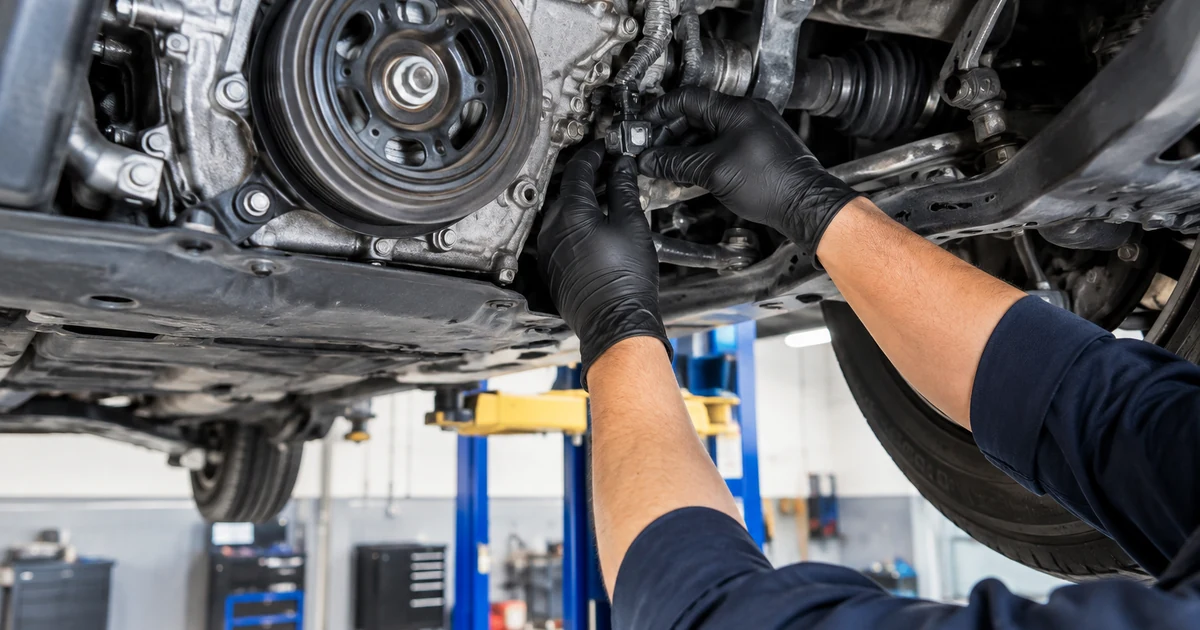
The crankshaft position sensor tells the engine computer how fast the engine is turning and where each piston is. The part is usually inexpensive. What changes the bill is where it’s mounted: some are right at the front of the engine, while others sit low on the block, behind the starter or inside the timing cover.
| Vehicle (engine) | Parts | Labor | Total at a shop |
|---|---|---|---|
| Ford F-150 (5.0L V8 / 3.5L EcoBoost) | $50 – $130 | $150 – $230 | $230 – $350 |
| Chevrolet Silverado 1500 (5.3L V8) | $50 – $130 | $140 – $210 | $220 – $330 |
| Toyota Camry (2.5L 4-cyl) | $80 – $160 | $170 – $240 | $260 – $390 |
| Toyota RAV4 (2.5L 4-cyl) | $80 – $160 | $160 – $230 | $250 – $380 |
| Toyota Corolla (1.8L / 2.0L 4-cyl) | $70 – $150 | $160 – $230 | $240 – $370 |
| Honda Civic (2.0L / 1.5L turbo) | $60 – $140 | $140 – $230 | $220 – $360 |
| Honda Accord (1.5L turbo) | $60 – $140 | $140 – $230 | $220 – $360 |
| Honda CR-V (1.5L turbo) | $60 – $130 | $110 – $170 | $180 – $290 |
| Nissan Altima (2.5L 4-cyl) | $50 – $110 | $100 – $140 | $160 – $250 |
| Chevrolet Equinox (1.5L turbo) | $50 – $130 | $130 – $220 | $200 – $340 |
| Jeep Wrangler / Grand Cherokee (3.6L V6) | $40 – $120 | $130 – $220 | $190 – $330 |
| BMW 3 Series (2.0L turbo) | $80 – $200 | $200 – $400 | $300 – $600 |
These are estimates for common model years and engines at independent shops. Engines where the sensor sits inside the timing cover or bellhousing cost more. Electric cars like the Tesla Model 3 don’t have a crankshaft or a crank sensor.
Cost Breakdown: Parts vs. Labor
Sensor prices
- Aftermarket sensor: about $40–$120 for most engines.
- OEM sensor: about $80–$200, sometimes more on European models. OEM sensors typically cost 30–50% more than quality aftermarket ones.
- Remanufactured: not common for a part this inexpensive; buy new.
RepairPal’s national average for parts is roughly $86–$124. Labor is the bigger half of this repair on most cars.
Labor
Most crank sensors take about 1–1.5 hours of book time, because the car often has to go up on a lift and a splash shield, heat shield or other part must come off. At independent rates of about $110–$150 an hour, that’s roughly $140–$220. RepairPal’s national labor average is about $142–$209.
On some engines the sensor is behind the crankshaft pulley, inside the timing cover or on the transmission bellhousing. Openbay notes that on those vehicles installation alone can run $600–$700 or more.
| Where you go | Easy-access sensor | Notes |
|---|---|---|
| Dealer | $300 – $600 | OEM sensor, higher labor rate |
| Independent shop | $170 – $420 | OEM or quality aftermarket sensor |
| DIY | $40 – $200 | Part only; access is often from under the car |
What Affects the Price
Sensor location
This is the biggest factor. A sensor bolted to the front of the block near the crank pulley is a quick job. One tucked behind the starter, under an exhaust manifold or inside the timing cover takes hours. Ask the shop where yours is and how much has to come apart.
Vehicle type
Trucks and SUVs often have easier access from below, while tightly packed front-wheel-drive cars and many European models take more time. Luxury and European brands also use pricier sensors.
Part quality
The crank sensor is critical: if it stops sending a signal, the engine stops. A quality sensor with at least a one-year warranty is worth the small extra cost over the cheapest option.
Shop type and region
Dealers charge more per hour and use OEM parts. Labor rates are higher in the Northeast and on the West Coast; the estimator’s region setting adjusts for this.
Related work
If the sensor sits behind the timing cover and your timing belt is due, doing both together saves a second round of labor. RepairPal also recommends having the timing belt inspected when the sensor is inside the engine. See our timing belt replacement cost guide. On engines where the sensor is near the reluctor ring, a damaged or loose tone ring can also need attention.
Symptoms of a Bad Crankshaft Position Sensor
- Engine cranks but won’t start
- Stalling, often after the engine warms up
- Hard starting when the engine is hot, then starting fine after it cools
- Check engine light, often with P0335, P0336 or P0337-P0339
- Misfires, rough running or hesitation
- Tachometer dropping to zero or bouncing while driving
- Worse fuel economy
The hot-stall-then-restart-when-cool pattern is a classic sign. Heat, age and rust are the most common reasons these sensors fail.
The camshaft position sensor causes similar symptoms, but most engines can still start and run, roughly, without it. If the code points to the cam side instead, see our camshaft position sensor replacement cost guide.
Crank sensor vs. other no-start causes
A crank-no-start can also come from a failed fuel pump, a bad ignition switch, a security system fault or a stretched timing chain. A quick check is whether the tachometer needle moves while cranking: on many cars, no movement points toward the crank sensor. If the engine won’t crank at all, look at the battery and starter instead; see our starter replacement cost guide. If there’s spark but no fuel pressure, see our fuel pump replacement cost guide.
Can You Drive With a Bad Crankshaft Position Sensor?
It’s not a good idea. Unlike some other sensors, the engine has no backup for the crank signal. When the sensor fails completely, the engine shuts off, and it can happen at highway speed or in the middle of an intersection. You lose power steering assist, and brake assist fades after a few presses.
A failing crank sensor usually won’t damage the engine itself, but repeated misfires can harm the catalytic converter. If your car has stalled once for no clear reason, have it checked before relying on it again. If it won’t start, have it towed rather than cranking the starter over and over.
DIY vs. Taking It to a Shop
Difficulty: 2 out of 5 when the sensor is on the front or side of the block, 4 out of 5 when it’s inside the timing cover or behind the bellhousing. For the easy version, you need jack stands or ramps, a socket set and possibly a trim-panel tool to remove a splash shield. Budget 30–90 minutes.
Disconnect the battery first. Note how the sensor is oriented, clean the mounting surface and lightly oil the new O-ring. Some vehicles need a crankshaft position relearn with a scan tool after the sensor is replaced, or the engine may run poorly or set a code. Check your service information before you start.
Is It Worth Fixing?
Yes. A crankshaft position sensor is a modest repair that fixes stalling and no-start problems, and the car isn’t reliably drivable without it. Even on an older, high-mileage car, a $170–$420 repair is usually well worth it.
The calculation only changes on a low-value car where the sensor is inside the timing cover and the timing components are also worn. Then you’re looking at a much larger bill, and it’s worth comparing the total against the car’s value.
How to Save Money on Crankshaft Position Sensor Replacement
- Confirm the diagnosis. Ask the shop to show you the code and the test result, not just the part.
- Use an independent shop for out-of-warranty cars.
- Buy a quality sensor with a warranty rather than the cheapest one.
- Bundle timing work if the sensor is behind the timing cover and your belt or chain is due.
- Check your powertrain warranty. Engine sensors are often covered on newer or certified used cars.
- Get a second quote if the estimate is well above $450 on an easy-access engine.
- DIY the easy ones if you’re comfortable working under a car on jack stands.
Frequently Asked Questions
How much does it cost to replace a crankshaft position sensor?
Most drivers pay $170 to $420 at an independent shop, with about $280 being typical. The sensor costs about $40 to $200, and labor is usually 1 to 1.5 hours. Sensors inside the timing cover can push the total to $500 to $900.
Can you drive with a bad crankshaft position sensor?
It isn’t safe to rely on the car. The engine has no backup for the crank signal, so a failing sensor can make it stall without warning, including at speed. Get it repaired as soon as symptoms appear.
What are the first signs of a bad crankshaft sensor?
Common early signs are stalling when the engine is hot, hard starting after a drive, a bouncing tachometer and a check engine light with code P0335 or P0336. Eventually the engine may crank but not start.
How long does a crankshaft position sensor last?
Many last well over 100,000 miles, and some last the life of the car. Heat, age, rust and oil contamination are the most common reasons they fail early.
Does a new crankshaft sensor need to be programmed?
Some vehicles, including many GM models, need a crankshaft position variation relearn with a scan tool after replacement. Without it, the engine may set a code or run poorly. A shop will handle this as part of the job.
Is a crankshaft sensor the same as a camshaft sensor?
No. The crankshaft sensor reads engine speed and piston position, while the camshaft sensor reads valve timing. They work together, and symptoms overlap, but a no-start is more often caused by the crank sensor.