Camshaft Position Sensor Replacement Cost by Vehicle
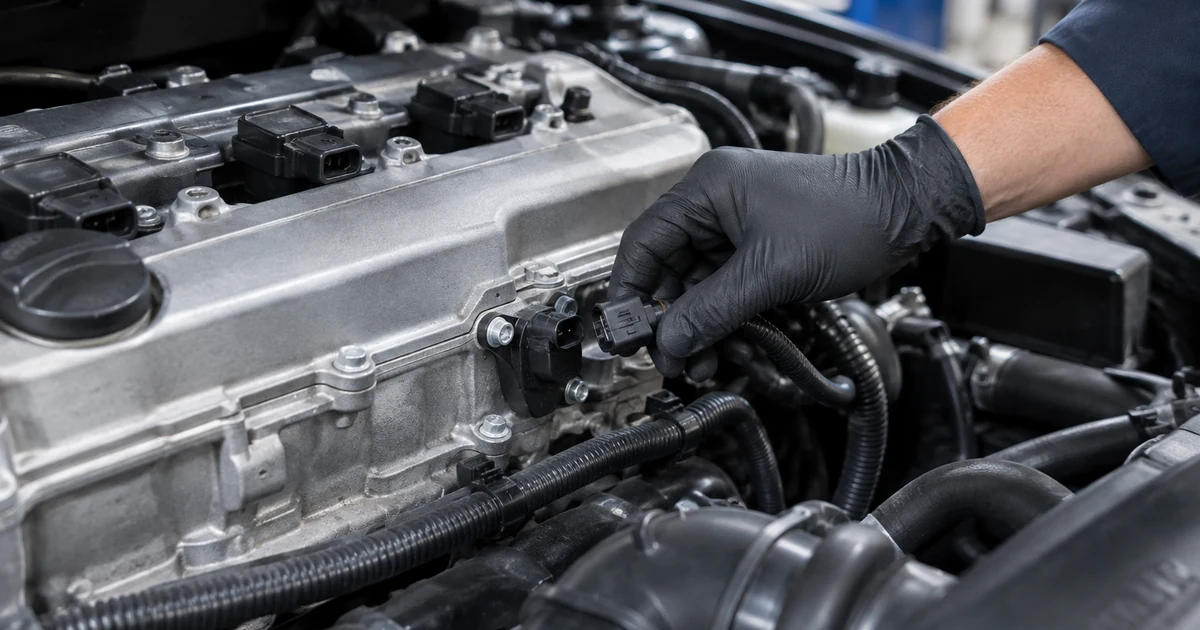
The camshaft position sensor is a small electronic part, usually held in by a single bolt on the cylinder head, valve cover or timing cover. On most cars it’s a short job. The price goes up when the sensor is tucked behind other components, or when a V6 or V8 has more than one sensor.
| Vehicle (engine) | Parts | Labor | Total at a shop |
|---|---|---|---|
| Ford F-150 (5.0L V8 / 3.5L EcoBoost) | $40 – $110 | $60 – $110 | $120 – $210 |
| Chevrolet Silverado 1500 (5.3L V8) | $40 – $120 | $80 – $180 | $150 – $300 |
| Toyota Camry (2.5L 4-cyl) | $90 – $160 | $70 – $120 | $190 – $280 |
| Toyota RAV4 (2.5L 4-cyl) | $90 – $160 | $70 – $120 | $190 – $280 |
| Honda Civic (2.0L / 1.5L turbo) | $70 – $150 | $70 – $130 | $160 – $280 |
| Honda Accord (1.5L turbo) | $70 – $150 | $70 – $130 | $160 – $280 |
| Honda CR-V (1.5L turbo) | $70 – $150 | $70 – $130 | $160 – $280 |
| Nissan Altima (2.5L 4-cyl) | $60 – $140 | $60 – $120 | $140 – $260 |
| Chevrolet Equinox (1.5L turbo) | $50 – $130 | $70 – $140 | $140 – $270 |
| Jeep Wrangler / Grand Cherokee (3.6L V6) | $40 – $120 | $70 – $150 | $130 – $270 |
| BMW 3 Series (2.0L turbo) | $80 – $200 | $80 – $160 | $190 – $360 |
These are estimates for one sensor on common model years and engines at independent shops. Engines with two or four cam sensors cost more if several need replacing. Electric cars like the Tesla Model 3 have no camshaft, so no cam sensor.
Cost Breakdown: Parts vs. Labor
Sensor prices
- Aftermarket sensor: about $20–$100 for most engines. AutoZone lists typical cam sensors at $20–$150 depending on the vehicle.
- OEM sensor: often $90–$200, more on some European models.
- Remanufactured: rarely worth it for a part this cheap; buy new.
RepairPal puts the national average for parts at roughly $115–$168, which reflects shops using OEM or OEM-quality sensors and adding their markup.
Labor
Most cam sensors take 0.5–1 hour to replace. At independent rates of about $110–$150 an hour, that’s roughly $60–$150. RepairPal’s national labor average is about $106–$156. Sensors mounted behind the timing cover, intake or other components can take 2–4 hours.
Expect a diagnostic fee if the shop has to trace the code. A P0340-series code points to the cam sensor circuit, but a damaged wire, a loose connector or a stretched timing chain can set the same code.
| Where you go | One sensor | Notes |
|---|---|---|
| Dealer | $250 – $500 | OEM sensor, higher labor rate |
| Independent shop | $160 – $360 | OEM or quality aftermarket sensor |
| DIY | $20 – $150 | Part only; usually one bolt and a connector |
What Affects the Price
Sensor location and engine layout
On most four-cylinder engines and trucks, the sensor is on top of or at the front of the cylinder head and comes out in minutes. On some engines it sits behind the intake manifold, alternator or timing cover, which multiplies the labor.
Number of sensors
Engines with variable valve timing often have one sensor per camshaft. A V6 or V8 with dual overhead cams can have up to four. The trouble code usually tells the shop which bank and which camshaft (intake or exhaust) is affected, so only that sensor needs replacing.
Part quality
Cheap sensors are a common cause of repeat visits. The signal has to be precise for the engine computer to time fuel and spark correctly. A quality aftermarket brand or the OEM part is worth the extra $20–$60.
Shop type and region
Dealers charge more per hour and use OEM parts. Labor rates are also higher in the Northeast and on the West Coast. The estimator’s region setting covers this.
Related problems found during diagnosis
Sometimes the sensor is fine and the real problem is timing. A stretched timing chain or a timing belt that has jumped a tooth throws cam/crank correlation codes. That’s a much bigger repair; see our timing chain replacement cost guide.
Symptoms of a Bad Camshaft Position Sensor
- Check engine light, often with code P0340, P0341, P0345 or P0365–P0390
- Hard starting or longer cranking before the engine fires
- Stalling, especially when the engine is warm
- Rough idle, misfires or hesitation
- Reduced power or the car going into limp mode
- Worse fuel economy
- Some automatic transmissions may shift harshly or stay in one gear
Cam and crank sensors share many symptoms. If the car cranks but won’t start at all, the crankshaft sensor is more often the culprit; see our crankshaft position sensor replacement cost guide.
Is it the sensor, the wiring or something else?
A cam sensor code doesn’t always mean a bad sensor. Before paying for the part, a good shop will check a few things:
- Wiring and connector: chafed wires, oil in the plug or a loose connection can set the same code.
- Battery and charging voltage: low voltage can cause erratic sensor signals.
- Timing: a stretched chain or jumped belt causes cam/crank correlation codes such as P0016.
- Variable valve timing parts: a stuck oil control solenoid can cause related codes.
A misfire code on a single cylinder is a different problem. That usually points to a spark plug or coil; see our ignition coil replacement cost guide.
Can You Drive With a Bad Camshaft Position Sensor?
Sometimes, but it’s risky. Many engines keep running on a backup strategy using the crankshaft sensor, with reduced power and poorer fuel economy. The danger is intermittent stalling. An engine that cuts out in traffic or on the highway takes away power assist for steering and, after a few presses, the brakes.
If the car is stalling, get it repaired before driving it regularly. If it only shows a check engine light and runs normally, drive gently to a shop soon. Persistent misfires can also damage the catalytic converter over time.
DIY vs. Taking It to a Shop
Difficulty: 1–2 out of 5 on most engines, 3–4 out of 5 when the sensor sits behind other parts. On an easy engine you unplug the connector, remove one bolt, pull the sensor out and install the new one with a lightly oiled O-ring. Budget 15–45 minutes and a basic socket set.
An OBD2 scanner lets you read the exact code, confirm which bank and camshaft it refers to, and clear the code afterward. Check the connector and wiring for oil or corrosion before buying a part.
Is It Worth Fixing?
Yes, in nearly every case. A camshaft position sensor is an inexpensive repair that restores reliable starting and prevents stalling. Even on an older car worth a couple of thousand dollars, spending $160–$360 makes sense.
There’s no set replacement interval for a cam sensor. Many last the life of the engine, and they’re replaced only when they fail. Heat, oil leaks into the connector and damaged wiring are the usual reasons they give out, so fixing the cause of an oil leak nearby helps the new sensor last.
The exception is when the code is caused by a worn timing chain rather than the sensor. On a high-mileage car with low value, a large timing repair is where the repair-or-replace question comes up.
How to Save Money on Camshaft Position Sensor Replacement
- Get the code read first. Many parts stores scan for free, and the code tells you which sensor is involved.
- Check the wiring and connector before replacing the sensor.
- Replace only the sensor that failed unless your shop shows evidence the others are faulty.
- Use an independent shop for out-of-warranty cars.
- Buy a quality sensor rather than the cheapest one, to avoid a repeat job.
- Check your powertrain warranty on newer or certified used cars; engine sensors are often covered.
- DIY easy-access sensors. It’s one of the simplest engine repairs.
Frequently Asked Questions
How much does it cost to replace a camshaft position sensor?
Most drivers pay $160 to $360 at an independent shop, with about $250 being typical. The sensor itself costs about $20 to $200, and labor is usually under an hour. Hard-to-reach sensors can cost $350 to $800.
What happens if you don't replace a bad camshaft sensor?
The engine may start slowly, run rough, lose power or stall. Stalling while driving is the biggest concern because you lose power steering assist. Ongoing misfires can also damage the catalytic converter.
How long does it take to replace a camshaft position sensor?
On most vehicles, 15 minutes to an hour. Engines where the sensor sits behind the intake manifold or timing cover can take 2 to 4 hours.
Should I replace both camshaft sensors at the same time?
Only if both are faulty or the shop has a clear reason, such as the same oil leak affecting both. The trouble code normally identifies the bank and camshaft, so a single sensor is the usual repair.
Can a bad camshaft sensor cause a no-start?
It can on some engines, but many will still start using the crankshaft sensor, just with longer cranking. A complete crank-no-start is more often caused by a failed crankshaft position sensor.
What code does a bad camshaft position sensor give?
The most common is P0340, a camshaft position sensor circuit fault. Related codes include P0341 and codes in the P0345 and P0365 to P0390 range for other banks or camshafts.