Head Gasket Replacement Cost by Vehicle
The ranges below are for replacing the head gasket(s) at an independent shop, including a typical head resurfacing. They are estimates for common model years and engines; the first eight rows follow RepairPal’s published model estimates.
| Vehicle | Parts | Labor | Total |
|---|---|---|---|
| Ford F-150 | $950 – $1,250 | $2,500 – $3,350 | $3,450 – $4,600 |
| Chevrolet Silverado 1500 | $700 – $900 | $1,300 – $1,650 | $2,000 – $2,550 |
| Toyota Camry | $800 – $1,050 | $2,000 – $2,700 | $2,800 – $3,750 |
| Toyota Corolla | $650 – $900 | $1,800 – $2,450 | $2,450 – $3,350 |
| Honda Accord | $650 – $850 | $1,650 – $2,100 | $2,300 – $2,950 |
| Honda Civic | $600 – $850 | $1,650 – $2,250 | $2,250 – $3,100 |
| Honda CR-V | $700 – $950 | $1,900 – $2,550 | $2,600 – $3,500 |
| Nissan Altima | $650 – $900 | $1,800 – $2,400 | $2,450 – $3,300 |
| Toyota RAV4 | $700 – $1,000 | $1,900 – $2,600 | $2,600 – $3,600 |
| Chevrolet Equinox (2.4L) | $650 – $900 | $1,600 – $2,300 | $2,250 – $3,200 |
| Subaru Outback / Impreza | $800 – $1,200 | $2,000 – $3,000 | $2,800 – $4,200 |
| Jeep Grand Cherokee (3.6L V6) | $900 – $1,300 | $2,300 – $3,300 | $3,200 – $4,600 |
| BMW 3 Series | $1,200 – $1,900 | $2,500 – $3,800 | $3,700 – $5,700 |
Subaru boxer engines and many V6 engines have two cylinder heads, and on some the engine has to be lifted or removed to reach them, which is why they sit at the top of the range.
Cost Breakdown: Parts vs. Labor
A head gasket is a cheap part in an expensive location. RepairPal’s national average is $2,572 to $3,386, with labor at $1,669 to $2,449 and parts at $903 to $937. The “parts” figure is much more than the gasket itself: it includes a full head gasket set, new head bolts (most are one-time-use stretch bolts), coolant, oil and filter, and often a thermostat.
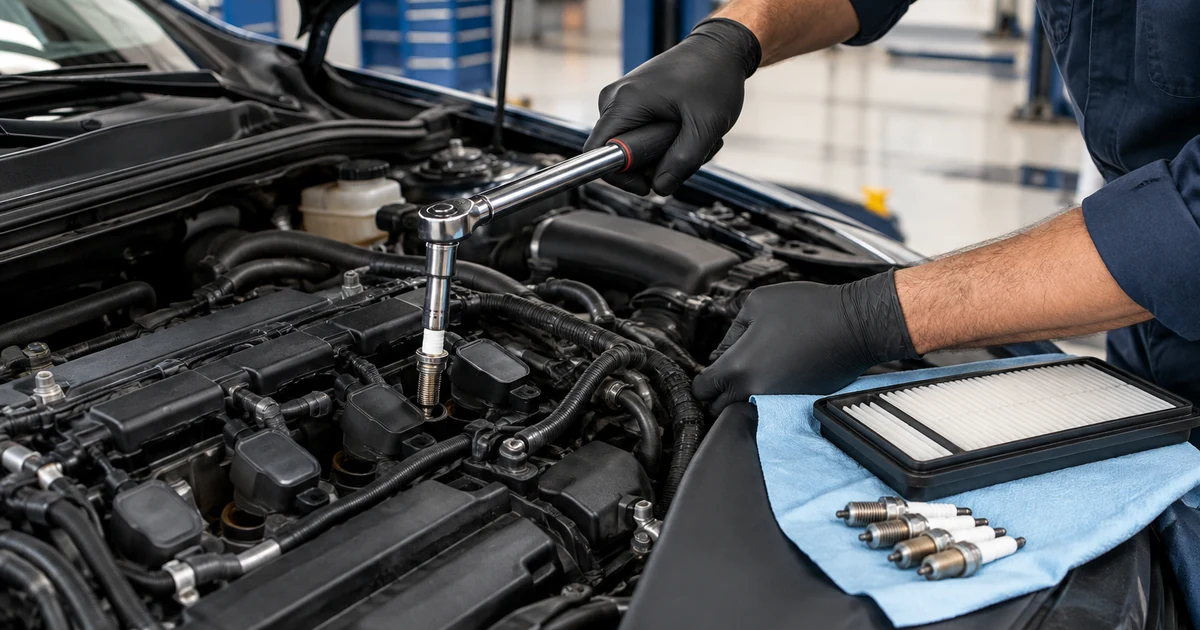
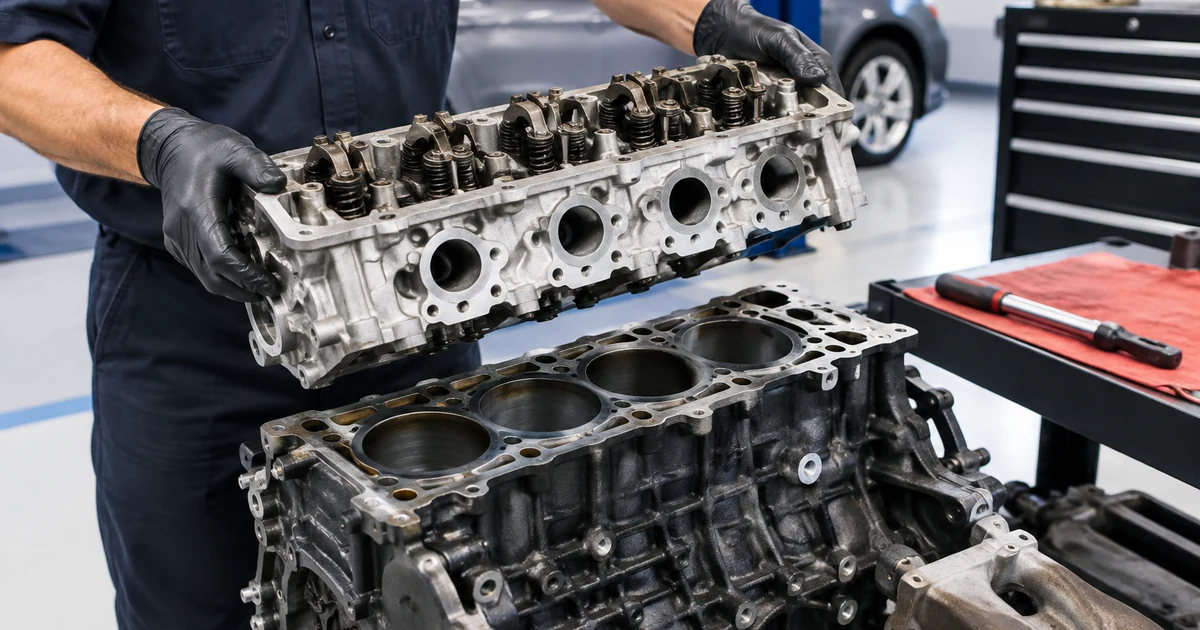
Labor is the big number because the mechanic has to remove the intake and exhaust manifolds, timing components and cylinder head, clean every surface, send the head out to be checked for flatness and cracks, then reassemble and retime the engine. Expect roughly 8 to 16 hours on a 4-cylinder and more on V6, V8 and boxer engines, at $110 to $150 an hour at independent shops.
| Option | 4-cylinder, midsize car | Notes |
|---|---|---|
| Independent shop | $2,000 – $3,800 | Most common; ask whether machining is included |
| Dealer | $2,600 – $4,950 | Higher labor rate, OEM gasket set |
| DIY | $600 – $1,150 | Gasket set, bolts, fluids and machine shop fee |
What Affects Head Gasket Replacement Cost
Engine layout
An inline 4-cylinder has one head and is usually the cheapest. V6, V8 and flat (boxer) engines have two heads, which roughly doubles gasket, bolt and machining costs and adds significant labor. Overhead-cam engines also require removing and retiming the timing belt or chain.
Condition of the cylinder head
Overheating is the usual cause of a blown head gasket, and it can warp or crack an aluminum head. Resurfacing a warped head is routine and inexpensive; a cracked head must be replaced, which can add $500 to $1,500.
Shop type
Consumer Reports notes that owners who use independent specialists instead of dealers can save substantially; one BMW owner it cited saved 35% over the local dealership.
Region
Because labor is most of the bill, regional labor rates matter more here than on most repairs. Expect higher prices in the Northeast and on the West Coast.
Related parts replaced at the same time
With the front of the engine apart, it is usually smart to replace the timing belt and water pump on belt-driven engines, along with the thermostat, valve cover gasket and hoses. The extra parts cost is small because the labor overlaps.
Symptoms of a Blown Head Gasket
- Overheating with no obvious leak.
- Coolant loss that you cannot trace to a hose, radiator or water pump.
- White, sweet-smelling exhaust smoke that does not clear once the engine is warm.
- Milky, light-brown oil on the dipstick or under the oil cap.
- Bubbles in the coolant reservoir or a pressurized, rock-hard upper radiator hose.
- Misfires or rough running, especially on cold starts.
- External oil or coolant leak at the seam between the head and the block.
A shop can confirm the diagnosis with a cooling system pressure test, a combustion gas (block) test and a compression or leak-down test. These usually cost $100 to $200 together and are worth doing before approving a $3,000 repair. Keep in mind that a stuck thermostat or failed water pump can also cause overheating.
Models with a history of head gasket trouble
Consumer Reports’ reliability data flagged higher-than-usual head gasket problem rates on several model years, including the 2011 Chevrolet Cruze, 2011 BMW 3 Series, 2014 BMW X1, 2011 Buick Lucerne, 2011 Subaru Impreza, 2012 BMW 5 Series and X3, 2013 Mini Cooper and 2015 Buick Encore. Most failures showed up between roughly 70,000 and 160,000 miles. If you own one of these, watch the coolant level closely.
Can You Drive With a Blown Head Gasket?
No, not for long. If the temperature gauge climbs, pull over and shut the engine off. Continued overheating can warp or crack the head, and coolant in the oil destroys the bearings. What starts as a head gasket job can turn into a full engine replacement. If you must move the car, keep trips very short, watch the gauge constantly, and consider a tow instead.
Do Head Gasket Sealers Work?
Sealer products cost roughly $15 to $70 and are poured into the cooling system. AutoZone says a sealer may permanently fix a small leak but may only be a temporary solution if the damage is more advanced. J.D. Power describes sealers as a temporary fix that can buy time rather than a substitute for replacing the gasket.
Honest take: a sealer is reasonable on an older, low-value car with a minor external or coolant leak, or to buy time before selling. It will not fix a warped head, a crack or a large breach, and it will not undo engine damage. Follow the product directions exactly and flush the system first if they say so.
DIY vs. Taking It to a Shop
Difficulty: 5 out of 5. A head gasket job requires a full engine top-end teardown, a precise torque sequence with angle-torque steps, correct timing on reassembly, and a machine shop to check the head. You need a torque wrench, angle gauge, full metric socket set, gasket scrapers that will not gouge aluminum, and service information for your engine. A mistake in timing can bend valves. It is doable for an experienced home mechanic with a weekend or more, but it is not a first project.
Is It Worth Fixing? Repair or Replace the Car
This is where honesty matters. A $2,500 to $3,500 head gasket job on a car worth $15,000 with no other problems is usually worth it; the engine can run for many more years. On a car worth $3,000 with high mileage, the repair can exceed the car’s value. In that case consider selling it as-is, trying a sealer as a stopgap if the leak is small, or putting the money toward another car.
Also ask the shop whether the engine was badly overheated. If compression is low on several cylinders or the block is damaged, a used or remanufactured engine may make more sense than a gasket job.
How to Save Money on Head Gasket Replacement
- Confirm the diagnosis with a block test and pressure test before approving the job.
- Check warranty coverage. Powertrain warranties often cover head gasket failures, and some models have had extended coverage.
- Use an independent shop or specialist rather than a dealer.
- Get two or three written quotes that list machining, head bolts and fluids.
- Bundle the timing belt, water pump and thermostat while the engine is apart.
- Stop driving at the first sign of overheating to avoid turning a gasket job into an engine replacement.
Replacing the head gasket usually means a new valve cover gasket too, since the cover comes off. See how we estimate costs for our methodology.
Frequently Asked Questions
How much does it cost to replace a head gasket?
Most head gasket replacements cost $2,000 to $3,800 on a 4-cylinder car, with a typical bill around $2,800. RepairPal’s national average is $2,572 to $3,386. V6, V8 and boxer engines, and luxury cars, can cost $5,000 or more.
Is a blown head gasket worth fixing?
It is usually worth fixing if the car is worth well more than the repair and has no other major problems. If the car is worth less than the repair or the engine was badly overheated, selling it as-is or replacing the engine may make more sense.
Does head gasket sealer really work?
It can seal small leaks, and AutoZone says it may permanently fix a minor one, but it is often only temporary for more advanced damage. It will not fix a warped or cracked head. Think of it as a stopgap for an older car, not a repair.
How long can you drive with a blown head gasket?
You should not drive far. Every overheating episode risks warping the head or ruining the engine bearings if coolant mixes with the oil. Short trips while watching the temperature gauge are the most you should risk, and towing is safer.
Why is head gasket replacement so expensive?
The gasket itself is cheap, but the mechanic has to remove the intake, exhaust, timing components and cylinder head, send the head to a machine shop, then reassemble everything. That is typically 8 to 16 hours of labor on a 4-cylinder engine.
How do I know if my head gasket is blown?
Common signs are unexplained coolant loss, overheating, white sweet-smelling exhaust, milky oil and bubbles in the coolant reservoir. A shop can confirm it with a combustion gas test, a pressure test and a compression or leak-down test.