Catalytic Converter Replacement Cost by Vehicle
The converter itself is most of the bill, and its price depends on how much platinum, palladium and rhodium the manufacturer put inside it. That is why two cars of similar size can be more than $1,000 apart. The ranges below are for an OEM-grade converter installed at a shop.
| Vehicle | Parts | Labor | Total |
|---|---|---|---|
| Toyota RAV4 | $750 – $950 | $150 – $250 | $900 – $1,200 |
| Toyota Tacoma | $1,000 – $1,200 | $180 – $300 | $1,200 – $1,500 |
| Ford F-150 | $1,300 – $1,600 | $200 – $350 | $1,500 – $1,950 |
| Nissan Altima | $1,000 – $2,050 | $200 – $350 | $1,200 – $2,400 |
| Chevrolet Equinox | $1,450 – $1,750 | $200 – $300 | $1,650 – $2,050 |
| Toyota Camry | $1,550 – $1,900 | $200 – $350 | $1,750 – $2,250 |
| Honda CR-V | $1,700 – $2,100 | $200 – $350 | $1,900 – $2,450 |
| Toyota Prius | $2,000 – $2,250 | $200 – $300 | $2,250 – $2,550 |
| Jeep Grand Cherokee | $1,500 – $3,100 | $300 – $450 | $1,800 – $3,550 |
| Honda Civic | $1,800 – $4,100 | $200 – $350 | $2,000 – $4,450 |
| Honda Accord | $1,350 – $4,350 | $250 – $400 | $1,600 – $4,750 |
| Ram 1500 | $2,500 – $3,450 | $300 – $450 | $2,800 – $3,900 |
| Chevrolet Silverado 1500 | $2,700 – $3,000 | $300 – $450 | $3,000 – $3,450 |
| BMW 3 Series | $1,800 – $3,900 | $350 – $650 | $2,150 – $4,550 |
| Tesla Model 3 | No catalytic converter (fully electric) | ||
These are estimates for common model years and engines. Newer model years often cost more: RepairPal lists 2023–2025 Accords well above older ones, largely because the converter design changed. An aftermarket direct-fit converter, where legal, typically cuts the total by 40% to 60%.
Cost Breakdown: Parts vs. Labor
RepairPal puts the national average at roughly $2,280 to $2,480, with parts at about $2,040 to $2,130 and labor at only $236 to $347. In other words, close to 90% of a typical bill is the part.
OEM vs. aftermarket converters
- OEM (factory) converter: about $800 to $3,000 for the part. Guaranteed fit, same catalyst loading as the original, and the safest bet for passing OBD2 monitors on newer cars.
- EPA-compliant aftermarket (49-state): about $200 to $800 for a direct-fit unit. Legal in most states on cars that are out of emissions warranty. Quality varies; cheap units can set a P0420 code again within months.
- CARB-compliant aftermarket: required in California and in states that adopted its rules (New York, Maine, and Colorado for many vehicles). CARB units are certified for specific vehicles and cost noticeably more than 49-state units.
- Universal weld-in converter: the cheapest part, but it needs cutting and welding and is often not legal where CARB rules apply. Most shops steer drivers to direct-fit.
There is no remanufactured option: converters aren’t rebuilt, and used ones have little catalyst life left.
Labor
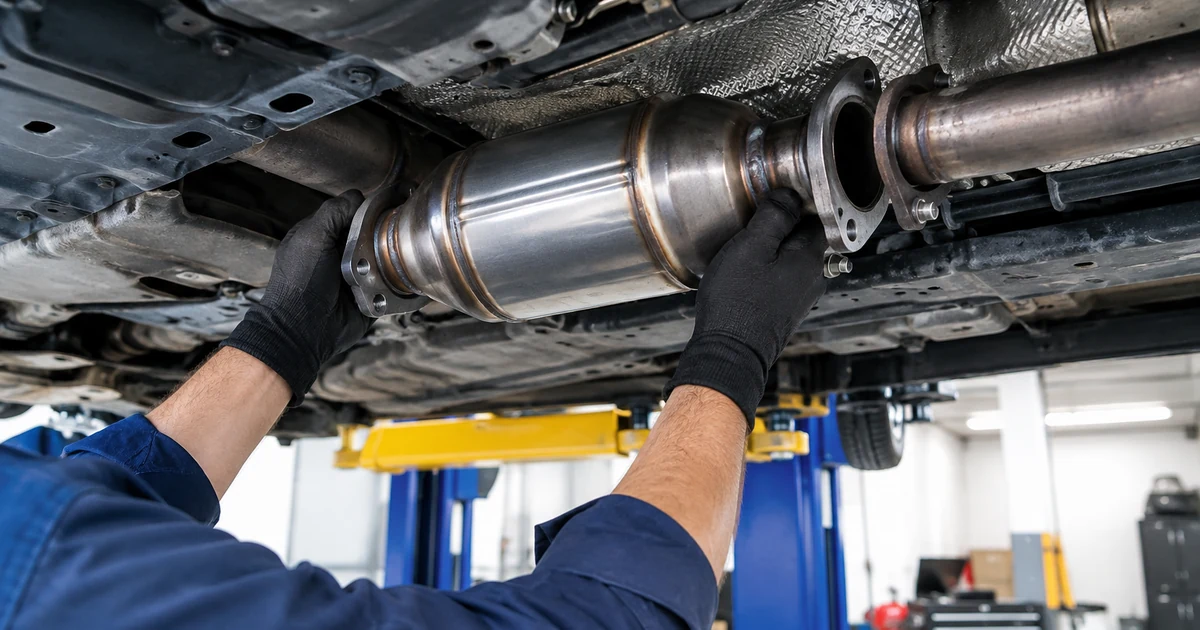
Book time is usually 1 to 3 hours. A bolt-on underbody converter can be under an hour, while a converter built into the exhaust manifold may mean removing heat shields, sensors and manifold studs. At $120 to $160 per hour for an independent shop, that’s roughly $150 to $450 in labor.
| Where | Typical total (one converter) | Notes |
|---|---|---|
| Dealer | $2,000 – $4,000 | OEM part, highest labor rate |
| Independent or muffler shop | $700 – $3,200 | Can install OEM or aftermarket; exhaust shops are often cheapest |
| DIY | $200 – $3,000 (part only) | Bolt-on units only; seized bolts and sensor removal are common hurdles |
What Affects the Price
Vehicle and engine layout
V6 and V8 engines often have two or more converters, one per bank, plus a rear unit on some trucks. Hybrids like the Prius use converters with more precious metal, which is also why they are theft targets. Converters integrated into the exhaust manifold cost more and take longer to replace.
Part type and state rules
In a 49-state area, a direct-fit EPA converter is often the biggest single saving. In a CARB state, your choices are narrower and prices are higher.
Shop type and region
Dealers charge top labor rates and install OEM parts only. Muffler and exhaust shops do this job every day and are usually the cheapest option. Labor rates are highest in the Northeast and on the West Coast.
Related parts replaced at the same time
Oxygen sensors are often replaced with the converter, especially if they are original and past 100,000 miles, adding $150 to $400. Gaskets and hardware add $20 to $100. After a theft, cut pipes may need new sections welded in.
The real cause of the failure
Converters rarely wear out on their own. Misfires, oil burning and coolant leaks overheat or contaminate them. If the root cause isn’t fixed, the new converter will fail too. Our P0300 misfire code guide explains why misfires are the most common converter killer.
Symptoms of a Bad Catalytic Converter
- Check engine light with code P0420 (bank 1) or P0430 (bank 2)
- Rotten-egg or sulfur smell from the exhaust
- Rattling under the car, especially at startup (broken internal substrate)
- Sluggish acceleration or loss of power, a sign of a clogged converter
- Failed emissions or smog test
- Suddenly very loud exhaust, the classic sign of a stolen converter
Can You Drive With a Bad Catalytic Converter?
With just a P0420 code and no drivability symptoms, most cars are fine to drive for a short time while you get quotes. You will fail an emissions test, though, and in many states you can’t renew your registration.
A clogged converter is different. It can choke the engine, cause overheating in the exhaust, and in severe cases make the converter glow red hot. If the car loses power, runs hot or smells burnt, stop driving it. A flashing check engine light means an active misfire that can destroy a converter in minutes; pull over.
If your converter was stolen, the car will run but it will be very loud, and exhaust gases can escape near the cabin. Get it fixed before regular driving.
DIY vs. Taking It to a Shop
Difficulty: 3 out of 5 for a bolt-on underbody converter, 4 to 5 for manifold-integrated or weld-in units.
- Tools: jack stands or ramps, penetrating oil, a good socket set, an oxygen sensor socket, new gaskets and hardware. Weld-in units need an exhaust shop.
- Time: 1 to 4 hours for an experienced DIYer; exhaust bolts are frequently rusted solid.
- Savings: modest, because labor is a small share of the bill. Buying the part yourself and having an exhaust shop install it can be a good middle ground.
Check your state’s rules before buying. An EPA-only converter installed in a CARB state will fail inspection.
Is It Worth Fixing?
For most cars, yes. You can’t legally register a car without a working converter in most emissions-testing areas, and a missing or dead converter isn’t something you can ignore forever.
- Under 8 years / 80,000 miles: the federal emissions warranty covers catalytic converters on 1995 and newer vehicles for defects. Ask the dealer before paying anything.
- Stolen converter: comprehensive insurance usually pays, minus your deductible. Liability-only policies don’t.
- Older, high-mileage car: if a $2,000+ OEM quote exceeds a large share of the car’s value, a legal aftermarket converter usually makes the math work. If the engine burns oil or misfires, fix that first or reconsider the car.
Catalytic Converter Theft
Converters are stolen for their precious metals, and a thief can cut one out in minutes. State Farm reported about 2,500 theft claims in 2019, rising to roughly 23,000 in the first half of 2022 alone, before dropping to about 14,500 in the first half of 2023 as new state laws on scrap sales took effect. Hybrids, trucks and SUVs with high ground clearance are common targets.
A theft repair usually costs more than a normal replacement because the thief cuts pipes and sometimes damages oxygen sensors and wiring. A bolt-on shield or cage runs about $150 to $400 installed, and etching your VIN on the converter can help deter resale.
How to Save Money
- Check the 8-year/80,000-mile federal emissions warranty first. Converter failures from defects are covered.
- File a comprehensive claim for theft if your deductible is well below the repair quote.
- Get a quote from an exhaust or muffler shop. They often beat both dealers and general repair shops.
- Use a legal direct-fit aftermarket converter on an out-of-warranty car. It can cut the total by roughly half.
- Fix the root cause (misfires, oil burning, bad oxygen sensors) so the new converter lasts.
- Ask for a diagnosis before a replacement. An exhaust leak or a bad sensor can trigger the same code for a few hundred dollars.
- Keep up with spark plugs and ignition parts. Healthy ignition is the cheapest converter insurance there is.
Frequently Asked Questions
Why are catalytic converters so expensive?
They contain platinum, palladium and rhodium, precious metals that speed up the chemical reactions that clean exhaust. The metal content, not the labor, is why OEM converters often cost $1,000 to $3,000 or more for the part alone.
Is a catalytic converter covered under warranty?
Yes, on 1995 and newer vehicles the federal emissions warranty covers catalytic converters for 8 years or 80,000 miles, whichever comes first. It covers defects, not theft or physical damage, and the car must not have been tampered with. California has its own emissions warranty rules.
What is the difference between a CARB and an EPA catalytic converter?
An EPA (49-state) converter meets federal standards and is legal in most states. A CARB-compliant converter is certified by the California Air Resources Board for specific vehicles and is required in California and states that follow its rules, such as New York, Maine and, for many vehicles, Colorado. CARB units cost more.
Does insurance cover a stolen catalytic converter?
Comprehensive coverage usually pays for a stolen converter and related damage, minus your deductible. Liability-only policies do not. If the repair quote is close to your deductible, a claim may not be worth it.
How long does a catalytic converter last?
A healthy converter often lasts 10 years or more and can outlive the car. Most early failures come from misfires, burning oil or coolant, or physical damage, so fixing engine problems quickly protects the converter.
Can I just remove the catalytic converter?
No. Removing or disabling a converter on a road vehicle violates the federal Clean Air Act, will trigger a check engine light, and will fail any emissions inspection. A straight pipe is not a legal fix.
How long does it take to replace a catalytic converter?
Most shops need 1 to 3 hours. Bolt-on underbody converters are quick, while manifold-mounted converters or theft repairs that require welding new pipe take longer.
- RepairPal — Catalytic converter replacement cost estimate
- Edmunds — Catalytic converter price and replacement cost
- ConsumerAffairs — Cost to replace a catalytic converter
- ConsumerAffairs — Is a catalytic converter covered under warranty?
- WANE / State Farm data — Catalytic converter thefts on the decline
- RepairPal — Honda Accord catalytic converter replacement cost