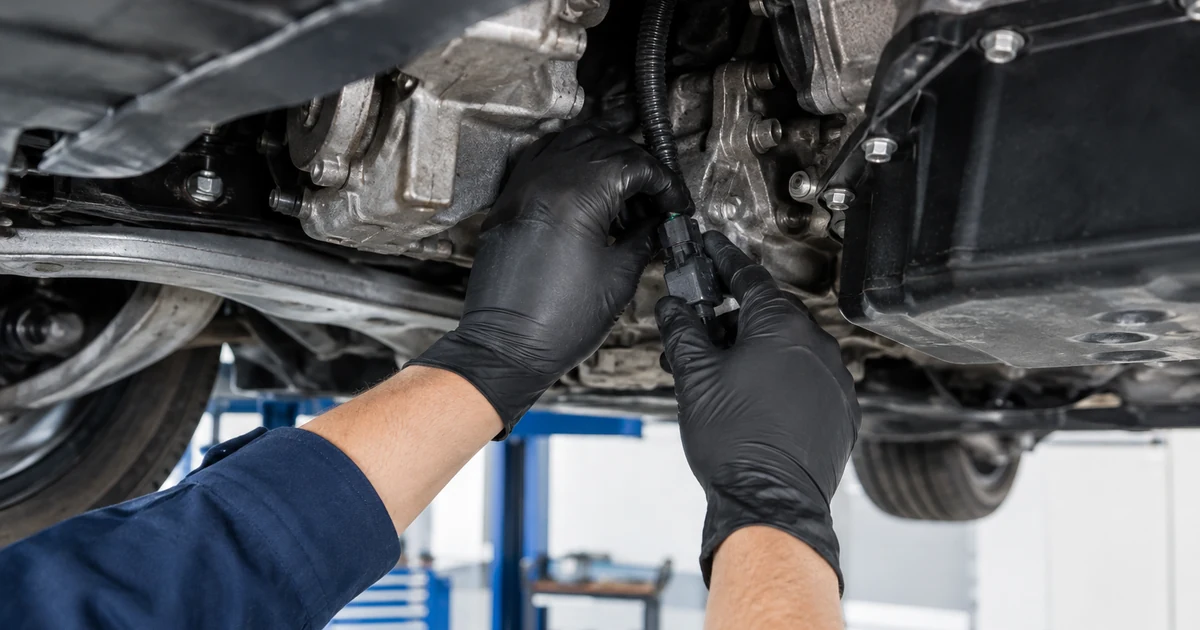
What the P0507 Code Means
P0507 stands for “Idle Air Control System RPM Higher Than Expected.” Every engine has a target idle speed, usually somewhere around 600 to 900 rpm once it’s warm. The engine computer constantly compares the actual idle speed with that target and adjusts the air coming into the engine to keep the two close.
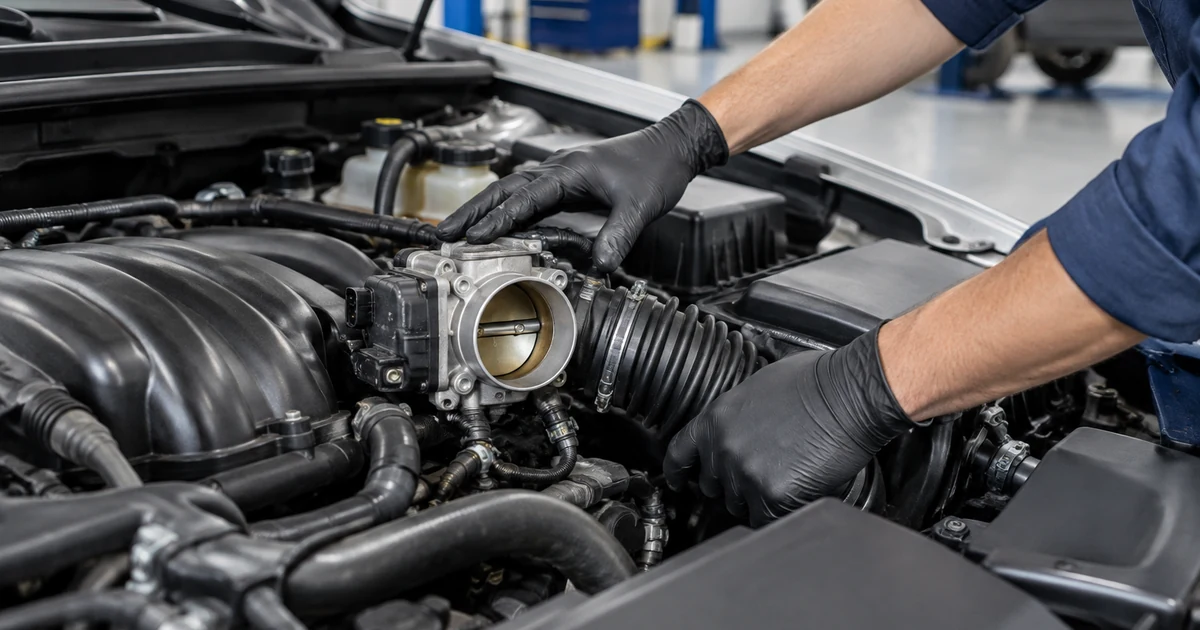
On older vehicles, a separate idle air control (IAC) valve meters the air that bypasses the closed throttle. On most newer vehicles, an electronic throttle body does the job by opening the throttle plate a tiny amount. Either way, when the computer has pulled the air back as far as it can and the idle is still too high for long enough, it sets P0507 and turns on the check engine light.
The exact rpm threshold and test conditions vary by manufacturer, and some vehicles need to see the fault on more than one drive before the light comes on. The meaning is the same: more air is getting into the engine at idle than the computer can account for or control.
P0507 has a mirror-image code, P0506, which means the idle is lower than expected. That usually points to a restriction such as a dirty throttle body, while P0507 more often points to extra air, such as a vacuum leak.
Common Causes of P0507
| Cause | Likelihood | Typical repair cost |
|---|---|---|
| Vacuum leak (cracked hose, loose intake duct, leaking connection) | Most common | $180 – $450 |
| Dirty or sticking throttle body | Very common | $170 – $300 (cleaning) |
| Faulty idle air control valve (older vehicles) | Common | $120 – $500 |
| Idle relearn needed after battery or throttle work | Common | $0 – $150 |
| Stuck PCV valve or cracked PCV hose | Occasional | $90 – $220 |
| Failed electronic throttle body | Occasional | $450 – $900 |
| Leaking intake manifold gasket | Less common | $400 – $1,200 |
| Damaged wiring or connector; rarely the engine computer | Rare | $100 – $400 |
MechanicBase and Edmunds both put vacuum leaks and the idle control system (IAC valve or throttle body) at the top of the list. MechanicBase also flags a step many owners don’t know about: some vehicles need an idle relearn after the battery is disconnected or the throttle body is cleaned, and until it’s done the idle can run high enough to set P0507.
Symptoms of P0507
- Check engine light on
- Idle that sits noticeably high, for example 1,000 to 1,500 rpm on a warm engine
- Idle that stays high after you release the gas pedal, or takes a long time to come down
- Idle that surges up and down (“hunting”)
- The car pushing harder against the brakes than usual when stopped in drive
- A hissing sound under the hood if a vacuum hose has cracked or come off
- Somewhat lower fuel economy
Some drivers notice nothing except the light. A high idle is easiest to spot on the tachometer at a stoplight once the engine has fully warmed up. A high idle for the first minute or two after a cold start is normal and is not P0507.
Is It Safe to Drive With P0507?
For short distances, usually yes, but don’t ignore it. A modestly high idle isn’t an emergency. It does have real downsides:
- Harder to hold the car at a stop. A high idle makes an automatic creep forward with more force. Edmunds warns that it can make the vehicle’s speed harder to control. Keep a firm foot on the brake, and be extra careful in parking lots and stop-and-go traffic.
- Extra wear and fuel use. A high idle wears the brakes and transmission engagement a little harder and burns more fuel.
- Failed emissions test. States that check stored codes will fail the car while P0507 is set.
- A vacuum leak can get worse. A large leak often brings lean codes too, such as P0171 or P0174, and can lead to rough running or stalling.
Stop driving and get help if the engine revs high on its own, the idle races well above 2,000 rpm, the throttle feels stuck, or the car is hard to stop. That’s a safety issue, not just an emissions one. If the check engine light starts flashing, the engine is misfiring badly; see our guide on a flashing check engine light.
How to Diagnose P0507
An OBD2 scanner is the starting point. Read every stored code, save the freeze-frame data and watch live data for actual idle rpm, target idle, throttle position and fuel trims. High positive fuel trims at idle that come down at higher rpm are a classic sign of a vacuum leak.
- Think about recent work. If the battery was just replaced or disconnected, or someone cleaned the throttle body, look up whether your vehicle needs an idle relearn. Some relearn on their own after a few drives; others need a specific key-on, idle-for-a-set-time routine or a scan tool command.
- Check the intake for leaks. Inspect the air duct between the air filter box and the throttle body, every vacuum hose and the PCV hose. Listen for hissing with the engine idling, keeping hands clear of the belt and fan.
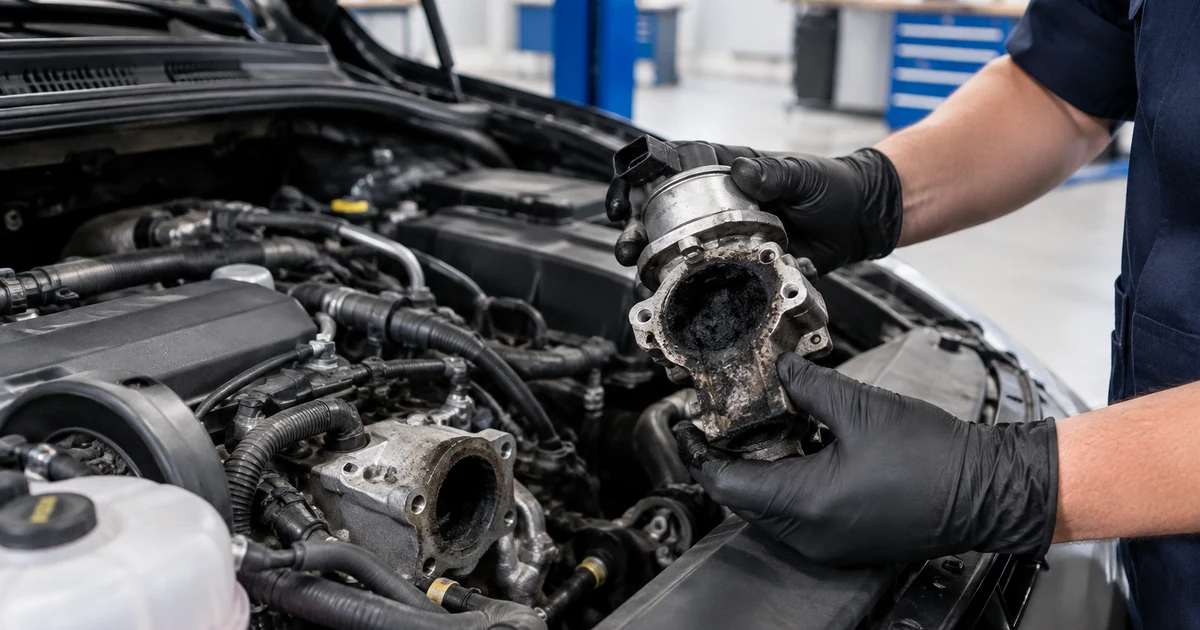
- Inspect the throttle. With the engine off, look for black carbon around the throttle plate. On cable-operated throttles, make sure the cable isn’t binding and the throttle closes fully. MechanicBase cautions against forcing an electronic throttle plate open by hand.
- Test the idle control part. On older vehicles, a scan tool or multimeter can check the IAC valve and its wiring. On electronic throttles, compare commanded and actual throttle position.
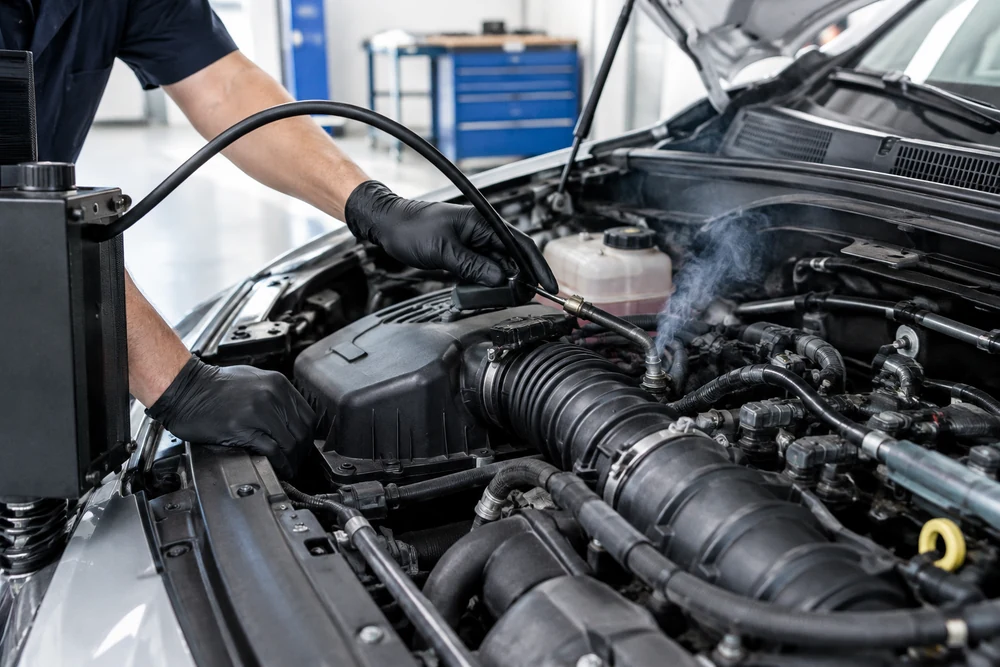
- Smoke test. If no leak is visible, a shop pumps visible smoke into the intake to find it. This is the most reliable way to find a hidden vacuum leak and usually costs $80 to $150.
A shop diagnosis typically runs $100 to $200, and many shops credit it toward the repair.
How to Fix P0507
Work from the cheapest and most likely fixes to the expensive ones:
- Perform the idle relearn if the battery was recently disconnected or the throttle body was serviced. This costs nothing if you do it yourself and often solves the code.
- Reconnect or replace any loose or cracked vacuum hose or intake duct. A hose that popped off during other work is a common surprise.
- Clean the throttle body with throttle body cleaner if carbon is visible, then do the relearn. Many shops charge $170 to $300 for this service.
- Replace the PCV valve or hose if it’s stuck open or cracked.
- Replace the IAC valve on older engines if testing shows it no longer controls idle.
- Replace the throttle body only if it’s confirmed faulty, for example if it fails a commanded-position test or a code like P2111 is also stored.
- Replace the intake manifold gasket if a smoke test shows the leak there.
- Clear the code and confirm that the warm idle stays at spec with the A/C and lights both on and off.
Cost to Fix P0507 by Cause
The cost to fix P0507 ranges from nothing for an idle relearn to about $1,200 for an intake manifold gasket. Most drivers who need a shop repair pay about $300, typically for finding and fixing a vacuum leak, with throttle body cleaning a close second.
| Repair | Parts | Labor | Total at a shop |
|---|---|---|---|
| Diagnosis with scan | — | $100 – $200 | $100 – $200 |
| Idle relearn | — | $0 – $150 | $0 – $150 |
| Wiring or connector repair | $10 – $50 | $90 – $350 | $100 – $400 |
| PCV valve or hose | $10 – $50 | $50 – $170 | $90 – $220 |
| IAC valve | $50 – $250 | $70 – $250 | $120 – $500 |
| Throttle body cleaning | $10 – $20 | $160 – $280 | $170 – $300 |
| Vacuum leak repair with smoke test | $20 – $100 | $160 – $350 | $180 – $450 |
| Throttle body replacement | $250 – $600 | $130 – $300 | $450 – $900 |
| Intake manifold gasket | $40 – $350 | $300 – $850 | $400 – $1,200 |
These figures line up with published estimates. RepairPal puts the average throttle body replacement at about $623 to $766, with most of that in the part. YourMechanic’s sample IAC valve estimates range from about $160 to over $400 depending on the engine, and Jerry lists shop throttle body cleaning at $200 to $300.
What Affects the Price
Where the leak or fault is
A hose or intake duct in plain sight is a quick fix. A leak under the intake manifold, or a gasket on a V6 or V8, takes hours of labor because the manifold has to come off.
Throttle system design
Older engines with a separate IAC valve often get away with a $120 to $500 part swap. Newer drive-by-wire engines put that job in the throttle body, which costs more to replace if cleaning doesn’t help.
Vehicle type and part quality
Trucks and large SUVs have bigger intakes and more hoses, and luxury and European models have pricier throttle bodies. Aftermarket hoses and PCV valves are fine on most cars; for an electronic throttle body, an OEM or OE-quality unit is the safer choice.
Shop type and region
Dealers charge more per hour but have factory relearn procedures. A good independent shop with a smoke machine is usually the best value. Labor rates run highest in the Northeast and on the West Coast.
DIY vs. Taking It to a Shop
An idle relearn or reconnecting a loose hose is a 1 out of 5 job. Cleaning a throttle body or replacing a PCV valve or IAC valve is about 2 out of 5 with basic hand tools and a can of throttle body cleaner. Replacing an electronic throttle body is 2 to 3 out of 5, and an intake manifold gasket is a 4 out of 5 job best left to a shop.
Spray cleaner only on a throttle body with the engine off and, on electronic units, follow the service manual so you don’t damage the motor. If a careful inspection turns up nothing, a smoke test is usually cheaper than replacing parts by guesswork.
Is It Worth Fixing?
Yes, in nearly every case. Most P0507 repairs cost a few hundred dollars, far less than the car’s value even on an older vehicle. Fixing it brings back normal fuel economy, makes the car easier to control at a stop, lets you pass an emissions test and frees the check engine light to warn you about the next real problem. Only an intake gasket job on a very low-value car might be worth weighing against the car’s worth.
How to Save Money on P0507
- Do the idle relearn first if the battery or throttle body was recently serviced.
- Get a free code scan at an auto parts store, and note any other codes stored with P0507.
- Look for loose hoses if the code appeared after recent repair work.
- Try a cleaning before a new part. A dirty throttle body is far cheaper to clean than replace.
- Pay for a smoke test before parts if the leak isn’t obvious.
- Use an independent shop for IAC valve, PCV and throttle body work.
- Bundle intake work. If the intake manifold comes off for a gasket, ask about spark plugs on engines where they sit underneath.
Related Codes
- P0505 — Idle air control system malfunction
- P0506 — Idle air control system RPM lower than expected
- P0171 / P0174 — System too lean, often from the same vacuum leak; see our P0171 guide
- P2111 — Throttle actuator control system stuck open
- P0121 — Throttle position sensor range or performance problem
Frequently Asked Questions
What does code P0507 mean?
P0507 means “Idle Air Control System RPM Higher Than Expected.” The engine computer tried to bring the idle down to its target but couldn’t, usually because extra air is leaking into the engine or the idle control part (IAC valve or electronic throttle) isn’t working properly.
What is the most common cause of P0507?
A vacuum leak is the most common cause, followed by a dirty or sticking throttle body and a faulty idle air control valve on older vehicles. If the code appeared right after battery work, a missed idle relearn is a strong suspect.
How much does it cost to fix a P0507 code?
An idle relearn can be free if you do it yourself. At a shop, a vacuum leak repair runs about $180 to $450, throttle body cleaning $170 to $300, an IAC valve $120 to $500 and a new throttle body $450 to $900. An intake manifold gasket can reach $1,200.
Can I drive with a P0507 code?
For short trips, usually yes, but get it fixed soon. A high idle makes an automatic creep harder at stops, so keep a firm foot on the brake. If the engine races on its own or the car is hard to stop, don’t drive it.
Can a dirty throttle body cause P0507?
Yes. Carbon buildup can keep the throttle plate from closing to the right position, and the computer may not be able to compensate. Cleaning the throttle body and then running the idle relearn often fixes it.
Will disconnecting the battery cause P0507?
It can on some vehicles. Disconnecting the battery erases the learned idle settings, and until the computer relearns them the idle may run high. Many vehicles relearn after a few drives, while others need a specific procedure or scan tool.