Ignition Coil Replacement Cost by Vehicle
On most modern engines, each spark plug has its own coil sitting right on top of it. Replacing one of those coils is usually a quick job. The price climbs when the coil is buried at the back of a sideways-mounted V6, or when the engine uses an expensive OEM coil.
| Vehicle (engine) | Parts (one coil) | Labor | Total at a shop |
|---|---|---|---|
| Honda Civic (2.0L / 1.5L turbo) | $60 – $130 | $50 – $90 | $130 – $220 |
| Honda Accord (1.5L turbo) | $60 – $140 | $50 – $100 | $140 – $240 |
| Honda CR-V (1.5L turbo) | $60 – $140 | $50 – $100 | $140 – $240 |
| Toyota Camry (2.5L 4-cyl) | $70 – $160 | $50 – $100 | $150 – $260 |
| Toyota RAV4 (2.5L 4-cyl) | $70 – $160 | $50 – $100 | $150 – $260 |
| Chevrolet Silverado 1500 (5.3L V8) | $70 – $150 | $60 – $110 | $180 – $260 |
| Ford F-150 (3.5L EcoBoost / 5.0L V8) | $90 – $200 | $80 – $170 | $250 – $380 |
| Chevrolet Equinox (1.5L turbo) | $60 – $140 | $60 – $110 | $150 – $260 |
| Nissan Altima (3.5L V6, rear coil) | $80 – $180 | $200 – $450 | $350 – $650 |
| Jeep Grand Cherokee (3.6L V6, rear coil) | $70 – $160 | $200 – $400 | $300 – $600 |
| Toyota Highlander (3.5L V6, rear coil) | $80 – $180 | $200 – $400 | $320 – $620 |
| BMW 3 Series (2.0L turbo) | $80 – $180 | $60 – $140 | $200 – $380 |
These are estimates for one coil on common model years and engines at independent shops. “Rear coil” means the coil sits on the bank against the firewall, under the intake plenum. Front-bank coils on the same V6 engines cost about the same as a four-cylinder job. Electric cars like the Tesla Model 3 have no ignition coils.
Cost Breakdown: Parts vs. Labor
Ignition coil prices
- Aftermarket coil-on-plug: roughly $35–$100 each for common engines. Quality varies a lot between brands.
- OEM coil: often $80–$200 each, and more on some European and performance engines.
- Coil pack (older engines): one block that fires several cylinders through plug wires. It’s replaced as a unit, typically $70–$250 for the part.
AutoZone notes that coils on common models can cost as little as $35 each, while some run $300 or more for a single coil.
Labor
On an engine where the coils sit on top, a shop needs about 0.3–1 hour, often including a quick misfire check. At independent rates of about $110–$150 an hour, that’s roughly $50–$150 of labor. Rear-bank coils on a transverse V6 can take 2–3 hours because the intake plenum has to come off.
Many shops also charge a diagnostic fee, commonly around one hour of labor, to confirm which cylinder is misfiring. Some waive it if you approve the repair.
| Where you go | One coil | Notes |
|---|---|---|
| Dealer | $250 – $500 | OEM coil, higher labor rate, diagnostic fee likely |
| Independent shop | $160 – $360 | OEM or quality aftermarket coil |
| DIY | $35 – $200 | Part only; most coil-on-plug jobs need basic hand tools |
What Affects the Price
Engine layout
This is the biggest factor. On most four-cylinders, straight-sixes and trucks with the V8 mounted lengthwise, every coil is easy to reach. On front-wheel-drive cars and crossovers with a sideways V6, the rear three coils sit under the intake plenum. Removing it adds hours, new gaskets and a much higher bill.
How many coils you replace
Replacing one failed coil is the most common job. Replacing a full set of six or eight costs more in parts, but the labor per coil drops because the engine is already open. A full set on a V6 typically runs $450–$950 at an independent shop.
Coil quality
RepairPal recommends ignition parts built to OEM standards or better, since cheap coils can fail early and bring the misfire right back. A mid-priced aftermarket coil from a known brand, or the OEM part, is usually the safest choice.
Shop type and region
Dealers charge higher labor rates and use OEM parts. Shops in the Northeast and on the West Coast also tend to charge more. Use the region setting in the estimator above to adjust.
Spark plugs replaced at the same time
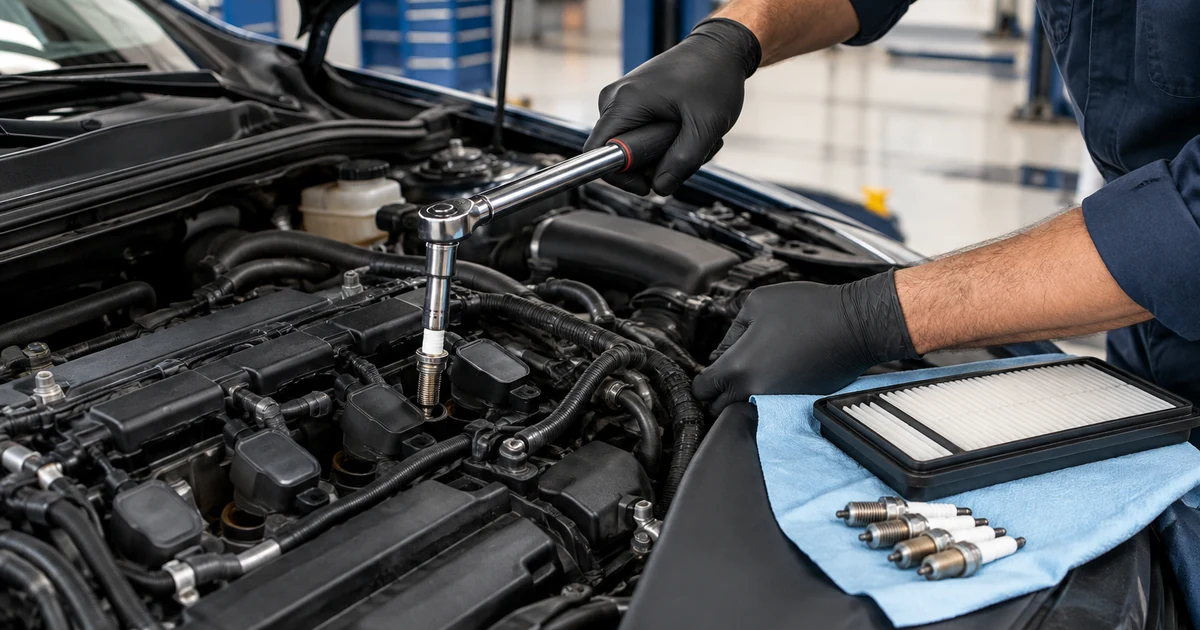
If your plugs are near or past their service interval, replacing them while the coils are out adds only the cost of the plugs and a little labor. A worn plug can also overload a coil and cause it to fail. See our spark plug replacement cost guide for plug prices.
Symptoms of a Bad Ignition Coil
- Check engine light, usually with a cylinder-specific misfire code such as P0301–P0308
- Flashing check engine light under load
- Rough idle or engine shaking
- Hesitation or stumbling when you accelerate
- Loss of power and worse fuel economy
- Hard starting or stalling in some cases
Worn spark plugs, bad plug wires and some fuel problems cause the same symptoms, so a proper diagnosis matters. A common trick is to swap the suspect coil to another cylinder: if the misfire moves with it, the coil is the problem. Our P0300 code guide explains how misfires are diagnosed.
Can You Drive With a Bad Ignition Coil?
For a short distance with a mild misfire, usually yes, but don’t put it off. A dead coil means one cylinder isn’t firing. Unburned fuel from that cylinder goes into the exhaust and can overheat the catalytic converter. Replacing a converter costs far more than a coil; see our catalytic converter replacement cost guide.
If the check engine light is flashing, ease off, avoid hard acceleration and get it checked soon. A car with a severe misfire can hesitate badly when merging or passing, which is a real safety concern.
DIY vs. Taking It to a Shop
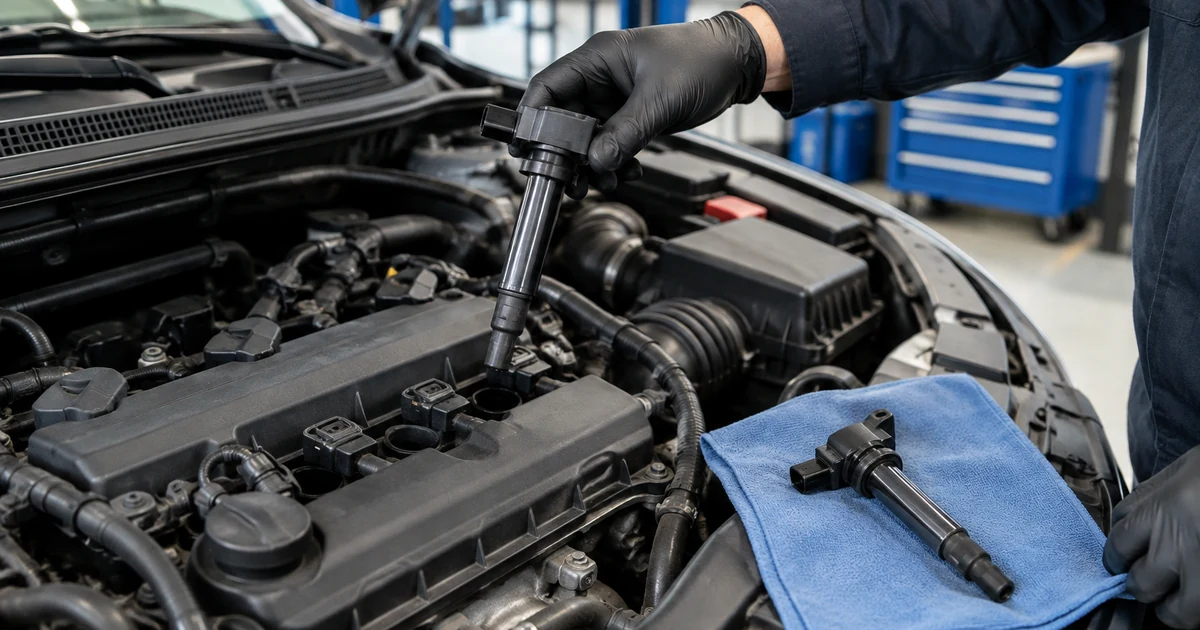
Difficulty: 1–2 out of 5 on engines with coils on top, 4 out of 5 for rear-bank coils under the intake. On an easy engine, you disconnect the electrical connector, remove one or two small bolts, pull the coil out and push the new one in. Budget 15–30 minutes and a basic socket set.
A cheap OBD2 scanner helps you read the misfire code and confirm the fix. Put a small dab of dielectric grease inside the coil boot so it seals and comes off easily next time.
Leave rear-bank V6 coils to a shop unless you’ve removed an intake plenum before. The gaskets must seal properly or you’ll create a vacuum leak.
Is It Worth Fixing?
Almost always. A single coil is one of the cheaper repairs on a modern engine, and ignoring a misfire can damage the catalytic converter. Even on an older, high-mileage car worth a couple of thousand dollars, a $160–$360 coil repair makes sense.
The only time to think twice is if the car has major problems elsewhere, such as a failing transmission, and the misfire is one of many issues. In that case, get a full inspection before spending money on any single repair.
Oil in the spark plug wells is a common reason coils fail early. If the shop finds oil on the coil boots, the valve cover gasket or tube seals are likely leaking, and fixing that protects the new coil. See our valve cover gasket replacement cost guide.
How to Save Money on Ignition Coil Replacement
- Read the code yourself first. Many auto parts stores scan codes for free, or you can use your own OBD2 scanner.
- Replace only the failed coil unless there’s a clear reason to do the set.
- Use an independent shop instead of a dealer on out-of-warranty cars.
- Choose a quality aftermarket coil rather than the cheapest one, so you don’t pay for the job twice.
- Bundle with spark plugs if they’re due, since the coils already have to come out.
- Ask whether the diagnostic fee is credited toward the repair.
- Get a second quote on rear-bank V6 jobs, where prices vary most.
Frequently Asked Questions
How much does it cost to replace an ignition coil?
Most drivers pay $160 to $360 for one coil at an independent shop, with about $250 being typical. Rear-bank coils on transverse V6 engines can cost $300 to $650 because the intake plenum has to come off.
Should I replace all ignition coils at once?
Usually not. Coil-on-plug systems let you replace just the failed coil. Replacing the full set makes more sense if a second coil fails, the coils are cracked or oil-soaked, or the intake is already off on a V6.
How long do ignition coils last?
Many coils last 100,000 miles or more, often outliving several sets of spark plugs. Heat, oil leaks into the plug wells and worn spark plugs are common reasons they fail sooner.
Can a bad ignition coil damage my engine?
A misfiring cylinder sends unburned fuel into the exhaust, which can overheat and damage the catalytic converter. It can also wash oil off the cylinder walls over time. That’s why a flashing check engine light should be addressed promptly.
How do I know if it's the coil or the spark plug?
Swap the suspect coil with one from another cylinder and clear the code. If the misfire follows the coil to the new cylinder, the coil is bad. If it stays on the original cylinder, check the spark plug and fuel injector.
Is replacing an ignition coil easy?
On most engines where the coils sit on top, yes. It usually takes 15 to 30 minutes with a basic socket set. Coils hidden under the intake on some V6 engines are a much harder job best left to a shop.