Starter Replacement Cost by Vehicle
Where the starter sits decides most of the bill. On many sedans it bolts to the side of the engine and comes out from above or below in an hour or two. On some V8 trucks the starter lives in the valley under the intake manifold, and labor can run five or six hours.
| Vehicle | Parts | Labor | Total at a shop |
|---|---|---|---|
| Ford F-150 | $180 – $400 | $120 – $250 | $300 – $650 |
| Chevrolet Silverado 1500 | $250 – $500 | $200 – $450 | $450 – $950 |
| Toyota Camry | $200 – $400 | $150 – $300 | $350 – $700 |
| Toyota RAV4 | $200 – $450 | $150 – $300 | $350 – $750 |
| Toyota Tundra (V8) | $250 – $500 | $500 – $900 | $750 – $1,400 |
| Honda Civic | $200 – $500 | $150 – $300 | $350 – $800 |
| Honda Accord | $180 – $450 | $120 – $250 | $300 – $700 |
| Honda CR-V | $200 – $450 | $150 – $300 | $350 – $750 |
| Nissan Altima | $180 – $450 | $150 – $350 | $330 – $800 |
| Chevrolet Equinox | $200 – $450 | $150 – $350 | $350 – $800 |
| Jeep Grand Cherokee | $200 – $500 | $200 – $500 | $400 – $1,000 |
| BMW 3 Series | $350 – $700 | $300 – $700 | $650 – $1,400 |
These are estimates for common model years and engines at independent shops. Newer model years usually cost more than older ones, and dealer quotes can run 25–40% higher.
Many hybrids, including most Toyota hybrids, don’t use a conventional starter; the hybrid system’s motor-generator spins the engine. Fully electric cars like the Tesla Model 3 have no starter at all.
Cost Breakdown: Parts vs. Labor
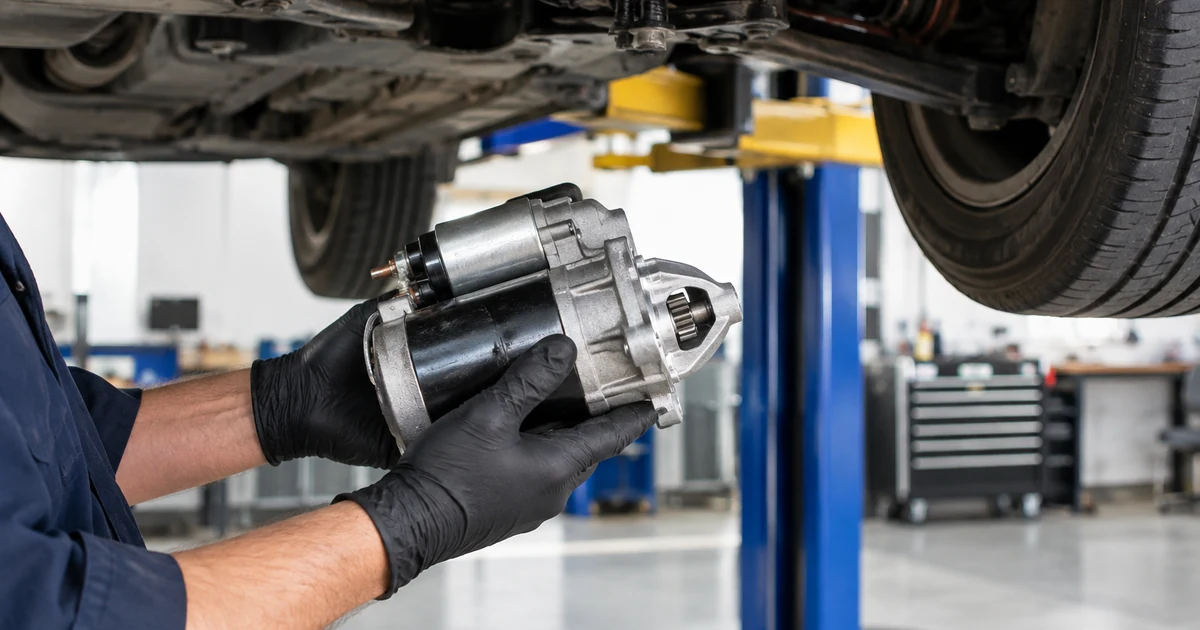
The starter motor
- Remanufactured: the industry standard for out-of-warranty repairs. Many cars fall around $120–$300 at parts stores.
- New aftermarket: a bit more than reman for most vehicles.
- OEM (dealer): often $300–$500 for mainstream models and $600 or more for BMW, Mercedes-Benz and similar vehicles.
As with alternators, there’s usually a refundable core charge when you buy the part yourself.
Labor
Accessible starters take about 1 to 2 hours. Hard-to-reach ones take 3 to 6 hours, and a few luxury vehicles run even longer. With independent-shop rates around $110–$150 an hour and dealer rates around $150–$220, labor usually lands between $150 and $400, with outliers well above that.
| Where you go | Typical total | What you get |
|---|---|---|
| Dealer | $650 – $1,300 | OEM part, highest labor rate |
| Independent shop | $400 – $900 | Reman or aftermarket part, lower labor rate |
| DIY | $120 – $400 | Part only (plus core charge), your time and tools |
What Affects the Price
Starter location and engine layout
This is the big one. A starter mounted low on the side of the block is a quick job from underneath. Some Toyota and Lexus V8 engines, and certain GM and European designs, put the starter under the intake manifold. Removing and resealing the intake can triple the labor.
When you get a quote, ask the shop how many labor hours they’re billing and why. If one shop quotes two hours and another quotes five for the same car, the difference is usually whether the intake or exhaust has to come off. Both can be honest; the higher quote should be able to explain what’s in the way.
Part quality
A good reman starter with a lifetime or multi-year warranty is usually the best value. The cheapest no-name units are more likely to fail early, and a second replacement wipes out the savings.
Shop type and region
Dealers charge the highest labor rates. Independent shops and mobile mechanics are usually cheaper. Labor rates are also higher in the Northeast and on the West Coast than in the South and Midwest.
Related parts
A worn battery cable, corroded ground, or failing ignition switch can all cause no-crank symptoms. A shop may recommend replacing a damaged cable while the starter is out. In rare cases, a starter that has been grinding damages the teeth on the flywheel or flexplate, which is a far more expensive repair because the transmission may need to come out.
Diagnosis
Expect a diagnostic charge at many shops if the cause isn’t obvious. It’s money well spent: a weak battery is the most common reason a car clicks and won’t start, and it costs far less than a starter.
Symptoms of a Bad Starter
- A single loud click when you turn the key or press start, but no cranking
- Rapid clicking (often a weak battery rather than the starter)
- Grinding or whirring noise while starting
- Engine cranks slowly even with a good, fully charged battery
- Intermittent no-start that sometimes goes away after a few tries
- Smoke or burning smell from under the car after repeated start attempts
Before blaming the starter, have the battery and cables tested. If the dash lights dim sharply when you try to start, the battery or connections are the likely cause.
Can You Drive With a Bad Starter?
Once the engine is running, a failing starter doesn’t affect how the car drives. The problem is getting it started again. You risk being stranded at the next stop, so treat it as a repair to schedule soon rather than an emergency.
If you hear grinding while the engine is running, or the starter keeps spinning after the engine starts, shut the car off and get it checked. A starter that stays engaged can overheat and damage the flywheel. Never try to start a car by shorting across the starter terminals with a screwdriver; it can cause burns or let the car move unexpectedly if it’s in gear.
DIY vs. Taking It to a Shop
Difficulty: 2–5 out of 5, depending entirely on location. On many cars, the starter is held by two or three bolts and one or two electrical connections, and a confident DIYer with jack stands and a socket set can finish in 1–3 hours.
The basic steps: disconnect the negative battery cable, raise and support the car safely, disconnect the wiring, remove the mounting bolts, install the new starter, and reconnect everything. The main battery cable to the starter is live at all times, so disconnecting the battery first is not optional.
Leave it to a shop if the starter is under the intake manifold, requires removing exhaust or suspension parts, or if you don’t have a safe way to work under the car. Jack stands on level ground are the minimum; never work under a car held up only by a jack.
Is It Worth Fixing?
Usually yes. A starter is a mid-priced repair, and a car that can’t start is worth very little. Even on a high-mileage car worth $2,000–$3,000, a $400–$700 starter job typically makes sense if the rest of the car is sound.
Starters also tend to fail at the same mileage where other wear items come due, so a starter job is a good moment to ask the shop to look over belts, hoses, battery age and fluid leaks while the car is on the lift. That quick look can help you plan the next year of repairs instead of being surprised by them.
The only time to pause is on an expensive intake-removal job on an older vehicle with other major problems. Get a full inspection and weigh the total repair bill against the car’s value before committing.
How to Save Money on Starter Replacement
- Rule out the battery first. Free battery and starter testing at a parts store can save you hundreds.
- Clean the connections. Corroded terminals and loose grounds cause many “bad starter” complaints.
- Pick a reman starter with a good warranty instead of an OEM unit.
- Use an independent shop rather than a dealer for out-of-warranty cars.
- Check your warranty. Bumper-to-bumper coverage on newer cars often includes the starter.
- Return the core if you buy the part yourself.
- Ask about bundled work. If the intake must come off, ask whether any related maintenance, like spark plugs on some engines, can be done for little extra labor.
If your car clicks but the starter tests good, start with our car battery replacement cost guide. If the battery keeps dying, the alternator may be the real problem. And if nothing happens at all when you press the button, a failing key fob or its battery is worth checking.
Frequently Asked Questions
How much does it cost to replace a starter?
Most drivers pay $400 to $900 at an independent shop, with about $600 being typical. Trucks with starters under the intake manifold and luxury European cars can cost $1,000 to $1,500 or more. Doing it yourself usually costs $120 to $400 for the part.
How long does it take to replace a starter?
On most cars, 1 to 2 hours. Starters that require removing exhaust parts take longer, and those located under the intake manifold can take 4 to 6 hours of labor.
How long do starters last?
Starters commonly last 100,000 to 150,000 miles. Lots of short trips mean more starts per mile, which can wear them out sooner, while mostly highway driving tends to extend their life.
Is it the starter or the battery?
Rapid clicking, dim dash lights and slow cranking usually point to the battery or its cables. A single click with bright dash lights, or a grinding noise, points more toward the starter. A free test at a parts store can confirm which one it is.
Can a starter be repaired instead of replaced?
Starters can be rebuilt, and remanufactured starters are exactly that. For most drivers, swapping in a reman unit with a warranty is cheaper and faster than paying a shop to rebuild the original.
Does tapping the starter really work?
Sometimes. Tapping a starter can temporarily free up worn brushes or a sticking solenoid and get you home. It’s a sign the starter is failing, so plan to replace it soon.
Is a starter covered under warranty?
Starters are usually covered by a new car’s bumper-to-bumper warranty but not by most powertrain-only warranties. Some extended service contracts include them, so check your paperwork before paying out of pocket.