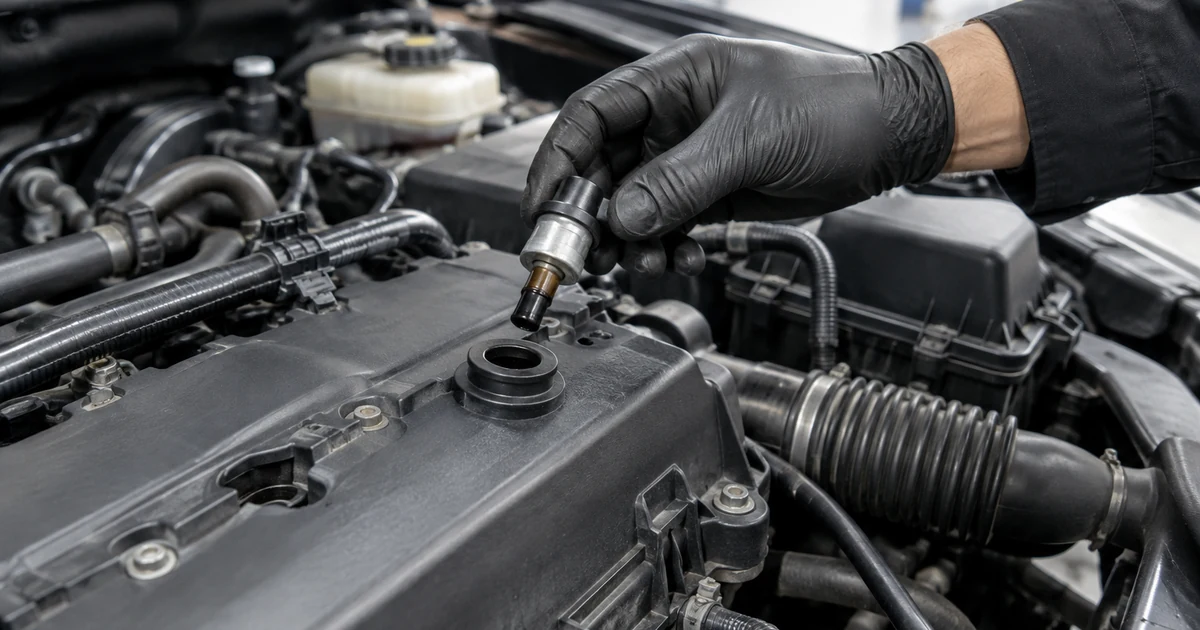
PCV Valve Replacement Cost by Vehicle
The PCV (positive crankcase ventilation) valve is one of the cheapest parts on an engine, often $10–$40. On many cars it pushes into a rubber grommet on the valve cover and takes minutes to change. On others it’s buried under the intake manifold, or built into the valve cover itself, and that’s where the price jumps.
| Vehicle (engine) | Parts | Labor | Total at a shop |
|---|---|---|---|
| Ford F-150 (5.0L V8) | $15 – $40 | $50 – $70 | $70 – $110 |
| Nissan Altima (2.5L 4-cyl) | $15 – $35 | $55 – $70 | $75 – $100 |
| Honda Accord (4-cyl) | $20 – $40 | $70 – $80 | $90 – $120 |
| Chevrolet Silverado 1500 (5.3L V8) | $20 – $40 | $75 – $100 | $95 – $140 |
| Honda Civic (4-cyl) | $20 – $40 | $75 – $100 | $100 – $140 |
| Honda CR-V (4-cyl) | $20 – $40 | $80 – $90 | $100 – $130 |
| Toyota Corolla (1.8L 4-cyl) | $25 – $50 | $190 – $270 | $220 – $320 |
| Toyota Camry (3.5L V6, under intake) | $25 – $50 | $290 – $410 | $310 – $460 |
| BMW 3 Series (PCV built into valve cover) | $150 – $450 | $300 – $650 | $500 – $1,100 |
These are estimates for common model years and engines at independent shops, and they vary a lot by generation. Some engines use a simple orifice or oil separator instead of a replaceable valve, and electric cars like the Tesla Model 3 have no crankcase ventilation system at all. Ask your shop how the PCV system on your specific engine is serviced.
Cost Breakdown: Parts vs. Labor
Parts
- Aftermarket PCV valve: often $5–$25.
- OEM PCV valve: usually $15–$50.
- PCV hoses and grommet: $10–$60 if cracked or brittle.
- Valve cover with integrated PCV: $150–$450 or more on many European engines, where the valve can’t be replaced on its own.
Labor
On engines where the valve is on top, a shop usually charges 0.3–0.7 hour, often a minimum charge. At independent rates of about $110–$150 an hour, that’s roughly $50–$110. When the intake manifold has to come off, labor rises to 2–3 hours or more. RepairPal’s national average is about $91–$134 in labor and $32–$39 in parts.
| Where you go | Easy-access valve | Notes |
|---|---|---|
| Dealer | $130 – $300 | OEM valve, higher rate or minimum charge |
| Independent shop | $90 – $220 | OEM or aftermarket valve |
| DIY | $10 – $50 | Part only; often no tools needed |
What Affects the Price
Where the valve sits
This decides almost everything. Many trucks and older four-cylinders have the valve in the valve cover, reachable in seconds. Some Toyota and other engines place it under the intake manifold, which is why RepairPal lists the Camry and Corolla well above the national average.
Integrated PCV systems
Many European engines, and some newer domestic ones, build the PCV valve or oil separator into the valve cover. When the diaphragm fails, the whole cover is replaced, making this a job similar to our valve cover gasket replacement cost guide rather than a $100 fix.
Vehicle type
Autowner’s data shows luxury and European vehicles averaging roughly twice what economy cars pay, mainly because of pricier parts and longer labor. Trucks and SUVs sit in between.
Part quality
The valve is cheap enough that there’s little reason to skip the OEM or a known-brand part. Very cheap valves can have weak springs that don’t regulate flow properly.
Shop type and region
Dealers and shops in high-cost areas often charge a minimum labor fee even for a 10-minute job. Use the region setting in the estimator above to adjust.
Hoses and related repairs
PCV hoses get brittle with heat and age and often crack at the same time the valve clogs. If you see oil leaks from the valve cover or oil pan, a clogged PCV system may be the cause: pressure builds in the crankcase and pushes oil past gaskets and seals.
What the PCV valve actually does
Every engine lets a little combustion gas slip past the piston rings into the crankcase. The PCV system draws those “blow-by” gases back into the intake so they’re burned instead of vented to the air. The valve meters that flow based on engine vacuum. When it clogs with sludge or sticks, the balance is lost: too little flow builds pressure and moisture in the crankcase, and too much flow acts like a vacuum leak.
Symptoms of a Bad PCV Valve
- Rough idle or a high, unstable idle
- Check engine light with lean codes like P0171 or P0174 (valve stuck open or hose cracked)
- Whistling or hissing sound from the engine
- Increased oil consumption, or oil in the air filter housing
- Blue or gray smoke from the exhaust
- New oil leaks around seals and gaskets (valve stuck closed)
- Sludge under the oil filler cap
A PCV valve stuck open or a cracked PCV hose acts like a vacuum leak. Our P0171 code guide explains how shops tell the difference between PCV problems and other lean causes, such as a leaking intake manifold gasket.
Can You Drive With a Bad PCV Valve?
Usually yes, for a short time. It’s rarely an emergency, but it’s not something to ignore. A stuck-closed valve lets crankcase pressure build, which can blow out seals and cause oil leaks. A stuck-open valve makes the engine run lean and can draw oil into the intake, raising oil consumption and fouling spark plugs.
If you see heavy smoke, the oil level is dropping quickly, or oil is leaking onto hot exhaust parts, stop driving and get it looked at. Oil on a hot exhaust can start a fire.
DIY vs. Taking It to a Shop
Difficulty: 1 out of 5 when the valve is on the valve cover, 4 out of 5 when it’s under the intake manifold, and 3 out of 5 for an integrated valve cover. On the easy version, you pull the hose off, twist or pull the old valve out of its grommet, push the new one in and reattach the hose. It takes about 10–20 minutes, sometimes with pliers for a hose clamp.
A quick check: with the engine off, remove the valve and shake it. A good valve rattles. A silent valve is likely stuck. Inspect the grommet and hoses while you’re there, and replace anything cracked or soft.
Is It Worth Fixing?
Absolutely. On most cars this is one of the cheapest repairs you’ll ever pay for, and it protects the engine from oil leaks and sludge. Even on a very old car, a $90–$220 repair is an easy yes.
On engines where the valve is integrated into the valve cover, the bill is higher, but ignoring it can lead to oil consumption, leaks and rough running. On a low-value car, get a quote and weigh it against the car’s other needs.
How often to replace it depends on the engine. AutoNation Mobile Service says PCV valves typically last 20,000 to 50,000 miles, while many owner’s manuals simply call for inspection at set intervals. Following your maintenance schedule is the safest guide.
How to Save Money on PCV Valve Replacement
- Find out where your valve is. If it’s on the valve cover, it’s a 15-minute DIY job.
- Buy the OEM or a known-brand valve online or at a parts store for a few dollars more than the cheapest.
- Bundle it with an oil change so you only pay a small add-on charge.
- Replace hoses only if they’re cracked or soft.
- Use an independent shop rather than a dealer for out-of-warranty cars.
- Get a second quote for integrated valve cover jobs, where prices vary most.
Many shops can check the PCV valve during routine service; see our oil change cost guide for typical service prices.
Frequently Asked Questions
How much does it cost to replace a PCV valve?
Most drivers pay $90 to $220 at an independent shop, with about $150 being typical. The valve itself costs $10 to $50. Engines with the valve under the intake manifold can cost $220 to $460, and European engines with the PCV built into the valve cover often cost $500 or more.
How often should a PCV valve be replaced?
Follow your owner’s manual. AutoNation Mobile Service says PCV valves typically last 20,000 to 50,000 miles. Many manufacturers call for periodic inspection rather than a fixed replacement interval.
What are the signs of a bad PCV valve?
Common signs include rough idle, a whistling noise, higher oil consumption, blue or gray exhaust smoke, oil leaks and lean codes like P0171. Sludge under the oil filler cap can also point to a clogged PCV system.
Can a bad PCV valve cause oil leaks?
Yes. When the valve sticks closed, pressure builds inside the crankcase and can push oil past gaskets and seals. Replacing the valve early can prevent more expensive gasket repairs.
Can I replace a PCV valve myself?
On many engines, yes. If the valve sits in a grommet on the valve cover, it takes 10 to 20 minutes and usually no special tools. If it’s under the intake manifold or built into the valve cover, a shop is the better choice for most people.
Can a bad PCV valve cause a check engine light?
Yes. A valve stuck open or a cracked PCV hose lets unmetered air into the engine, which often sets lean codes like P0171 or P0174. It can also cause idle-related codes on some vehicles.