Fuel Pump Replacement Cost by Vehicle
The table below shows typical shop prices for popular US models. Most modern cars and trucks use an in-tank fuel pump module, so the bill is mostly the part itself plus two to four hours of labor to reach it.
| Vehicle | Parts | Labor | Total |
|---|---|---|---|
| Ford F-150 | $550 – $1,150 | $300 – $550 | $900 – $1,600 |
| Chevy Silverado 1500 | $500 – $1,050 | $300 – $500 | $850 – $1,450 |
| Toyota Camry | $650 – $1,250 | $250 – $450 | $950 – $1,650 |
| Toyota Corolla | $600 – $1,200 | $250 – $450 | $900 – $1,600 |
| Toyota RAV4 | $600 – $1,200 | $250 – $450 | $900 – $1,600 |
| Honda Civic | $600 – $1,200 | $250 – $400 | $900 – $1,550 |
| Honda Accord | $500 – $1,150 | $250 – $400 | $800 – $1,500 |
| Honda CR-V | $500 – $950 | $250 – $350 | $800 – $1,250 |
| Nissan Altima | $500 – $900 | $250 – $350 | $800 – $1,250 |
| Chevy Equinox | $450 – $950 | $250 – $450 | $750 – $1,400 |
| Jeep Wrangler | $550 – $1,150 | $350 – $600 | $950 – $1,700 |
| Jeep Grand Cherokee | $550 – $1,150 | $350 – $600 | $950 – $1,700 |
| BMW 3 Series | $700 – $1,700 | $300 – $600 | $1,000 – $2,300 |
These are estimates for common model years and engines. The low end reflects an independent shop using a quality aftermarket module; the high end reflects OEM parts or dealer labor. Some model years run noticeably higher or lower, so check a quote against the estimator above.
Cost Breakdown: Parts vs. Labor
On most vehicles the part is the bigger half of a fuel pump replacement cost. National estimates put parts at roughly $500 to $1,100 and labor at roughly $250 to $650, which is why most drivers land somewhere around $1,000 to $1,500.
Parts: module vs. pump only
- Complete fuel pump module (pump, fuel level sender, strainer, housing): the most common repair and what most shops install. Aftermarket modules often cost $200 to $600; OEM modules can run $500 to $1,100 or more.
- Pump only: on some vehicles the pump can be swapped into the old housing for less money. It saves on parts but reuses an old sender and wiring, so many shops will not warranty it.
- High-pressure pump: gasoline direct-injection (GDI) engines also have an engine-mounted high-pressure pump driven by the camshaft. It is a separate part, often pricier than the in-tank pump, and fails with different symptoms.
Remanufactured fuel pumps are uncommon. Most shops install new aftermarket or OEM units because a failed pump means a tow and a second labor bill.
Labor: access panel vs. dropping the tank
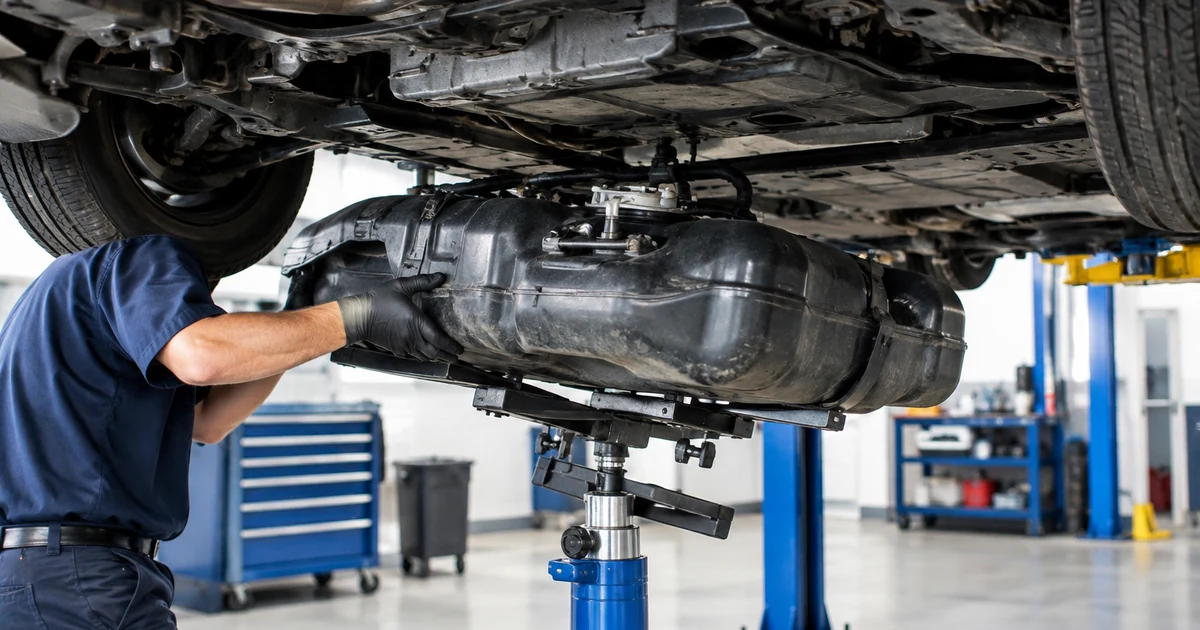
Labor time usually runs 2 to 4 hours. Many cars have an access panel under the rear seat, which keeps the job near the short end. Most trucks and many SUVs need the fuel tank lowered, or the bed lifted on pickups, which adds time. At $110 to $150 per hour at an independent shop and $150 to $220 per hour at a dealer, that works out to about $250 to $650 in labor.
| Where | Typical total | Notes |
|---|---|---|
| Dealer | $1,300 – $2,200 | OEM module, highest labor rate, usually the longest warranty |
| Independent shop | $900 – $1,700 | Choice of OEM or quality aftermarket parts |
| DIY | $250 – $850 | Parts only; requires safe fuel handling and often dropping the tank |
What Affects Fuel Pump Replacement Cost
Vehicle type and tank layout
Whether the pump is reachable through an access panel or requires dropping the tank is the biggest labor variable. Pickups, body-on-frame SUVs, and all-wheel-drive vehicles with exhaust or driveshafts in the way take longer. Some vehicles use two pumps or a saddle-style tank with a secondary sender.
Part quality
OEM modules cost more but match the original flow rate and fuel level readings. Economy aftermarket pumps are the cheapest and the most likely to cause a gauge that reads wrong or an early repeat failure.
Shop type
Dealers charge the most per hour and almost always use OEM parts. Independent shops typically charge less and let you pick the part grade.
Region
Labor rates in the Northeast and on the West Coast run well above the South and Midwest, which can move the total by a couple of hundred dollars on the same car.
Related parts
Shops often recommend a new lock ring and seal, and on older vehicles an external fuel filter. If the tank is rusted or the filler neck is damaged, those can add to the bill once the tank is down.
Symptoms of a Bad Fuel Pump
- Engine cranks but will not start, especially after sitting or on a hot day.
- Sputtering or loss of power at highway speed, under load, or climbing hills.
- Hesitation when accelerating, or stalling that goes away after the car cools.
- A loud whine or hum from the rear of the car near the tank.
- Check engine light, often with lean codes such as P0171 or misfire codes.
- Fuel gauge that reads wrong, since the level sender is part of the module.
Lean and misfire codes have many possible causes. See our guides to the P0171 code and the P0300 misfire code before assuming the pump is at fault.
How a shop diagnoses a fuel pump
A proper diagnosis usually starts with a scan for trouble codes, then a fuel pressure test at the fuel rail with the engine running and under load. The technician also checks that the pump is getting full voltage and a good ground, and tests the fuel pump relay, fuse and, on some vehicles, the fuel pump control module. A clogged fuel filter or a failing pressure regulator can also cause low pressure. Expect a diagnostic charge of roughly one hour of labor, which some shops credit toward the repair.
Can You Drive With a Bad Fuel Pump?
You can sometimes limp along with a weak pump, but it is not a good idea. A failing pump can cut power suddenly on the highway or in traffic, and it usually gets worse rather than better. If the car stalls, hesitates badly, or loses power under load, drive only as far as necessary and have it checked.
Running the tank very low makes things worse. In-tank pumps use the surrounding fuel for cooling, so keeping at least a quarter tank can buy time until the repair. If you smell raw fuel anywhere around the car, stop driving and have it towed.
DIY vs. Taking It to a Shop
Difficulty: 3 to 4 out of 5. On a car with a rear-seat access panel, a careful DIYer can swap the module in 2 to 3 hours with basic hand tools and a lock-ring tool. On trucks and many SUVs, you must support and lower a tank full of gasoline, which is heavy and hazardous without a transmission jack.
- Relieve fuel pressure and disconnect the battery first.
- Work outdoors or in a well-ventilated space, away from sparks or pilot lights.
- Run the tank as low as you safely can before starting.
- Use a new lock ring seal and confirm there are no leaks before refitting the seat or tank.
If you are not comfortable handling fuel, this is a job worth paying for. The labor savings are real, but a leak or a pinched line creates a fire risk.
Is It Worth Replacing the Fuel Pump?
On most vehicles, yes. A fuel pump is a one-time repair that usually lasts 100,000 miles or more, and a car that will not run is worth far less than a repaired one. The math changes if the vehicle is worth under about $2,000, needs other major work, or has serious rust around the tank and lines. In that case get a firm quote and weigh it against the car’s value before committing.
How to Save Money on a Fuel Pump Replacement
- Confirm the diagnosis. Ask for a fuel pressure reading and a check of the relay, fuse, and wiring before you approve a new pump.
- Get a second quote from an independent shop; dealer quotes are often several hundred dollars higher.
- Choose a quality aftermarket module rather than the cheapest pump on the shelf.
- Check your warranty. Powertrain and extended warranties sometimes cover the fuel pump, and some models have had fuel pump recalls. Search your VIN at NHTSA.
- Ask about the access panel. If your car has one, labor should be on the low end.
- Keep your tank above a quarter full to reduce heat and wear on the new pump.
For how we build these numbers, see how we estimate costs.
Frequently Asked Questions
How much does it cost to replace a fuel pump?
Most drivers pay $900 to $1,700 for a fuel pump replacement at a shop, with a typical bill around $1,260. Older or simpler cars can come in near $500 to $800, while luxury vehicles and trucks that need the tank dropped can exceed $2,000.
How long does it take to replace a fuel pump?
Most fuel pump replacements take 2 to 4 hours of shop time. Cars with an access panel under the rear seat are on the short end; trucks and SUVs that require lowering the fuel tank take longer.
How long does a fuel pump last?
Modern electric fuel pumps commonly last 100,000 miles or more, and many last the life of the vehicle. Frequently running on a near-empty tank and clogged fuel filters can shorten that.
Is it worth replacing a fuel pump on an old car?
Usually yes, if the rest of the car is sound. A car that will not run is worth much less, and a new pump often lasts many years. If the car is worth less than about $2,000 or needs other major repairs, compare the quote to its value first.
What are the first signs of a failing fuel pump?
Early signs include hesitation or sputtering under load, loss of power at highway speed, a whining noise from the tank, and longer cranking before the engine starts. A no-start with the engine cranking normally is a common final symptom.
Can a bad fuel pump relay cause the same symptoms?
Yes. A failed relay, blown fuse, or wiring fault can stop the pump from running and look exactly like a dead pump. A good shop checks power to the pump and measures fuel pressure before replacing it.
Does insurance cover fuel pump replacement?
Standard auto insurance does not cover wear-and-tear failures like a fuel pump. A factory powertrain warranty, an extended warranty, or a manufacturer recall may cover it, so check those before paying out of pocket.