Valve Cover Gasket Replacement Cost by Vehicle
These ranges are for replacing the valve cover gasket(s) and spark plug tube seals at an independent shop. They are estimates for common model years and engines; the first eight rows follow RepairPal’s published model estimates.
| Vehicle | Parts | Labor | Total |
|---|---|---|---|
| Ford F-150 (V6/V8) | $80 – $150 | $380 – $465 | $460 – $615 |
| Chevrolet Silverado 1500 | $50 – $90 | $185 – $245 | $235 – $335 |
| Toyota Camry | $30 – $70 | $245 – $310 | $275 – $380 |
| Toyota Corolla | $25 – $60 | $215 – $270 | $240 – $330 |
| Honda Accord | $30 – $70 | $250 – $290 | $280 – $360 |
| Honda Civic | $25 – $60 | $220 – $275 | $245 – $335 |
| Honda CR-V | $30 – $60 | $180 – $215 | $210 – $275 |
| Nissan Altima | $25 – $60 | $185 – $230 | $210 – $290 |
| Toyota RAV4 | $30 – $70 | $220 – $310 | $250 – $380 |
| Chevrolet Equinox | $35 – $80 | $215 – $320 | $250 – $400 |
| Jeep Wrangler (3.6L V6) | $60 – $150 | $290 – $550 | $350 – $700 |
| Jeep Grand Cherokee (3.6L V6) | $60 – $150 | $290 – $550 | $350 – $700 |
| Subaru Outback (boxer) | $50 – $120 | $350 – $580 | $400 – $700 |
| BMW 3 Series | $80 – $200 | $420 – $800 | $500 – $1,000 |
V6 engines where the rear cover sits under the intake manifold, and many European engines, are where prices jump. YourMechanic has quoted some luxury and commercial vehicles at more than $1,400 because of the labor involved.
Cost Breakdown: Parts vs. Labor
This is a labor-heavy job with an inexpensive part. RepairPal’s national average is $375 to $514, with labor at $288 to $423 and parts at $87 to $91. CarParts.com lists replacement gaskets from about $12 on budget models to $124 on luxury engines. The rest of the bill is time: Jerry notes most 4-cylinder jobs take 1 to 3 hours, while V6 and V8 engines typically take 2 to 5.
OEM vs. aftermarket gaskets
Quality aftermarket gasket sets from established brands are fine for most cars and usually include the spark plug tube seals and bolt grommets. OEM gaskets cost a bit more and are a good choice on engines known for fussy seals. Either way, buy a set rather than the main gasket alone.
| Option | 4-cylinder, midsize car | Notes |
|---|---|---|
| Independent shop | $220 – $500 | Most common |
| Dealer | $290 – $650 | OEM parts, higher hourly rate |
| DIY | $30 – $75 in parts | Plus RTV sealant and a torque wrench if you do not own one |
What Affects Valve Cover Gasket Replacement Cost
Engine layout and access
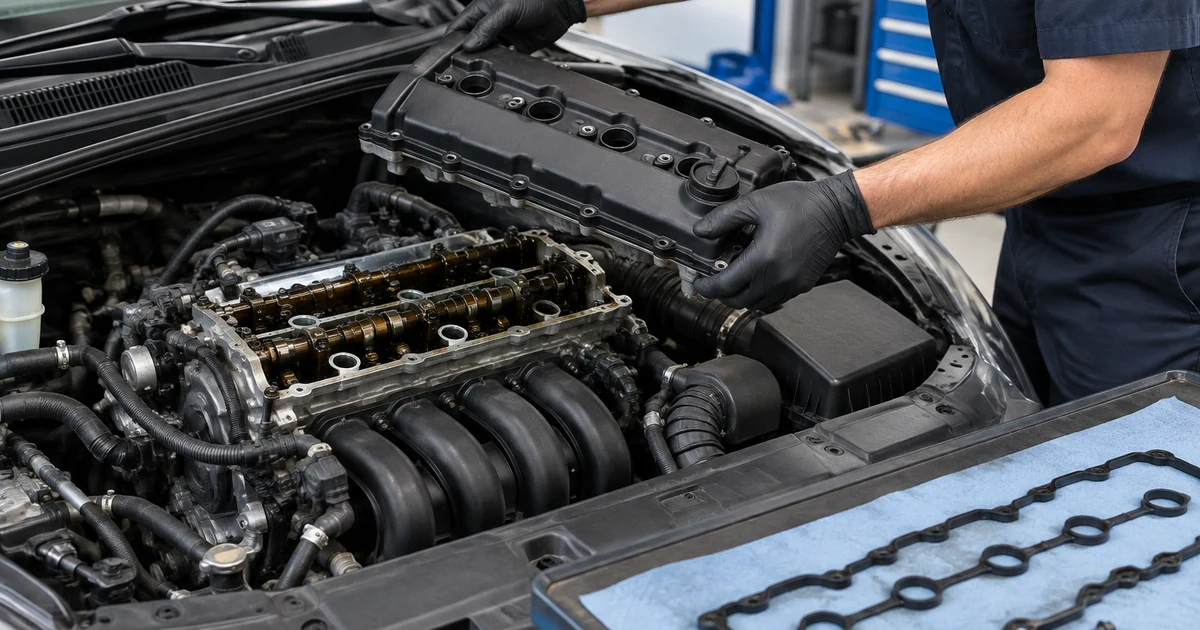
On many 4-cylinder engines the cover is right on top and comes off with a handful of bolts. V6 and V8 engines have two covers, and on transverse V6 engines the rear one often sits under the intake plenum, which must come off first. Boxer engines have covers on each side, low in the engine bay.
Vehicle type
European engines often use plastic covers with an integrated PCV system, and when the cover warps or cracks, the whole cover must be replaced, not just the gasket.
Shop type and region
Because labor dominates, dealer rates and high-cost regions like the Northeast and West Coast have a big effect on the final price.
Related work
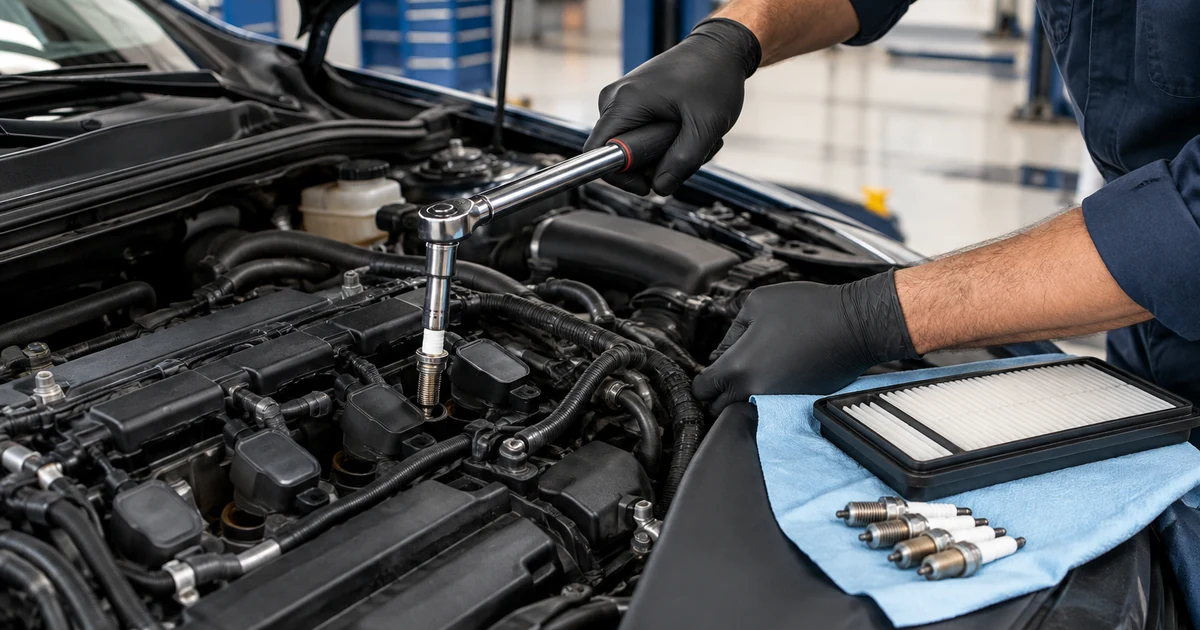
With the cover off, plugs and coils are fully exposed. If your spark plugs are due, replacing them now adds little labor. Oil that has leaked onto the drive belt can also shorten its life; check whether the serpentine belt is oil-soaked.
Symptoms of a Bad Valve Cover Gasket
- Burning oil smell, especially after driving, from oil dripping onto the exhaust manifold.
- Oil seeping around the edge of the valve cover or down the side of the engine.
- Oil in the spark plug wells, which can cause misfires and a flashing check engine light.
- Light smoke from the engine bay at idle.
- Slowly dropping oil level between changes with no other obvious leak.
Valve cover gaskets harden with heat and age. YourMechanic estimates they typically last 20,000 to 50,000 miles or more, and many go far longer.
Can You Drive With a Leaking Valve Cover Gasket?
Usually yes, for a while, if the leak is a small seep. YourMechanic says it is safe to drive as long as the leak is small and not dripping onto hot parts like the exhaust manifold. Check the oil level every week or two and top it up. Get it fixed soon if oil is landing on the exhaust (fire risk), soaking the belt or alternator, filling the spark plug wells, or if you see smoke. Never let the oil level fall below the minimum mark.
DIY vs. Taking It to a Shop
Difficulty: 2 out of 5 on most 4-cylinder engines, 3 to 4 out of 5 on V6 engines that need the intake removed. This is one of the more approachable engine repairs.
What you need:
- A gasket set for your exact engine (cover gasket, tube seals, grommets).
- Socket set and extensions, plus a torque wrench that reads in inch-pounds. Valve cover bolts use low torque, and overtightening is the most common DIY mistake.
- A plastic gasket scraper and brake cleaner or gasket remover to clean the sealing surfaces.
- RTV sealant for the corners where the timing cover meets the head, if your service info calls for it.
The basic sequence on a typical 4-cylinder engine:
- Let the engine cool completely and disconnect the battery if your service info recommends it.
- Remove the engine cover, ignition coils or plug wires, and any hoses or brackets attached to the valve cover. Label connectors as you go.
- Loosen the valve cover bolts in the reverse of the tightening sequence and lift the cover off.
- Clean the sealing surfaces on the head and cover without gouging them, and wipe out any oil in the spark plug wells.
- Install the new gasket, tube seals and grommets, add RTV only where specified, and torque the bolts in sequence.
- Reinstall everything, start the engine, and check for leaks after a short drive.
Time: 1 to 3 hours for a first-timer on a simple 4-cylinder. Tighten the bolts in the specified sequence to the specified torque, and let RTV cure as directed before running the engine.
Is It Worth Fixing?
Yes, on almost any car. It is one of the cheapest ways to stop an oil leak and protect nearby parts from oil damage. Even on an old, low-value car, a DIY gasket costing well under $100 is usually worth it. The only time to hold off is a very slow seep that never reaches hot parts, where you might simply monitor it and top off oil.
Be sure the leak is really the valve cover. Oil running down the back of the engine can also come from the timing cover, oil pressure sender or, in more serious cases, the head gasket. If you see coolant loss or overheating as well, read our head gasket replacement cost guide.
How to Save Money on Valve Cover Gasket Replacement
- Do it yourself on a 4-cylinder engine with easy access; parts often cost under $75.
- Use an independent shop instead of a dealer for a labor-heavy job like this one.
- Combine it with spark plugs if they are due, so you pay for access once.
- Buy a complete gasket set so you are not paying labor twice for a leaking tube seal later.
- Clean the engine first so the shop can confirm the leak source and you do not pay for the wrong gasket.
- Ask for the whole job to be quoted, including intake removal on V6 engines, so the price does not grow later.
See how we estimate costs for our methodology.
Frequently Asked Questions
How much does it cost to replace a valve cover gasket?
Most valve cover gasket replacements cost $220 to $500 at an independent shop, with a typical bill around $350. RepairPal’s national average is $375 to $514. V6 engines with a cover under the intake and European cars can run $500 to $1,000 or more.
Can I drive with a leaking valve cover gasket?
A small seep is usually fine short-term if you keep the oil topped up. Fix it soon if oil drips onto the exhaust, soaks the drive belt, fills the spark plug wells or causes smoke, since that creates fire and misfire risks.
Can I replace a valve cover gasket myself?
Yes, on most 4-cylinder engines it is a beginner-to-intermediate job taking 1 to 3 hours. You need a gasket set, basic sockets, a scraper and an inch-pound torque wrench. V6 engines that require removing the intake manifold are harder.
How long does a valve cover gasket last?
YourMechanic estimates 20,000 to 50,000 miles or more, though many last much longer. Heat cycles eventually harden the rubber, which is why leaks are common on older, higher-mileage engines.
Can a bad valve cover gasket cause a misfire?
Yes. On many engines the spark plug tube seals are part of the valve cover gasket set, and oil leaking into the plug wells can short out the coils and cause misfires. Replace the tube seals along with the gasket.
What happens if you overtighten valve cover bolts?
Overtightening can split the gasket, crush the grommets or crack a plastic or aluminum cover, causing a new leak. Always use a torque wrench, follow the specified sequence and use your engine’s torque spec, which is usually low and given in inch-pounds.