What to Do Immediately If Your Car Is Overheating
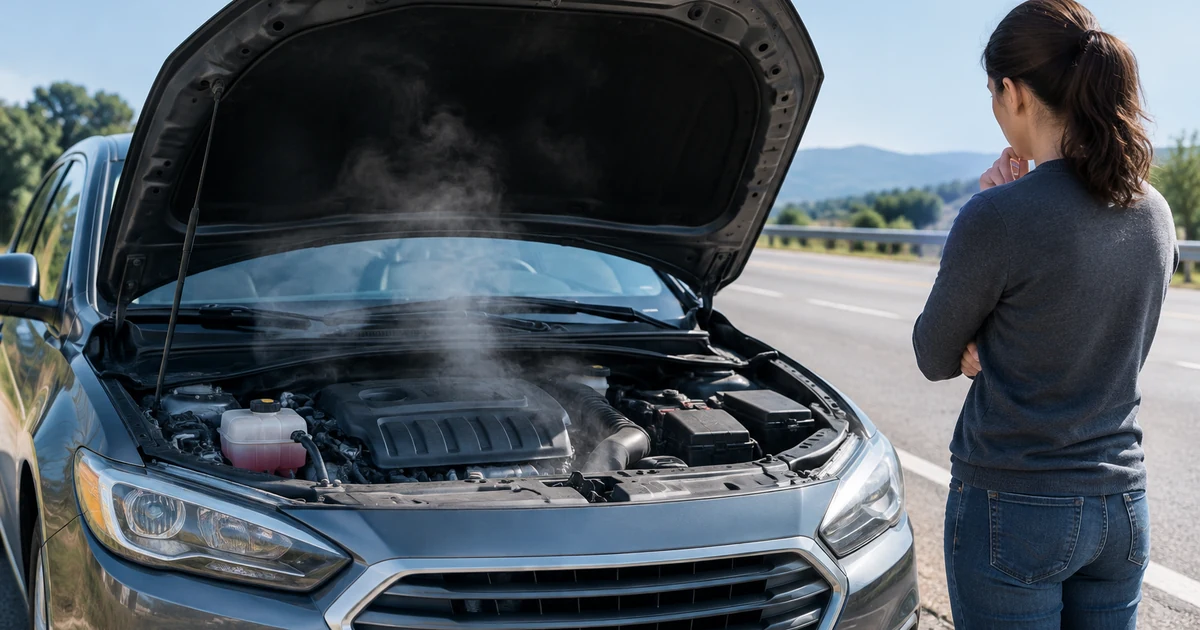
If the temperature gauge climbs into the red, steam comes from under the hood, or a hot-engine warning lights up, act right away. Engine overheating can warp the cylinder head and blow the head gasket within minutes of continued driving.
- Turn off the A/C and turn the heater to full hot with the fan on high. It feels wrong on a hot day, but the heater core pulls heat away from the engine. Firestone and AAA both recommend this first step.
- Pull over as soon as it’s safe and shut the engine off. Don’t keep driving to “make it home.”
- Turn the key to accessory if your car allows it. AAA notes this can keep the electric cooling fans running.
- Don’t open the hood right away if you see steam. Opening it can expose you to a burst of hot steam.
- Wait at least 15 to 30 minutes for the engine to cool. AAA suggests about 20 minutes before inspecting anything.
- Call for roadside help if the coolant is empty, you see a major leak, or the engine overheated badly.
Also, don’t pour cold water on a hot engine. Firestone warns the sudden temperature change can crack engine parts. Once the engine is fully cool, you can top up the reservoir with the correct coolant, or plain water as a short-term emergency measure.
What Car Overheating Usually Means
An engine normally runs at about 195 to 220 degrees Fahrenheit, according to AAA. Your cooling system keeps it there by pumping coolant through the engine and shedding heat through the radiator, with the thermostat controlling the flow and the fans pulling air through at low speeds.
When the engine overheats, one part of that loop has failed: there isn’t enough coolant, it isn’t circulating, or the heat isn’t getting out of the radiator. The pattern of the overheating is your best clue:
- Overheats in traffic or at idle, fine on the highway: usually a cooling fan, fan relay or low coolant.
- Overheats at highway speed: often a clogged radiator, a failing water pump or a thermostat stuck closed.
- Overheats within minutes of starting: thermostat stuck closed, very low coolant or an air pocket.
- Keeps losing coolant with no visible leak: possible head gasket failure or a leaking heater core.
Common Causes of Engine Overheating
| Cause | How to recognize it | How likely | Typical repair cost |
|---|---|---|---|
| Coolant leak (radiator hose, clamp) | Puddle under the car, sweet smell, low reservoir | Most common | $100 – $500 per hose |
| Thermostat stuck closed | Overheats fast, upper hose hot but lower hose cool | Common | $200 – $700 |
| Failed water pump | Coolant drip near the front of the engine, whining noise | Common | $450 – $1,300 |
| Cooling fan, fan motor or relay | Overheats in traffic, fan doesn’t spin with A/C on | Common | $90 – $120 (relay), $600 – $1,000 (fan assembly) |
| Clogged or cracked radiator | Overheats on highway, leaks at radiator seams, sludge | Occasional | $500 – $1,500 |
| Old or contaminated coolant | Rusty or sludgy coolant, overdue service | Occasional | $100 – $300 (flush) |
| Bad radiator cap | Coolant pushed into the overflow, slow coolant loss | Occasional | $40 – $100 |
| Blown head gasket | White exhaust smoke, bubbles in coolant, coolant loss | Less common but serious | $2,000 – $3,800 |
Costs are typical shop prices for common cars and SUVs, based on national repair estimates. Trucks, luxury models and engines with hard-to-reach parts cost more.
Coolant Leak or Low Coolant
Low coolant is the most frequent reason a car overheats, and it’s almost always caused by a leak. Rubber radiator hoses harden and crack with age, clamps loosen, and plastic tanks and fittings eventually split.
Signs: a green, orange or pink puddle under the front of the car, a sweet smell after driving, a low reservoir, or a hose that feels soft and swollen when cold.
Fix and cost: replacing a radiator hose costs roughly $90 to $514 depending on the vehicle and which hose failed, with parts from $10 to $345 and labor of $80 to $170. Most drivers pay about $300 including fresh coolant. Many shops will suggest replacing both hoses if one has failed.
Thermostat Stuck Closed
The thermostat is a heat-sensitive valve that opens to send coolant to the radiator. If it sticks shut, coolant stays trapped in the engine and temperatures rise quickly, even with a full system.
Signs: the gauge climbs within 10 to 15 minutes of driving, the upper radiator hose is very hot while the lower hose stays cooler, and the heater may blow hot then cold.
Fix and cost: thermostat replacement typically costs $200 to $700, with most drivers paying about $400. Engines with an electronic thermostat or a housing buried under other parts sit at the top of that range.
Failing Water Pump
The water pump circulates coolant through the engine. Its seal can leak, its bearing can wear, and plastic impellers can break apart and stop moving coolant.
Signs: a coolant drip from the weep hole near the front of the engine, a whining or grinding noise, wobble in the pump pulley, or steam from the front of the engine.
Fix and cost: water pump replacement usually costs $450 to $1,300, about $800 on average. Pumps driven by the timing belt cost more, and it makes sense to replace the belt at the same time.
Cooling Fan Not Working
At highway speed, air flows through the radiator on its own. In traffic, the electric fan has to do the work. If the fan motor, relay, fuse or temperature switch fails, the car overheats when you slow down.
Signs: the temperature rises at stoplights and drops once you’re moving, and the fan doesn’t kick on when you turn on the A/C with the engine warm.
Fix and cost: a fan relay is a cheap fix at about $90 to $120 installed. A complete fan assembly usually runs $600 to $1,000 on passenger vehicles, mostly in parts.
Radiator Problems
Radiators clog internally with scale and sludge, especially when coolant changes are skipped, and plastic end tanks crack with age. Either way, heat can’t leave the engine fast enough.
Signs: overheating at highway speeds or when towing, visible leaks at the radiator seams, cold spots across the radiator, or brown sludge in the coolant.
Fix and cost: minor radiator repairs run about $250 to $750, while a full radiator replacement typically costs $500 to $1,500 with most drivers paying about $900.
Blown Head Gasket
A head gasket can fail as a cause of overheating or as a result of it. Combustion gases forced into the cooling system push coolant out and create air pockets.
Signs: white, sweet-smelling exhaust smoke, bubbles in the coolant reservoir, milky oil, and coolant loss with no visible leak.
Fix and cost: a head gasket replacement costs $2,000 to $3,800 on most four-cylinder engines and more on V6 and V8 engines. On an older car, this repair often exceeds the vehicle’s value.
Is It Safe to Drive an Overheating Car?
No. If your engine is overheating, stop driving. Every extra mile with the gauge in the red risks a warped cylinder head, a blown head gasket or a seized engine. That turns a $300 hose repair into a $2,000 to $3,800 head gasket job or an engine replacement.
After the engine cools and you’ve topped up the coolant, a short, gentle drive to a nearby shop may be possible if the gauge stays normal. Watch it constantly, keep the heater on full, and pull over again the moment it starts climbing. If coolant is pouring out or the engine overheated severely, have it towed.
Never drive with the temperature warning on while also seeing a flashing check engine light, oil pressure warning, or heavy white smoke. Those point to engine damage already underway.
How a Mechanic Diagnoses Overheating
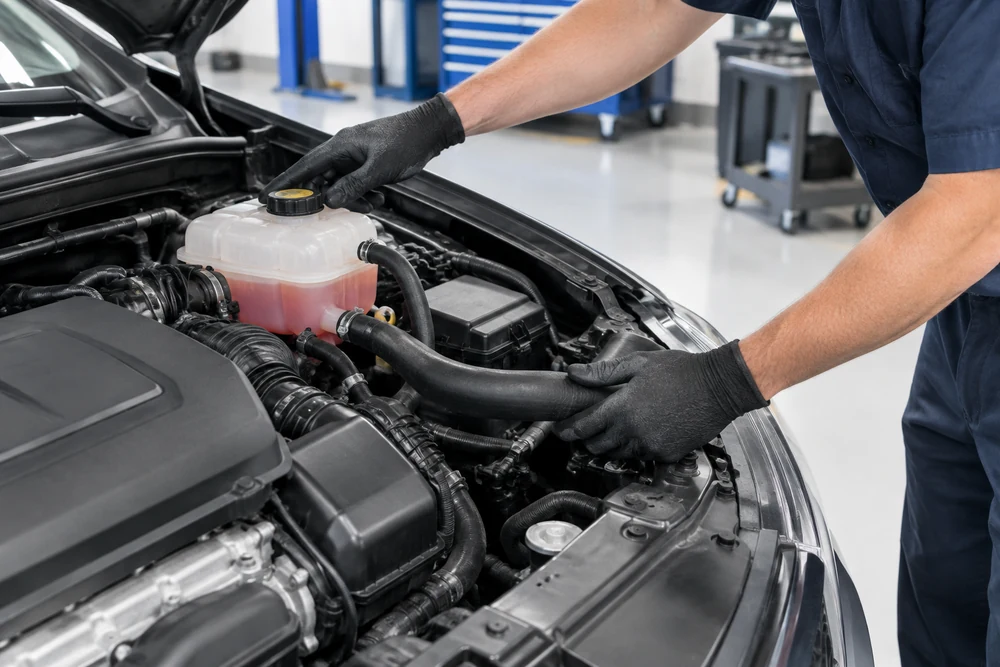
A shop will typically:
- Pressure test the cooling system to find leaks the eye can’t see. This costs about $40 to $100 on its own.
- Check the radiator cap to confirm it holds its rated pressure.
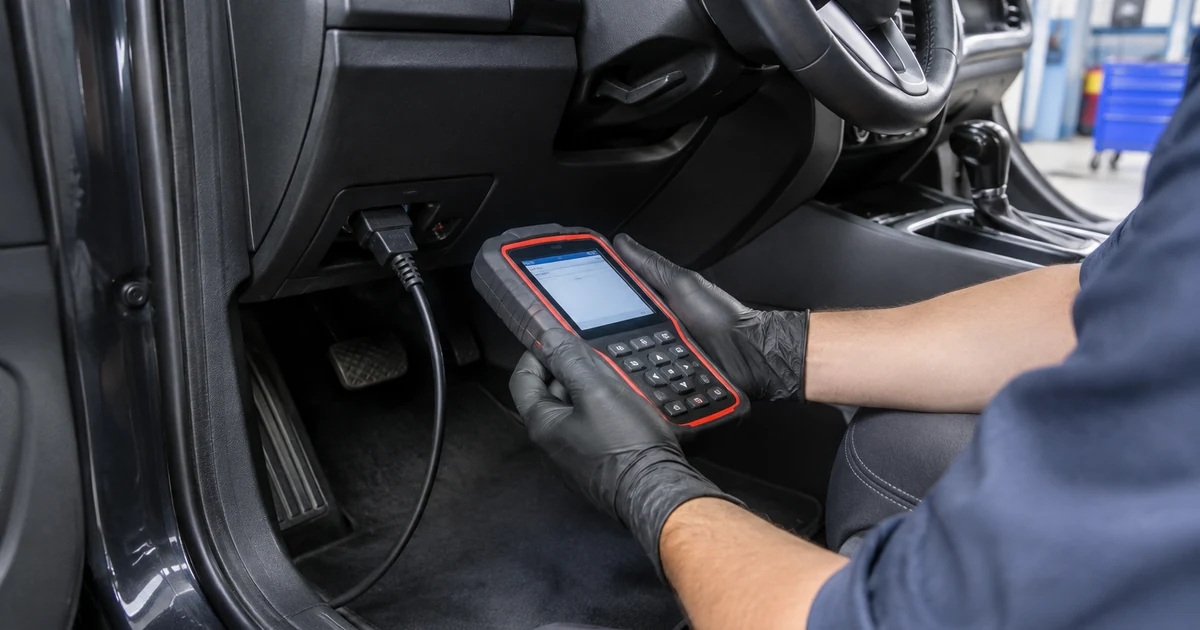
- Read temperature data with a scan tool and check whether the fans turn on when commanded.
- Feel or measure hose temperatures to check thermostat operation.
- Run a combustion leak (block) test that detects exhaust gases in the coolant if a head gasket is suspected.
A full cooling system diagnosis usually costs $100 to $200, and many independent shops apply it toward the repair.
What You Can Check Yourself
Only do these checks with the engine completely cool:
- Check the coolant reservoir level against the MIN and MAX marks. Use the coolant type listed in your owner’s manual.
- Look for leaks under the car and around the hoses, radiator, water pump and reservoir. Dried, crusty coolant residue is a giveaway.
- Squeeze the radiator hoses. Soft, swollen or cracked hoses need replacing.
- Check the fan. With the engine warm and the A/C on, the electric fan should start running. Keep hands, hair and clothing well away from it.
- Look at the coolant color. Rusty brown or sludgy coolant means the system is overdue for a flush.
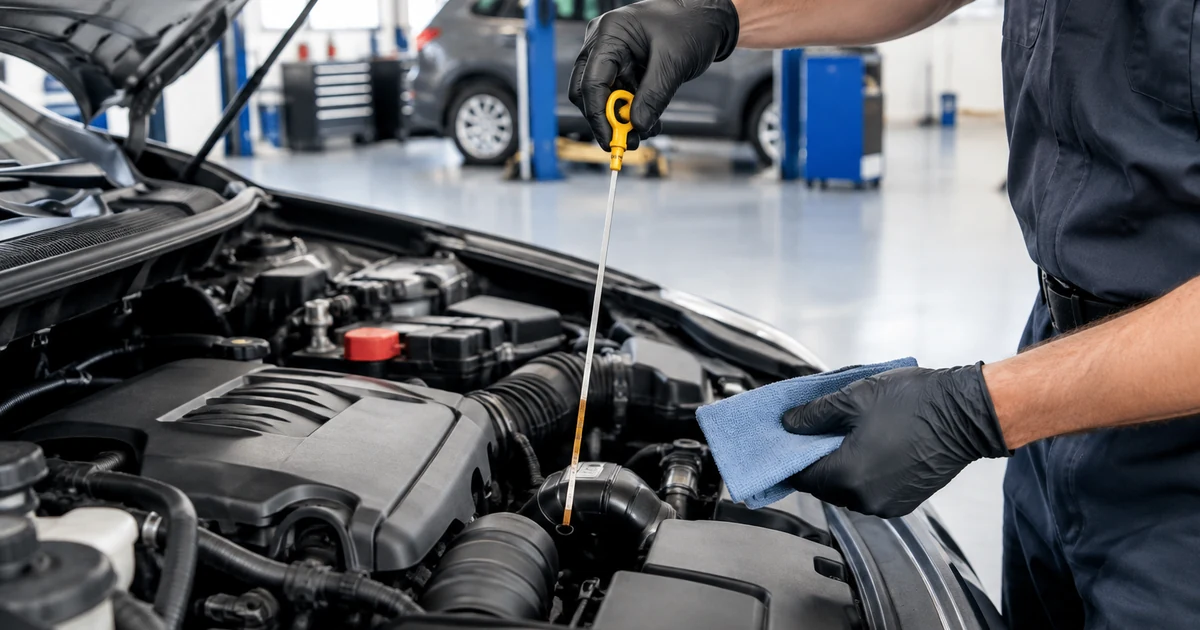
- Check the oil. Milky, light-brown oil can mean coolant is mixing in, a head gasket warning sign.
Keeping a jug of the correct coolant in the trunk lets you top up safely once the engine has cooled.
When to See a Mechanic Right Away
- The gauge goes into the red or the warning light comes on more than once
- You’ve added coolant and it’s low again within days
- White smoke from the exhaust or bubbles in the coolant reservoir
- Milky oil on the dipstick
- A grinding or whining noise from the front of the engine
- Steam from under the hood
Cooling problems rarely fix themselves. Catching a leaking hose or a failing pump early is the difference between a few hundred dollars and several thousand.
How to Save on the Repair
- Stop at the first sign of overheating. It’s the single biggest way to avoid a head gasket or engine bill.
- Find the actual cause first. A $40 to $100 pressure test beats replacing parts by guesswork.
- Use an independent shop for hoses, thermostats and radiators. Dealer labor rates are usually higher.
- Ask about quality aftermarket parts. Aftermarket radiators and hoses are often much cheaper than OEM for common cars.
- Bundle related work. Replace the thermostat with a water pump, or the timing belt with a belt-driven pump, to avoid paying labor twice.
- Keep up with coolant changes. A coolant flush at the interval in your manual helps prevent clogged radiators and corroded pumps.
- Get a second quote before approving a head gasket or engine replacement.
Frequently Asked Questions
What should I do if my car is overheating?
Turn off the A/C and turn the heater to full hot, then pull over safely and shut off the engine. Wait at least 15 to 30 minutes before opening the hood or checking coolant. Never open a hot radiator cap, and call for roadside help if coolant is leaking heavily.
Can I drive my car if it's overheating?
No. Driving an overheating engine can warp the cylinder head or blow the head gasket, turning a small repair into a $2,000 to $3,800 job. Once it has cooled and been topped up, a short drive to a nearby shop may be possible only if the gauge stays normal.
What is the most common cause of a car overheating?
Low coolant caused by a leak is the most common cause, usually from a cracked hose, loose clamp, failing water pump seal or leaking radiator. A thermostat stuck closed and a cooling fan that won’t turn on are also very common.
How much does it cost to fix an overheating car?
Most fixes cost $100 to $1,500. A radiator hose runs about $90 to $514, a thermostat $200 to $700, a water pump $450 to $1,300 and a radiator $500 to $1,500. A blown head gasket is the expensive case at $2,000 to $3,800 or more.
Why does my car overheat when idling but not when driving?
That pattern usually points to the cooling fan. At speed, air flows through the radiator on its own, but at idle the electric fan has to pull air through. A bad fan motor, relay, fuse or low coolant level is the usual culprit.
Can I put water in my radiator instead of coolant?
In an emergency, plain water added to a cool engine can get you to a shop. It doesn’t protect against freezing, boiling or corrosion, so have the system drained and refilled with the correct coolant soon after.
How long should I wait before opening the hood after overheating?
Wait at least 15 to 30 minutes, and longer for the radiator cap. AAA suggests about 20 minutes before inspecting. The cap should only be opened when the engine is cool to the touch, slowly, with a rag over it.
- AAA — What to do if your car is overheating
- Firestone Complete Auto Care — Car overheating: why, what to do and not do
- Jerry — How much will it cost to fix an overheated engine?
- AutoNation Mobile Service — Radiator hose replacement cost
- ConsumerAffairs — How much does a car radiator repair cost?
- Radiator Supply House — Radiator fan replacement cost