What the P0016 Code Means
P0016 stands for Crankshaft Position – Camshaft Position Correlation (Bank 1 Sensor A). In plain English: the engine computer compared the crankshaft and camshaft signals and found that the two shafts are not lined up the way they should be.
The crankshaft turns with the pistons; the camshaft opens and closes the valves. A timing chain or belt links them so they stay in step. Two sensors, one on each shaft, report their positions every revolution. If the cam signal arrives too early or too late compared with the crank signal, beyond a preset margin, the computer sets P0016 and turns on the check engine light.
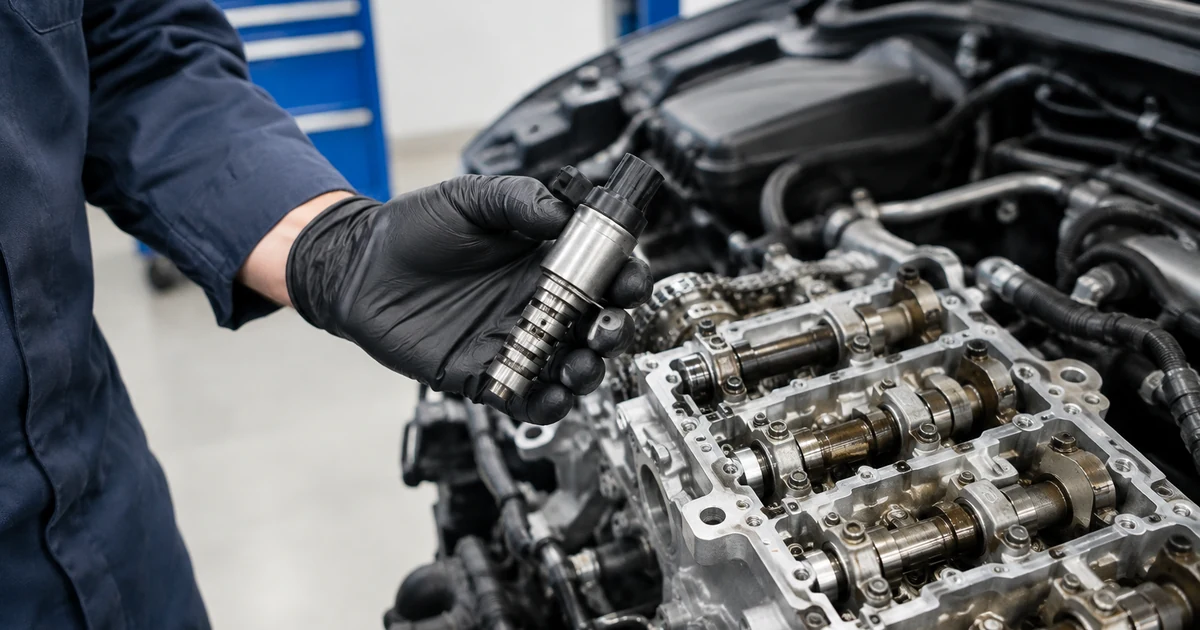
“Bank 1” is the side of the engine with cylinder 1, and “Sensor A” is usually the intake camshaft sensor. On engines with variable valve timing (VVT), the computer deliberately moves the cam a few degrees, so a sticking VVT solenoid or phaser can also throw the correlation off.
The key point for your budget: P0016 can be caused by something as simple as low oil or a $40 sensor, but it is also the classic warning sign of a stretched timing chain or a belt that has jumped a tooth. Diagnosis decides whether the bill is a few hundred dollars or a few thousand.
Common Causes of P0016
| Cause | Likelihood | Typical repair cost |
|---|---|---|
| Low or dirty engine oil (VVT engines) | Common, check first | $65 – $125 (oil change) |
| Stretched timing chain, worn guides or tensioner | Very common on high-mileage chain engines | $1,500 – $2,700 (timing chain) |
| Timing belt jumped a tooth or worn | Common on belt engines | $650 – $1,250 (timing belt) |
| Faulty camshaft position sensor | Common | $160 – $360 (cam sensor) |
| Faulty crankshaft position sensor | Common | $170 – $420 (crank sensor) |
| Sticking VVT solenoid or cam phaser | Occasional | $250 – $550 solenoid; $750 – $1,500 phaser |
| Damaged reluctor (tone) ring or slipped harmonic balancer | Occasional | $200 – $600+ |
| Wiring, connector or PCM software issue | Less common | $100 – $300 |
CarParts.com, AutoZone and FIXD all put a stretched or damaged timing chain or belt at the top of their cause lists, followed by bad cam or crank sensors, damaged tone rings, wiring faults and, on VVT engines, the oil control valve and phaser. FIXD also points out that low or dirty oil can trigger the code, because oil pressure drives both the VVT system and the hydraulic chain tensioner.
Symptoms of P0016
- Check engine light on
- Rattling from the front of the engine, often loudest for a few seconds after a cold start
- Rough idle or rough starts that smooth out once the engine runs
- Reduced power and poor acceleration
- Lower fuel economy
- Misfires, stalling, or an engine that cranks but won’t start
A cold-start rattle that fades as oil pressure builds is the textbook sign of a stretched chain or a weak tensioner. If you hear it along with P0016, budget for timing work. If the engine is quiet and runs normally, a sensor or oil issue is more likely.
Is It Safe to Drive With P0016?
Treat P0016 as urgent. RepairPal rates it “Urgent,” and FIXD advises against driving and recommends a tow. AutoZone notes that even a small timing difference should be inspected right away because it can damage the engine or leave you unable to start it.
The reason is mechanical. Most modern engines are interference designs: if a stretched chain jumps a tooth or a belt slips further, the valves can hit the pistons. That turns a $2,000 timing job into a cylinder head repair or a replacement engine.
- Stop driving and tow it if you hear rattling or slapping from the timing area, the engine runs rough, stalls, or the check engine light flashes.
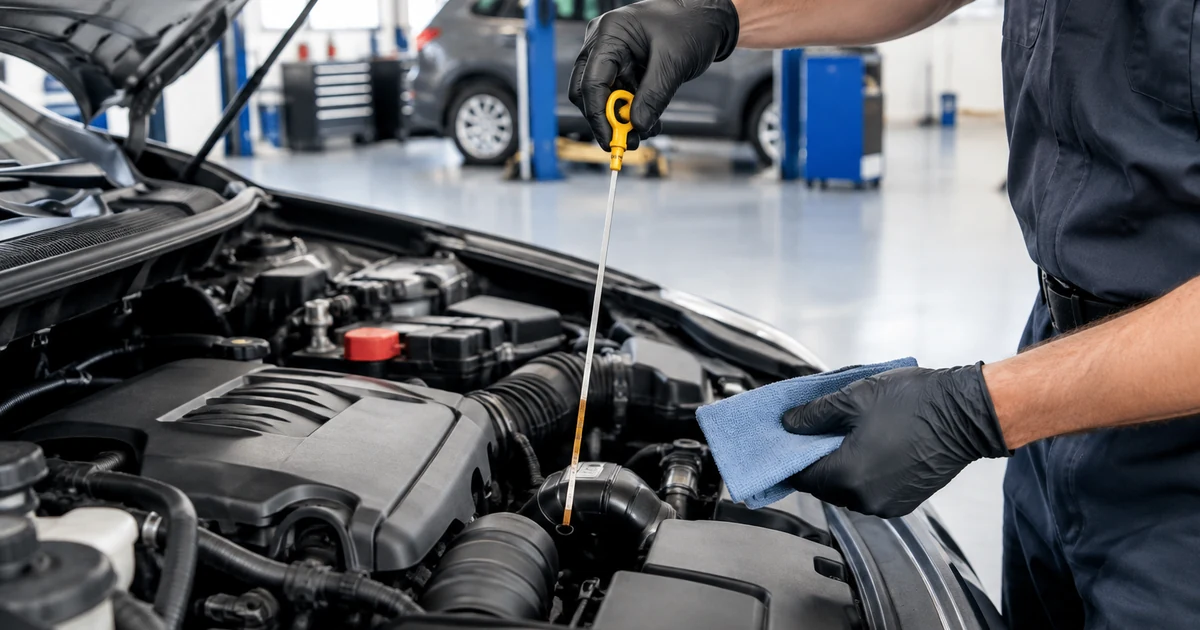
- Check the oil level immediately. If it’s low, top it up with the correct grade. Low oil starves the chain tensioner and VVT system.
- If the engine is quiet, smooth and the oil is full, keep any drive short and gentle, straight to a shop. No highway runs, towing or hard acceleration.
How to Diagnose P0016
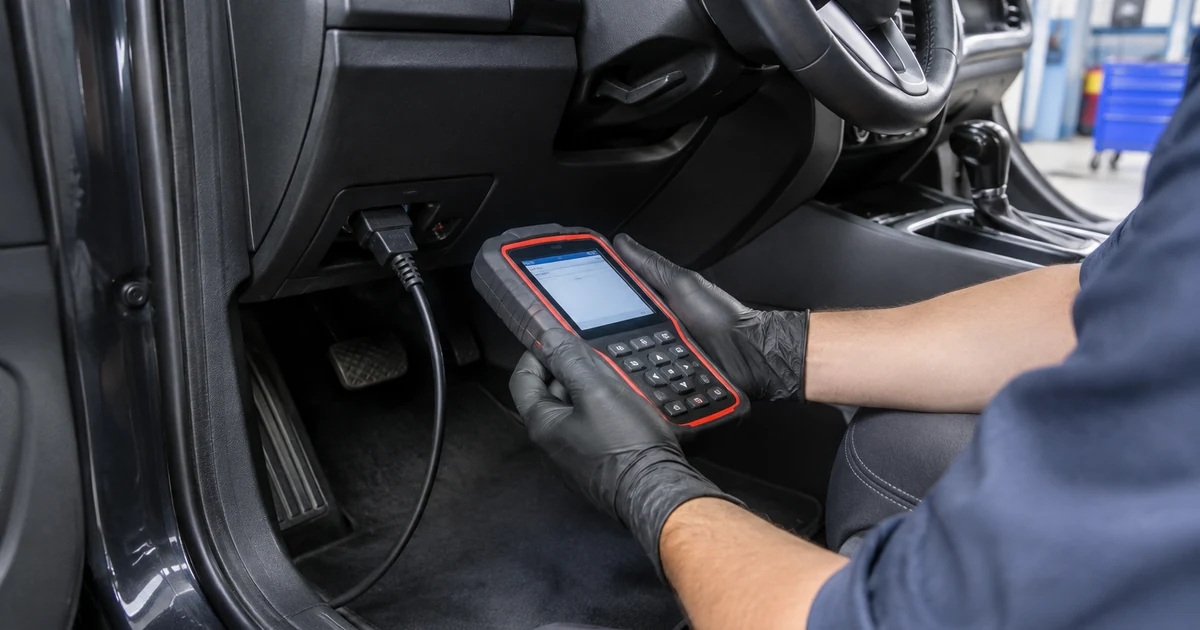
An OBD2 scanner is step one. Note every code stored, because companions narrow things down. P0017 (Bank 1 Sensor B), P0018 and P0019 (Bank 2) alongside P0016 suggest the chain or a shared oil problem; P0340 or P0335 point to a sensor circuit.
- Check the oil level and condition. Low, sludgy or overdue oil is the cheapest suspect.
- Listen at cold start. A rattle from the timing cover in the first seconds is a strong clue.
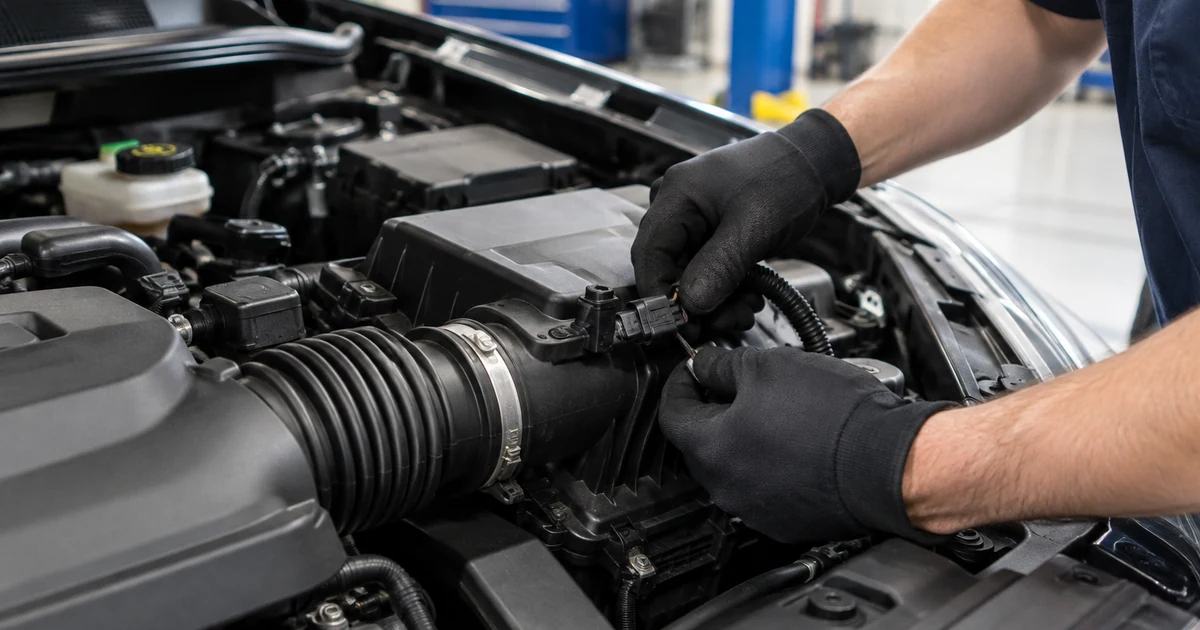
- Inspect sensors and wiring. Look for oil-soaked connectors, broken clips and chafed wires at the cam and crank sensors. AutoZone lists electrical faults as a known cause.
- Read live data. Many scan tools show cam/crank correlation or cam angle deviation. A value drifting far from the specification indicates chain stretch on many engines.
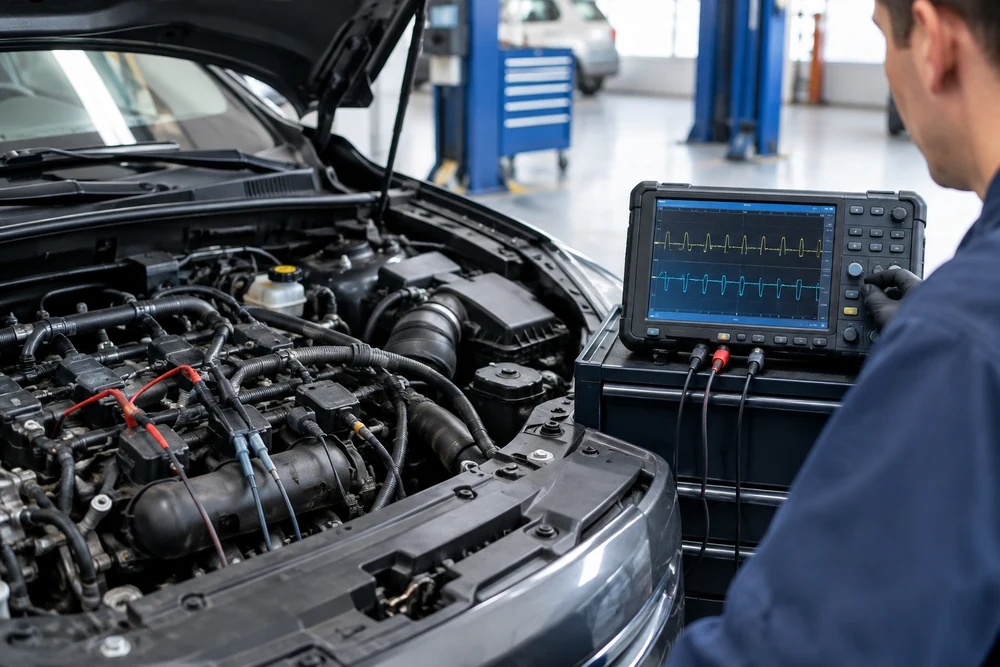
- Scope the signals. CarParts.com notes that technicians use an oscilloscope to compare the cam and crank waveforms, which separates a bad sensor or slipped tone ring from real timing error.
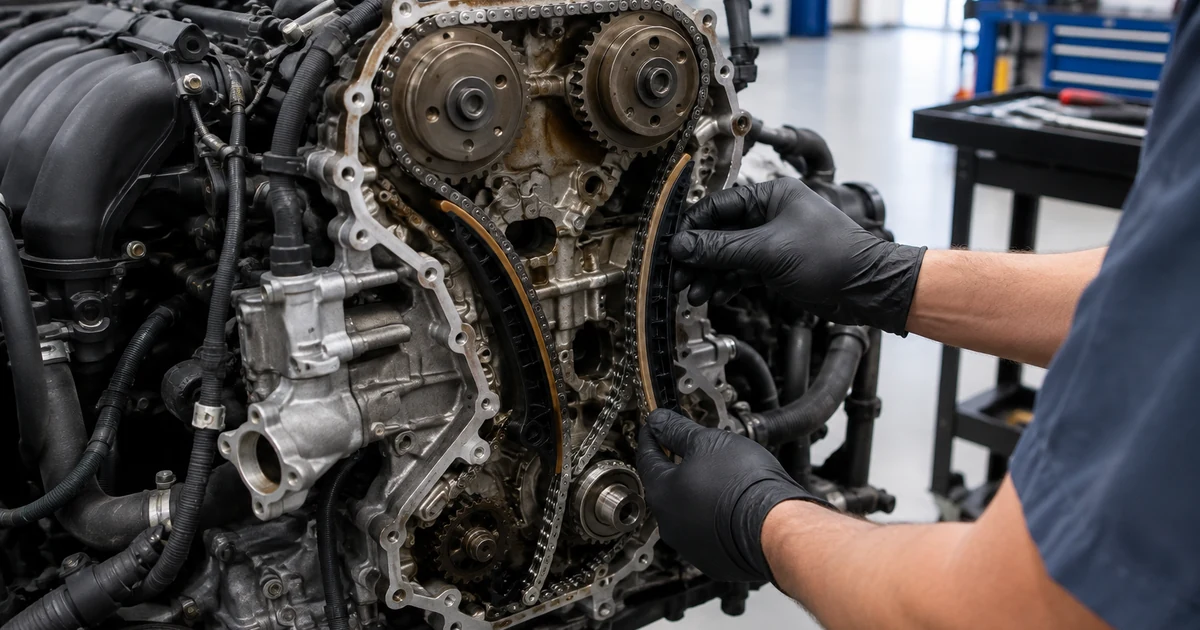
- Verify mechanical timing. If data points to the chain or belt, the shop checks timing marks, chain slack and guides, sometimes by removing the valve cover.
A professional diagnosis usually costs $100 to $185. On P0016 it’s money well spent, because guessing between a $250 sensor and a $2,000 chain is expensive either way.
How to Fix P0016
- Change the oil and filter with the viscosity your engine specifies, then clear the code and recheck. This alone fixes some VVT-related cases.
- Repair wiring or connectors that testing shows are damaged.
- Replace the faulty sensor, cam or crank, but only after testing. Swapping sensors blindly is a common way to spend money without curing P0016.
- Replace a sticking VVT solenoid if commanding it doesn’t move the cam as expected.
- Check for PCM software updates and service bulletins for your engine.
- Replace the timing chain kit or timing belt kit when stretch, a jumped tooth or worn guides are confirmed. Include the tensioner, guides and gears; on VVT engines, phasers are often replaced at the same time.
Cost to Fix P0016 by Cause
The cost to fix P0016 runs from about $65 for an oil change to $3,900 for a timing chain kit with new phasers. When a sensor or VVT solenoid is to blame, most drivers pay about $380 or less at an independent shop. A stretched timing chain typically costs about $2,000.
| Repair | Parts | Labor | Total at a shop |
|---|---|---|---|
| Diagnosis | — | $100 – $185 | $100 – $185 (often credited) |
| Oil and filter change (full synthetic) | $35 – $70 | $25 – $55 | $65 – $125 |
| Wiring or connector repair | $10 – $60 | $90 – $240 | $100 – $300 |
| Camshaft position sensor | $40 – $200 | $60 – $160 | $160 – $360 |
| Crankshaft position sensor | $40 – $200 | $130 – $230 | $170 – $420 |
| VVT solenoid (oil control valve) | $90 – $250 | $160 – $300 | $250 – $550 |
| Reluctor ring or harmonic balancer | $30 – $250 | $170 – $350 | $200 – $600 |
| Timing belt kit + water pump | $150 – $450 | $350 – $800 | $650 – $1,250 |
| Timing chain kit | $300 – $800 | $1,200 – $1,900 | $1,500 – $2,700 |
| Timing chain kit + cam phasers | $700 – $1,600 | $1,600 – $2,300 | $2,300 – $3,900 |
FIXD’s published P0016 figures fall in the same territory: $176 to $227 for a camshaft position sensor, $168 to $224 for a crankshaft position sensor, $200 to $600 for a reluctor ring, $603 to $785 for a timing belt and $1,604 to $1,905 for a timing chain at a shop. Our sensor and chain ranges are slightly wider because they cover more vehicles and engines; see the timing chain cost guide for prices by model.
Reluctor rings are the wild card. Some are a simple pressed ring or part of the harmonic balancer; others are machined into the crankshaft or camshaft, which can push the repair well beyond $600.
What Affects the Price
Chain vs. belt, and engine layout
Timing belts are designed to be replaced and are usually cheaper to service. Chains are meant to last, so when they stretch the repair is bigger. Transverse V6 engines and some engines with the chain at the back need far more labor; a few require pulling the engine.
Which sensor and where it sits
Cam sensors are often on top of the engine and easy to reach. Crank sensors can sit low on the block, behind the starter or inside the timing cover, which moves the price from about $170 toward $900.
Part quality
Cheap sensors are a known cause of repeat P0016 codes. For sensors and chain kits, OEM or OE-supplier parts are often worth the extra cost.
Shop type and region
Independent shops typically charge $110 to $150 an hour; dealers $150 to $220. Expect higher totals in the Northeast and on the West Coast, and lower ones in the South and Midwest.
Related parts replaced at the same time
A timing job opens up the front of the engine. Replacing the water pump, front seals and drive belts at the same time adds parts cost but saves duplicate labor later.
DIY vs. Taking It to a Shop
Scanning, checking oil and inspecting connectors are 1 out of 5. Replacing an accessible cam sensor is 2 out of 5 with basic tools. A crank sensor under the car is about 3 out of 5. Timing chain and belt jobs are 4 to 5 out of 5: they need cam and crank locking tools, exact torque values and careful alignment, and a mistake on an interference engine can bend valves.
The realistic DIY role on P0016 is the first round: scan, change the oil, look for wiring damage and, if the data clearly blames a sensor, swap it. Leave timing work to a shop unless you’ve done it before on that engine.
Is It Worth Fixing?
A sensor, oil or solenoid fix is worth doing on nearly any car. A chain job at $1,500 to $3,900 deserves a quick reality check: compare the quote to the car’s value and the condition of the transmission, body and suspension. On a car worth well under the repair cost with other problems looming, selling it as-is can make sense. On a solid car you plan to keep, a new timing set often buys many more years. What isn’t worth it is ignoring P0016 on a chain engine and risking the damage that a jumped chain can cause.
How to Save Money on P0016
- Check the oil before anything else, and use the exact viscosity your engine requires.
- Pay for a real diagnosis instead of guessing with sensors; ask if the fee is credited toward the repair.
- Buy quality sensors; a bargain part that fails again costs more in labor.
- Look up technical service bulletins and software updates for your engine.
- Check powertrain warranty coverage; timing chains, guides and phasers are often covered on newer cars.
- Get a second quote for any chain or belt job from an independent shop.
- Fix it early. A chain replaced before it jumps costs far less than an engine.
Related Codes
- P0017 — crankshaft/camshaft correlation, Bank 1 Sensor B (usually exhaust cam)
- P0018 / P0019 — the same correlation fault on Bank 2
- P0011 — “A” camshaft timing over-advanced (Bank 1), often a VVT solenoid or oil issue
- P0012 — “A” camshaft timing over-retarded (Bank 1)
- P0335 — crankshaft position sensor “A” circuit
- P0340 — camshaft position sensor “A” circuit
Frequently Asked Questions
What does code P0016 mean?
P0016 means Crankshaft Position – Camshaft Position Correlation (Bank 1 Sensor A). The engine computer compared the crank and cam sensor signals and found the shafts are not aligned within specification, which can be a timing problem, a sensor fault or a variable valve timing issue.
Is P0016 always a timing chain?
No. Low or dirty oil, a faulty cam or crank sensor, a sticking VVT solenoid, a damaged tone ring or wiring can all set P0016. A stretched chain is very common on high-mileage chain engines, though, especially if you hear a rattle at cold start, so it should be ruled out before you keep driving.
How much does it cost to fix P0016?
An oil change runs $65 to $125. At an independent shop, a camshaft position sensor costs about $160 to $360, a crankshaft sensor $170 to $420 and a VVT solenoid $250 to $550. A timing belt kit costs $650 to $1,250 and a timing chain kit $1,500 to $2,700, or up to $3,900 with phasers.
Can I drive with a P0016 code?
Only as little as possible, and not at all if the engine rattles, runs rough, stalls or the check engine light flashes. RepairPal rates P0016 as urgent because a chain or belt that jumps on an interference engine can damage valves and pistons. A tow costs far less than an engine.
Can low oil cause P0016?
Yes. On engines with variable valve timing, oil pressure moves the cam phasers and keeps the chain tensioner tight. Low, sludgy or wrong-viscosity oil can let the cam drift out of position and set P0016. Check and correct the oil before replacing parts.
Will replacing the camshaft sensor fix P0016?
Only if the sensor is actually bad. Many owners replace the sensor and the code comes back because the real cause is chain stretch or a VVT problem. Test the sensor signal or have a shop scope it before buying parts.