What a Steering Wheel Shaking at High Speed Usually Means
When your steering wheel shakes at high speed but feels fine around town, the most common cause is a tire and wheel assembly that’s out of balance. A balance problem usually shows up in a specific speed range, often somewhere between 50 and 70 mph, and may fade a little above or below it. Motorist.org and Les Schwab both put tire balance at the top of the list.
A tiny heavy spot doesn’t matter at 30 mph. At highway speed, a wheel spins more than 800 times a minute, and that heavy spot tugs the wheel up and down or side to side many times a second. The front wheels connect to the steering, so you feel it in your hands.
Balance isn’t the only possibility. A damaged tire, a bent wheel, poor alignment, or worn steering and suspension parts can cause the same feeling. Where and when you feel it narrows things down:
- Steering wheel shakes, seat is calm: usually a front tire or wheel, or a front steering or suspension part.
- Seat and floor shake more than the wheel: often a rear tire or wheel.
- Shake only when braking: usually the brake rotors, not the tires. That’s a separate problem with its own fixes, covered in our guide to a car that shakes when braking.
- Shake when accelerating that eases when you coast: points toward a CV axle or other drivetrain part.
Common Causes of Steering Wheel Shaking at High Speed
| Cause | How to recognize it | How likely | Typical repair cost |
|---|---|---|---|
| Tires out of balance | Smooth shake that starts around 50–60 mph and may fade at higher speeds; often after new tires or a lost wheel weight | Most common | $40 – $80 (four tires) |
| Tire damage or uneven wear | Bulge on the sidewall, cupped or patchy tread, a shake that gets worse over days | Common | About $130 – $300 per tire installed |
| Bent wheel or loose lug nuts | Started after a pothole or curb hit, or right after a tire change | Common | Free re-torque to several hundred dollars for a new wheel |
| Wheel alignment off | Car pulls or wanders, steering wheel is off-center, inside or outside tire edges wear fast | Occasional cause of shake | $75 – $200 |
| Worn tie rod ends | Loose or vague steering, clunk over bumps, shimmy that comes and goes | Occasional | $225 – $470 (outer end + alignment) |
| Worn ball joints | Clunking over bumps, wandering, uneven tire wear | Occasional | $275 – $620 (one joint + alignment) |
| Worn wheel bearing | Hum or growl that rises with speed and changes when you turn | Occasional | $250 – $750 per wheel |
| Worn CV axle (front-wheel drive) | Shake under acceleration, clicking in tight turns, grease on the inside of the wheel | Less common | $300 – $850 per side |
These are parts-and-labor estimates for a typical midsize car at an independent shop or tire store. Trucks, large SUVs and European cars cost more. Start with the cheap tire checks: they solve most high-speed shakes.
1. Tires Out of Balance
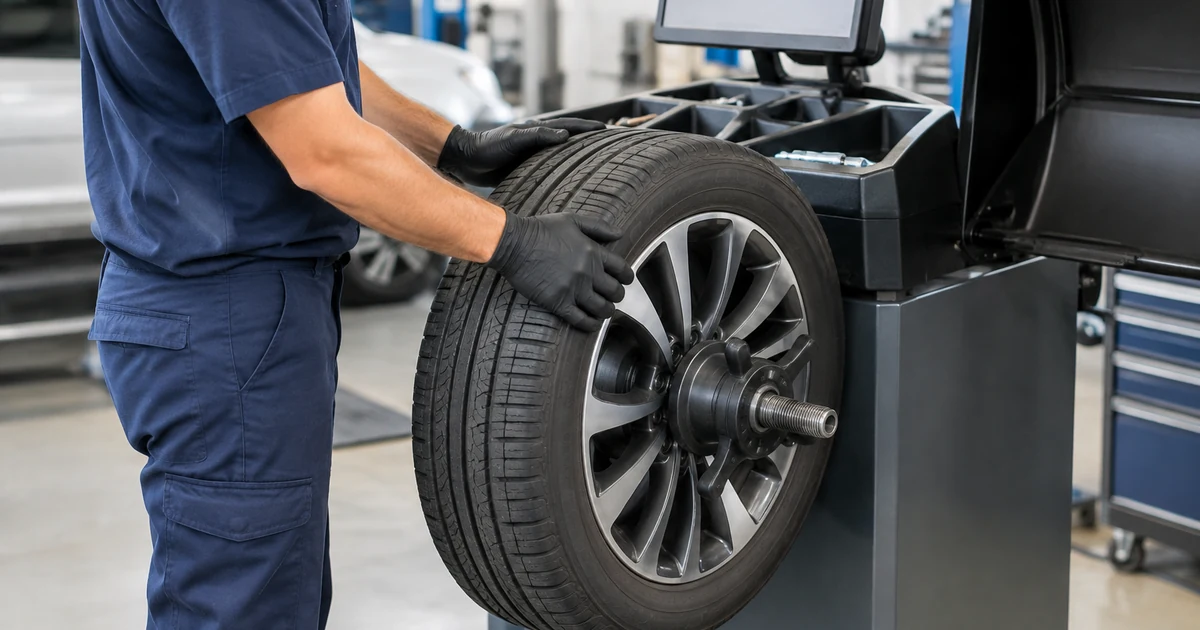
Every tire and wheel has slightly uneven weight. A shop corrects it by spinning the assembly on a balancer and adding small weights. Over time, weights fall off, tires wear unevenly, and the balance drifts. Hitting a pothole can also knock a weight loose.
Signs: a steady, rhythmic shake in the steering wheel that appears at a certain speed, often 55 to 70 mph, and sometimes fades as you go faster. It often starts right after new tires or a tire repair.
Fix: rebalance all four tires. If a normal balance doesn’t cure it, a road force balance presses a roller against the tire to find stiff spots or out-of-round tires that a standard balancer can’t detect. Motorist.org notes that a tire can balance correctly and still vibrate because it doesn’t roll evenly under load.
Cost: about $40 to $80 for four tires, with most drivers paying around $60. Road force balancing runs about $80 to $160. Balancing is often free for the life of the tires if you bought them from a tire store, so check your receipt.
2. Tire Damage or Uneven Wear
A tire that has separated inside, has a flat spot, or has worn unevenly won’t roll round, and no amount of balancing fixes that. NAPA notes that a vibration felt from the front of the car often comes before tread separation, and that a sidewall bulge means the tire’s internal structure is damaged and the tire needs replacing.
Signs: a bubble or bulge on the sidewall, a lump in the tread, cupped or scalloped tread, or a shake that gets worse week by week. Low or uneven tire pressure can also cause vibration.
Fix: replace the damaged tire. If the tread is cupped, ask why: worn shocks, struts or alignment problems often cause it, and a new tire will wear the same way if the cause isn’t fixed.
Cost: roughly $130 to $300 for one typical passenger tire installed and balanced, more for trucks, SUVs and performance tires. On all-wheel-drive vehicles, your owner’s manual may call for replacing tires in pairs or sets to keep tread depths close.
3. Bent Wheel or Loose Lug Nuts
Les Schwab lists bent wheels and improperly installed lug nuts as causes of steering wheel shake. A curb strike or deep pothole can bend the rim enough to cause a shake that balancing can’t cancel. Lug nuts that are loose or tightened unevenly let the wheel wobble on the hub.
Signs: a shake that started right after a pothole, curb hit or tire service. A loose wheel can also click or clunk.
Fix and cost: having the lug nuts re-torqued to spec is quick and often free at the shop that did the work. A bent alloy wheel can sometimes be straightened by a wheel repair shop; otherwise it’s replaced. Prices vary widely by wheel, so get a quote.
4. Wheel Alignment
Misalignment more often causes pulling, wandering or an off-center steering wheel than a true shake. But it wears tires unevenly, and that uneven wear can create vibration over time. Potholes, curb hits and worn suspension parts all knock alignment out of spec.
Cost: about $75 to $200 for a four-wheel alignment, with most drivers paying around $140. Cars with driver-assist cameras may need a calibration afterward, which adds cost.
5. Worn Tie Rods and Ball Joints
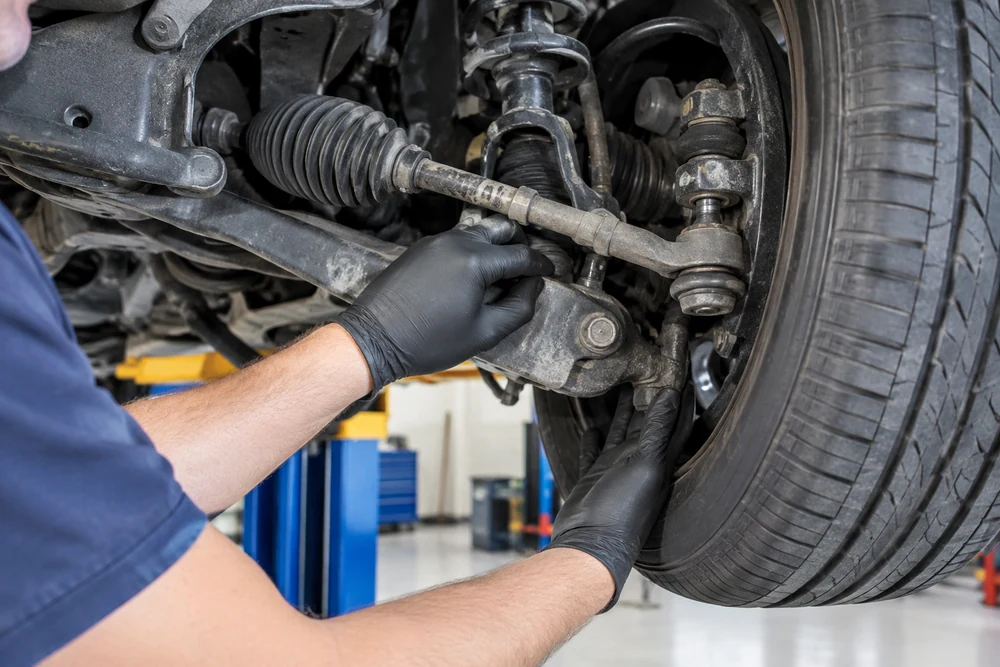
Tie rods connect your steering rack to the wheels, and ball joints let the wheels pivot and move with the suspension. When they wear, the wheel has play, and it can shimmy at speed. Les Schwab lists broken tie rods as a cause of steering wheel shake.
Signs: loose or vague steering, a clunk over bumps, a shimmy that comes and goes, and uneven tire wear. This is the cause to take most seriously, because a badly worn tie rod end or ball joint can separate.
Cost: one outer tie rod end with the required alignment runs about $225 to $470, with most drivers paying around $340. One lower ball joint with alignment is about $275 to $620, most often around $430.
6. Worn Wheel Bearing
A worn bearing lets the hub wobble slightly. You’ll usually hear it before you feel it.
Signs: a humming or growling noise that rises with speed and changes when you steer left or right, sometimes with a vibration in the wheel or floor.
Cost: about $250 to $750 per wheel, with most drivers paying around $400. Press-in bearings and 4WD trucks cost more than bolt-on hub assemblies.
7. CV Axle and Other Drivetrain Parts
On front-wheel-drive cars, a worn inner CV joint can cause a shake under acceleration that eases when you lift off the gas. A torn boot that has slung grease is a common clue. Replacing one CV axle costs about $300 to $850 per side at an independent shop. Worn engine mounts can add vibration too, but they usually show up at idle or when shifting rather than only at highway speed.
Is It Safe to Drive With a Steering Wheel That Shakes at High Speed?
A mild, steady shake from tire balance is not an emergency, but it isn’t harmless either. It wears tires, shocks and steering parts faster and makes the car less comfortable to control. Get it checked within a week or so, and keep your speed below the range where the shake appears until then.
Slow down and get it inspected promptly (within a day or two) if:
- The steering feels loose, vague or wanders, or you hear clunks over bumps (possible worn tie rods or ball joints)
- The shake is getting worse quickly
- It started right after a pothole, curb hit or tire service
- You hear a hum or growl that rises with speed
Stop driving and use the spare or call for a tow if:
- You see a bulge or bubble on a tire sidewall, or a lump in the tread. That tire can fail suddenly.
- The shaking is violent or the steering wheel jerks in your hands
- A wheel feels loose, or you hear clicking or knocking from one corner that changes with speed
- The car pulls hard to one side or the steering stops responding normally
Motorist.org also suggests checking for open safety recalls, especially if the steering concern is new or unusual. You can look up your VIN on the NHTSA recall site for free.
How a Mechanic Diagnoses It
- Road test: note the speed where the shake starts and stops, whether it’s in the steering wheel or the seat, and whether it changes when accelerating, coasting or braking.
- Tire inspection: check pressures, tread wear patterns, sidewalls and tread for bulges or separations.
- Balance check: spin each wheel on a balancer, look for missing weights and check the wheel for bends. A road force balancer measures tire uniformity too.
- Steering and suspension check: lift the car and check tie rods, ball joints, bushings and wheel bearings for play.
- Alignment check: if tire wear or pulling suggests it.
Many tire stores inspect for free and only charge for the balance or repair. A general vibration diagnosis at a repair shop usually costs $100 to $200, often credited toward the repair. Ask the shop to show you what it found: a missing weight, a bent rim, or play in a joint.
What You Can Check Yourself
Do these with the car parked on level ground, in Park, with the engine off.
- Check tire pressure on all four tires with a gauge, cold, and set them to the pressure on the driver’s door jamb sticker.
- Look at every tire for bulges, bubbles, cuts, and uneven or cupped tread. Run your hand lightly over the tread to feel for lumps or scalloped wear.
- Look for missing wheel weights. A clean rectangle on the rim where a weight used to be is a strong clue.
- Check for wheel damage such as dents or cracks on the rim edge.
- Think back. New tires, a pothole or recent suspension work? Go back to that shop first.
- Note the speed and feel on your next drive so you can describe it clearly.
Balancing and suspension repairs need shop equipment, so this isn’t a DIY fix for most people. A good pressure gauge and a tread depth gauge make monthly checks easy and help you catch problems early.
When to See a Mechanic Right Away
- Any bulge, bubble or lump on a tire
- Loose steering, clunking, or a shimmy that comes and goes
- A shake that started after a pothole, curb strike or tire service
- Humming or growling from a wheel
- The shake is getting worse, or now happens at lower speeds too
How to Save on the Repair
- Start with a balance. At $40 to $80, it’s the cheapest fix and the most likely one. Ask about free lifetime balancing if you bought your tires at a tire store.
- Ask for a road force balance if a normal balance didn’t fix it, before paying for suspension parts.
- Use tire warranties. A tire with a manufacturing defect such as a separated belt may be covered, and road hazard plans can cover pothole damage.
- Get a second quote on suspension work. Ask the shop to show you the play in the joint.
- Bundle the alignment with any tie rod, ball joint or control arm repair so you pay for it once.
- Use an independent shop for steering and suspension work; dealers typically charge about 30% more.
- Rotate tires on schedule and keep them inflated. It slows the uneven wear that leads to vibration.
Frequently Asked Questions
Why does my steering wheel shake at 60 mph but not at 70?
That pattern is typical of an out-of-balance tire. The imbalance resonates with the suspension in a certain speed range and can fade above it. A tire balance, about $40 to $80 for four tires, usually fixes it.
Can bad alignment cause the steering wheel to shake?
Alignment more often causes pulling, wandering or an off-center steering wheel. Over time, though, misalignment wears tires unevenly, and that uneven wear can cause vibration. An alignment costs about $75 to $200.
Is it safe to drive with a shaking steering wheel?
A mild shake from tire balance isn’t an emergency, but get it checked within a week and avoid the speeds where it happens. If steering feels loose or you hear clunks, get it inspected within a day or two. If a tire has a bulge, or the shaking is violent, stop driving and use the spare or call for a tow.
Why does my steering wheel shake after getting new tires?
The most common reasons are a tire that wasn’t balanced correctly, a wheel weight that came off, a tire that isn’t perfectly round, or lug nuts that weren’t torqued evenly. Take the car back to the tire shop; rebalancing or a road force balance is often free shortly after purchase.
Can a bad tie rod cause shaking at high speed?
Yes. A worn tie rod end lets the wheel shimmy, especially over bumps or at speed, and often comes with loose or vague steering. Replacing one outer tie rod end with the required alignment costs about $225 to $470. Don’t put it off, because a badly worn tie rod can separate.
How much does it cost to fix a steering wheel that shakes?
Most drivers pay about $60 to balance four tires, which fixes the majority of high-speed shakes. Other fixes range from about $75 to $200 for an alignment up to $250 to $850 for a wheel bearing or CV axle.