What the P0700 Code Means
P0700 stands for “Transmission Control System Malfunction.” On most cars with an automatic transmission, a separate computer called the transmission control module (TCM) runs the shifting. When the TCM detects a fault of its own, it asks the engine computer to turn on the check engine light. P0700 is that request.
The key thing to understand: P0700 is an informational code, not a diagnosis. AutoZone describes it as a code that “points to a general fault, not a direct fault.” It tells you the transmission computer has stored at least one trouble code, but not which one. The real answer lives in the TCM’s own memory.
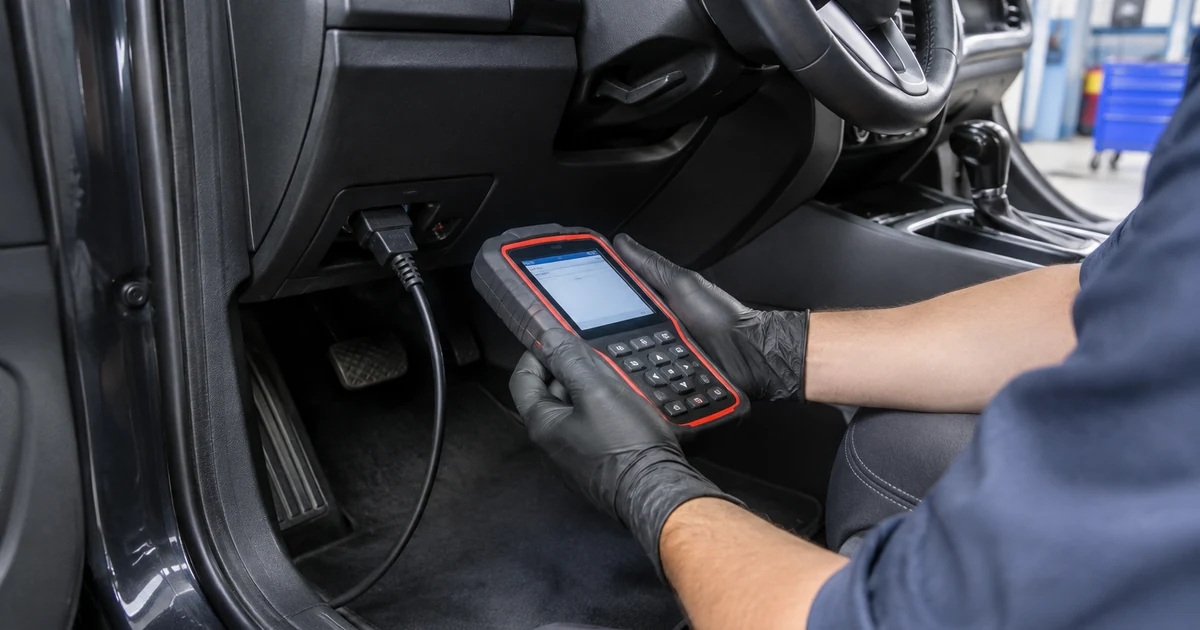
That’s why a cheap code reader can leave you stuck. Many basic readers only talk to the engine computer, so they show P0700 and nothing else. A scanner that can read the transmission module will show the companion code, such as a shift solenoid fault, a speed sensor fault or a gear ratio error, and that code is what decides the repair and the price.
P0700 applies to automatic transmissions, including CVTs and dual-clutch units. It can also appear on vehicles where the engine and transmission share one computer, in which case the specific transmission code is usually stored right next to it.
Common Causes of P0700
| Cause | Likelihood | Typical repair cost |
|---|---|---|
| Faulty shift solenoid | Most common | $150 – $500 |
| Low, burnt or wrong transmission fluid | Common | $130 – $270 (drain-and-fill, plus any leak fix) |
| Damaged wiring or corroded connector | Common | $150 – $500 |
| Failed speed sensor or range sensor | Common | $150 – $500 |
| Solenoid pack or valve body | Occasional | $300 – $800 |
| Transmission control module (TCM) | Occasional | $850 – $1,100 |
| Internal mechanical failure (clutches, bands, torque converter) | Less common but expensive | $2,000 – $4,000 (rebuild) |
Costs are shop estimates for a midsize car or SUV at an independent shop, in line with our transmission cost guides. Trucks, luxury models and modern 8- to 10-speed automatics cost more.
FIXD, AutoZone and YourMechanic all list the same main suspects: shift solenoids, the valve body, wiring and connectors, and the TCM itself. AutoZone also lists low or dirty fluid, internal transmission problems and, on some vehicles, a faulty engine coolant temperature sensor, because the TCM uses engine temperature to decide when to shift.
Symptoms of P0700
- Check engine light on, often along with a transmission warning light or message
- Harsh, delayed or erratic shifts
- Transmission stuck in one gear, often 2nd or 3rd (limp mode)
- Engine revs high before an upshift, or the car feels sluggish from a stop
- Worse fuel economy
- Stalling or rough running when coming to a stop, on some vehicles
Limp mode, also called failsafe mode, is the transmission protecting itself. It locks into a single gear so you can still drive slowly to a shop. It’s not a fix, and the car won’t shift normally until the fault is repaired.
Sometimes there are no symptoms at all and the code shows up only on a scan. The TCM may have caught an intermittent electrical fault before it affected shifting.
Is It Safe to Drive With P0700?
It depends on how the car is driving. If it shifts normally and the only sign is the check engine light, you can usually drive gently to a shop in the next few days. Don’t put it off: a solenoid or fluid problem left alone can damage clutches inside the transmission.
If the car is stuck in one gear, slipping, shifting harshly or won’t move properly, stop driving it. YourMechanic warns that a vehicle having trouble changing gears or stuck in one gear should not be driven, because it causes further damage and is a safety hazard. FIXD rates the code as severe for the same reason. Limp mode makes merging and highway driving dangerous, since the car can’t accelerate normally.
Towing is often cheaper than turning a $300 solenoid repair into a $3,000 rebuild.
How to Diagnose P0700
Everything starts with reading the transmission computer. A basic OBD2 code reader may show only P0700. You need a scanner that can access the TCM or transmission codes, or a shop with a professional scan tool. Many parts stores will read codes for free, but ask whether their tool reads transmission modules on your vehicle.
- Read all codes, including the TCM. Write down every code and the freeze-frame data (speed, engine load, throttle position, temperature). The companion code tells you where to look.
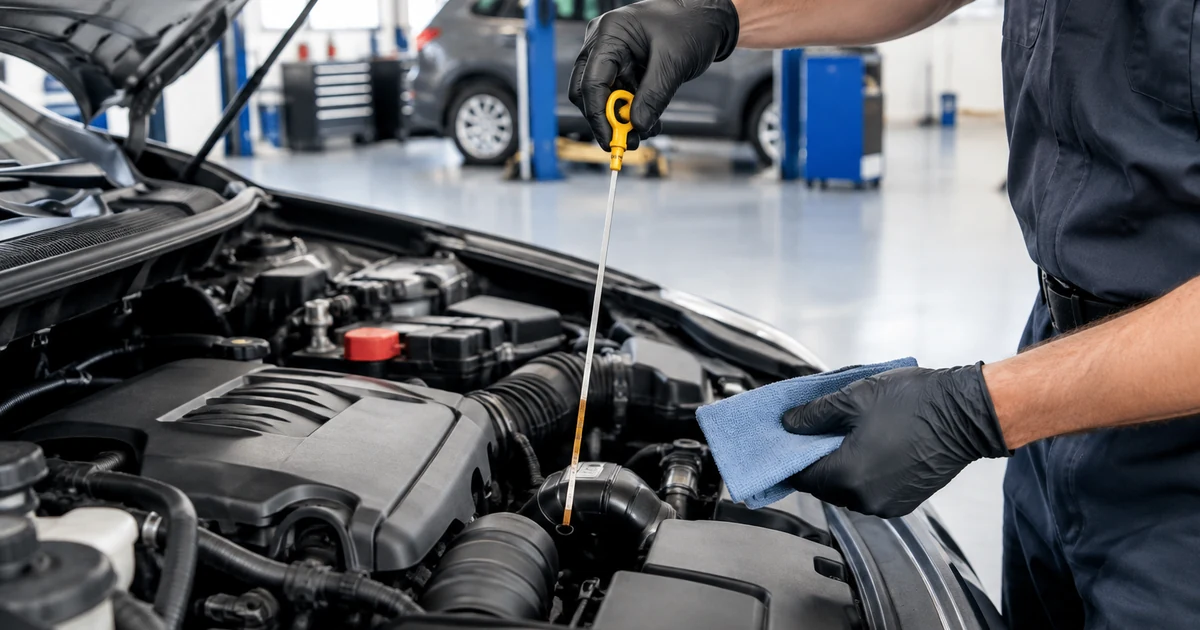
- Check the transmission fluid. Check the level the way your owner’s manual specifies, usually with the engine running and at operating temperature. Look at the color and smell: dark brown fluid with a burnt smell signals overheating and wear. Some newer transmissions have no dipstick and need a shop to check the level.
- Look for leaks around the pan, cooler lines and seals.
- Inspect wiring and connectors at the transmission, especially the main harness connector and any speed sensors. Corrosion, bent pins and chafed wires are common on older vehicles.
- Test the component named by the companion code. A shop measures solenoid resistance, watches sensor signals on live data, and compares input and output shaft speeds to spot slipping.
- Clear the codes and road test. If the code returns right away, the fault is hard. If it comes back only under certain conditions, it’s often wiring or a sensor.
- Check for software updates and service bulletins. Some vehicles need a TCM reflash to fix shifting complaints.
- Pull the pan if electrical tests pass. Heavy metal debris points to internal damage.
Expect a diagnostic fee of roughly $100 to $200 at a shop, often applied to the repair if you approve it. YourMechanic notes that the most common mistake is skipping steps and assuming a standard repair, since P0700 has many possible causes.
How to Fix P0700
Fix the problem named by the companion code, starting with the cheapest and most likely causes:
- Correct the fluid. Top off with the exact fluid type your transmission requires, fix any leak, or do a drain-and-fill if the fluid is old. Using the wrong fluid can itself cause shifting codes.
- Repair wiring and connectors. Clean corroded pins, fix chafed wires, and make sure the main connector is seated.
- Replace a faulty sensor such as an input or output speed sensor or a range sensor.
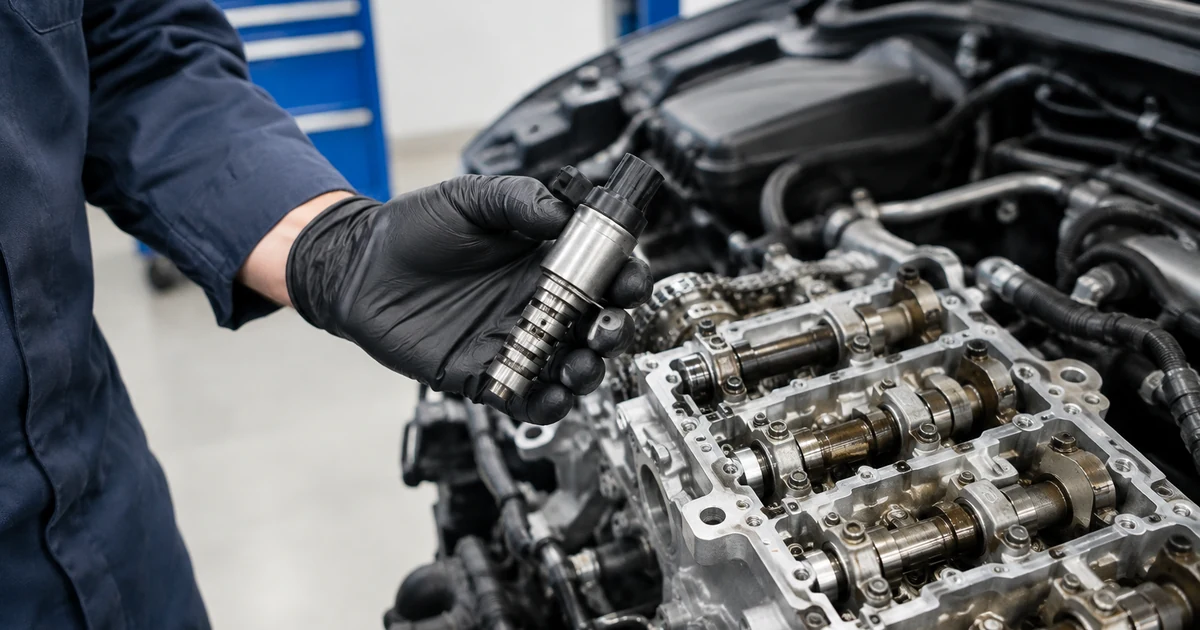
- Replace the faulty shift solenoid. On many transmissions solenoids come as a pack or are part of the valve body.
- Update or replace the TCM if it fails tests or a known software update applies. Replacement modules often need programming to your vehicle.
- Rebuild or replace the transmission only when internal damage is confirmed.
- Clear the codes and road test to confirm the fix. Some transmissions also need an adaptive relearn after repairs.
Cost to Fix P0700 by Cause
Because P0700 has so many possible causes, the bill swings from a fluid service to a new transmission. Here’s what each repair usually costs at an independent shop on a midsize car or SUV.
| Repair | Typical cost at a shop |
|---|---|
| Diagnosis with transmission scan | $100 – $200 |
| Transmission fluid drain-and-fill | $130 – $270 |
| Leak fix: pan gasket or cooler line | $150 – $400 |
| Wiring or connector repair | $150 – $500 |
| Speed or range sensor | $150 – $500 |
| Single shift solenoid | $150 – $500 |
| Solenoid pack or valve body | $300 – $800 |
| Transmission control module (TCM) | $850 – $1,100 |
| Full automatic rebuild | $2,000 – $4,000 |
| Remanufactured transmission replacement | $3,000 – $5,000 |
Most drivers pay about $310 when the cause is a single shift solenoid, the most common fix. Dealers typically charge around 30 percent more than independent shops, and trucks and luxury vehicles cost more across the board.
DIY vs. Taking It to a Shop
Most P0700 repairs are not beginner jobs. FIXD rates the repair as expert level. What you can reasonably do yourself: read all the codes with a capable scanner, check fluid level and condition where there’s a dipstick, and inspect connectors for obvious damage.
Replacing an external speed sensor or a solenoid accessible from the pan is intermediate work (about 3 out of 5) on some vehicles. It needs the right fluid, a new pan gasket, a torque wrench, and a correct fill procedure. TCM replacement usually needs programming, and anything internal belongs at a transmission shop.
Is It Worth Fixing?
For electrical faults, solenoids, sensors and fluid problems, yes: the repair is small compared to the value of almost any running car. The decision gets harder when the diagnosis is internal damage on an older, high-mileage vehicle. A rebuild or replacement at $2,000 to $5,000 can approach the car’s value, so compare the estimate to what the car is worth and its overall condition, and get a second opinion from a transmission specialist before committing.
How to Save Money on a P0700 Repair
- Get the TCM code read before buying any parts; P0700 alone doesn’t tell anyone what to replace.
- Check the fluid level and condition first. It’s the cheapest possible fix.
- Ask about software updates or service bulletins for your model; a reflash can cost far less than parts.
- Check your powertrain warranty. Transmissions are often covered longer than the rest of the car.
- Get a second quote from an independent transmission shop, especially if a rebuild is recommended.
- Ask whether the diagnostic fee is applied to the repair.
- Stop driving in limp mode. Towing costs less than turning a solenoid job into a rebuild.
Related Codes
P0700 almost always comes with one or more specific transmission codes. The most common companions:
- P0705: transmission range sensor circuit
- P0711 / P0712 / P0713: transmission fluid temperature sensor
- P0715: input or turbine speed sensor circuit
- P0720: output speed sensor circuit
- P0730: incorrect gear ratio, often slipping or low fluid
- P0740: torque converter clutch circuit
- P0750, P0755, P0760, P0765, P0770: shift solenoid A, B, C, D or E
- Manufacturer-specific codes starting with P1 or P2 that only a capable scanner will read
Frequently Asked Questions
What does code P0700 mean?
P0700 means “Transmission Control System Malfunction.” The transmission control module has found a problem and asked the engine computer to turn on the check engine light. It’s an informational code: the specific fault is stored as a separate transmission code.
Can I drive with a P0700 code?
If the car shifts normally, a gentle drive to a shop within a few days is usually fine. If it’s stuck in one gear, slipping or shifting harshly, stop driving it. Continuing can damage the transmission and limp mode makes highway driving unsafe.
How much does it cost to fix P0700?
It depends on the companion code. A fluid service runs $130 to $270, a shift solenoid $150 to $500 (most pay about $310), a TCM $850 to $1,100, and a rebuild $2,000 to $4,000 at an independent shop.
Why does my scanner only show P0700?
Many basic code readers only talk to the engine computer. The detailed transmission code is stored in the TCM, so you need a scanner that reads transmission modules for your vehicle, or a shop scan tool.
Can low transmission fluid cause P0700?
Yes. Low, burnt or incorrect fluid can cause slipping, pressure problems and solenoid faults that set transmission codes, which then trigger P0700. Checking the fluid is one of the first steps.
Does P0700 mean I need a new transmission?
Not usually. Most P0700 cases trace back to a solenoid, sensor, wiring or fluid problem. A rebuild or replacement is only needed when testing confirms internal damage.