What the P0113 Code Means
P0113 stands for “Intake Air Temperature Sensor 1 Circuit High Input.” The intake air temperature (IAT) sensor measures how warm the air entering the engine is. The engine computer uses that reading, together with airflow and coolant temperature, to fine-tune fuel delivery and ignition timing.
The sensor is a thermistor: its resistance changes with temperature. The computer sends it a 5-volt reference and reads the voltage that comes back. Cold air means high resistance and high voltage; hot air means low voltage. RepairPal explains that P0113 sets when the IAT signal voltage stays above about 4.5 volts while the coolant temperature reading behaves normally.
In plain terms, the computer is seeing an air temperature that’s impossibly cold, often a reading like -40°F on a scan tool. That almost always means an open circuit: an unplugged connector, a broken wire or a sensor that has failed internally. It’s the opposite of P0112 (circuit low input), which usually points to a short.
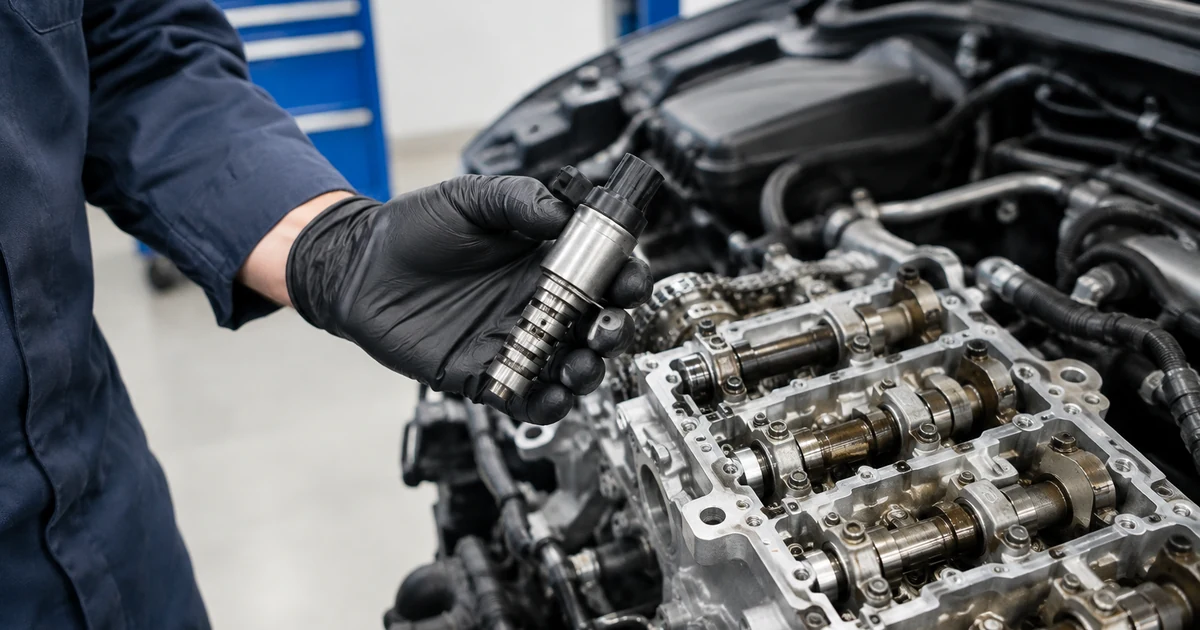
Where the sensor lives depends on the vehicle. Mechanicbase notes it’s often built into the mass airflow (MAF) sensor in the intake duct, sometimes mounted separately in the air box or intake tube, and occasionally on the intake manifold. That location matters a lot for the repair cost.
Common Causes of P0113
| Cause | Likelihood | Typical repair cost |
|---|---|---|
| IAT connector unplugged, loose or corroded (often after air filter service) | Very common, check first | $0 – $120 |
| Failed standalone IAT sensor | Common | $100 – $250 |
| Broken, chafed or open IAT wiring | Common | $100 – $400 |
| Failed MAF sensor with built-in IAT | Common on newer cars | $275 – $450 |
| Dirty or clogged engine air filter (contributing factor) | Occasional | $40 – $100 |
| Engine computer (PCM) fault | Rare | $250 – $2,500 |
RepairPal lists a defective IAT sensor, a dirty air filter, a defective MAF sensor, and faulty or corroded wiring and connections as the common causes. It also flags a frequent misdiagnosis: the IAT sensor gets replaced when the real problem is a poor connection, chafed wiring, the air filter or the MAF sensor. Jerry lists the same causes plus, rarely, the engine computer.
Symptoms of P0113
- Check engine light on
- Hard starting, especially when the engine is warm (the computer thinks the air is freezing and adds too much fuel)
- Hesitation or sluggish acceleration
- Rough idle
- Worse fuel economy, sometimes with black, sooty spark plugs from running rich
- Failed emissions inspection
Many cars run almost normally with P0113, because the engine computer substitutes a default air temperature when it sees an impossible reading. That fallback keeps the engine running but makes the fuel mixture less precise.
Is It Safe to Drive With P0113?
Usually yes, for a short time, but don’t ignore it. P0113 doesn’t affect brakes or steering, and most cars stay drivable. Edmunds still advises against driving with it for long, because the wrong air-fuel mixture lowers performance, raises emissions and can contribute to further damage, such as to the catalytic converter.
Fix it promptly in these cases:
- The engine stalls, hesitates badly or is hard to start. That can be risky when pulling into traffic.
- The check engine light starts flashing. That signals a misfire serious enough to overheat the converter. See our guide on a flashing check engine light and limit driving.
- Other airflow codes appear, such as MAF or lean codes, which point to a bigger intake problem.
A lit check engine light also hides new trouble. While P0113 keeps it on, you won’t see a warning if another code sets.
How to Diagnose P0113
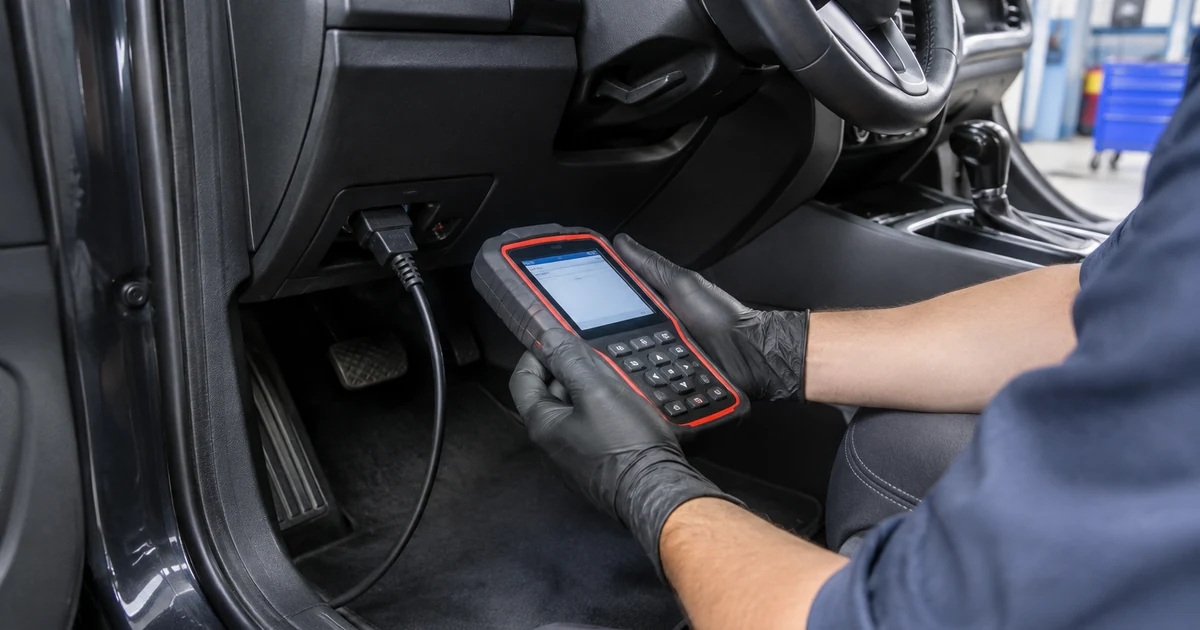
An OBD2 scanner with live data is the most useful tool here. Mechanicbase recommends comparing the IAT reading with the actual outside temperature.
- Check the IAT reading with the engine cold. After the car sits overnight, the IAT and coolant temperature readings should be close to each other and to the outside air. A reading of -40°F or similar confirms an open circuit.
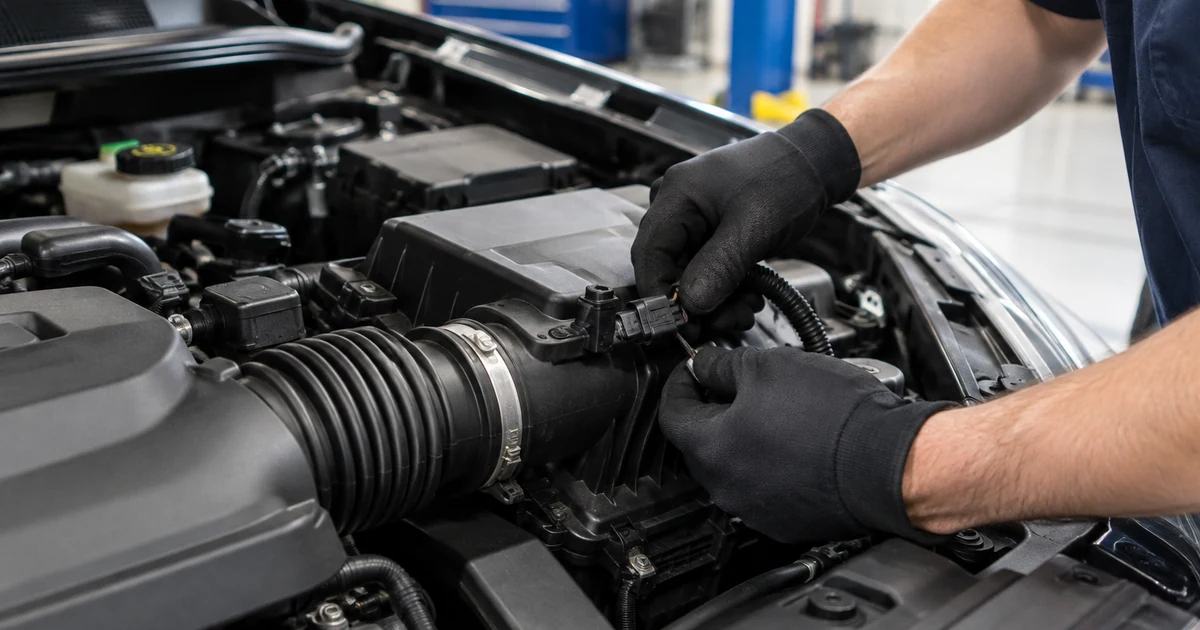
- Inspect the connector. Make sure the IAT or MAF connector is fully seated and locked. Look for bent pins, corrosion or a broken locking tab. This is the first thing to check if the code appeared after an air filter change.
- Wiggle test the wiring. With the scanner showing live IAT data, gently move the harness. A reading that jumps between normal and -40°F points to a broken wire or poor pin contact.
- Jumper test. A shop may unplug the sensor and briefly jumper the two terminals in the connector. If the reading jumps to a very high temperature, the wiring and computer are fine and the sensor is bad.
- Measure resistance and voltage. RepairPal recommends checking for a steady 5-volt reference and a good ground at the connector. The sensor’s resistance should match the service manual spec for the current temperature.
Diagnosis at a shop usually costs $100 to $180, and many shops credit it toward the repair.
How to Fix P0113
Start with what’s free and cheap:
- Reconnect or clean the connector. Push it in until it clicks, and clean corroded pins with electrical contact cleaner.
- Replace a dirty air filter. It’s cheap, and RepairPal lists it among the common contributors. It won’t fix a broken wire, though.
- Repair broken or chafed wiring. Look closely where the harness bends near the air box lid or rubs on brackets.
- Replace the IAT sensor if it fails the resistance or jumper test. Standalone sensors usually twist or clip out of the intake tube or air box.
- Replace the MAF sensor if the IAT is built into it and testing confirms the IAT side has failed.
- Consider the engine computer only after the sensor and wiring test good. Ask about software updates first.
- Clear the code and drive. If the repair worked, the code should not return and the IAT reading should look sensible right away.
Cost to Fix P0113 by Cause
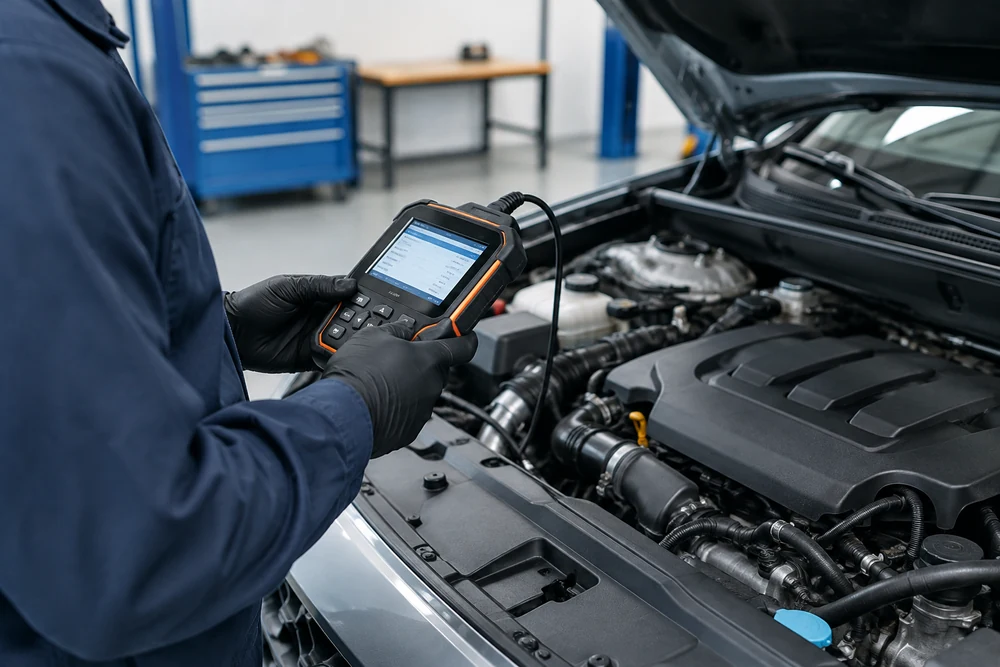
The cost to fix P0113 runs from nothing for a loose connector to about $450 for a MAF sensor with a built-in IAT, with rare computer problems costing more. When a part is needed, most drivers pay about $170 to have a standalone intake air temperature sensor replaced at an independent shop.
| Repair | Parts | Labor | Total at a shop |
|---|---|---|---|
| Diagnosis | — | $100 – $180 | $100 – $180 (often credited) |
| Reconnect or clean connector | $0 – $20 | $0 – $100 | $0 – $120 |
| Engine air filter | $15 – $45 | $20 – $55 | $40 – $100 |
| Standalone IAT sensor | $20 – $150 | $40 – $100 | $100 – $250 |
| Wiring or connector repair | $15 – $80 | $85 – $320 | $100 – $400 |
| MAF sensor with built-in IAT | $220 – $350 | $50 – $100 | $275 – $450 |
| PCM update or replacement | $0 – $1,500 | $100 – $500 | $250 – $2,500 |
These ranges match published data. Mechanicbase estimates $40 to $250 for an IAT sensor replacement (part $20 to $150, labor $20 to $100) and up to about $400 for the part when the IAT is integrated into the MAF sensor. RepairPal’s national estimate for a mass airflow sensor replacement is $274 to $381, with parts making up most of the bill.
What Affects the Price
Where the sensor is
A standalone sensor in the air box or intake tube is cheap and quick. If the IAT is part of the MAF sensor, you replace the whole MAF unit, which costs more. The rare sensor mounted under the intake manifold adds labor.
Part quality
Standalone IAT sensors are simple parts, and quality aftermarket versions work well. For a MAF sensor, an OEM or original-equipment-supplier part is often worth it, because cheap MAF sensors can cause new fuel trim problems.
Vehicle type
Luxury and European models use more expensive sensors, and some combine several sensors in one housing.
Shop type and region
Independent shops typically charge $110 to $150 an hour and dealers $150 to $220. Labor runs highest in the Northeast and on the West Coast.
Wiring damage
A broken wire inside a harness, or damage from rodents, takes longer to trace than a simple sensor swap and can push the bill toward the top of the range.
DIY vs. Taking It to a Shop
P0113 is one of the most DIY-friendly check engine codes. Reseating a connector is a 1 out of 5 job. Replacing a standalone IAT sensor or a MAF sensor is usually 1 to 2 out of 5: unplug it, remove one or two screws or twist it out, and install the new one. It often takes 15 to 30 minutes with basic hand tools.
Tracing a broken wire is a 3 out of 5 and needs a multimeter and a wiring diagram. If the sensor tests good and the wiring isn’t obviously damaged, a shop diagnosis is a better use of money than buying parts by guesswork.
Is It Worth Fixing?
Yes. Most P0113 repairs cost less than $250, and an accurate air temperature reading helps the engine run cleanly, start easily and use less fuel. In states with emissions testing, you won’t pass inspection with the code stored. Even on an older, high-mileage car, it’s an inexpensive repair that’s clearly worth doing.
How to Save Money on P0113
- Check the connector first, especially after recent air filter or intake work.
- Use a scanner’s live data to confirm the -40°F reading before buying parts.
- Don’t replace the sensor by default. Rule out wiring and the connector, the most common misdiagnosis.
- Replace a standalone sensor yourself; parts often cost $20 to $150.
- Ask whether diagnosis is credited toward the repair.
- Check your warranty on newer vehicles; emissions-related sensors may be covered.
- Get a second opinion before agreeing to an engine computer replacement.
Related Codes
- P0110 — Intake air temperature sensor circuit malfunction
- P0111 — IAT sensor circuit range/performance
- P0112 — IAT sensor circuit low input (usually a short)
- P0114 — IAT sensor circuit intermittent
- P0101 / P0102 / P0103 — Mass airflow sensor circuit faults, common when the IAT is built into the MAF
- P0128 — Coolant temperature below thermostat regulating temperature; a faulty IAT can occasionally be involved. See our P0128 guide.
- P0171 — System too lean, bank 1, often an intake or MAF issue; see our P0171 guide
Frequently Asked Questions
What does code P0113 mean?
P0113 means “Intake Air Temperature Sensor 1 Circuit High Input.” The engine computer sees a voltage above about 4.5 volts on the IAT circuit, which it reads as extremely cold air. That usually points to an unplugged connector, a broken wire or a failed sensor.
Can I drive with a P0113 code?
Usually for a short time, since most cars switch to a default air temperature and stay drivable. The fuel mixture becomes less accurate, though, which can cause hard starting, poor fuel economy and higher emissions. Fix it soon, and stop driving if the check engine light flashes.
How much does it cost to fix P0113?
A loose connector can cost nothing to fix. A standalone intake air temperature sensor costs about $100 to $250 at a shop, with most drivers paying around $170. If the IAT is built into the MAF sensor, expect $275 to $450, and wiring repairs run $100 to $400.
Can a dirty air filter cause P0113?
RepairPal and Jerry both list a dirty air filter as a possible contributor, and replacing it is cheap. But P0113 is an electrical high-voltage fault, so an unplugged connector, broken wire or failed sensor is a more likely cause. Replace the filter if it’s dirty, then check the circuit.
Where is the intake air temperature sensor located?
On many newer vehicles the IAT is built into the mass airflow sensor in the intake duct after the air filter. On others it’s a separate sensor in the air box or intake tube, and occasionally it sits on the intake manifold. Your service manual or a parts lookup by VIN shows the exact location.
What is the difference between P0112 and P0113?
P0112 means the IAT circuit voltage is too low, which the computer reads as very hot air and usually points to a short to ground. P0113 means the voltage is too high, read as very cold air, which usually points to an open circuit such as an unplugged connector or broken wire.