What Transmission Slipping Usually Means
A slipping transmission is one that isn’t fully holding a gear. The classic sign: you press the gas, the engine revs climb, but the car barely speeds up, as if it’s briefly in neutral. It can also feel like a delay before the car moves when you shift into drive or reverse, a gear change that takes too long, or a shift that suddenly flares and then catches with a thump.
Inside an automatic, gears are engaged by clutch packs and bands that are squeezed together by pressurized transmission fluid. Slipping happens when that grip isn’t strong enough. Either the fluid can’t build enough pressure (low fluid, worn-out fluid, a clogged filter or a bad solenoid), or the friction parts themselves are worn. In a manual, the usual culprit is a worn clutch.
That split matters for your wallet. Problems outside the transmission’s core, like fluid, leaks, solenoids and sensors, usually cost a few hundred dollars. Worn parts inside usually mean a rebuild or replacement in the thousands. Catching slipping early is the best chance of staying in the first group.
Before blaming the transmission, rule out look-alikes. Jerry notes that engine misfires, traction control cutting in and wheelspin on slick roads can all feel like slipping.
Common Causes of Transmission Slipping
| Cause | How to recognize it | How likely | Typical repair cost |
|---|---|---|---|
| Low fluid from a leak | Red or brown spots under the car, low dipstick reading, slipping worse when hot or on turns | Most common | $150 – $400 (leak fix and refill) |
| Old, burnt or wrong fluid | Dark fluid with a burnt smell, overdue service, slipping after a fluid top-off with the wrong type | Common | $130 – $270 |
| Faulty shift solenoid | Slips or hesitates in one gear, check engine light, codes such as P0700 or P0750–P0770 | Common | $150 – $500 |
| Solenoid pack or valve body problem | Erratic or harsh shifts in several gears, slipping that comes and goes | Occasional | $300 – $800 |
| Failing torque converter | Shudder at steady speed, slipping at highway speed, whining | Occasional | $600 – $1,200 |
| Worn clutch (manual transmission) | Revs rise without speed in high gears, clutch engages high on the pedal | Common on manuals | $1,100 – $2,200 |
| Worn clutch packs or bands inside an automatic | Slipping in several gears, burnt fluid with debris, getting steadily worse | Common on high-mileage units | $2,000 – $4,000 (rebuild) |
| Transmission control module or software fault | Warning lights, limp mode, odd shifting that a reflash may fix | Less common | $850 – $1,100 (module) |
Costs are typical national shop prices for a midsize car or SUV with a conventional automatic. Modern 8- to 10-speed automatics, CVTs, trucks and luxury models cost more. If the unit is beyond repair, a remanufactured transmission replacement typically runs $3,000 to $5,000.
Low Transmission Fluid
Low fluid is the most common reason a transmission slips. The transmission is a sealed system, so low fluid almost always means a leak: a pan gasket, a cooler line, an axle seal or the front pump seal. With too little fluid, the pump can’t build full pressure, especially when the fluid is hot or sloshes to one side in a turn.
Signs: slipping that’s worse when the car is warm, delayed engagement, red or reddish-brown drips under the middle of the car and a low reading on the dipstick if your car has one.
Fix and cost: fixing a pan gasket or cooler line leak and refilling typically costs $150 to $400. Topping off without fixing the leak only buys time.
Old, Burnt or Wrong Fluid
Transmission fluid wears out. Heat breaks it down, and as it ages it loses the friction properties the clutches rely on. The Drive notes that “lifetime” fluid claims are rarely realistic and suggests changes around every 40,000 miles or at the maker’s interval. Using the wrong fluid, especially in a CVT or dual-clutch transmission, can cause slipping by itself.
Signs: fluid that’s dark brown or black, smells burnt or has visible particles.
Fix and cost: a drain-and-fill typically costs $130 to $270, about $200 for most drivers. Be realistic: on a high-mileage transmission that is already slipping, fresh fluid sometimes doesn’t help, and The Drive warns that a fluid change can occasionally make an already worn unit slip more. Burnt fluid is often a sign of wear inside, not just the cause.
Faulty Shift Solenoids or Valve Body
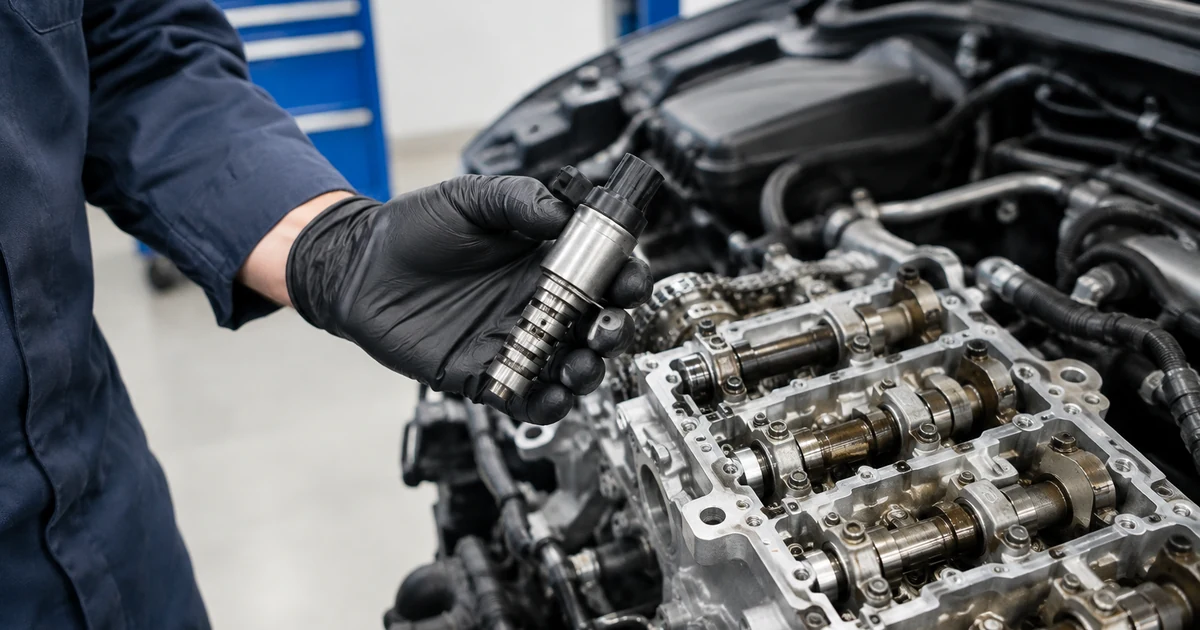
Shift solenoids are electrically controlled valves that direct fluid to engage each gear. When one sticks or its wiring fails, the clutch for that gear doesn’t get full pressure. The valve body is the maze of passages the solenoids sit in, and wear or debris there can cause similar problems across several gears.
Signs: slipping or hesitation in one particular gear, harsh or late shifts, a check engine or transmission light and often limp mode, where the car stays in one gear. A P0700 code is a common companion.
Fix and cost: a single shift solenoid typically costs $150 to $500. A solenoid pack or valve body runs $300 to $800.
Failing Torque Converter
The torque converter connects the engine to an automatic transmission through fluid. At cruising speed, a lock-up clutch inside it links the two directly. When that clutch wears, the car can slip or shudder at highway speeds even though the gears themselves are fine.
Signs: a vibration or shudder at steady 30 to 50 mph, rpm that creeps up on the highway, a whine and overheating fluid.
Fix and cost: torque converter replacement typically costs $600 to $1,200 because the transmission has to come out to reach it.
Worn Clutch (Manual Transmission)
In a manual car, slipping almost always means a worn clutch disc. The engine revs rise but the car doesn’t accelerate to match, most noticeably in higher gears or going uphill.
Signs: the clutch grabs very high in the pedal travel, a burning smell after hills or traffic and slipping that gets worse over weeks.
Fix and cost: a clutch replacement costs about $1,100 to $2,200 at an independent shop, about $1,600 for most drivers.
Worn Internal Parts
Clutch packs and bands inside an automatic wear over many miles, faster with towing, overheating or neglected fluid. Once the friction material is gone, no fluid or electrical fix will restore the grip.
Signs: slipping in several gears, burnt fluid with debris and a problem that steadily worsens.
Fix and cost: a full rebuild typically costs $2,000 to $4,000, about $2,900 for most drivers. A remanufactured transmission installed runs about $3,000 to $5,000.
Is It Safe to Drive With a Slipping Transmission?
Not for long, and sometimes not at all. A slipping transmission can lose power at the worst possible moment, such as merging onto a highway, pulling across traffic or climbing a hill. That makes it a real safety risk, not just a repair bill.
- Stop driving and arrange a tow if the engine revs flare with almost no acceleration, you smell burning or see smoke, a transmission temperature warning comes on, or the car won’t engage drive or reverse. Jerry lists all of these as stop-now signs.
- Don’t drive if the fluid looks pink and milky. That can mean coolant has mixed into the transmission fluid.
- Mild or occasional slipping: have it checked within days, not weeks. Drive gently, avoid highways and heavy traffic if you can, and don’t tow.
- Don’t keep driving to “see if it gets better.” Slipping creates heat, heat burns the fluid and friction parts, and a repair that might have cost a few hundred dollars can turn into a rebuild.
The Drive puts it bluntly: a slipping transmission can quickly turn into a dead one if you’re not careful.
How a Mechanic Diagnoses Transmission Slipping
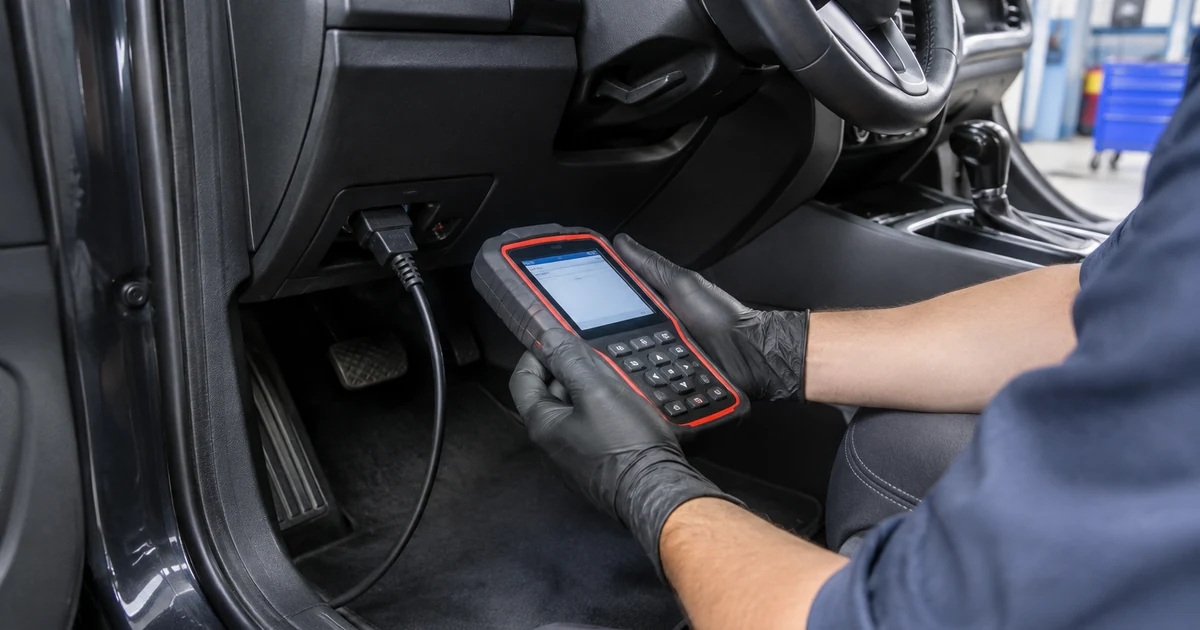
- Scan for codes with a tool that reads the transmission module, not just engine codes. Solenoid, sensor and gear-ratio codes point straight at the problem.
- Check fluid level and condition using the correct procedure for your transmission. Many newer units have no dipstick and must be checked at a set temperature on a lift.
- Look for leaks at the pan, cooler lines, axle seals and the bellhousing.
- Road test while watching live data such as engine speed, gear commanded and torque converter slip.
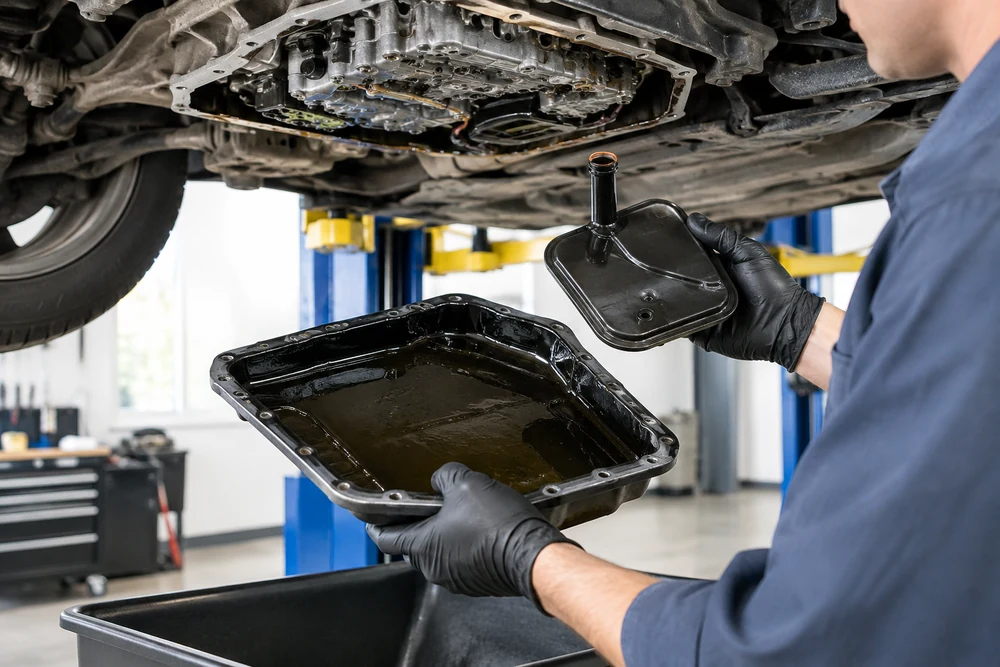
- Inspect the pan for metal shavings or friction material, which separates an external fix from internal wear.
- Check for software updates or service bulletins for your model.
Expect to pay $100 to $200 for a transmission diagnosis at an independent or transmission shop. Many apply it toward the repair.
What You Can Check Yourself
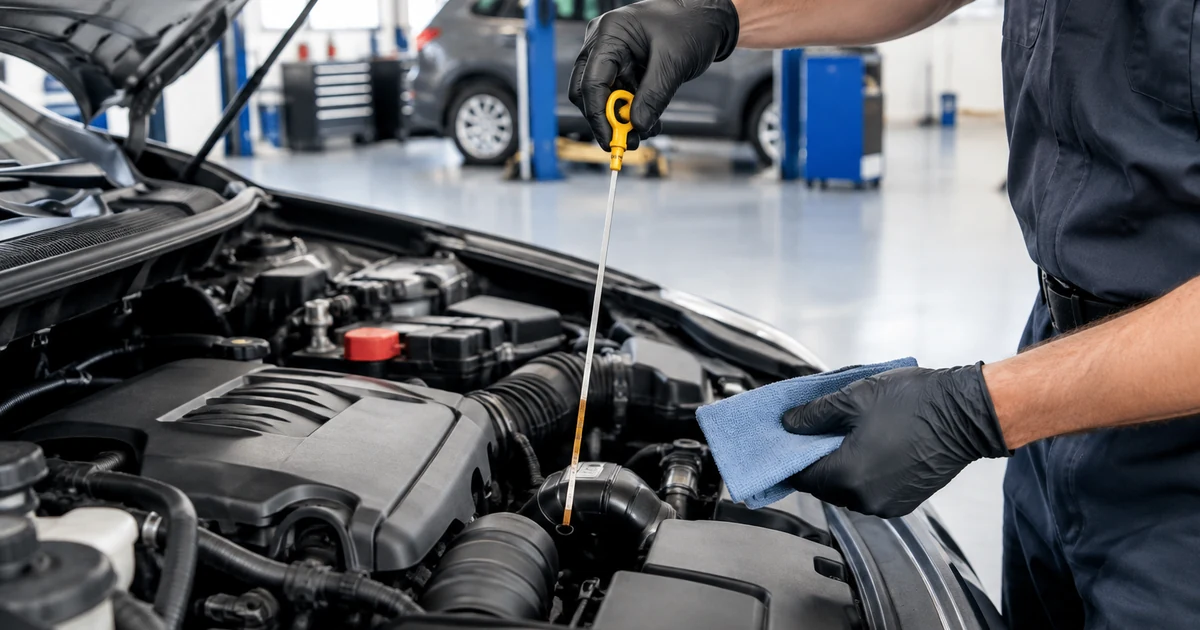
- Check the fluid if your car has a transmission dipstick. Follow the owner’s manual: most are checked warm, with the engine running, in park, on level ground. Healthy fluid is usually red or pink and translucent; dark brown, burnt-smelling fluid is a warning sign.
- Look under the car after it sits overnight for red or brown spots near the middle of the car.
- Scan for codes. A basic OBD2 scanner or a free scan at a parts store catches many transmission codes, though some need a more capable tool.
- Note exactly when it slips: cold or hot, which gear, at what speed, and whether a light comes on. That information speeds up the diagnosis.
- Use only the specified fluid. Don’t mix types or pour in additives without guidance; Jerry advises against it, and The Drive notes that “fix in a bottle” products rarely work.
Never reach under a running car or work near hot exhaust parts. If the car has no dipstick, leave the fluid check to a shop.
When to See a Mechanic Right Away
- The engine revs but the car barely moves, especially when merging or climbing
- The car won’t go into drive or reverse, or takes several seconds to engage
- You smell burning fluid or see smoke from under the car
- A transmission temperature or warning light comes on, or the car goes into limp mode
- You see a puddle of red fluid under the car
How to Save on the Repair
- Act at the first sign. Early slipping from low fluid or a solenoid is a few-hundred-dollar repair; driving on it can turn it into a $3,000 one.
- Get the transmission codes read first so the shop starts with evidence, not guesses.
- Check your warranty. Many automakers cover the transmission under the powertrain warranty, and some models have extended coverage or bulletins.
- Use a transmission specialist or good independent shop rather than a dealer for out-of-warranty work.
- Get a second opinion before a rebuild. Ask the first shop to show you the codes, fluid and pan debris.
- Compare rebuilt, remanufactured and used if the unit is worn out. Warranty length often matters more than the lowest price.
- Keep up with fluid service afterward to protect the repair.
Frequently Asked Questions
What does a slipping transmission feel like?
The engine revs rise but the car doesn’t speed up to match, as if it briefly dropped into neutral. You may also feel a delay when shifting into drive or reverse, shifts that flare and then thump, or a shudder at steady speeds.
Can low transmission fluid cause slipping?
Yes, it’s the most common cause. Without enough fluid, the pump can’t build the pressure needed to hold the clutches, especially when the fluid is hot. Since transmissions don’t consume fluid, a low level also means there’s a leak to fix.
How much does it cost to fix a slipping transmission?
It depends on the cause. A leak fix and refill runs about $150 to $400, a drain-and-fill $130 to $270 and a shift solenoid $150 to $500. A torque converter costs $600 to $1,200, a full rebuild $2,000 to $4,000 and a remanufactured transmission about $3,000 to $5,000 installed.
Is it safe to drive with a slipping transmission?
Only briefly and carefully. Slipping can leave you without power when merging or crossing traffic, and continued driving creates heat that causes more damage. If the revs flare with almost no acceleration, you smell burning or the car won’t engage a gear, stop and have it towed.
Will a transmission fluid change fix slipping?
Sometimes. If the fluid is low, old or the wrong type, fresh fluid of the correct spec can help. On a high-mileage transmission with worn clutches, it usually won’t, and in some cases it can make slipping worse, so have the cause diagnosed first.
Do transmission additives fix slipping?
Rarely for long. Additives may mask a minor problem for a while, but they can’t replace worn friction material or fix a failed solenoid or leak. Use only the fluid your manufacturer specifies and get a proper diagnosis.
Can a slipping transmission be fixed without a rebuild?
Often, if it’s caught early. Low fluid, leaks, old fluid, solenoids, sensors and software problems can all be fixed without opening the transmission. A rebuild is needed when the clutch packs, bands or other internal parts are worn.