Brake Pad Replacement Cost by Vehicle
Prices below are for replacing the front pads on one axle at an independent shop, with quality aftermarket ceramic or semi-metallic pads. They are estimates for common model years and trims; performance packages, heavy-duty trucks and dealer pricing run higher.
| Vehicle | Parts | Labor | Total |
|---|---|---|---|
| Ford F-150 | $70 – $130 | $170 – $210 | $240 – $340 |
| Chevrolet Silverado 1500 | $90 – $150 | $220 – $280 | $310 – $430 |
| Toyota Camry | $60 – $120 | $180 – $240 | $240 – $360 |
| Toyota RAV4 | $60 – $120 | $160 – $230 | $220 – $350 |
| Toyota Corolla | $50 – $110 | $170 – $230 | $220 – $340 |
| Honda Civic | $50 – $100 | $160 – $220 | $210 – $320 |
| Honda Accord | $55 – $110 | $170 – $230 | $225 – $340 |
| Honda CR-V | $55 – $110 | $150 – $210 | $205 – $320 |
| Nissan Altima | $70 – $140 | $200 – $280 | $270 – $420 |
| Chevrolet Equinox | $60 – $120 | $160 – $230 | $220 – $350 |
| Jeep Grand Cherokee | $80 – $160 | $170 – $250 | $250 – $410 |
| Tesla Model 3 | $80 – $170 | $150 – $250 | $230 – $420 |
| BMW 3 Series | $100 – $220 | $180 – $280 | $280 – $500 |
Trucks and three-row SUVs cost more because the pads are bigger and the calipers heavier. European cars add a wear sensor and pricier pads, and many need a scan tool to open the rear calipers on cars with an electronic parking brake. A Tesla or other EV often goes much longer between pad changes thanks to regenerative braking, but the job itself costs about the same as a gas midsize car when it is finally due.
Cost Breakdown: Parts vs. Labor
A pad-only brake job is mostly labor. A set of pads for one axle usually costs $35 to $150, while labor runs about $100 to $250. Book time is roughly 0.8 to 1.5 hours per axle, and most independent shops bill somewhere around $120 to $160 an hour.
Pad types
- Organic (NAO): cheapest and quiet, but they wear fastest and make more dust. Fine for light commuter cars.
- Ceramic: the most common upgrade for cars and crossovers. Quiet, low dust, long life, usually a bit more expensive.
- Semi-metallic: strong bite and good heat tolerance, which is why they are common on trucks, towing rigs and performance cars. Noisier and dustier.
- OEM pads: the dealer-brand pad, matched to the original feel and noise level. Usually 10% to 30% more than a good aftermarket set.
Dealer vs. independent vs. DIY
| Option | Typical cost (one axle) | What you get |
|---|---|---|
| Independent shop | $170 – $450 | Aftermarket or OEM pads, usually a 12-month or longer warranty |
| Dealership | $220 – $590 | OEM pads, factory procedures, higher labor rate |
| DIY | $35 – $150 | Pads only; you supply tools and time |
What Affects the Price
Vehicle type and brake design
Bigger, heavier vehicles need bigger pads. A Silverado or Grand Cherokee pad set costs more than a Civic set, and heavy-duty trucks can double the parts price. Rear brakes with an electronic parking brake need a scan tool to retract the caliper, which adds labor time.
Pad quality
The gap between a budget pad and a premium ceramic pad can be $50 to $100 per axle. Cheap pads may save money today but often wear faster and squeal more.
Shop type
Dealers charge the highest labor rates, often 25% to 35% more than an independent shop for the same job. Chain brake shops sometimes advertise very low pad prices, then add rotors, fluid flushes and hardware on the counter, so compare the full written quote.
Where you live
Labor rates are highest in the Northeast and on the West Coast and lowest across much of the South and Midwest. Use the region setting in the estimator above to see the difference.
Parts replaced at the same time
The biggest swing is whether your rotors are still usable. If they are worn below minimum thickness, warped or scored, the job becomes a pads-and-rotors job, which roughly doubles the bill. See our brake pads and rotors cost guide for those prices.
Symptoms of Worn Brake Pads
- High-pitched squeal when braking. Many pads have a small metal wear indicator that squeals on purpose when the pad gets thin.
- Grinding or growling noise. This usually means the friction material is gone and metal is touching the rotor.
- Brake warning light on cars with electronic pad wear sensors.
- Longer stopping distances or a pedal that feels less responsive.
- Vibration or pulsation in the pedal, which usually points to uneven rotors rather than the pads alone.
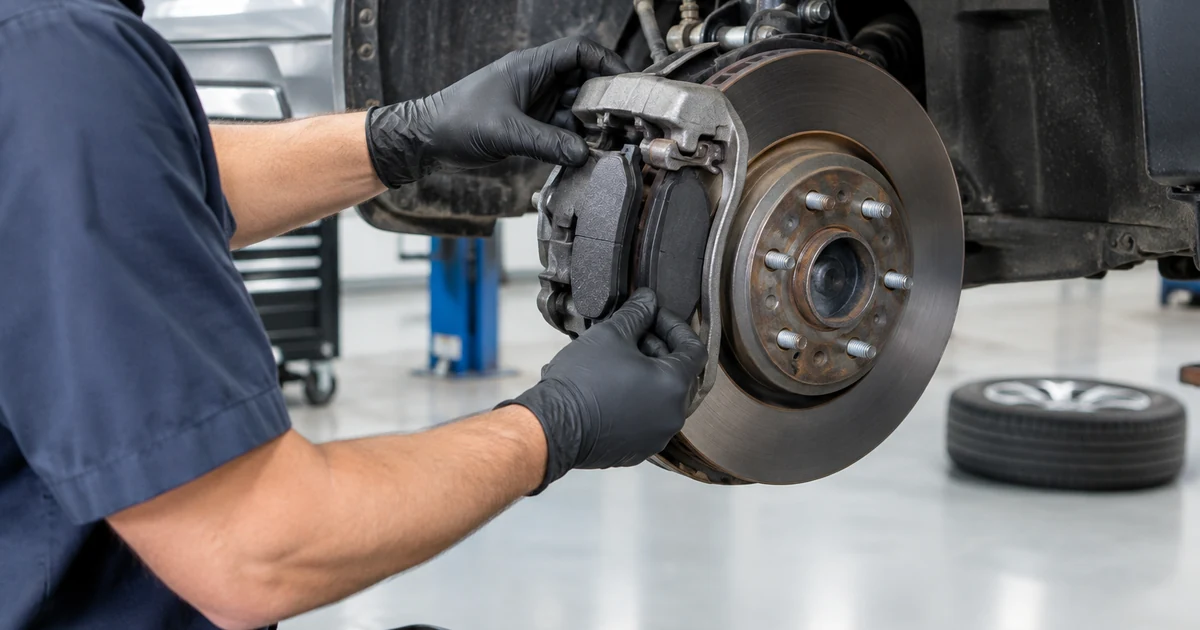
- Visible thin pads: if you can see less than about 3 to 4 mm of pad through the wheel, it is time.
Pads typically last anywhere from about 25,000 to 70,000 miles. City driving, towing, and heavy vehicles wear them faster; highway miles and regenerative braking make them last longer.
Can You Drive With Worn Brake Pads?
A light squeal from the wear indicator is a warning, not an emergency. You generally have a little time to book the job, but not months. Once you hear grinding, feel the car pull to one side, or notice the pedal sinking or feeling soft, stop driving and have it towed or repaired right away. Metal-on-metal braking stops you less well, and it quickly ruins the rotors, which turns a roughly $300 pad job into a $500 to $800 pads-and-rotors job.
If the brake warning light is red or the pedal goes close to the floor, that is a hydraulic problem, not just worn pads. Do not drive the car.
DIY vs. Taking It to a Shop
Difficulty: 2 out of 5. Replacing pads on a typical car is one of the most approachable DIY brake jobs. Plan on 1 to 2 hours per axle the first time.
Tools you need: floor jack and jack stands, lug wrench, socket set, a C-clamp or caliper piston tool, brake cleaner, brake grease for the slide pins, and a torque wrench. Rear calipers on some cars need a piston wind-back tool, and electronic parking brakes need a scan tool or a specific service procedure.
Be honest with yourself: brakes are a safety system. If you are not sure how to check rotor thickness, torque the caliper bolts, or bed in new pads, pay a shop. Always pump the pedal before driving off, because the first press after a pad change goes to the floor.
Is It Worth Replacing Brake Pads on an Older Car?
Almost always, yes. Brake pads are routine maintenance, not a major repair, and $150 to $450 is small compared with the value of nearly any running car. The only time to think twice is when the brake quote is part of a much bigger list, such as a failing transmission or engine, on a car worth less than the total. Even then, a car you keep driving needs working brakes.
How to Save Money on Brake Pads
- Replace pads before they grind. Catching them early can save the rotors, which is the single biggest saving.
- Get a second written quote that lists pads, rotors, hardware and labor separately.
- Use an independent shop instead of the dealer for out-of-warranty cars.
- Choose a good aftermarket ceramic pad rather than OEM if you do not need the exact factory feel.
- Check warranties. Some pad brands and chain shops offer lifetime pad warranties where you only pay labor next time.
- Do both front wheels at once (always), but do not let a shop sell you rear pads if they still have plenty of material left.
- Consider DIY if you have the tools and experience; you save most of the labor.
Hearing a hum or growl that changes with speed rather than when you brake? That is more likely a wheel bearing; see our wheel bearing replacement cost guide. You can also read how we estimate costs.
Frequently Asked Questions
How much does it cost to replace brake pads on all four wheels?
Doing front and rear pads together usually costs about $320 to $850 at an independent shop, or roughly double a single axle. Front pads wear faster than rears on most cars, so you often only need one axle at a time.
Is brake pad replacement priced per wheel or per axle?
Per axle. Pads are always replaced in pairs across an axle (both front wheels or both rear wheels) so the car brakes evenly. A quote for a single wheel is a red flag.
How long does a brake pad replacement take?
Book time is about 0.8 to 1.5 hours per axle, so most shops finish one axle in about an hour and both axles in two to three hours. Cars with electronic parking brakes can take a little longer.
Do I need new rotors every time I replace brake pads?
Not always. If the rotors are above minimum thickness and not warped or deeply scored, new pads can go on the old rotors. Many shops now replace rotors rather than resurfacing them, so ask to see the measurement if they recommend new ones.
How long do brake pads last?
Most pads last roughly 25,000 to 70,000 miles. Stop-and-go city driving, towing and heavy vehicles wear them faster, while highway driving and the regenerative braking in hybrids and EVs make them last longer.
Are ceramic brake pads worth the extra cost?
For most cars and crossovers, yes. Ceramic pads are quieter, make less dust and usually last longer. Semi-metallic pads are often the better pick for trucks, towing and hard use because they handle heat well.
Why is the dealer quote so much higher?
Dealers usually charge higher hourly labor rates and use OEM pads, so the same job can cost 25% to 35% more than at an independent shop. The work itself is the same on a routine pad replacement.