What Squeaking Brakes Usually Mean
Most of the time, brakes squeaking when stopping means one of two things: the pads are getting thin, or something small (moisture, dust, dry hardware) is making the pads vibrate against the rotor. The first needs a brake job soon. The second is often harmless or a cheap fix.
The trick is telling them apart. A brief squeak on the first few stops of a damp morning that disappears after a mile is normal. A steady, high-pitched squeal every time you brake, day after day, is usually the pad wear indicator doing its job: a small metal tab built into the pad that touches the rotor when the friction material is nearly gone.
Squeaking is not the same as grinding. Squeaking is high-pitched and thin. Grinding is a low, harsh, metallic growl you can sometimes feel through the pedal. Grinding means metal is already cutting into the rotor, and it’s a much more urgent problem (see our brake pads and rotors cost guide for what that usually leads to).
Common Causes of Squeaking Brakes
| Cause | How to recognize it | How likely | Typical repair cost |
|---|---|---|---|
| Worn brake pads (wear indicator) | Constant high-pitched squeal when braking, getting worse over weeks | Most common | $150 – $450 per axle |
| Overnight moisture or surface rust | Squeaks on first stops after rain or a cold night, then goes away | Very common | $0 (normal) |
| Dry or worn hardware, unlubricated contact points | Squeak or chirp at low speed or light braking; pads still thick | Common | $100 – $200 per axle (clean, lube, new clips) |
| Glazed pads or rotors | Squeal plus weaker braking; shiny, glassy pad or rotor surface | Common | $250 – $500 (pads + resurfaced rotors) |
| Worn or damaged rotors | Squeal with grooves, a lip on the rotor edge, or vibration | Occasional | $350 – $800 per axle (pads + rotors) |
| Hard pad compound (semi-metallic) | Occasional squeal from new or performance pads, otherwise fine | Occasional | $0, or switch to ceramic pads at next job |
| Sticking caliper or slide pins | Squeal plus pulling, a hot wheel, or one pad worn much more | Less common | $300 – $800 per caliper |
| Dry drum brake backing plate (rear drums) | Scraping squeak from the rear at low speed | Less common | $100 – $250 (clean, lube, adjust) |
These ranges are parts and labor at an independent shop for a typical midsize car. Trucks, large SUVs and European cars run higher.
1. Worn Brake Pads
This is the cause most drivers are dealing with. AutoZone and NuBrakes both describe the same mechanism: pads carry a small metal wear indicator that starts squealing against the rotor as the pad approaches its minimum thickness. AutoZone suggests replacing pads when about 1/8 to 1/4 inch of friction material is left.
Signs: a squeal on almost every stop that doesn’t go away when the brakes warm up, often louder on one side. Through the wheel spokes you may see a thin pad.
Fix: new pads on that axle, usually with new hardware clips. If the rotors are smooth and above minimum thickness, they can stay.
Cost: about $150 to $450 per axle, with most drivers paying around $300. Acting now matters: NuBrakes notes that letting pads wear down until the rotors need replacing can more than double the bill.
2. Moisture and Surface Rust
Firestone and NuBrakes both point out that rain, humidity and overnight condensation leave a thin film of rust on bare iron rotors. The first few stops scrape it off, and that scraping can squeak.
Signs: noise only in the morning or after a car wash, gone within a few stops. You may see an orange haze on the rotors.
Fix: nothing. Parking in a garage reduces it. If a car sits for weeks, rust can get heavier and pit the rotor, which is a different story.
Cost: $0.
3. Dry Hardware and Missing Lubrication
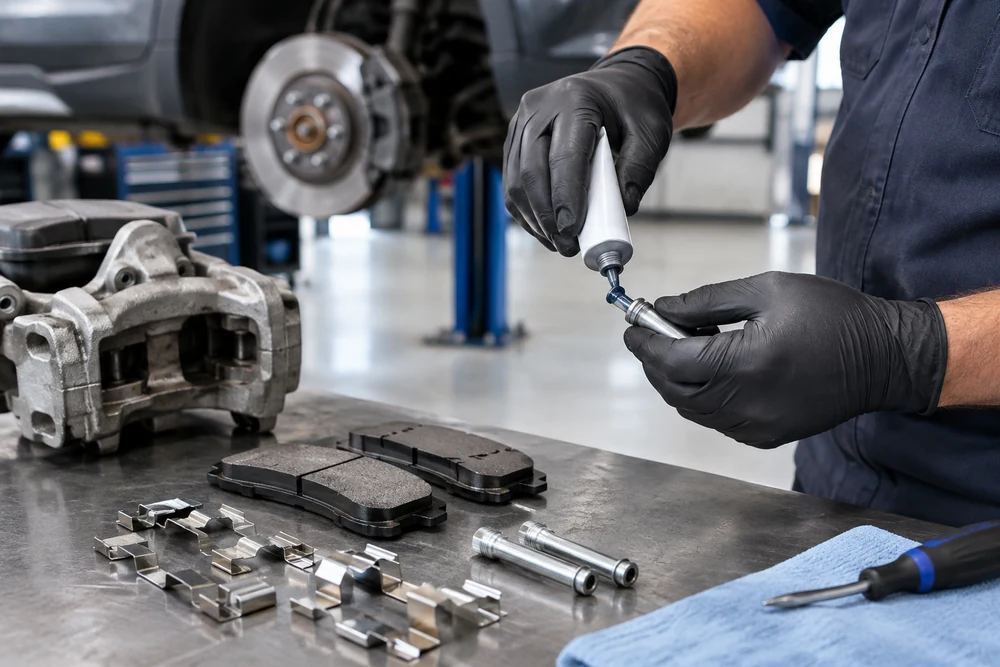
Brake pads sit in metal clips and slide on lubricated pins. Over time, heat cycles weaken the clips and dry out the grease. The pad can then vibrate in its bracket and squeak even when it has plenty of material left. AutoZone recommends replacing the hardware clips at every pad change and putting a thin layer of brake lubricant on the contact points and slide pins.
Signs: chirps or squeaks at low speed and light braking; pads look thick; the noise sometimes started right after a cheap brake job.
Fix: a brake service: remove the pads, clean the bracket, install new clips, lubricate the pins and pad ears.
Cost: about $100 to $200 per axle at a shop, or $10 to $30 in supplies if you do it yourself.
4. Glazed Pads or Rotors
Hard braking, towing, or riding the brakes down long hills can overheat the pads. Their surface turns hard and glassy, grips less and squeals. NuBrakes and Firestone both list glazing as a common cause.
Signs: squealing plus a pedal that needs more effort than before; a mirror-like shine on the pad or rotor.
Fix: new pads, plus resurfaced or new rotors. A resurfacing job at a shop usually adds roughly $100 to $200 per axle on top of the pads, so expect about $250 to $500 in total.
5. Worn or Grooved Rotors
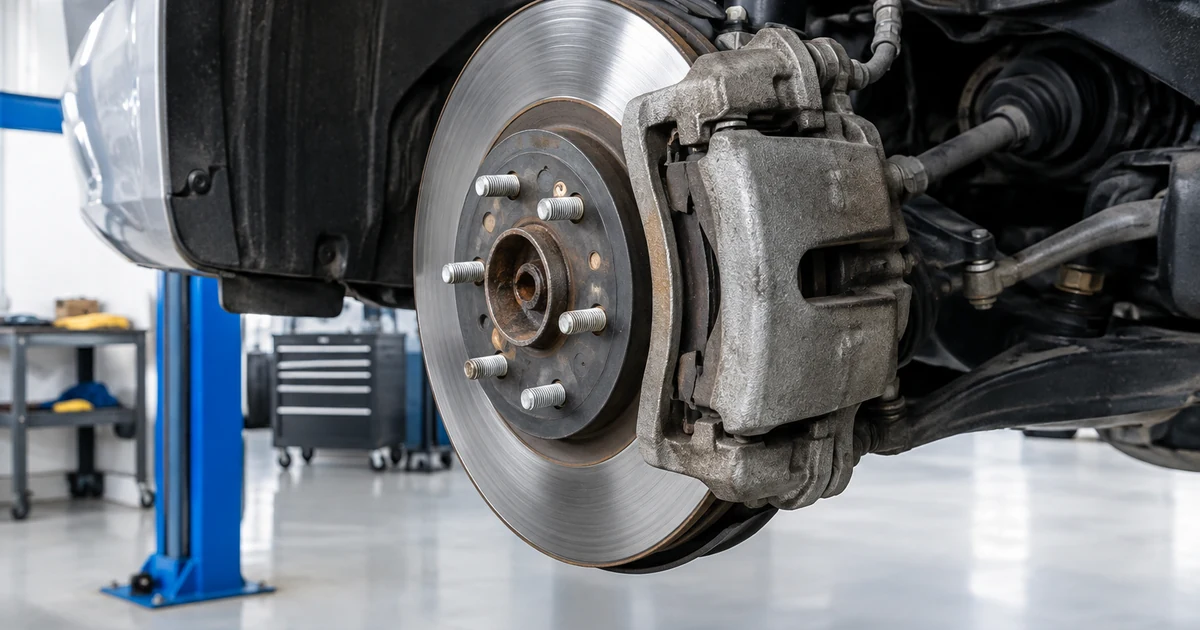
Rotors wear too. Deep grooves, a raised lip at the outer edge, or a rotor below its minimum thickness can make even new pads squeal and vibrate.
Signs: visible grooves, a lip you can feel with a fingernail, or a pulsing pedal.
Fix: new pads and rotors on that axle. Most shops now replace rather than resurface, because new aftermarket rotors are affordable.
Cost: about $350 to $800 per axle, with most drivers paying around $550.
6. Pad Material
Semi-metallic pads contain a large share of metal fibers and are more prone to occasional squeaking, according to AutoZone and NuBrakes. Ceramic pads are generally the quietest option.
Fix: if braking feels normal, it’s a comfort issue, not a safety one. Ask for ceramic pads at your next brake job instead of paying to replace good pads early.
7. Sticking Caliper or Slide Pins
If a caliper piston or slide pin corrodes, the pad stays pressed against the rotor. That causes squealing, heat, a burning smell and very uneven pad wear.
Signs: the car pulls to one side, one wheel is much hotter than the others after a drive, or one pad is worn far more than its partner.
Fix: sometimes cleaning and lubricating the slide pins is enough. If the piston is seized, the caliper is replaced and the brakes are bled.
Cost: roughly $300 to $800 per caliper, usually with new pads on that axle.
Is It Safe to Drive With Squeaking Brakes?
Usually yes for a short time, as long as the car stops normally. A squeak by itself does not mean your brakes are about to fail. But it is often a warning with a deadline: if it’s the wear indicator, you have a limited window before the pads are gone and the rotors get damaged.
Stop driving and have the car checked (or towed) if any of these come with the squeak:
- The noise changes to a grinding or growling sound
- The brake pedal feels soft, spongy, or sinks toward the floor
- The car pulls hard to one side when you brake
- A burning smell, smoke, or one wheel that is very hot
- The brake warning light is on
- Stopping distances feel longer than usual
If none of those apply, book an inspection within a week or two rather than waiting for the next oil change.
How a Mechanic Diagnoses Squeaking Brakes
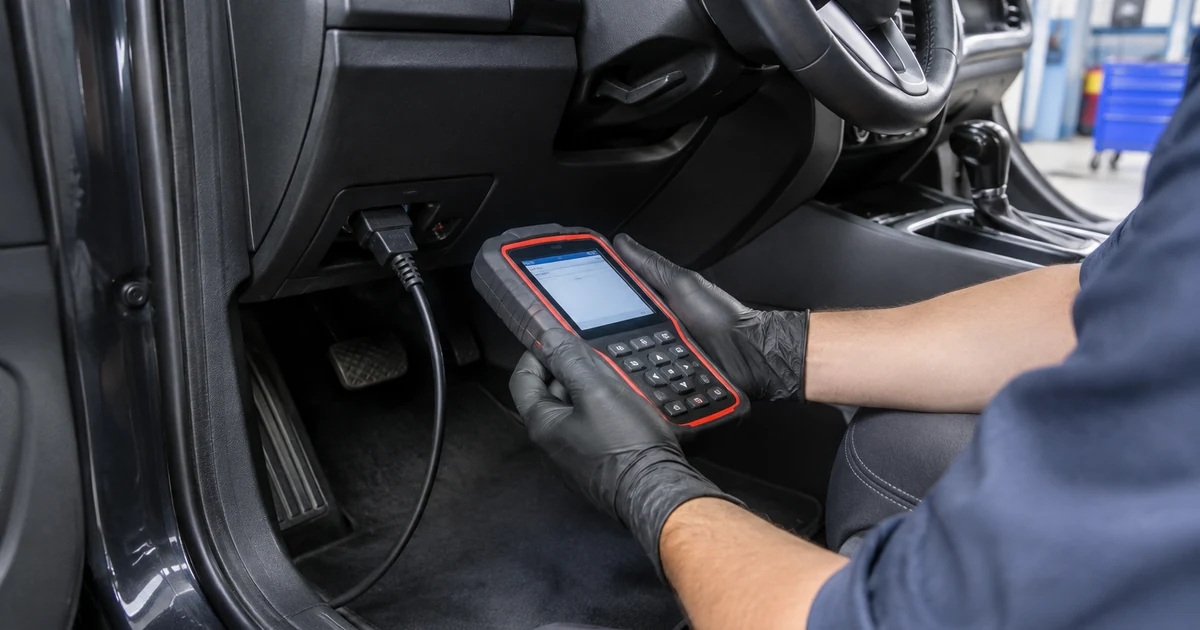
A brake inspection is quick. The tech will:
- Road test the car to hear when the noise happens (light vs. hard braking, cold vs. warm, front vs. rear).
- Remove the wheels and measure pad thickness on all four corners.
- Check rotors for grooves, glazing, rust and minimum thickness.
- Check the caliper slide pins, hardware clips and piston movement.
- Check brake fluid level and condition.
A stand-alone diagnosis typically costs $100 to $200 at a general repair shop. Many tire and brake chains advertise free brake inspections, and most shops apply the inspection fee to the repair if you have them do the work. Ask for the pad measurements in millimeters so you can compare quotes.
What You Can Check Yourself
These checks are safe and need no tools beyond a flashlight. Do them with the car parked on level ground, in Park, with the engine off and the brakes cool.
- When does it squeak? Only on damp mornings is likely rust. Every stop, all day, points to pads or hardware.
- Look through the wheel spokes. Find the pad pressed against the rotor. If the friction material looks thinner than about 1/4 inch (roughly 6 mm), plan a pad replacement.
- Check the rotor surface. Deep grooves, a heavy lip at the edge, or blue heat marks mean the rotors likely need replacing too.
- Feel for heat after a drive. Hold your hand near (not on) each wheel. One wheel much hotter than the rest suggests a sticking caliper.
- Check the brake fluid reservoir. A low level can mean the pads are very worn, or a leak.
If you’re comfortable doing your own brakes, a hardware service (cleaning the brackets, new clips, lubricating the pins and pad contact points) is one of the easiest DIY jobs. Use a high-temperature brake lubricant, never on the pad friction surface or the rotor face. Pads on most cars are a 1–2 hour job per axle with basic hand tools, a jack, jack stands and a torque wrench.
When to See a Mechanic Right Away
- The squeal is constant and has been going on for more than a few days
- You hear grinding, or feel a vibration through the pedal or steering wheel
- The pedal feels different, or the car pulls to one side
- You smell burning brakes after normal driving
- The noise started right after a brake job (it may be a hardware or installation problem the shop should fix under its warranty)
How to Save on the Repair
- Don’t wait for grinding. Pads alone cost about $300 per axle. Wait until metal hits metal and you’re usually paying around $550 for pads and rotors.
- Ask for the measurements. A shop should tell you pad thickness and whether the rotors are above minimum spec. That’s how you know a rotor replacement is actually needed.
- Get a second quote for anything beyond pads, especially calipers.
- Use an independent shop. Dealers typically charge about 30% more for the same brake job.
- Choose quality aftermarket ceramic pads. They’re usually quieter and cheaper than dealer pads.
- Check for a lifetime pad warranty if your last brake job was at a chain shop. Some include free replacement pads; you pay labor only.
- Do the hardware service yourself if the pads are still thick and the noise is just a dry-clip squeak.
Frequently Asked Questions
Why are my brakes squeaking when I stop?
The most common reason is worn pads: a small metal wear indicator squeals against the rotor when the pad is nearly used up. Other causes are surface rust from moisture, dry or worn hardware clips, glazed pads and hard semi-metallic pad compounds.
Is it normal for brakes to squeak in the morning?
Yes, a brief squeak on the first few stops after rain or a humid night is normal. It’s a thin layer of surface rust being wiped off the rotors. If it lasts all day, it’s not moisture.
How much does it cost to fix squeaky brakes?
Anywhere from $0 for moisture to about $100 to $200 for a hardware clean-and-lube service. New pads cost about $150 to $450 per axle (typically around $300), and pads with new rotors run about $350 to $800 per axle.
Can I drive with squeaking brakes?
Usually for a short time, if the car stops normally and the pedal feels firm. Book an inspection within a week or two. Stop driving if you hear grinding, the pedal sinks, the car pulls, or you smell burning.
Why do my new brakes squeak?
New pads can squeak while they bed in over the first few hundred miles. Persistent squeaking after new brakes often points to missing lubricant, reused hardware clips or a hard pad compound, which the installing shop should check under warranty.
Will WD-40 stop squeaky brakes?
No, and it’s dangerous. Any oil or lubricant on the pad or rotor friction surface reduces braking. Brake lubricant only goes on the back of the pads, the pad ears and the caliper slide pins.
How long do brake pads last after they start squeaking?
There’s no fixed number, because it depends on how much pad is left and how you drive. Treat a constant wear-indicator squeal as a sign to replace the pads within the next couple of weeks, before the rotors get damaged.