Brake Line Replacement Cost by Vehicle
Prices below are for replacing one steel brake line section at an independent shop, including bleeding the brakes. They are estimates for common model years; heavy rust, hard-to-reach routing over the fuel tank, and dealer pricing push costs higher.
| Vehicle | Parts | Labor | Total |
|---|---|---|---|
| Ford F-150 | $30 – $120 | $180 – $340 | $210 – $460 |
| Chevrolet Silverado 1500 | $30 – $120 | $180 – $340 | $210 – $460 |
| Toyota Camry | $25 – $90 | $150 – $300 | $175 – $390 |
| Toyota RAV4 | $25 – $90 | $150 – $300 | $175 – $390 |
| Honda Civic | $20 – $80 | $140 – $280 | $160 – $360 |
| Honda Accord | $25 – $90 | $150 – $300 | $175 – $390 |
| Honda CR-V | $25 – $90 | $150 – $300 | $175 – $390 |
| Nissan Altima | $25 – $90 | $150 – $300 | $175 – $390 |
| Chevrolet Equinox | $25 – $100 | $150 – $310 | $175 – $410 |
| Jeep Grand Cherokee | $30 – $120 | $170 – $330 | $200 – $450 |
| Jeep Wrangler | $30 – $110 | $160 – $320 | $190 – $430 |
| Ram 1500 | $30 – $120 | $180 – $340 | $210 – $460 |
| BMW 3 Series | $40 – $150 | $170 – $340 | $210 – $490 |
Parts are cheap; the bill is mostly labor. Trucks and body-on-frame SUVs have long lines running along the frame, and in road-salt states the fittings are often rusted solid, which is why they sit at the top of the range.
Full brake line replacement
When one line rusts through, the others are often close behind. Replacing several lines or the full set of hard lines costs far more:
| Scope | Typical cost at a shop |
|---|---|
| One flexible brake hose | $150 – $300 |
| One steel hard line section | $170 – $450 |
| Two or three lines | $450 – $1,100 |
| All hard lines, car or small SUV | $800 – $1,800 |
| All hard lines, pickup or large SUV | $1,000 – $2,500 |
Cost Breakdown: Parts vs. Labor
A single brake line or hose usually costs $20 to $120 in parts. Labor typically runs $100 to $300 per line, because the mechanic has to reach the line, free the fittings, bend and flare a new section if needed, and then bleed the entire system. Figure about 1 to 2.5 hours for one line, and much longer for a full set on a rusty frame.
Line types
- Flexible rubber hoses: the short hoses at each wheel that let the suspension move. Cheap and relatively quick to swap.
- Coated steel hard lines: the standard factory replacement. Sold in straight lengths that the shop bends and flares, or as pre-bent sections for some models.
- Copper-nickel lines: easier to bend and very resistant to rust. A popular choice for repairs in salt states, at a modest price premium.
- Stainless steel pre-bent kits: full-vehicle kits for popular trucks. Aftermarket kits for trucks such as the Silverado can sell for under $200 in parts, but installing a full kit is a multi-hour job.
Dealer vs. independent vs. DIY
| Option | Typical cost (one line) | What you get |
|---|---|---|
| Independent shop | $170 – $450 | Line made or fitted to your car, brake bleed, warranty on labor |
| Dealership | $220 – $600 | OEM pre-formed line when available, higher labor rate |
| DIY | $20 – $120 | Parts only, plus flaring and bending tools if you do not own them |
What Affects the Price
Rust and climate
Road salt is the leading cause of brake line failure. Cars in the rust belt and along the coast often need lines years earlier than those in dry climates, and rusted fittings can snap or round off, adding labor and sometimes parts such as a new wheel cylinder or caliper.
Vehicle type and line routing
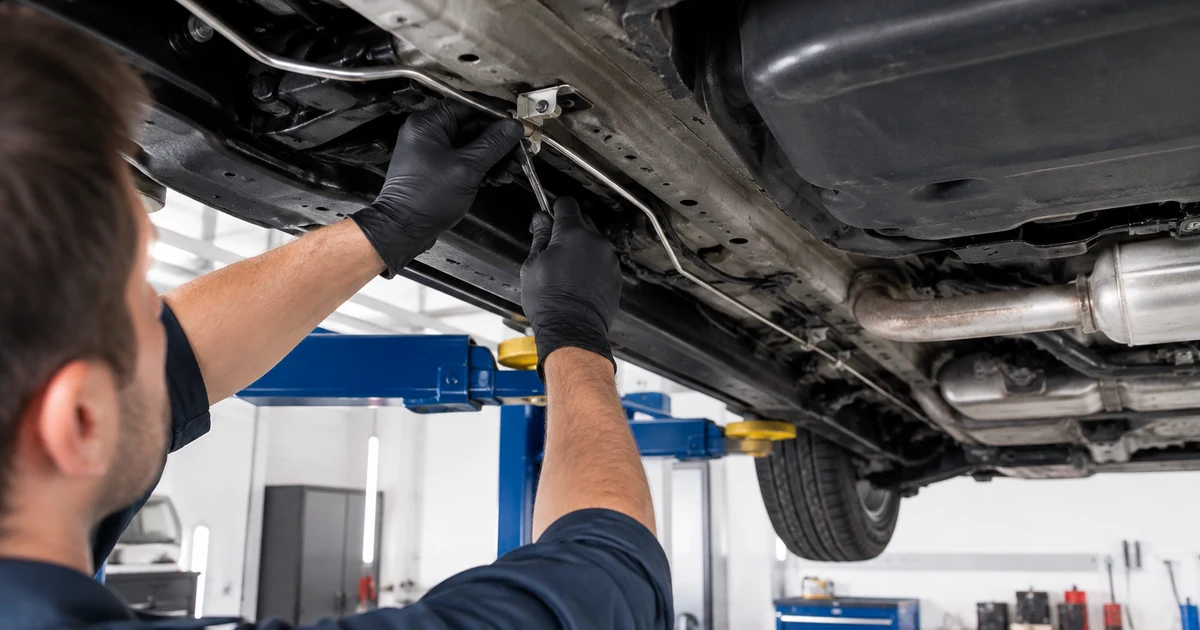
Some lines are easy to reach under the car. Others run over the fuel tank, behind the rear axle or inside the frame rails, which can mean dropping the tank or removing heat shields. Trucks have the longest lines.
Shop type
Dealers charge more per hour and may use pre-formed OEM lines, which fit well but cost more. Independent shops usually bend lines to fit from bulk tubing.
Where you live
Labor rates are highest in the Northeast and on the West Coast, which also overlaps with some of the worst rust regions. Use the region setting in the estimator above to see the difference.
Parts replaced at the same time
Because the system must be bled, many owners add a full fluid flush. Rusted bleeder screws, calipers or wheel cylinders found during the job are also common add-ons. If your pads or rotors are due, see our brake pads and rotors cost guide and bundle the work.
Symptoms of a Bad Brake Line
- Soft, spongy or sinking brake pedal, especially one that slowly goes toward the floor while you hold it.
- Brake fluid puddles or wet spots under the car, often near a wheel or along the frame. Brake fluid is clear to amber and slightly oily.
- Low brake fluid level in the reservoir with no pad wear to explain it.
- Red brake warning light on the dash.
- Heavy scale or flaking rust on the steel lines during an inspection.
- Cracked, bulging or swollen rubber hoses at the wheels.
Can You Drive With a Leaking Brake Line?
No. A leaking or rusted-through brake line can empty the system and leave you with little or no braking. Modern cars split the hydraulic system into two circuits, so you may still have partial braking if one line fails, but stopping distances get much longer and the pedal can drop to the floor with no warning. If you see fluid leaking, the pedal is soft or sinking, or the red brake light is on, park the car and have it towed.
A line that shows surface rust but is not leaking can usually be driven to a shop, but get it looked at soon, especially before winter in a salt state.
DIY vs. Taking It to a Shop
Difficulty: 3 to 4 out of 5. Swapping a flexible hose at one wheel is manageable for an experienced DIYer. Replacing steel hard lines is harder: you have to route the line correctly, make proper double or bubble flares that match your car, and bleed the whole system.
Tools you need: jack and jack stands, line (flare-nut) wrenches, a tubing bender and cutter, a flaring tool that matches your fittings, penetrating oil, fresh brake fluid of the correct DOT type and a bleeder kit. Compression fittings are not a safe substitute for proper flares on brake lines.
Be honest with yourself: a bad flare can leak or blow out under hard braking. If you have not done hydraulic brake work before, this is a job for a shop.
Is It Worth Replacing Brake Lines on an Older Car?
A single line at $170 to $450 is almost always worth it; the car is not safe without it. A full set on a truck at $1,000 to $2,500 is a bigger decision. If the frame, rocker panels and suspension parts are rusted just as badly, and the vehicle is worth only a few thousand dollars, that repair may be a sign it is time to replace the vehicle. Ask the shop for an honest look at the rest of the underside before committing.
How to Save Money on Brake Lines
- Get the whole underside inspected once so you can plan one repair instead of several tows and visits.
- Ask about copper-nickel line for longer life in salt states at a small price premium.
- Get a second written quote for multi-line or full-set jobs; labor estimates vary a lot between shops.
- Use an independent shop rather than the dealer for out-of-warranty vehicles.
- Wash the underside in winter to slow rust on the lines you still have.
- Bundle a brake fluid flush with the repair, since the system is being bled anyway.
If your brakes squeal or grind rather than feel soft, the issue is more likely pads; see our brake pad replacement cost guide. You can also read how we estimate costs.
Frequently Asked Questions
How much does it cost to replace all brake lines?
Replacing all the steel hard lines typically costs about $800 to $1,800 on a car or small SUV and $1,000 to $2,500 on a pickup or large SUV at an independent shop. Heavy rust and lines routed over the fuel tank push costs to the top of the range.
How long does it take to replace a brake line?
One line usually takes about 1 to 2.5 hours including the bleed. A full set of hard lines can take most of a day, longer if fittings are seized or the fuel tank has to come down.
Is it safe to drive with a leaking brake line?
No. A leak can drain the system and leave you with greatly reduced braking. If you see fluid leaking, the pedal is soft or the red brake light is on, have the car towed.
Why do brake lines rust?
Most factory hard lines are coated steel. Road salt, moisture and road grime wear through the coating over the years, especially along the frame and above the rear axle. Cars in the rust belt and coastal areas are affected most.
Can a brake line be patched instead of replaced?
A damaged section can be cut out and replaced with a new flared section joined by a proper union fitting, which is a common repair. Tape, clamps, epoxy or compression fittings are not safe fixes for brake lines.
What is the difference between a brake line and a brake hose?
Hard lines are rigid metal tubes that carry fluid along the body and frame. Hoses are the short flexible sections at each wheel that allow for steering and suspension travel. Both must be sealed and leak-free.