What the P0430 Code Means
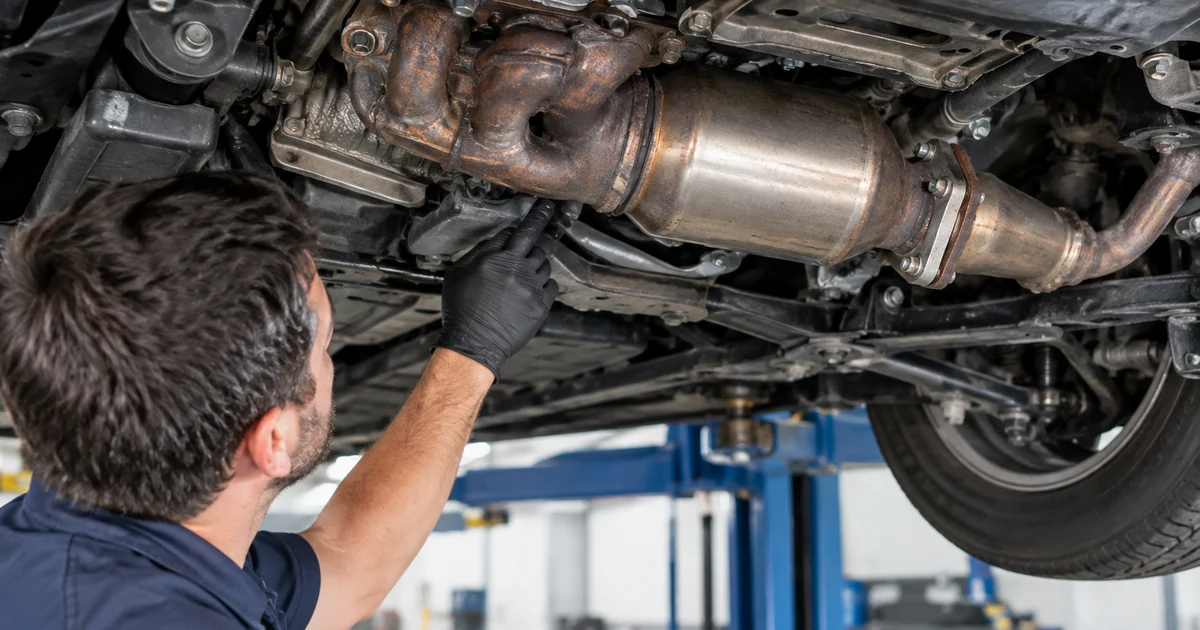
P0430 stands for “Catalyst System Efficiency Below Threshold (Bank 2).” Your engine computer watches two oxygen sensors on each side of a V6 or V8 engine: one ahead of the catalytic converter and one after it. A healthy converter stores oxygen and evens out the exhaust, so the rear sensor reads fairly steady while the front sensor switches back and forth quickly. When the rear sensor on bank 2 starts copying the front one, the computer concludes the bank 2 converter isn’t cleaning the exhaust well enough and sets P0430.
“Bank 2” is the side of the engine opposite cylinder number 1. Only V-type and flat engines have a bank 2, so P0430 shows up on V6 and V8 cars, trucks and SUVs, not on inline four-cylinder engines. Which side is bank 2 (driver or passenger) depends on the manufacturer, so check a service manual or ask the shop before anyone orders parts.
P0430 is the bank 2 twin of P0420. The logic, causes and fixes are the same; only the side of the engine changes. If both codes are stored at once, suspect something that affects the whole engine, such as misfires, a fuel mixture problem or oil burning, before assuming two converters failed at the same time.
Common Causes of P0430
| Cause | Likelihood | Typical repair cost |
|---|---|---|
| Worn-out or damaged bank 2 catalytic converter | Most common | $700 – $1,600 aftermarket, $1,400 – $3,200 OEM |
| Faulty downstream or upstream oxygen sensor on bank 2 | Common | $200 – $560 |
| Exhaust leak (cracked manifold, loose pipe, failed gasket) | Common | $100 – $600 |
| Misfires on bank 2 (spark plugs, coil, injector) | Occasional, but often the root cause | $240 – $400 |
| Damaged O2 sensor wiring or connector | Less common | $100 – $300 |
| Engine burning oil or coolant, or running too cool | Occasional | Varies; fix before replacing the converter |
Edmunds, FIXD and CarParts.com all list a failed converter as the most frequent cause, followed by oxygen sensors and exhaust leaks. CarParts.com also flags faulty fuel injectors and an engine that runs too cool as possible contributors.
Symptoms of P0430
- Check engine light on (often the only sign)
- Failed emissions or smog inspection
- Rotten-egg or sulfur smell from the exhaust
- Rattling under the car if the converter’s internal honeycomb has broken apart
- Sluggish acceleration or poor power if the converter is starting to clog
- Lower fuel economy
- Rough idle or hesitation, usually when a misfire is the real cause
Plenty of vehicles with P0430 drive normally, which is why the code often surfaces for the first time at an inspection station.
Is It Safe to Drive With P0430?
Usually yes, for a short time. FIXD’s guidance is that driving for a short period is acceptable, but repairs should happen within a couple of weeks. The code itself doesn’t mean anything is about to break.
Stop driving and have the car checked if:
- The check engine light is flashing, which signals an active misfire that can overheat and destroy the converter
- The engine loses power, stalls or struggles to accelerate (possible clogged converter)
- You smell burning or see heat damage under the vehicle
You will fail an emissions test while P0430 is stored, and in testing states that can hold up your registration renewal.
How to Diagnose P0430
Start with an OBD2 scanner. A basic unit reads the code and shows readiness monitors. A scanner with live data lets you compare the bank 2 oxygen sensor signals yourself, which is the heart of this diagnosis.
- Read every stored code. Misfire codes (P0300–P0308), lean codes (P0171, P0174) or O2 sensor circuit codes point to a root cause that must be fixed first. If P0420 is stored too, look for an engine-wide problem.
- Review freeze-frame data. It records engine temperature, speed and fuel trims at the moment the code set.
- Compare the bank 2 O2 sensor graphs. With the engine fully warm, the upstream sensor should switch rapidly and the downstream sensor should stay fairly flat. If both switch in step, the converter is likely worn.
- Check for exhaust leaks at the bank 2 manifold, the pipe joints and the flex section ahead of the rear sensor. Outside air sucked in through a leak fools the sensor.
- Inspect sensor wiring where it runs near hot exhaust parts.
- Look up service bulletins. Some manufacturers have released updated engine software or repair procedures for catalyst efficiency codes on specific models.
- Test the converter with a temperature comparison or backpressure test if a clog is suspected.
How to Fix P0430
Go from the cheapest, most likely fixes to the most expensive one:
- Repair any other codes first, especially misfires and fuel trim problems. They can set P0430 and will ruin a new converter if left alone.
- Fix exhaust leaks ahead of the bank 2 downstream sensor.
- Repair damaged wiring or connectors for the bank 2 sensors.
- Apply any software update the manufacturer offers.
- Replace a slow or failed bank 2 oxygen sensor if live data proves it’s lazy.
- Replace the bank 2 catalytic converter once everything else checks out. Buy a CARB-compliant unit if you live in California or a state that follows its rules.
- Clear the code and drive normally for several days so the catalyst monitor can run and confirm the repair.
Cost to Fix P0430 by Cause
Because P0430 has several possible causes, the cost to fix it runs from about $100 to more than $3,000. When the bank 2 converter is the problem, most drivers pay about $1,100 for a legal aftermarket converter installed, or about $2,200 for an OEM converter.
| Repair | Parts | Labor | Total at a shop |
|---|---|---|---|
| Diagnosis | — | $100 – $180 | $100 – $180 (often credited to repair) |
| Software update or wiring repair | $0 – $50 | $100 – $250 | $100 – $300 |
| Exhaust leak repair | $20 – $200 | $80 – $400 | $100 – $600 |
| Oxygen sensor (one) | $40 – $400 | $60 – $200 | $200 – $560 |
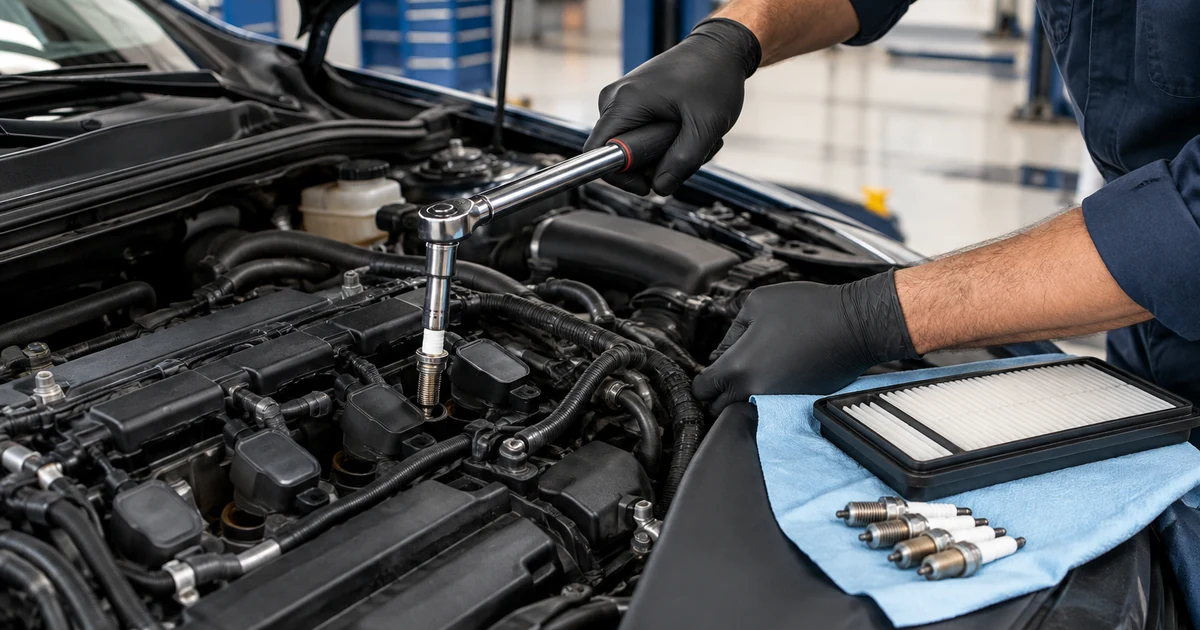
| Spark plugs (misfire root cause) | $100 – $130 | $180 – $270 | $290 – $400 |
| Catalytic converter, aftermarket | $200 – $800 | $150 – $450 | $700 – $1,600 |
| Catalytic converter, OEM | $800 – $3,000 | $150 – $450 | $1,400 – $3,200 |
FIXD’s cost figures for P0430 repairs line up with these ranges: about $210–$280 for spark plugs, $360–$410 for an oxygen sensor, and about $2,300–$2,450 for a catalytic converter, close to the OEM figures above. Manifold-style converters and hard-to-reach bank 2 locations on transverse V6 engines sit toward the top of the labor range.
If your vehicle is under 8 years and 80,000 miles, the federal emissions warranty should cover a defective catalytic converter. Ask a dealer before you pay for one.
What Affects the Price
Engine layout
On a transverse V6 (common in minivans and midsize SUVs), the rear bank sits against the firewall. If the bank 2 converter or sensor lives there, labor time climbs. Trucks with longitudinal V8s are usually easier to reach from underneath.
Converter design
A bolt-in, direct-fit converter is quicker to install than one integrated into the exhaust manifold or one that must be welded in. Manifold converters often need more gaskets and hardware, and studs may break on high-mileage engines.
Part quality and emissions rules
OEM converters carry the highest price. Direct-fit aftermarket units cost much less but must be legal in your state. CARB-compliant units cost more than 49-state versions.
Shop type and region
Muffler and exhaust shops are often the cheapest place for converter work. Dealers charge more per hour but may have software updates and bulletins for your model.
Is It Worth Fixing?
In almost every case, yes. You can’t pass an emissions test with P0430, and a worn converter gets worse over time. The math only gets harder on an old, high-mileage vehicle that already needs other big repairs, especially if the engine burns oil, because a new converter won’t last long on that engine. Get the engine problem priced alongside the converter before you decide.
How to Save Money on P0430
- Pay for a real diagnosis before buying a converter. A $100–$180 test can reveal a $300 sensor or leak repair instead.
- Check the emissions warranty if the vehicle is under 8 years and 80,000 miles.
- Replace only the failed bank. Two converters are rarely needed at once.
- Get a quote from an exhaust or muffler shop as well as a general repair shop or dealer.
- Use a legal direct-fit aftermarket converter where your state allows it.
- Fix misfires promptly so a new converter isn’t damaged.
- Skip converter “cleaner” additives as a fix. They can’t restore a converter that has lost its catalyst coating.
Related Codes
- P0420 — Catalyst efficiency below threshold, bank 1. See our P0420 guide.
- P0431 — Warm-up catalyst efficiency below threshold, bank 2
- P0156–P0161 — Bank 2 downstream oxygen sensor circuit faults
- P0300–P0308 — Engine misfires, a frequent root cause; see our P0300 guide
- P0174 — System too lean, bank 2
Frequently Asked Questions
What does code P0430 mean?
P0430 means “Catalyst System Efficiency Below Threshold (Bank 2).” The engine computer compared the oxygen sensors before and after the bank 2 catalytic converter and decided the converter isn’t reducing emissions as much as it should.
What is the difference between P0420 and P0430?
They describe the same problem on different sides of the engine. P0420 is bank 1, the side with cylinder 1, and P0430 is bank 2, the opposite side of a V6 or V8. Causes, diagnosis and fixes are the same.
How much does it cost to fix a P0430 code?
It depends on the cause. An exhaust leak, wiring repair or O2 sensor usually costs $100 to $600. A new bank 2 catalytic converter costs about $700 to $1,600 for an aftermarket unit or $1,400 to $3,200 for OEM, installed.
Can I drive with a P0430 code?
Usually yes, for a week or two, if the vehicle runs normally. Stop driving if the check engine light flashes, the engine loses power, or you smell burning. You will fail an emissions test until it’s fixed.
Which side is bank 2?
Bank 2 is the side of a V engine that doesn’t contain cylinder 1. Whether that is the driver or passenger side depends on the manufacturer, so confirm it in a service manual before replacing parts.
Do I need to replace both catalytic converters for P0430?
Usually not. P0430 points to the bank 2 converter only. If P0420 is also stored, look for an engine-wide cause such as misfires or oil burning before replacing both.