Transmission Fluid Change Cost by Vehicle
Price depends mostly on the transmission type, how much fluid it takes, whether the fluid is a special factory formula, and whether the pan and filter come off. Many modern automatics have no dipstick and need a temperature-controlled fill procedure, which adds labor.
| Vehicle (transmission) | Parts (fluid, filter) | Labor | Total at a shop |
|---|---|---|---|
| Ford F-150 (10-speed automatic) | $90 – $200 | $130 – $250 | $220 – $450 |
| Chevrolet Silverado 1500 (8- / 10-speed) | $70 – $150 | $110 – $200 | $180 – $350 |
| Toyota Camry (8-speed automatic) | $70 – $140 | $130 – $210 | $200 – $350 |
| Toyota RAV4 (8-speed automatic) | $70 – $140 | $130 – $210 | $200 – $350 |
| Honda Civic (CVT) | $50 – $100 | $80 – $150 | $130 – $250 |
| Honda Accord (CVT / 10-speed) | $50 – $120 | $90 – $160 | $140 – $280 |
| Honda CR-V (CVT) | $50 – $110 | $90 – $150 | $140 – $260 |
| Nissan Altima (CVT) | $70 – $150 | $110 – $200 | $180 – $350 |
| Chevrolet Equinox (6- / 9-speed) | $60 – $120 | $100 – $180 | $160 – $300 |
| Jeep Grand Cherokee / Wrangler (8-speed) | $120 – $220 | $130 – $230 | $250 – $450 |
| BMW 3 Series (8-speed automatic) | $180 – $350 | $170 – $300 | $350 – $650 |
These are estimates for a drain-and-fill (with filter where the pan must come off) on common model years at independent shops. RepairPal’s national figures for some trucks run higher when the shop exchanges the full fluid volume, so compare what each quote actually includes.
Cost Breakdown: Drain-and-Fill vs. Flush
This is the “transmission flush cost” question most people are really asking. The two services are priced differently and do different things.
| Service | Typical cost | Fluid replaced | What it involves |
|---|---|---|---|
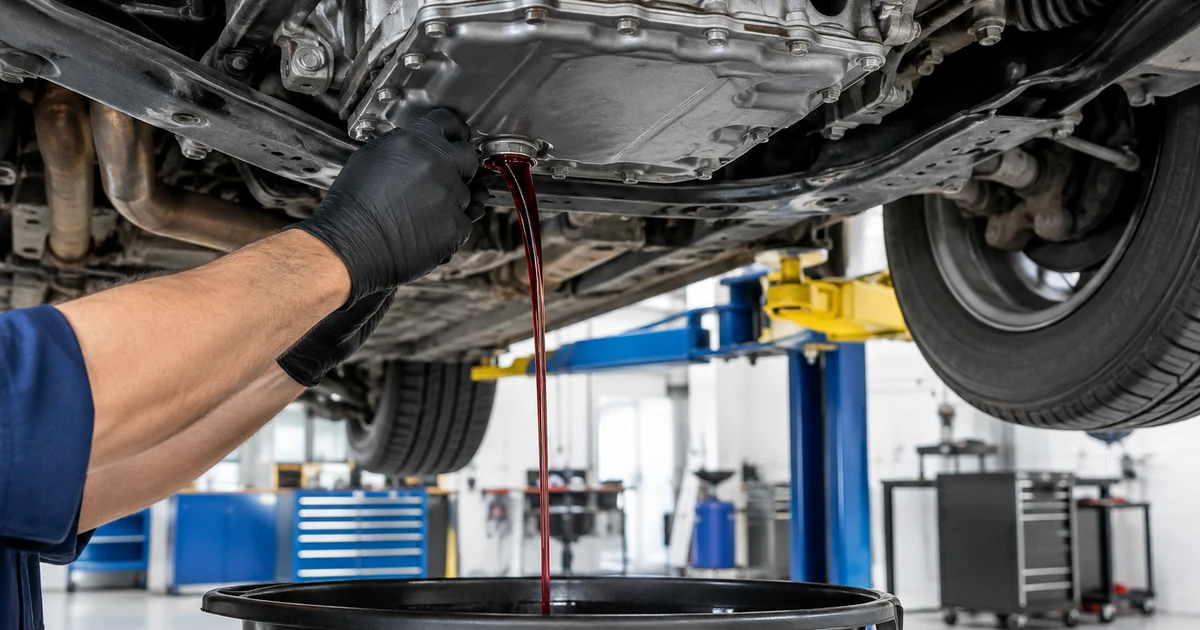
| Drain-and-fill | $120 – $270 | About 30–60% | Remove the drain plug, refill to the correct level |
| Drain-and-fill with filter | $190 – $400 | About 30–60% | Drop the pan, replace filter and gasket, refill |
| Flush / fluid exchange | $170 – $350 | About 90–100% | A machine swaps old fluid for new through the cooler lines |
| CVT fluid service | $150 – $320 | About 30–60% | Drain-and-fill with the maker’s CVT-specific fluid |
| Manual transmission | $80 – $170 | Nearly all | Drain and refill gear oil |
A drain-and-fill leaves a good share of old fluid in the torque converter and cooler lines, which is why some shops recommend two or three drain-and-fills a few hundred miles apart. A flush replaces nearly all of it in one visit. Kelley Blue Book lists a fluid change around $150–$175 and a flush around $165–$290, and independent-shop data compiled from RepairPal shows dealers typically running 20–30% higher.
Which one should you choose?
Do what your manufacturer’s service information calls for. Some automakers specify only a drain-and-fill and advise against machine flushes. On a high-mileage transmission that has never been serviced, many mechanics prefer a gentle drain-and-fill over a flush, because a sudden full change on a worn unit can coincide with new problems. A flush on a well-maintained transmission, done with the correct fluid, is generally fine.
Fluid prices
Standard automatic fluids cost roughly $5–$8 a quart. Proprietary fluids for some European, CVT and late-model transmissions can run $15–$25 a quart, and some units take 8–13 quarts for a full exchange. That alone explains most of the gap between a Civic and a BMW.
What Affects the Price
Transmission type
A conventional automatic with a drain plug and dipstick is the cheapest to service. Sealed units without a dipstick need a fill-plug procedure at a set fluid temperature, which adds labor. CVTs need their own specific fluid, and dual-clutch transmissions can have their own service steps and fluids.
Fluid type and quantity
A drain-and-fill might use 3–6 quarts, while a full exchange can use 10–16 quarts on a large truck. Multiply that by $15–$25 a quart for a proprietary fluid and the parts bill alone can top $200.
Filter and pan gasket
Some transmissions have a replaceable filter behind the pan; others have an internal filter that isn’t serviced, and a few use a plastic pan with the filter built in, so the whole pan is replaced. That can add $20–$150 in parts.
Shop type and region
Dealers charge more for labor and use factory fluid. Labor rates are also higher in the Northeast and on the West Coast; the estimator’s region setting adjusts for that.
Related fluids on AWD and 4WD vehicles
Trucks and AWD crossovers also have differential and transfer case fluids. Servicing them in the same visit adds cost but saves a separate trip.
How Often Should You Change Transmission Fluid?
There’s no single answer. Typical ranges:
- Many automatics: every 30,000–60,000 miles, sooner under severe use
- CVTs: often 25,000–60,000 miles; CVTs are sensitive to fluid condition
- Some newer automatics: 100,000+ miles or labeled “lifetime” fluid
- Manual transmissions: commonly 30,000–60,000 miles
“Lifetime” usually means the lifetime of the warranty, not the car. If you tow, drive in heavy traffic, live somewhere hot or plan to keep the car past 100,000 miles, changing the fluid sooner than the minimum is cheap insurance. Follow the severe-service schedule in your owner’s manual if it applies.
Signs You Need a Transmission Fluid Change
- Delayed, harsh or slipping shifts
- Shudder at low speed, especially on CVTs and torque converter lockup
- Fluid that’s dark brown or smells burnt (healthy ATF is usually red or amber and translucent)
- Whining or grinding noises
- Transmission temperature warning or check engine light
- Red fluid spots under the car, which points to a leak
A fluid change is maintenance, not a repair. If the transmission is already slipping badly, new fluid rarely fixes it and the problem is mechanical or electrical. See our transmission repair cost guide in that case.
Can You Drive With Old Transmission Fluid?
Yes, for a while, but it wears the transmission faster. Degraded fluid loses its friction properties and ability to carry away heat, and heat is what kills automatic transmissions. Low fluid is more urgent than old fluid: if the level is low or you see a leak, get it checked before driving far. If the transmission overheats, slips or won’t engage a gear, stop driving and have it towed.
DIY vs. Taking It to a Shop
Difficulty: 3 out of 5 for a dipstick transmission with a drain plug, 4 out of 5 for sealed transmissions with a fill plug and temperature check. Tools: jack stands or ramps, a drain pan, a fluid pump, a torque wrench and, on many modern cars, a scan tool to read transmission temperature. Budget 1–2 hours.
Use exactly the fluid your manufacturer specifies; the wrong fluid can cause shifting problems or damage. Sealed units must be filled at a specific temperature with the engine running, and overfilling or underfilling both cause trouble. DIY saves about two-thirds of the cost, but this is a job where the shop’s scan tool and procedure are worth paying for if you’re unsure.
Quick Lube vs. Dealer vs. Independent Shop
| Where | Typical drain-and-fill | Notes |
|---|---|---|
| Quick lube chain | $110 – $250 | Often sells machine exchanges; confirm the fluid meets your spec |
| Independent shop | $120 – $270 | Good choice for most cars; ask about a filter |
| Transmission specialist | $150 – $300 | Best for CVTs and high-mileage units |
| Dealer | $170 – $350+ | Factory fluid and procedure; highest labor rate |
| DIY | $45 – $100 | Fluid and gasket only |
Is It Worth It?
Almost always. A $200 fluid service is small compared with rebuilding or replacing a transmission, which commonly costs thousands; see our transmission replacement cost guide. The exception is a very high-mileage car with a transmission that’s already failing: new fluid won’t reverse mechanical wear, and money may be better spent on a diagnosis first.
How to Save Money on a Transmission Fluid Change
- Check your manual before buying a flush. If a drain-and-fill is what’s specified, that’s all you need.
- Use an independent shop or transmission specialist instead of the dealer for out-of-warranty cars.
- Get the quote itemized: fluid type, quarts, filter and labor. It’s the easiest way to compare.
- Bundle with other fluid work, such as differential or transfer case service on AWD and 4WD vehicles.
- Don’t wait for symptoms. Maintenance is cheap; repairs after overheating are not.
- Use coupons from chains and dealers, but confirm the fluid spec before you approve.
Transmission fluid is one of several fluids on a maintenance schedule. See our oil change cost guide for the most frequent one.
Frequently Asked Questions
How much does a transmission fluid change cost?
Most drivers pay $120 to $400, with about $200 typical for a drain-and-fill at an independent shop. Adding a filter and pan gasket, using a proprietary fluid, or going to a dealer pushes the price higher.
How much does a transmission flush cost?
A machine flush or fluid exchange usually costs $170 to $350. It replaces 90–100% of the fluid versus roughly 30–60% for a drain-and-fill, but uses more fluid and some manufacturers don’t call for it.
Is a transmission flush better than a drain-and-fill?
Not automatically. A flush replaces more fluid at once, but a drain-and-fill is what many manufacturers specify. On a high-mileage transmission that’s never been serviced, many mechanics prefer a drain-and-fill. Follow your service manual.
How often should transmission fluid be changed?
Many automatics call for service every 30,000 to 60,000 miles, CVTs often 25,000 to 60,000, and some newer units list 100,000 miles or ‘lifetime’ fluid. Towing, heat and stop-and-go driving justify the shorter end.
How much does a CVT fluid change cost?
Usually $150 to $320. CVTs require the manufacturer’s specific CVT fluid, and many shops recommend changing it more often than a conventional automatic’s fluid.
Can changing old transmission fluid cause problems?
On a well-maintained transmission, no. On a neglected, high-mileage unit that’s already slipping, a fluid change won’t fix wear and may coincide with worsening symptoms, which is why a gentle drain-and-fill is often preferred there.
Can I change transmission fluid myself?
On a transmission with a dipstick and drain plug, yes, with the correct fluid and a pump. Sealed transmissions need a temperature-controlled fill procedure and often a scan tool, so many owners leave those to a shop.