How Often to Change Transmission Fluid: Interval Chart
Most vehicles need a transmission fluid change somewhere between 30,000 and 100,000 miles, and the right number depends far more on your transmission type and how you drive than on a universal rule. Consumer Reports notes that manufacturer intervals range from as little as 30,000 miles to more than 100,000, and some newer automatics are sold with fluid meant to last the life of the car.
| Transmission type | Normal driving | Severe driving (towing, heat, short trips) | Notes |
|---|---|---|---|
| Older conventional automatic (with dipstick) | 30,000 – 60,000 mi | 15,000 – 30,000 mi | Often has a serviceable filter behind the pan |
| Newer automatic (6- to 10-speed) | 60,000 – 100,000+ mi | Often 45,000 – 60,000 mi | Many are sealed with no dipstick; some are labeled “lifetime” |
| “Lifetime” / filled-for-life automatic | No set interval | Many makers list a severe-service interval | Many mechanics suggest at least one change if you keep the car long term |
| CVT | 25,000 – 60,000 mi | Toward the low end | Needs the maker’s CVT-specific fluid |
| Dual-clutch (DCT) | Often 40,000 – 60,000 mi | Toward the low end | Some use separate fluids for clutch and gear sections |
| Manual transmission | 30,000 – 60,000 mi | As often as 15,000 mi with heavy towing | May use gear oil, engine oil or ATF depending on design |
These are general ranges. Your owner’s manual or maintenance schedule is the final word, and it often lists two schedules: normal and severe. Read both, because the severe one usually fits more drivers than the name suggests.
What manufacturers actually say
Factory intervals vary a lot, even among similar vehicles. A summary of owner’s manual schedules published by a lubricant maker shows how wide the spread is: a 2021 Ford F-150 lists 150,000 miles; a 2021 Chevrolet Silverado lists no change in normal service but every 45,000 miles under severe service; a 2021 Ram 1500 is filled for life unless the fluid becomes contaminated; and an older Honda CR-V listed 90,000 miles normal and 30,000 miles severe. Two trucks in the same class can differ by 100,000 miles, which is why a generic rule of thumb doesn’t work.
What “lifetime” fluid really means
“Lifetime” or “filled for life” generally means the fluid is designed to last through the warranty period under normal conditions, not that it will protect the transmission at 180,000 miles. If you plan to keep the car long past the warranty, a fluid change somewhere around 60,000 to 100,000 miles is inexpensive protection. Consumer Reports calls changing the fluid good advice for any owner who plans to keep a vehicle for an extended period.
Normal vs. severe service
Most owner’s manuals define severe service as some mix of the following:
- Towing a trailer or carrying heavy loads
- Frequent short trips (many schedules cite trips under about 10 miles)
- Heavy stop-and-go traffic
- Sustained high outside temperatures or mountain driving
- Dusty or unpaved roads
- Delivery, rideshare or police-style duty with long idling
If two or more of these describe your normal week, use the severe schedule. Toyota’s own car-care guidance lists towing or hauling, severe weather and stop-and-go traffic as reasons to service the fluid more often.
What Shortens Transmission Fluid Life
Heat
Heat is the main enemy. Automatic transmission fluid breaks down through oxidation, and that process speeds up sharply as temperatures climb. Degraded fluid forms varnish and sludge that clog small passages in the valve body and glaze clutch material, which shows up as rough or slipping shifts over time.
Towing and hauling
Pulling a trailer or carrying a full bed raises transmission temperatures, especially on grades. Trucks that tow regularly are the clearest case for a severe-service interval. An auxiliary transmission cooler, which many tow packages include, helps keep temperatures down.
Stop-and-go and short trips
City traffic means constant shifting and torque converter slip, both of which make heat. Short trips are a problem of a different kind: the fluid may never reach full operating temperature to drive off moisture.
Climate and terrain
Desert heat, long mountain climbs and heavy summer traffic all add up. A car that spends its life in Phoenix traffic works its fluid much harder than the same car on rural highways in Minnesota.
Low fluid and leaks
Transmissions are sealed systems and shouldn’t consume fluid. A low level always means a leak somewhere, often at the pan gasket, cooler lines or axle seals. Low fluid runs hotter and can starve the pump, so it does more damage, faster, than old fluid does.
Wrong fluid
Modern transmissions are engineered around a specific fluid. Topping up or refilling with the wrong type, including a generic “universal” fluid that doesn’t carry your maker’s specification, can cause shudder, harsh shifts and long-term wear. CVTs are especially sensitive; Consumer Reports warns that using anything other than CVT-specific fluid risks big repair bills.
Warning Signs Your Transmission Fluid Needs Changing
- Delayed engagement: a pause of a second or more before the car moves after you shift into Drive or Reverse.
- Harsh, late or slipping shifts: the engine revs climb but the car doesn’t accelerate to match.
- Shudder at low speed: a vibration like driving over rumble strips, common on CVTs and when the torque converter locks up.
- Dark or burnt-smelling fluid: healthy automatic fluid is usually pinkish-red and translucent.
- Whining, buzzing or grinding noises in gear.
- Warning lights: a transmission temperature light or check engine light, sometimes with stored codes such as P0700.
- Red or brown spots under the car, which point to a leak.
A fluid change is maintenance, not a repair. If the transmission is already slipping badly or refuses to shift, fresh fluid rarely fixes it. A check engine light with transmission codes is covered in our P0700 code guide, and mechanical problems are covered in our transmission repair cost guide.
Is it safe to keep driving on old fluid?
For a while, yes, but it shortens the transmission’s life. Old fluid is a slow problem. Low fluid, overheating, slipping, or a transmission that won’t engage a gear are urgent: stop driving and have the car checked or towed, because continuing can turn a few-hundred-dollar repair into a rebuild.
How to Check Your Transmission Fluid
If your car has a dipstick
- Park on level ground. Most automatics are checked with the engine running and warm, in Park; check your owner’s manual, since a few specify Neutral.
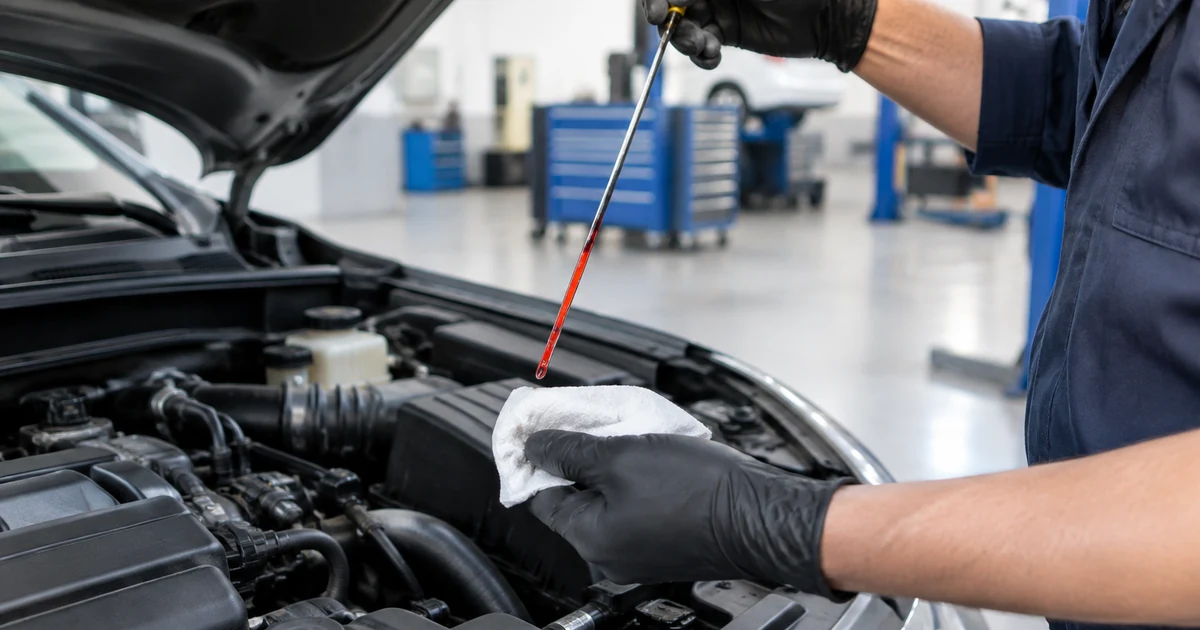
- Pull the transmission dipstick (often red or yellow handled, toward the back of the engine), wipe it clean, push it fully back in and pull it out again.
- Read the level against the “hot” marks.
- Look at the fluid on a white paper towel. Pinkish-red and clear is good. Dark brown, cloudy, or a burnt smell means it’s due for service or an inspection.
If there’s no dipstick
Many newer automatics, CVTs and DCTs are sealed. Checking the level means raising the car level, removing a fill or check plug and confirming the fluid temperature with a scan tool, all within a specific range. That’s usually a job for a shop, and many will check it during an oil change or inspection.
Manual transmissions
Manuals are checked by removing a fill plug on the side of the case with the car level; fluid should be at or just below the bottom of the hole. Gear oil darkens normally, so mileage and the maker’s schedule matter more than color.
Transmission Fluid Change Cost
A standard drain-and-fill costs $120 to $270 at an independent shop, and most drivers pay about $200. Adding a filter and pan gasket brings it to $190–$400, a flush or full fluid exchange typically runs $170–$350, and European cars with special fluid can top $400. Our full transmission fluid change cost guide breaks down prices by vehicle.
| Service | Typical cost at a shop | Fluid replaced |
|---|---|---|
| Drain-and-fill | $120 – $270 | About 30–60% |
| Drain-and-fill with filter and gasket | $190 – $400 | About 30–60% |
| Flush / fluid exchange | $170 – $350 | About 90–100% |
| CVT fluid service | $150 – $320 | About 30–60% |
| Manual transmission fluid | $80 – $170 | Nearly all |
| DIY (fluid and parts only) | $45 – $100 | Same as the service you do |
A drain-and-fill leaves a large share of old fluid in the torque converter and cooler lines; Toyota puts a standard change at about 30 to 40 percent of the fluid, versus nearly 100 percent for a flush. That’s why some shops suggest two drain-and-fills a few hundred miles apart. Compare that with a transmission replacement, which commonly runs several thousand dollars, and regular fluid service looks cheap.
Drain-and-fill or flush?
Follow your maker’s procedure. Some automakers call only for a drain-and-fill. On a high-mileage transmission that has never been serviced, many mechanics prefer a drain-and-fill over a flush, because a sudden full change on a worn unit can coincide with new problems. Consumer Reports also cautions that doing either far more often than the schedule calls for is a waste of money.
DIY or Shop?
Difficulty: 3 out of 5 on an older automatic with a drain plug and dipstick, 4 out of 5 on sealed units that need a temperature-controlled fill. You’ll need jack stands or ramps that keep the car level, a drain pan, a fluid transfer pump, a funnel, a torque wrench and, on most modern cars, a scan tool that reads transmission temperature. Plan on 1–2 hours.
The fluid itself is the critical part. Buy the exact fluid your manual specifies, not just one that lists your car on the bottle. Overfilling and underfilling both cause trouble, and on sealed units it’s easy to get wrong without the right procedure. If you’re not comfortable, this is one job where paying a shop $100 or so in labor is reasonable.
How to Make Your Transmission Fluid Last Longer
- Follow the severe-service schedule if you tow, haul, drive mostly in traffic or live somewhere hot.
- Use only fluid that meets your manufacturer’s specification, for top-ups too.
- Fix leaks promptly; red spots under the car are worth a look before they become low fluid.
- Consider an auxiliary transmission cooler if you tow regularly and your vehicle doesn’t have one.
- Come to a full stop before shifting between Drive and Reverse.
- Don’t rock the car back and forth hard to get out of snow or mud; it generates a lot of heat quickly.
- Have the level checked on sealed transmissions during routine service, and keep the receipts. Service records also help resale.
Frequently Asked Questions
How often should you change transmission fluid?
Most vehicles need it every 30,000 to 100,000 miles. Older automatics and manuals often fall in the 30,000–60,000-mile range, many newer automatics list 60,000–100,000 miles or more, and CVTs are commonly 25,000–60,000 miles. Use the severe schedule in your owner’s manual if you tow, drive in heavy traffic or live in a hot climate.
Is transmission fluid really lifetime?
“Lifetime” fluid is designed to last through the warranty period under normal use, and many of those same vehicles list a severe-service interval. If you plan to keep the car past 100,000 miles, at least one fluid change is cheap insurance.
Can changing old transmission fluid cause problems?
On a high-mileage transmission that has never been serviced, a sudden full flush sometimes coincides with new shifting problems, usually because the unit was already worn. Many mechanics prefer a gentle drain-and-fill in that case. On a well-maintained transmission, fluid service with the correct fluid is routine.
What color should transmission fluid be?
Healthy automatic transmission fluid is usually pinkish-red and translucent. Dark brown or black fluid, a cloudy look, or a burnt smell means it’s due for service or an inspection. Some CVT fluids are a different color, so compare with new fluid of the same type.
How much does a transmission fluid change cost?
A drain-and-fill typically costs $120 to $270 at an independent shop, with most drivers paying about $200. A flush runs about $170 to $350, and adding a filter and pan gasket brings a drain-and-fill to $190–$400.
Do CVTs need fluid changes more often?
Often, yes. Many CVT schedules call for service between 25,000 and 60,000 miles, and CVTs are sensitive to fluid condition and type. Always use the maker’s CVT-specific fluid.
How often should manual transmission fluid be changed?
Commonly every 30,000 to 60,000 miles, and as often as every 15,000 miles under heavy towing, but schedules vary widely. Some manuals use gear oil, others engine oil or ATF, so check the manual for both the interval and the fluid.