Engine Air Filter Replacement Cost by Vehicle
On most cars the filter box sits right on top of the engine and opens with a few clips, so labor is minimal and the filter itself is most of the cost. A few trucks and luxury models have housings that take longer to open, which is where prices climb.
| Vehicle | Filter (part) | Labor | Total at a shop |
|---|---|---|---|
| Ford F-150 | $20 – $45 | $20 – $45 | $40 – $90 |
| Chevrolet Silverado 1500 | $25 – $50 | $25 – $60 | $50 – $110 |
| Toyota Camry | $15 – $40 | $20 – $45 | $35 – $85 |
| Toyota RAV4 | $15 – $40 | $20 – $45 | $35 – $85 |
| Honda Civic | $15 – $35 | $20 – $45 | $35 – $80 |
| Honda Accord | $15 – $35 | $20 – $45 | $35 – $80 |
| Honda CR-V | $15 – $35 | $20 – $45 | $35 – $80 |
| Nissan Altima | $15 – $40 | $20 – $50 | $35 – $90 |
| Chevrolet Equinox | $15 – $40 | $20 – $45 | $35 – $85 |
| Jeep Wrangler | $20 – $45 | $20 – $45 | $40 – $90 |
| Jeep Grand Cherokee | $20 – $45 | $20 – $50 | $40 – $95 |
| BMW 3 Series | $25 – $60 | $30 – $80 | $55 – $140 |
These are estimates for common model years and engines at independent shops and quick lube chains. RepairPal’s national averages run a little higher, roughly $80–$100, because they’re based on repair-shop labor rates. Electric cars like the Tesla Model 3 have no engine air filter, only cabin filters.
Cost Breakdown: Parts vs. Labor
Filter prices
- Standard paper filter (aftermarket): about $15–$35. Fine for nearly every car.
- OEM filter from the dealer: about $25–$60.
- Reusable cotton or synthetic performance filter: about $50–$90. Washable, but needs cleaning and, for oiled types, re-oiling.
Labor
Most shops book 0.2–0.3 hours, or charge a flat fee. That’s why a filter that costs $20 at the parts store often shows up as $50–$90 on an invoice. Harder housings, such as those under engine covers or with multiple fasteners, take longer.
| Where you go | Typical total | Notes |
|---|---|---|
| Dealer | $60 – $130 | OEM filter, highest markup |
| Independent shop | $40 – $95 | Usually OEM-equivalent filter |
| Quick lube chain | $35 – $90 | Most often sold as an oil change add-on |
| DIY | $15 – $35 | Filter only; usually no tools needed |
What Affects the Price
Filter housing access
Most air boxes open with clips in seconds. Some engines hide the filter under a plastic engine cover or behind intake ducting, or use a housing held by several screws. That’s the main reason one car’s quote is $45 and another’s is $120.
Filter brand and type
Aftermarket paper filters are the cheapest and work fine for daily driving. Dealer OEM filters cost more. Reusable filters cost the most up front but can be cleaned and reused.
Shop markup
Shops typically charge a flat labor fee plus a marked-up filter. The same filter can cost $20 at a parts store and $45 on an invoice. That markup is why this is such a good job to do yourself.
Driving conditions
Price per replacement doesn’t change, but how often you replace it does. Dust, gravel roads, construction zones and desert climates can double the number of filters you buy over the life of the car.
Region
Labor rates are higher in the Northeast and on the West Coast; the region setting in the estimator adjusts for that.
What About the Cabin Air Filter?
It’s a different part. The engine air filter cleans air going into the engine; the cabin air filter cleans air coming through your vents. Shops often recommend both at once. A cabin air filter replacement typically costs about $50–$115 at a shop (RepairPal’s average is around $91–$114), or $15–$40 for the filter if you do it yourself. On many cars it sits behind the glovebox and takes a few minutes to change. Common guidance is every 12,000–15,000 miles or about once a year, sooner with dust, pollen or allergies.
How Often Should You Replace the Engine Air Filter?
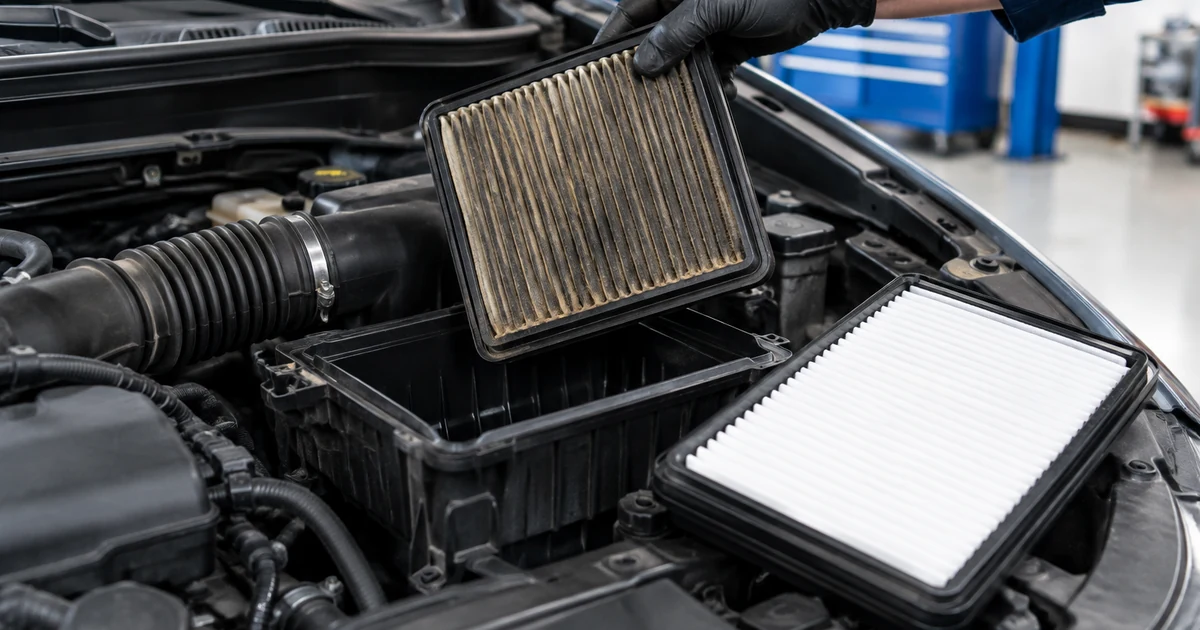
A common rule of thumb is every 12,000–15,000 miles, or about every third oil change, though many manufacturers list 15,000–30,000 miles under normal conditions. Check your maintenance schedule and replace it more often if you drive on dirt or gravel roads, in construction zones or in dusty, dry regions. The simplest test is to look: hold the filter up to a light. If the pleats are dark and packed with debris, it’s due.
Signs You Need a New Engine Air Filter
- Filter looks dark gray or black, or is clogged with debris, leaves or bugs
- Sluggish acceleration, especially on older engines
- Slightly worse fuel economy
- Unusual engine sounds or rough running with a badly restricted filter
- Check engine light in severe cases, such as a mass airflow sensor contaminated by a damaged filter
On modern fuel-injected engines, a moderately dirty filter mainly costs you a bit of power rather than much fuel economy, because the engine computer adjusts fueling. That’s not a reason to ignore it: a torn or missing filter lets dirt into the engine, which causes wear.
Can You Drive With a Dirty Air Filter?
Yes. A dirty filter isn’t a safety issue and won’t leave you stranded. Replace it at your next convenient opportunity. The exception is a filter that’s torn, soaked with water or oil, or not seated properly in its housing; fix that promptly so unfiltered air and debris don’t reach the engine.
DIY vs. Taking It to a Shop
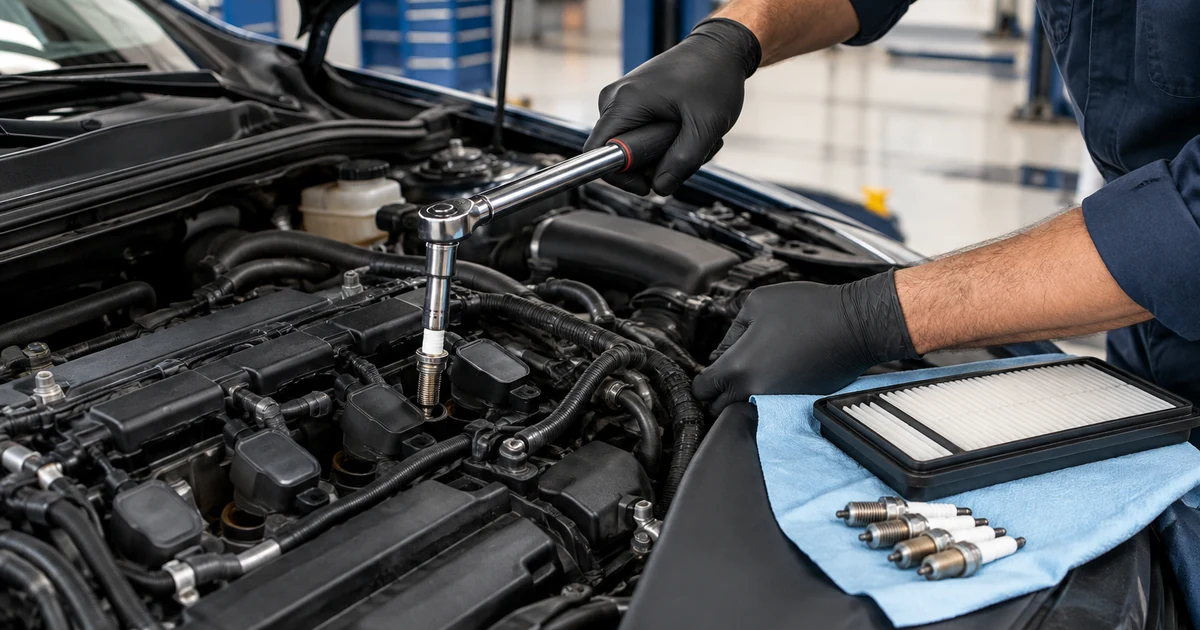
Difficulty: 1 out of 5. This is one of the easiest maintenance jobs on any car. Tools: usually none, sometimes a screwdriver or a small socket. Time: 5–15 minutes.
- Buy the filter that matches your year, make, model and engine.
- Open the air box by releasing the clips or screws.
- Note which way the old filter sits, then lift it out.
- Wipe out loose debris from the housing with a clean rag.
- Drop in the new filter with the rim seated all the way around, and close the housing securely.
Don’t use compressed air to “clean” a paper filter; it can tear the media. Make sure no clips are left loose, and don’t disturb the mass airflow sensor on the intake duct. If you use an oiled reusable filter, don’t over-oil it, since excess oil can foul the sensor.
Is It Worth Paying a Shop?
If you’re at the shop for other work and the filter genuinely needs replacing, $40–$90 is a reasonable convenience charge. But because the job takes minutes and needs almost no tools, it’s one of the best places to save money on routine maintenance. Most drivers can cut the cost by more than half doing it themselves.
One exception: if the housing on your car is buried under an engine cover or ducting and you’d need to remove several fasteners, paying a shop while it’s in for an oil change is reasonable. Ask them to show you the old filter, and keep the receipt so you know when the next one is due. That record also stops the same filter from being sold to you twice in a short span.
How to Save Money on Air Filter Replacement
- Do it yourself. It’s usually a no-tool, 10-minute job.
- Check before you buy. Look at the filter yourself instead of approving it at the counter.
- Buy aftermarket. A quality aftermarket paper filter performs the job fine for daily driving.
- Buy in multipacks for the engine and cabin filters if you keep the car for years.
- Follow your manual’s interval, shortened only if you drive in dusty conditions.
- Skip performance filters unless you want a reusable option; they rarely add noticeable power on a stock car.
The air filter is often bundled with other routine work. See our guides to oil change cost and tune-up cost. If a dirty filter has led to a check engine light with lean codes, our P0171 code guide explains what to check.
Frequently Asked Questions
How much does it cost to replace an engine air filter?
Most drivers pay $40 to $100 at a shop, with about $65 typical. The filter itself costs about $15 to $35 aftermarket or $25 to $60 from the dealer.
How often should I change my engine air filter?
A common guideline is every 12,000 to 15,000 miles, though many manufacturers list 15,000 to 30,000 miles under normal driving. Replace it sooner if you drive on dusty or dirt roads.
Can I replace my engine air filter myself?
Yes. On most cars you open a few clips on the air box, swap the filter and close it, usually in under 15 minutes with no tools. Just make sure the new filter seats fully.
What's the difference between an engine air filter and a cabin air filter?
The engine air filter cleans air going into the engine. The cabin air filter cleans air coming out of your vents. They’re separate parts with separate replacement intervals.
How much does a cabin air filter replacement cost?
Usually about $50 to $115 at a shop, or $15 to $40 for the filter if you do it yourself. On many cars it sits behind the glovebox and is easy to reach.
Does a new air filter improve gas mileage?
On older carbureted engines it can. On modern fuel-injected engines, a clogged filter mostly reduces acceleration rather than fuel economy, so expect a small improvement at most.
Is a quick lube shop air filter upsell legitimate?
Sometimes. Ask to see the old filter next to a new one, and check when it was last replaced. If it’s only lightly dusty and was changed recently, you can decline.