What the P0301 Code Means
P0301 stands for “Cylinder 1 Misfire Detected.” The engine computer watches how smoothly the crankshaft spins. Every time a cylinder fires, the crank gets a small push. When cylinder 1 fails to burn its air-fuel mixture, that push goes missing, the crank slows for an instant, and the computer counts it as a misfire. Once the count passes a set threshold, it stores P0301 and turns on the check engine light.
The last digit is the cylinder number. P0302 means cylinder 2, P0303 cylinder 3, and so on through P0306 on a V6 (P0307 and P0308 on a V8). P0300 is the “random or multiple cylinder” version, set when misfires move around or hit several cylinders at once.
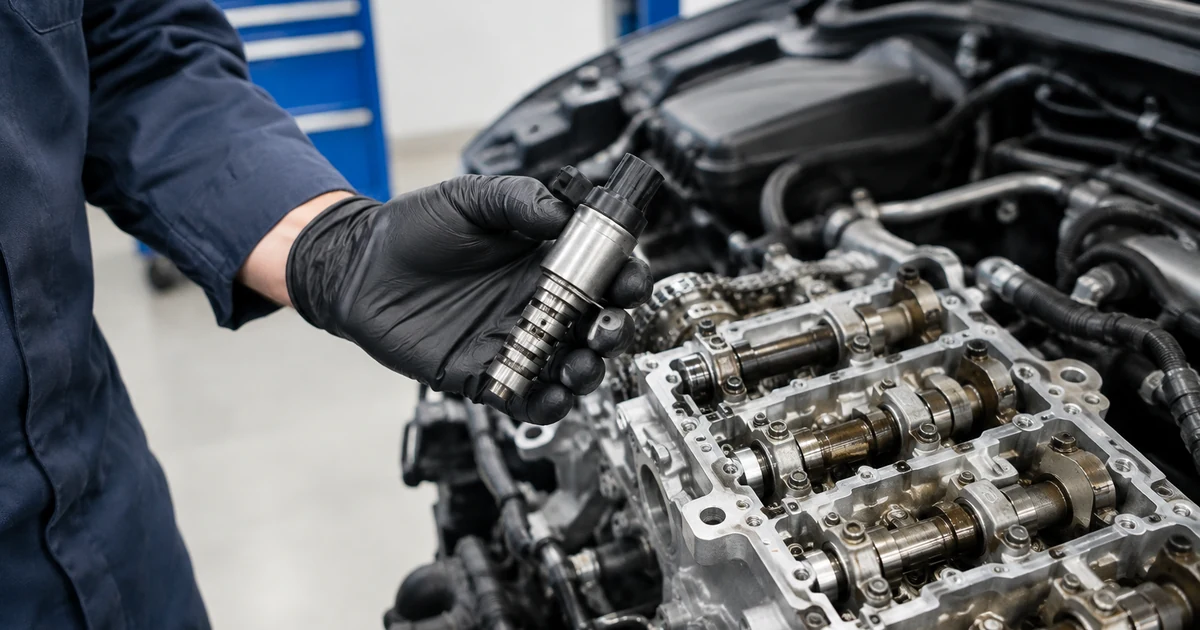
Because P0301 names one cylinder, it is usually easier and cheaper to fix than a random misfire. The cause is most often a part that serves only that cylinder: its spark plug, its ignition coil or its fuel injector. Shared problems like low fuel pressure tend to show up across several cylinders instead.
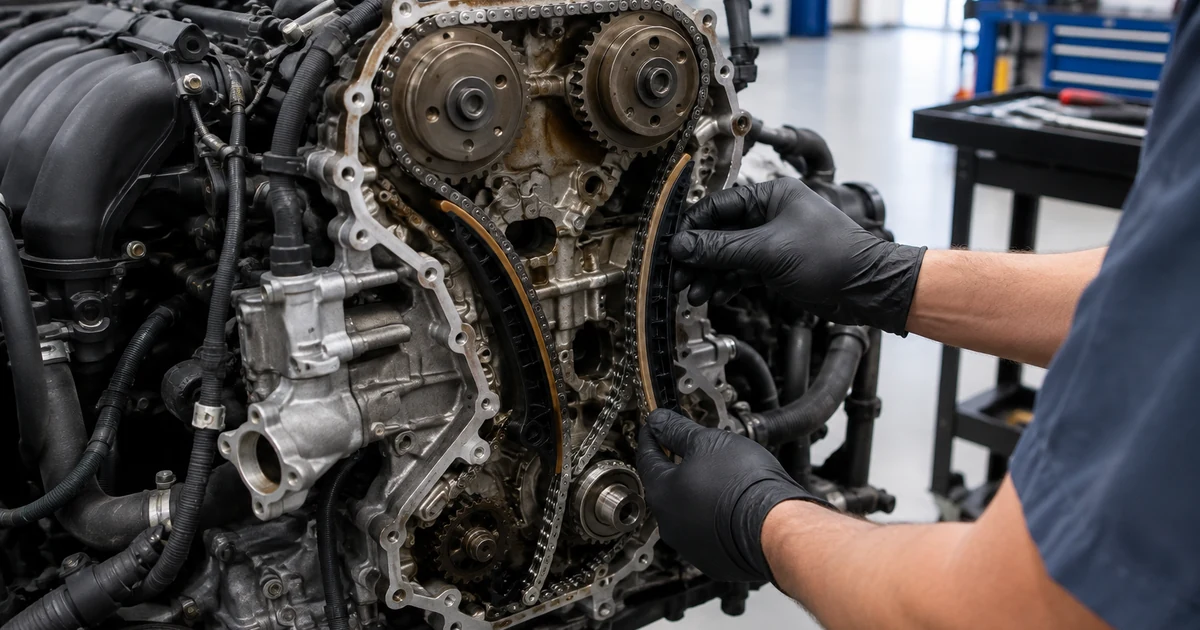
Where cylinder 1 sits depends on the engine. On most inline four-cylinders it is at the end of the engine opposite the transmission, often the timing belt or chain end. On V6 and V8 engines the numbering varies by manufacturer, so check your owner’s manual or a service manual before you start pulling parts.
Common Causes of P0301
| Cause | Likelihood | Typical repair cost |
|---|---|---|
| Failed ignition coil on cylinder 1 | Most common | $160 – $360 (one coil) |
| Worn or fouled spark plug | Very common | $200 – $370 (full set, 4-cylinder) |
| Bad plug wire or cracked coil boot | Common on older engines | $100 – $250 |
| Vacuum leak near cylinder 1 (intake gasket, hose) | Occasional | $180 – $450 |
| Clogged or failed fuel injector | Occasional | $300 – $800 (one port injector) |
| Wiring or connector fault on the coil or injector | Occasional | $100 – $300 |
| Low compression (valve, rings, head gasket) | Less common but serious | $2,000 – $3,800 |
Prices are shop estimates for a typical four-cylinder engine at an independent shop, in line with our cost guides. V6 and V8 engines cost more, especially when cylinder 1 sits on the rear bank under the intake manifold.
FIXD and YourMechanic both list the same core suspects: spark plugs and wires, ignition coils, fuel injectors, vacuum leaks, and less often low compression or a failing sensor.
Symptoms of P0301
- Check engine light on, or flashing when the misfire is severe
- Rough idle with a rhythmic shake you can feel in the seat or steering wheel
- Hesitation or stumbling when you accelerate, often worse uphill or under load
- Loss of power and slower acceleration
- Hard starting or stalling at stops
- Worse fuel economy and sometimes a fuel smell from the exhaust
Some mild misfires only show up at certain speeds or when the engine is cold, so the car may feel almost normal between episodes.
Is It Safe to Drive With P0301?
If the check engine light is flashing, stop driving. A flashing light means the misfire is bad enough to send raw fuel into the exhaust. That fuel burns inside the catalytic converter, overheats it, and can ruin a part that costs far more than the original repair. Pull over when it’s safe and have the car towed or moved only a very short distance.
With a steady light and a light, occasional stumble, a short, gentle trip to a shop is usually acceptable. Avoid highway driving, towing and hard acceleration until it’s fixed. FIXD advises against continued driving because a persistent misfire can damage the engine and the converter, and YourMechanic rates cylinder misfire codes as serious because the engine can stall or lose power without warning, which is dangerous in traffic.
RepairPal classifies P0301 as urgent. The practical takeaway: get it diagnosed within days, not weeks, even if the car still drives.
How to Diagnose P0301
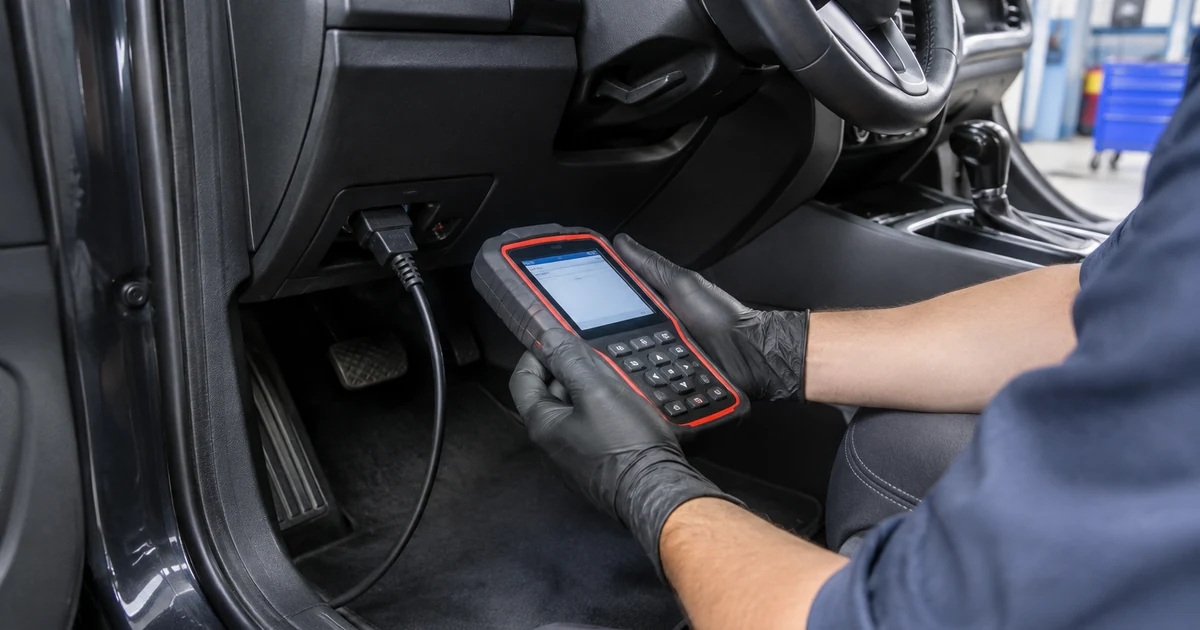
An OBD2 scanner is the first tool you need. A basic reader confirms P0301 and shows any other stored codes. A scanner with live data or Mode 6 misfire counters shows how many misfires cylinder 1 is logging, which makes it much easier to confirm a fix later.
- Read all codes and freeze-frame data. Note engine speed, load and temperature when the misfire happened. Lean codes like P0171 alongside P0301 suggest a vacuum leak. A coil circuit code (P0351) points straight at the cylinder 1 coil or its wiring.
- Find cylinder 1 using your owner’s manual or a service manual.
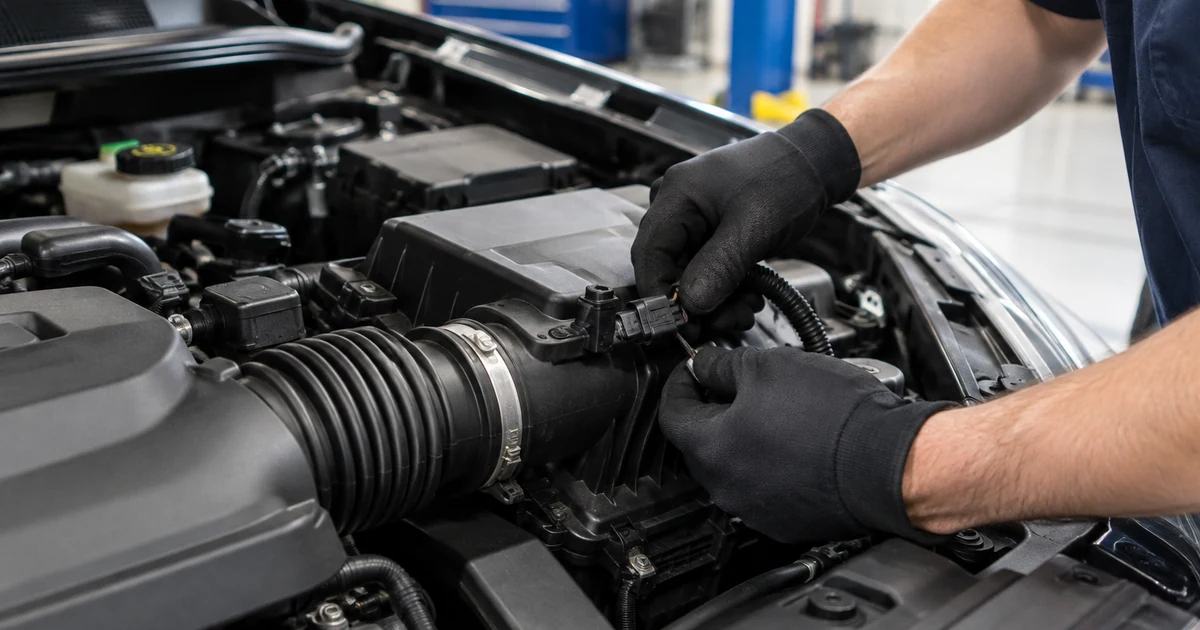
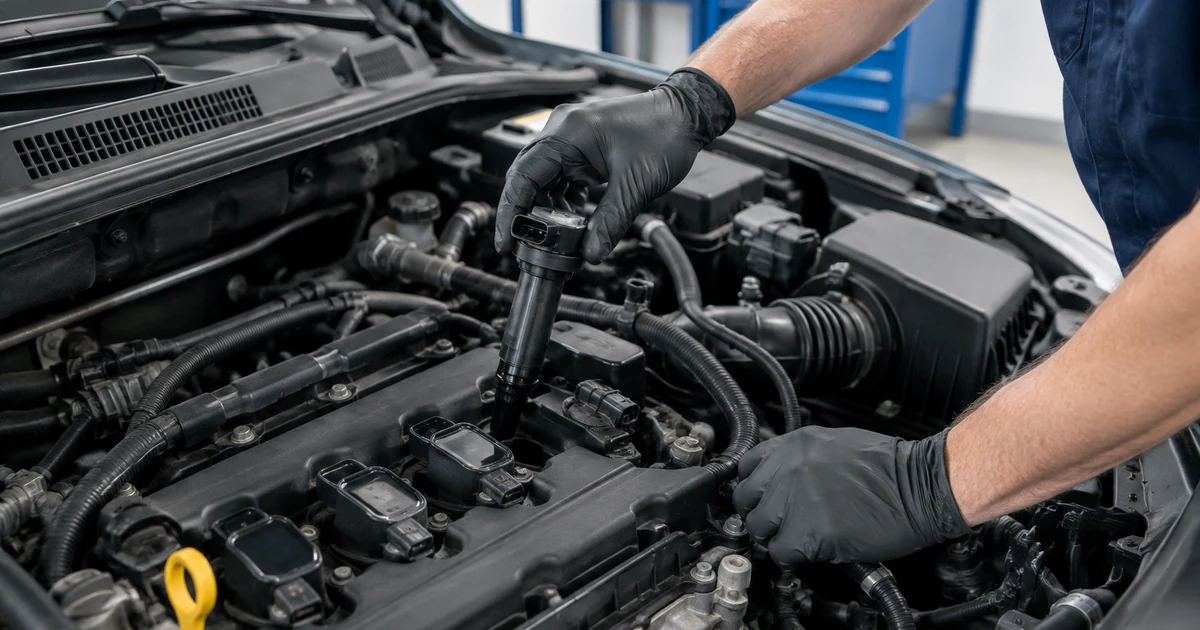
- Do the coil swap test. With the engine off, unplug and remove the cylinder 1 coil and swap it with the coil from a neighboring cylinder, say cylinder 2. Clear the codes and drive the car until the misfire comes back. If the code changes to P0302, the misfire followed the coil, and the coil is bad. If P0301 stays, the coil is fine and the problem is the plug, injector or engine.
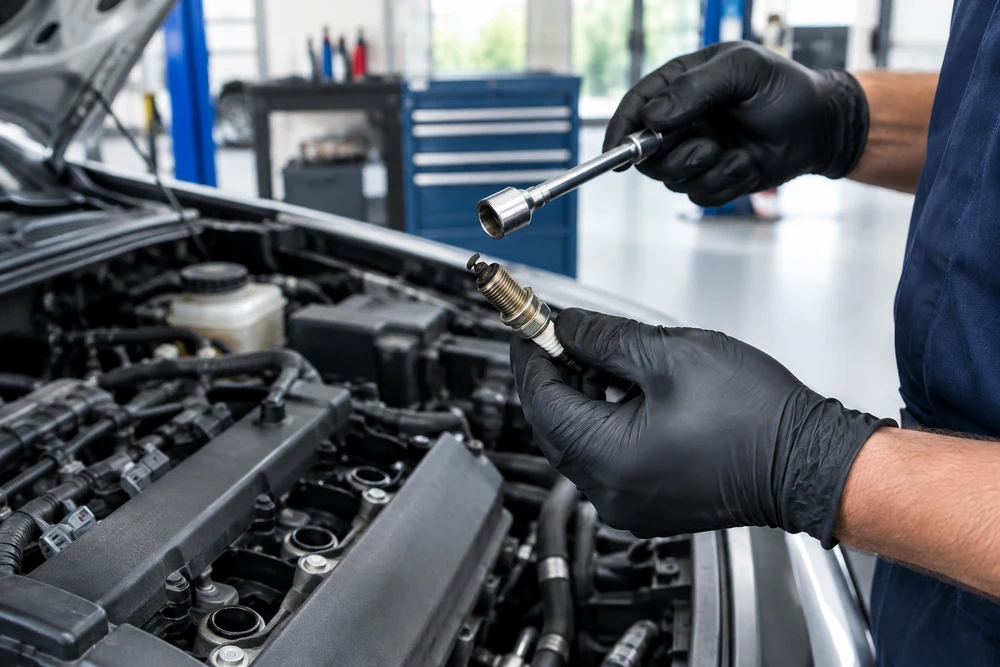
- Pull and inspect the spark plug. Look for worn electrodes, a wrong gap, oil or carbon fouling, or a cracked insulator. You can swap the plug to another cylinder too, the same way as the coil.
- Check the injector. Listen for clicking with a mechanic’s stethoscope, check the connector, and have a shop test resistance or balance if needed. An injector can also be swapped to another cylinder on many port-injected engines.
- Look for vacuum leaks around the intake runner for cylinder 1 and review fuel trims.
- Run a compression test if spark and fuel check out. A cylinder well below the others points to valves, rings or a head gasket.
YourMechanic notes a common mistake is replacing spark plugs without checking the injector and its wiring, and not confirming the plug gap matches the manufacturer’s spec.
How to Fix P0301
Work from the cheapest and most likely fix upward:
- Replace the ignition coil if the misfire followed it in the swap test. This is the most common single fix.
- Replace the spark plugs if they are due or the cylinder 1 plug is worn or fouled. Replace them as a set, with the type and gap the manufacturer specifies.
- Replace the plug wire or coil boot on engines that use them, especially if you see carbon tracking or cracks.
- Repair any wiring or connector damage at the coil or injector.
- Fix vacuum leaks near cylinder 1, such as a split hose or a leaking intake gasket.
- Clean or replace the fuel injector if testing shows it is clogged, leaking or not firing.
- Address low compression if a compression test confirms it. This is where costs jump, so get a second opinion first.
- Clear the code and road test. Drive the car through the conditions in the freeze-frame data and confirm the misfire counter for cylinder 1 stays at or near zero.
If oil is found in the spark plug well, the valve cover or tube seals are leaking onto the plug. Fix that leak too, or the new plug and coil will fail again.
Cost to Fix P0301 by Cause
Here’s what each fix usually costs at an independent shop on a four-cylinder car. Add roughly 25 to 35 percent for a V6 or V8, and more if cylinder 1 is buried under the intake manifold.
| Repair | Parts | Labor | Total at a shop |
|---|---|---|---|
| One ignition coil | $40 – $200 | $50 – $150 | $160 – $360 |
| Spark plugs, full set (4-cylinder) | $40 – $150 | $100 – $250 | $200 – $370 |
| Coil + full set of plugs | $90 – $350 | $120 – $300 | $300 – $620 |
| Plug wire or coil boot | $20 – $80 | $60 – $150 | $100 – $250 |
| Vacuum leak repair | $20 – $150 | $100 – $300 | $180 – $450 |
| One fuel injector (port injection) | $100 – $400 | $150 – $400 | $300 – $800 |
| Head gasket / low compression | $400 – $900 | $1,400 – $2,900 | $2,000 – $3,800 |
| Diagnosis (often waived if you approve the repair) | — | $100 – $185 | $100 – $185 |
Most drivers pay about $250, the cost of one ignition coil on a four-cylinder. Doing it yourself, a coil is often a $40 to $150 part and a 15-minute job on an engine with coils on top.
Two more costs to watch. A dealer typically charges about 30 percent more than an independent shop. And if a misfire was ignored for weeks, a damaged catalytic converter can add $700 to $3,500 to the bill.
DIY vs. Taking It to a Shop
A coil or spark plug job on a four-cylinder with coils on top of the engine is one of the friendliest DIY repairs: difficulty about 2 out of 5, 15 to 60 minutes, and basic tools (a ratchet, a spark plug socket with extension, and ideally a torque wrench). Let the engine cool fully first, and don’t cross-thread plugs in aluminum heads.
Leave it to a shop if cylinder 1 is on the rear bank of a transverse V6 (intake removal), if the cause turns out to be an injector on a direct-injection engine, or if compression is low. Those jobs need specialized tools and procedures.
Is It Worth Fixing?
Almost always. A coil, plug or injector fix costs a small fraction of most cars’ value, and ignoring the misfire risks a catalytic converter. The tough call only comes when a compression test points to a head gasket or valve problem on a high-mileage car. Then compare the repair estimate to the car’s value and overall condition, and get a second opinion before you commit.
How to Save Money on a P0301 Repair
- Do the coil swap test yourself before paying for parts; it often settles the diagnosis for free.
- Ask if the diagnostic fee is applied to the repair if you let the shop do the work.
- Use an independent shop instead of the dealer for coils, plugs and injectors.
- Quality aftermarket coils are usually fine; ask the shop what warranty comes with them.
- If the plugs are near their service interval, replace them along with the coil to save a second labor charge later.
- Check for extended warranties or service bulletins on coils or injectors for your model.
- Fix it early. A $250 coil is far cheaper than a ruined catalytic converter.
Related Codes
- P0300: random or multiple cylinder misfire (see our P0300 guide)
- P0302, P0303, P0304, P0305, P0306: misfire detected in cylinder 2, 3, 4, 5 or 6 (P0307 and P0308 on V8s). The diagnosis is the same; only the cylinder changes.
- P0351: ignition coil A (cylinder 1) primary or secondary circuit fault
- P0201: injector circuit fault, cylinder 1
- P0171: system too lean, bank 1, often linked to vacuum leaks
- P0420: catalyst efficiency below threshold, sometimes the aftermath of a long-running misfire
Frequently Asked Questions
What does code P0301 mean?
P0301 means “Cylinder 1 Misfire Detected.” The engine computer has seen cylinder 1 fail to fire often enough to affect crankshaft speed. The most common causes are a bad ignition coil or spark plug on that cylinder.
Can I drive with a P0301 code?
Not if the check engine light is flashing, because a severe misfire can overheat and ruin the catalytic converter. With a steady light and a mild stumble, a short, gentle drive to a shop is usually acceptable. Get it fixed within days.
How much does it cost to fix P0301?
Most drivers pay about $250 for one ignition coil on a four-cylinder, with a typical range of $160 to $360. Spark plugs run $200 to $370, a fuel injector $300 to $800, and low compression from a head gasket $2,000 to $3,800.
How do I know if it's the coil or the spark plug?
Swap the cylinder 1 coil with a neighboring cylinder’s coil, clear the codes and drive. If the code moves to that cylinder (for example P0302), the coil is bad. If P0301 stays, check the spark plug, injector and compression next.
What is the difference between P0300 and P0301?
P0301 points to a misfire in cylinder 1 only, which usually means a part on that cylinder. P0300 means random or multiple cylinders are misfiring, which more often points to a shared cause like fuel pressure or a vacuum leak.
Will a new spark plug fix P0301?
Sometimes, if the cylinder 1 plug is worn or fouled. But coils fail just as often, so do a swap test or inspect the plug before buying parts. If oil is fouling the plug, the leak needs fixing too.