Fuel Injector Replacement Cost by Vehicle
Fuel injector prices vary more than most repairs because of two things: the type of fuel injection your engine uses, and whether the shop replaces one injector or the whole set. Older-style port injection is simpler and cheaper. Gasoline direct injection (GDI), now used on most new engines, runs at much higher pressure and costs more in both parts and labor.
| Vehicle (engine) | Parts (full set) | Labor | Total at a shop |
|---|---|---|---|
| Honda Civic (2.0L 4-cyl) | $250 – $450 | $200 – $350 | $500 – $800 |
| Toyota Corolla (1.8L / 2.0L 4-cyl) | $350 – $550 | $250 – $400 | $630 – $950 |
| Toyota Camry (2.5L 4-cyl) | $450 – $650 | $300 – $450 | $800 – $1,100 |
| Toyota RAV4 (2.5L 4-cyl) | $500 – $800 | $350 – $650 | $900 – $1,500 |
| Honda Accord (1.5L turbo) | $500 – $750 | $350 – $500 | $900 – $1,250 |
| Honda CR-V (1.5L turbo) | $600 – $800 | $450 – $600 | $1,100 – $1,400 |
| Nissan Altima (2.5L 4-cyl) | $600 – $800 | $450 – $600 | $1,100 – $1,400 |
| Chevrolet Equinox (1.5L turbo) | $450 – $750 | $400 – $650 | $900 – $1,400 |
| Ford F-150 (5.0L V8) | $450 – $750 | $350 – $550 | $800 – $1,300 |
| Chevrolet Silverado 1500 (5.3L V8) | $600 – $950 | $500 – $750 | $1,100 – $1,700 |
| Jeep Wrangler (3.6L V6) | $350 – $650 | $300 – $550 | $700 – $1,200 |
| BMW 3 Series (2.0L turbo) | $800 – $1,500 | $550 – $1,000 | $1,400 – $2,500 |
These are estimates for replacing the full set on common model years and engines at independent shops. Replacing a single injector usually costs $300–$900 on a port-injected engine. Electric cars like the Tesla Model 3 have no fuel system at all.
Cost Breakdown: Parts vs. Labor
Injector prices
- Port fuel injectors: often $50–$150 each for aftermarket or remanufactured, more for OEM.
- Direct injection (GDI) injectors: commonly $100–$400 or more each. They’re built for much higher fuel pressure.
- Diesel common-rail injectors: the most expensive. CarParts.com puts diesel jobs at about $700–$2,000 per injector installed.
- Remanufactured injectors: cleaned, flow-tested and resealed units. A good way to cut parts cost on many engines, especially in matched sets.
New seals, O-rings and sometimes intake gaskets are needed too. CarParts.com notes these usually run $20–$60 in parts.
Labor
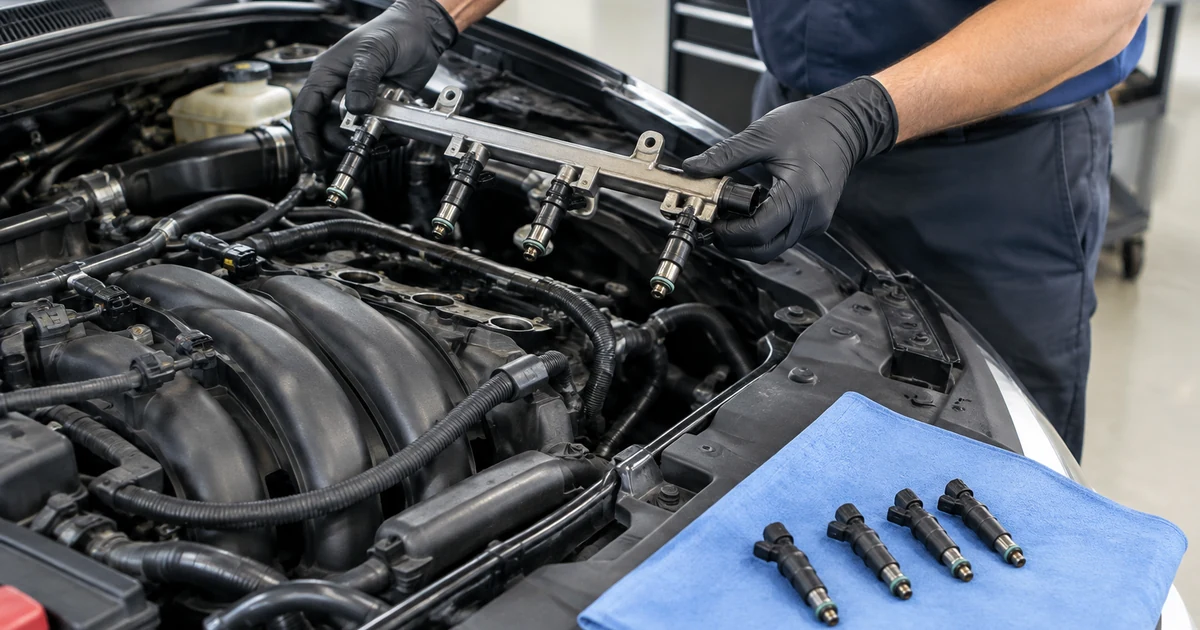
On many port-injected four-cylinders, the injectors sit in a fuel rail on top of the intake and take about 1.5–3 hours to replace. On direct-injection engines and V6s where the intake manifold must come off, it’s often 3–5 hours or more. At independent rates of about $110–$150 an hour, labor typically runs $200–$650. RepairPal’s national labor average is about $304–$446.
Shops also have to depressurize the fuel system, reseal everything and check for leaks. Some vehicles need the new injectors coded to the engine computer with a scan tool.
| Where you go | 4-cylinder full set | Notes |
|---|---|---|
| Dealer | $1,000 – $2,200 | OEM injectors, highest labor rate |
| Independent shop | $550 – $1,500 | OEM, aftermarket or reman injectors |
| DIY | $200 – $800 | Parts only; port injection only for most DIYers |
What Affects the Price
Port vs. direct injection
This is the biggest factor. CarParts.com estimates port injector jobs at about $300–$900 per injector and direct-injection jobs at about $450–$1,500 per injector, parts and labor included. Many newer engines, including several Toyota and Ford engines, use both systems, which means more injectors in total.
One injector or the full set
Replacing one failed injector is cheapest up front. But the labor to reach the second, third and fourth injector is small once the rail or intake is off, so many shops recommend a full set on high-mileage engines. CarParts.com estimates about $600–$2,200 for a four-cylinder set and $900–$3,000 for a six-cylinder set.
Number of cylinders and engine layout
A V6 or V8 has more injectors, and on many V-engines the intake manifold has to come off to reach them. That’s why trucks and SUVs cost more than compact cars.
Part quality
Injectors must spray evenly to keep each cylinder running the same fuel mixture. Cheap unbranded injectors can flow unevenly and bring back misfires. Stick with OEM, a known aftermarket brand or flow-tested remanufactured sets.
Shop type and region
Dealers charge the highest rates and typically install OEM injectors. Labor also costs more in the Northeast and on the West Coast. Set your region in the estimator above.
Related parts
If the intake manifold comes off, the gaskets must be replaced. A leaking intake gasket can cause lean codes that look like injector trouble; see our intake manifold gasket replacement cost guide.
Symptoms of a Bad Fuel Injector
- Misfires on one cylinder, often with a code like P0301–P0308
- Rough idle or shaking at a stop
- Hesitation or stumbling when accelerating
- Worse fuel economy
- Raw fuel smell, or fuel leaking around the injectors or rail
- Lean or rich codes such as P0171 or P0172
- Hard starting, especially after the car sits
Misfires can also come from spark plugs, coils or vacuum leaks, so a good shop tests the injector before replacing it. Our P0300 code guide covers misfire diagnosis, and our P0171 code guide explains lean-running causes.
Can You Drive With a Bad Fuel Injector?
It depends on how it’s failing. A clogged injector that causes a mild misfire won’t leave you stranded right away, but the misfire can overheat and damage the catalytic converter. Get it diagnosed soon.
A leaking injector is different. If you smell raw fuel or see fuel dripping in the engine bay, stop driving and have the car towed. Fuel on a hot engine is a fire risk. An injector stuck open can also wash fuel into the oil, which thins it and can harm the engine.
DIY vs. Taking It to a Shop
Difficulty: 3 out of 5 on a port-injected four-cylinder with the rail on top, 5 out of 5 on direct-injection engines. For a port system you’ll relieve fuel pressure, remove the rail, swap injectors with new O-rings lightly lubricated, then reinstall and check for leaks with the key on before starting. Budget 2–4 hours.
Direct-injection systems run at extremely high pressure, use special seals and sometimes need injector coding. Most DIYers should leave these to a shop. Always work with the engine cold, away from sparks, and with a fire extinguisher nearby.
Is It Worth Fixing?
For a single injector, almost always. A $300–$900 repair keeps the engine running smoothly and protects the catalytic converter.
A full direct-injection set on a V6 or V8 can reach $2,000–$3,000. On an older car worth $3,000 or less, compare that to the car’s value and its other needs. If the engine is otherwise healthy, with good compression and no oil burning, the repair can still make sense: a replacement car usually costs far more than the injector job.
Signs it may be time to walk away: the injector problem is one of several major issues, the engine already burns oil or has low compression, or fuel has diluted the oil long enough to damage bearings. In those cases, get a full inspection and a written estimate for everything before deciding.
How to Save Money on Fuel Injector Replacement
- Confirm the diagnosis with a balance or flow test before replacing injectors.
- Try cleaning first on port-injected engines with mild clogging.
- Consider remanufactured sets that are flow-tested and matched.
- Replace the full set when labor overlaps, such as when the intake manifold is already off.
- Check your powertrain or emissions warranty. Some injector failures on newer cars are covered.
- Use an independent shop for out-of-warranty cars.
- Get a second quote on any job over $1,500.
Fuel delivery problems aren’t always the injectors. Weak fuel pressure produces similar symptoms; see our fuel pump replacement cost guide.
Frequently Asked Questions
How much does it cost to replace fuel injectors?
Most drivers pay $300 to $1,500, with about $850 being typical. One port injector often costs $300 to $900 installed, while a full set on a direct-injection V6 or V8 can reach $2,000 to $3,000.
Should I replace all fuel injectors at once?
Often yes on high-mileage engines, because most of the labor is getting to the injectors, not swapping each one. Replacing the set also keeps fuel delivery even across cylinders. On a low-mileage engine with one clearly failed injector, replacing just that one is reasonable.
Can fuel injectors be cleaned instead of replaced?
Sometimes. Mildly clogged port injectors often respond to professional cleaning or a quality fuel system cleaner. Injectors that leak, stick open or fail electrically must be replaced.
How long do fuel injectors last?
Many last 100,000 miles or more, and some last the life of the engine. Poor-quality fuel, long periods of sitting and deposits can shorten their life.
Is it safe to drive with a leaking fuel injector?
No. If you smell raw fuel or see fuel leaking under the hood, stop driving and have the car towed. Fuel on a hot engine is a fire risk.
Why are direct injection injectors so expensive?
Direct injectors spray fuel straight into the cylinder at very high pressure, so they’re built to tighter tolerances. They also take more labor to reach and often need special seals or coding after installation.