What a Flashing Check Engine Light Usually Means
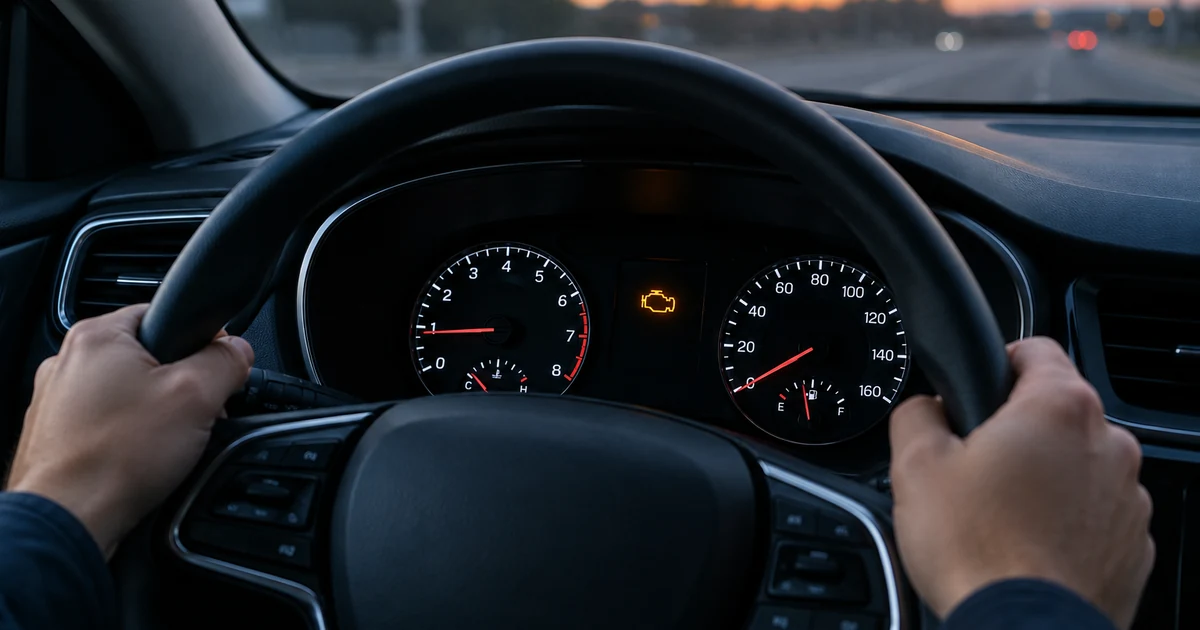
A flashing check engine light almost always means one thing: the engine is misfiring badly right now. One or more cylinders aren’t burning their fuel, and that raw fuel is being pushed into the exhaust.
That’s what makes a flashing light different from a steady one. Consumer Reports explains that a blinking light indicates a misfire so severe that unburned fuel is being dumped into the exhaust system, where it can quickly damage the catalytic converter. Kelley Blue Book puts it simply: with a flashing light, you should not drive the vehicle.
A steady light is usually an emissions-related fault, like a loose gas cap or a failing oxygen sensor, and you can normally keep driving until you get it checked. A flashing light is an active problem that gets more expensive every mile.
| Flashing light | Steady light | |
|---|---|---|
| What it usually means | Severe, active misfire | Emissions or sensor fault |
| Typical codes | P0300, P0301–P0308 | P0420, P0171, P0456, O2 sensor codes |
| Can you keep driving? | No, pull over and stop | Usually yes, get it checked soon |
| Main risk | Catalytic converter damage, power loss | Worse fuel economy, failed emissions test |
The code stored behind a flashing light is usually P0300 (random or multiple misfires) or a cylinder-specific code from P0301 to P0308. The last digit tells you which cylinder is misfiring.
Common Causes of a Flashing Check Engine Light
| Cause | How to recognize it | How likely | Typical repair cost |
|---|---|---|---|
| Failed ignition coil | Single-cylinder code (P0301–P0308), shaking, power loss | Very common | $160 – $360 per coil |
| Worn or fouled spark plugs | Overdue plugs, rough idle, misfires on several cylinders | Very common | $150 – $450 |
| Spark plugs + coils together | High mileage, more than one coil failing | Common | $600 – $1,100 |
| Vacuum leak | Hissing sound, lean codes such as P0171, misfire at idle | Common | $180 – $450 |
| Clogged or leaking fuel injector | Misfire on one cylinder that stays after a coil swap | Occasional | $300 – $1,500 |
| Catalytic converter already damaged | Rotten-egg smell, rattling, sluggish acceleration after misfiring | Possible after long misfires | $700 – $3,500 |
| Low compression (valves, head gasket) | Misfire that stays after plugs and coils, coolant loss or white smoke | Less common | $2,000 – $3,800 |
Costs are national shop estimates for a typical four-cylinder engine. V6 and V8 engines have more plugs and coils, and some rear-bank parts on sideways-mounted V6s need the intake plenum removed, which adds labor.
Failed Ignition Coil
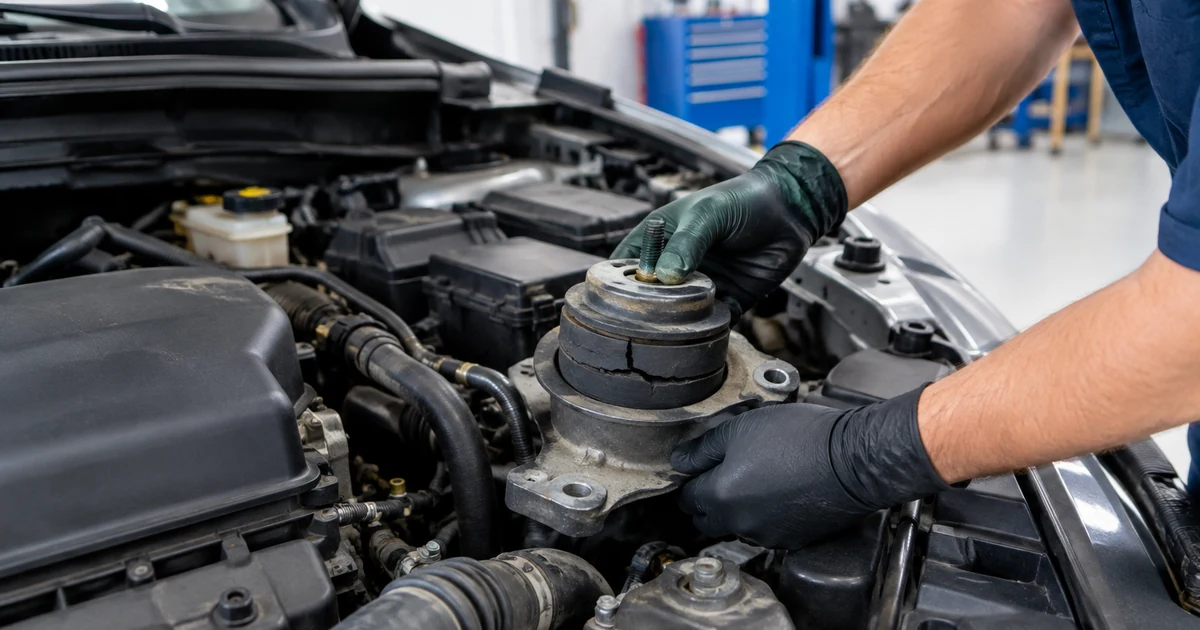
Most modern engines have one coil sitting on top of each spark plug. When a coil cracks or weakens, that cylinder stops firing completely, which is exactly the kind of hard misfire that makes the light flash.
Signs: a sudden shake, a noticeable loss of power, and a code naming one cylinder. The problem is often worse under load or in damp weather.
Fix and cost: replacing one coil typically runs $160 to $360 at a shop, with most drivers paying about $250. Easy-access coils take well under an hour.
Worn or Fouled Spark Plugs
Spark plugs wear gradually. As the gap grows, the coil has to work harder to fire it, and eventually the spark fails under load. Oil-fouled plugs can also cause misfires, and a worn plug can overload and kill a coil.
Signs: plugs past their service interval, a rough idle, weak acceleration and lower fuel economy. Misfires may jump between cylinders.
Fix and cost: a set of plugs costs $150 to $450 at a shop, about $280 for most four-cylinder cars. If the plugs are very worn, many shops recommend replacing the coils at the same time, which brings the bill to roughly $600 to $1,100.
Vacuum Leaks and Fuel Problems
A cracked vacuum hose or a leaking intake gasket lets in air the engine computer can’t measure. The mixture runs lean and cylinders can misfire, especially at idle. A clogged or stuck injector does the same thing to one cylinder.
Signs: lean codes such as P0171, a hissing sound under the hood, or a misfire that stays on the same cylinder after you swap coils.
Fix and cost: a vacuum leak repair is usually $180 to $450 including a smoke test. A fuel injector costs $300 to $1,500 depending on whether the engine uses port or direct injection.
Damaged Catalytic Converter
The catalytic converter isn’t usually what causes the flashing light. It’s what gets hurt by it. Unburned fuel ignites inside the converter, overheats it and can melt the internal honeycomb.
Signs: a rotten-egg smell, rattling under the car, poor acceleration even after the misfire is fixed, and code P0420.
Fix and cost: converter replacement runs $700 to $3,500, with an OEM part averaging about $2,200. This is the expensive repair you avoid by stopping quickly.
Low Compression or Head Gasket Problems
Sometimes the misfire isn’t electrical or fuel-related at all. A burnt valve, worn piston rings or a failing head gasket lets compression escape, so the cylinder can’t fire properly no matter how good the spark is.
Signs: a misfire that stays on the same cylinder after new plugs and a coil swap, coolant loss with no visible leak, white exhaust smoke, or overheating.
Fix and cost: a compression or leak-down test confirms it. A head gasket job on a four-cylinder typically costs $2,000 to $3,800, and V6 or V8 engines cost more. On an older, low-value car, this is often where owners weigh repairing against replacing the vehicle.
Is It Safe to Drive With a Flashing Check Engine Light?
No. A flashing check engine light means you should stop driving as soon as it’s safe. Kelley Blue Book advises pulling over immediately and turning off the car, especially if the oil pressure or temperature warning lights are also on.
Here’s what to do:
- Ease off the gas. Reduce load right away. Don’t accelerate hard, tow, or climb hills.
- Pull over somewhere safe and turn the engine off.
- Check the other gauges. If the temperature or oil warning is also on, don’t restart the engine.
- Have the car towed or, if the shop is very close, drive there slowly at light throttle.
- Don’t keep clearing the code and driving on. The misfire is still there even if the light stops flashing for a while.
Beyond the catalytic converter, a severe misfire can cause sudden power loss while merging or passing. Very hot converters have been known to start fires under the car, so don’t park on dry grass after a hard misfire.
If the light flashes briefly and then turns steady, the misfire has eased but hasn’t been fixed. Treat it as urgent and book a diagnosis within a day or two.
How a Mechanic Diagnoses a Flashing Check Engine Light
A shop will start by reading codes and freeze-frame data, then check misfire counts for each cylinder. From there the usual steps are:
- Coil swap test: moving the coil from the misfiring cylinder to another. If the misfire follows the coil, the coil is bad.
- Spark plug inspection: checking wear, gap, cracks and oil fouling.
- Fuel trim and vacuum check: a smoke test finds leaks; injector balance testing finds a weak injector.
- Compression or leak-down test if ignition and fuel check out.
Diagnosis typically costs $100 to $200 at an independent shop. Consumer Reports cites a typical shop diagnosis of around $90, and many shops credit the fee toward the repair. Dealers sit at the higher end.
What You Can Check Yourself
You can do a few safe checks before going to the shop, as long as the engine is off and cool:
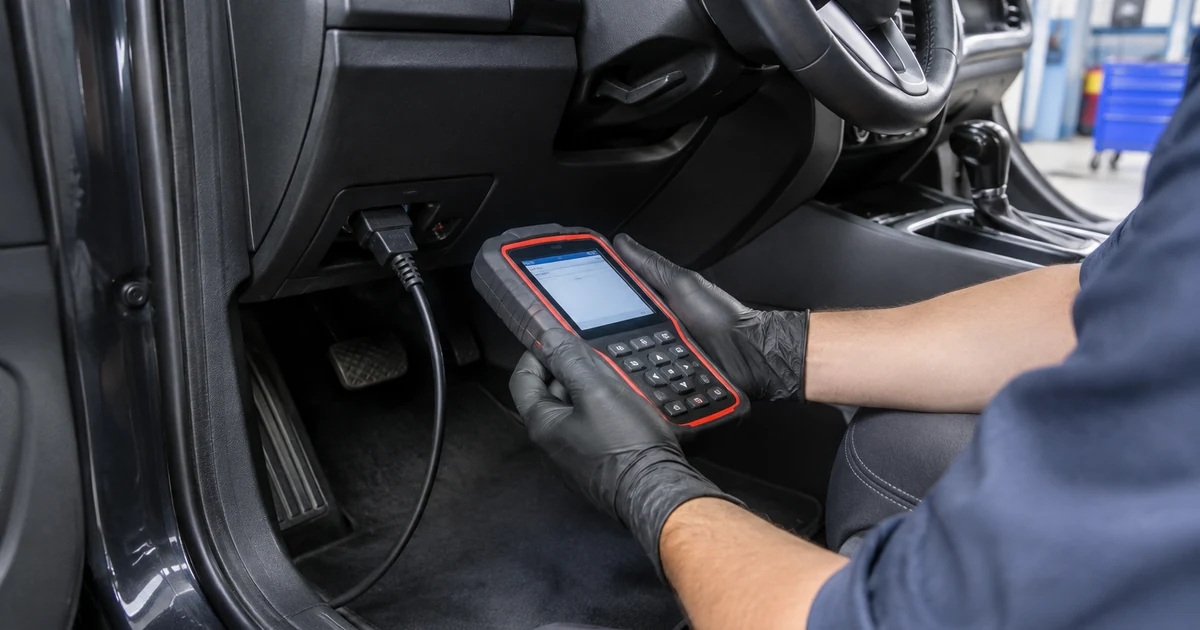
- Read the code. A basic OBD2 scanner costs less than $50, according to KBB, and many auto parts stores read codes for free. Write down every code, not just the first.
- Check the spark plug history. Look up when the plugs were last replaced. Many iridium plugs are due around 100,000 miles, but older engines and copper plugs need them much sooner.
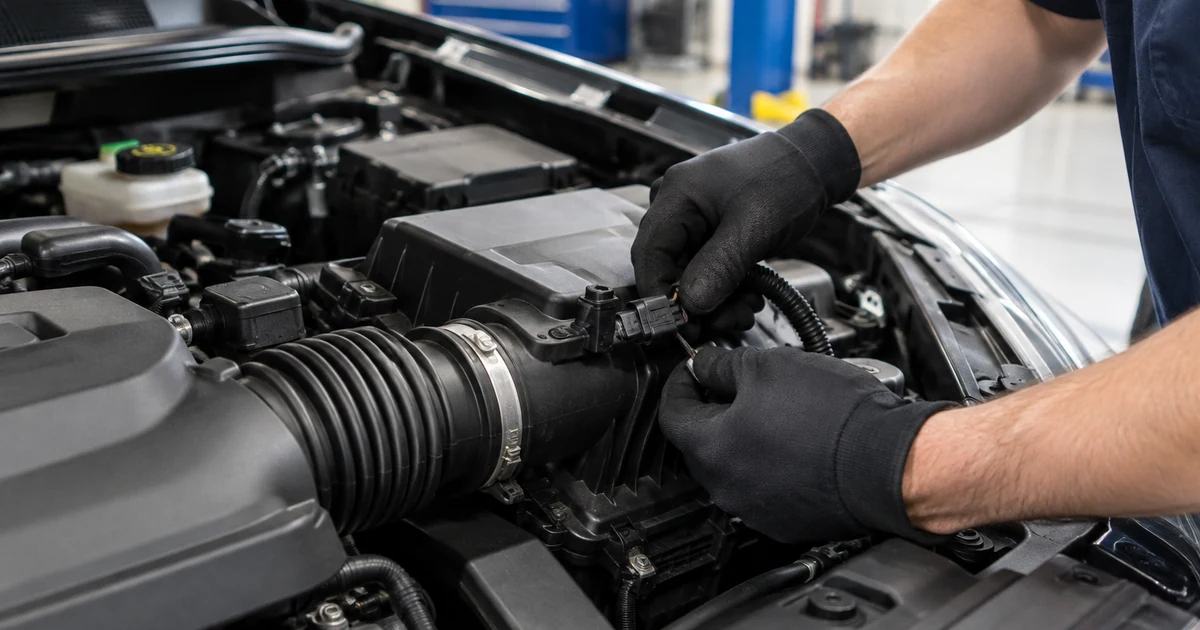
- Look at the coils and connectors. Check for cracked coil boots, oil in the plug wells, or a loose connector.
- Listen for hissing around the intake with the engine idling briefly, which may point to a vacuum leak.
- Consider recent events. Did it start after a fill-up, a car wash or heavy rain? Bad fuel and water in the plug wells are both possible triggers.
If you’re comfortable with basic tools, swapping a coil between two cylinders and rescanning is a common DIY test on engines where the coils sit on top.
When to See a Mechanic Right Away
- The light is flashing and the engine is shaking hard or losing power
- You smell fuel, rotten eggs or burning from under the car
- The temperature gauge is rising or the oil light is on at the same time
- You see white smoke from the exhaust or the coolant level keeps dropping
- The light keeps flashing after you replaced plugs or a coil
Any of these means the problem can get much more expensive within a few miles. Get the car towed if needed. A tow is cheaper than a catalytic converter.
How to Save on the Repair
- Stop driving early. The biggest saving is avoiding a $700 to $3,500 catalytic converter replacement.
- Get the code read for free at an auto parts store, or buy a basic scanner, before paying for diagnosis.
- Ask for the misfire data by cylinder. It shows whether one coil or the whole ignition system needs work.
- Use an independent shop. Labor rates are usually lower than at a dealer for the same coil or plug job.
- Bundle the work. If plugs are due, doing plugs and the bad coil together saves duplicated labor.
- Check your warranty. Coils and injectors may be covered under a powertrain or emissions warranty on newer cars, and federal emissions warranty rules cover the catalytic converter for longer on many vehicles.
- Get a second quote before approving a catalytic converter or internal engine repair.
Frequently Asked Questions
What does it mean when the check engine light is flashing?
A flashing check engine light means the engine is misfiring severely right now. Unburned fuel is entering the exhaust, where it can overheat and damage the catalytic converter. It’s more urgent than a steady light, which usually points to an emissions fault.
Can I drive with a flashing check engine light?
You shouldn’t. Kelley Blue Book advises against driving with a flashing light. Reduce speed, pull over when it’s safe and turn the engine off. If the shop is very close, a slow, light-throttle drive may be acceptable, but towing is the safer choice.
How much does it cost to fix a flashing check engine light?
Most fixes cost $150 to $450 for spark plugs or $160 to $360 for one ignition coil. Fuel injectors run $300 to $1,500. If you kept driving and damaged the catalytic converter, expect $700 to $3,500 more.
Why is my check engine light flashing and my car shaking?
Shaking plus a flashing light is the classic sign of a misfire: one or more cylinders isn’t firing, so the engine runs unevenly. A failed ignition coil or worn spark plugs are the most common causes.
Why did my check engine light flash and then stop?
The misfire eased, often because engine load dropped or conditions changed, but the cause is still there. The code stays stored in memory. Get it scanned soon, because the flashing usually returns under load.
Can low oil or a loose gas cap make the check engine light flash?
A loose gas cap causes a steady light, not a flashing one. Low oil usually triggers the separate oil pressure warning. A flashing check engine light is almost always tied to misfires.