Oil Change Cost by Vehicle
The two things that set the price are how much oil your engine holds and which oil it requires. A compact car that takes four quarts of 0W-20 is cheap. A V8 truck that takes eight quarts, or a heavy-duty diesel that takes twelve or more, costs noticeably more at every shop.
| Vehicle (engine) | Oil capacity (approx.) | Parts (oil + filter) | Labor | Total, full synthetic |
|---|---|---|---|---|
| Ford F-150 (3.5L EcoBoost / 5.0L V8) | 6–9 qts | $45 – $90 | $25 – $50 | $70 – $140 |
| Chevrolet Silverado 1500 (5.3L V8) | 8 qts | $50 – $90 | $25 – $50 | $75 – $140 |
| Ram 2500 (6.7L Cummins diesel) | 12 qts | $90 – $170 | $40 – $80 | $130 – $250 |
| Toyota Camry (2.5L 4-cyl) | 4.8 qts | $35 – $65 | $25 – $45 | $60 – $110 |
| Toyota RAV4 (2.5L 4-cyl) | 4.8 qts | $35 – $65 | $25 – $45 | $60 – $110 |
| Honda Civic (2.0L / 1.5L turbo) | 3.7–4.4 qts | $30 – $60 | $25 – $45 | $55 – $105 |
| Honda Accord (1.5L turbo) | 3.7 qts | $30 – $60 | $25 – $45 | $55 – $105 |
| Honda CR-V (1.5L turbo) | 3.7 qts | $30 – $60 | $25 – $45 | $55 – $105 |
| Nissan Altima (2.5L 4-cyl) | 5 qts | $35 – $65 | $25 – $45 | $60 – $110 |
| Chevrolet Equinox (1.5L turbo) | 4.2 qts | $35 – $65 | $25 – $45 | $60 – $110 |
| Jeep Grand Cherokee / Wrangler (3.6L V6) | 5–6 qts | $40 – $75 | $25 – $50 | $65 – $125 |
| BMW 3 Series (2.0L turbo) | 5.3 qts | $60 – $120 | $40 – $90 | $100 – $210 |
These are estimates for common model years and engines at quick lube chains and independent shops using the oil grade the manufacturer specifies. Capacities vary by year, so confirm yours in the owner’s manual. Electric cars like the Tesla Model 3 have no engine oil to change.
Oil Change Cost by Oil Type
Oil type is the biggest price lever you control, but it isn’t really a free choice. Most engines built in the last decade call for a low-viscosity synthetic such as 0W-20 or 0W-16, and using something else can affect your warranty. Check the owner’s manual or the oil filler cap.
| Oil type | Typical price at a shop | Best for |
|---|---|---|
| Conventional | $35 – $75 | Older, simpler engines that specify it |
| Synthetic blend | $50 – $90 | Engines that allow it; a middle-ground price |
| Full synthetic | $65 – $125 | Most modern engines, turbos, towing, extreme temperatures |
| High-mileage | $60 – $110 | Engines past about 75,000 miles with minor seepage |
| Diesel (pickup) | $110 – $250 | Heavy-duty diesel trucks holding 10–15 qts |
Posted prices at national chains back this up. A NerdWallet price survey found conventional oil changes from roughly $27 to $46 and full synthetic from about $59 to $105 before coupons, with Walmart at the low end and Jiffy Lube and Take 5 at the top. Dealers and some independent shops charge more, and RepairPal’s national estimate for a full service at a repair shop runs well above chain pricing.
What’s Included in an Oil Change
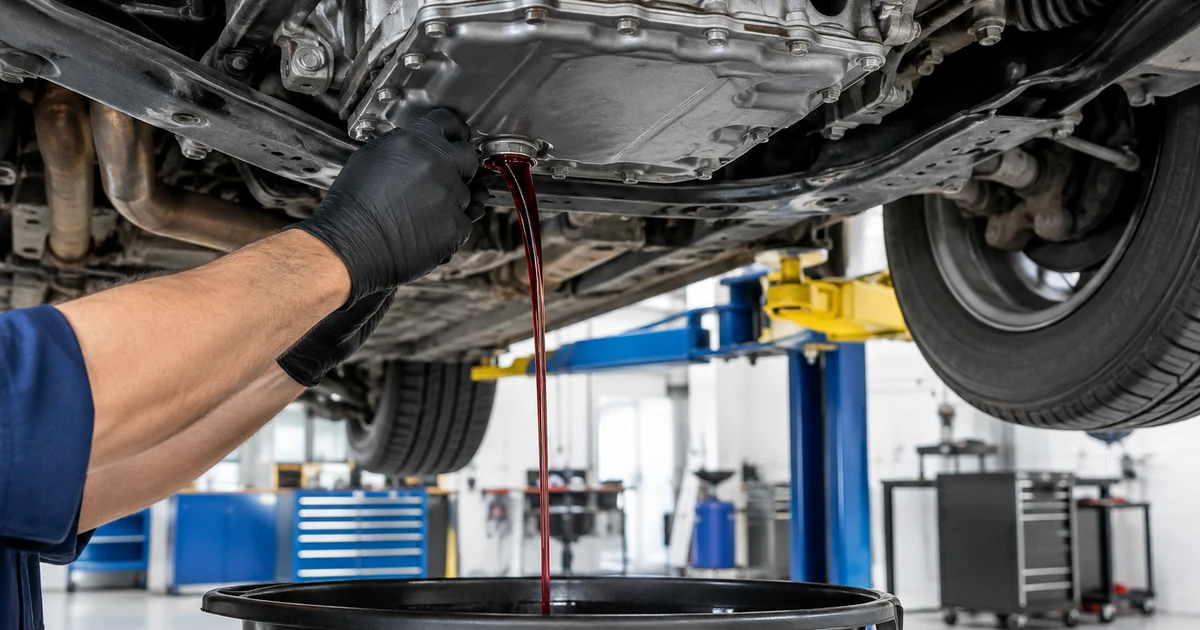
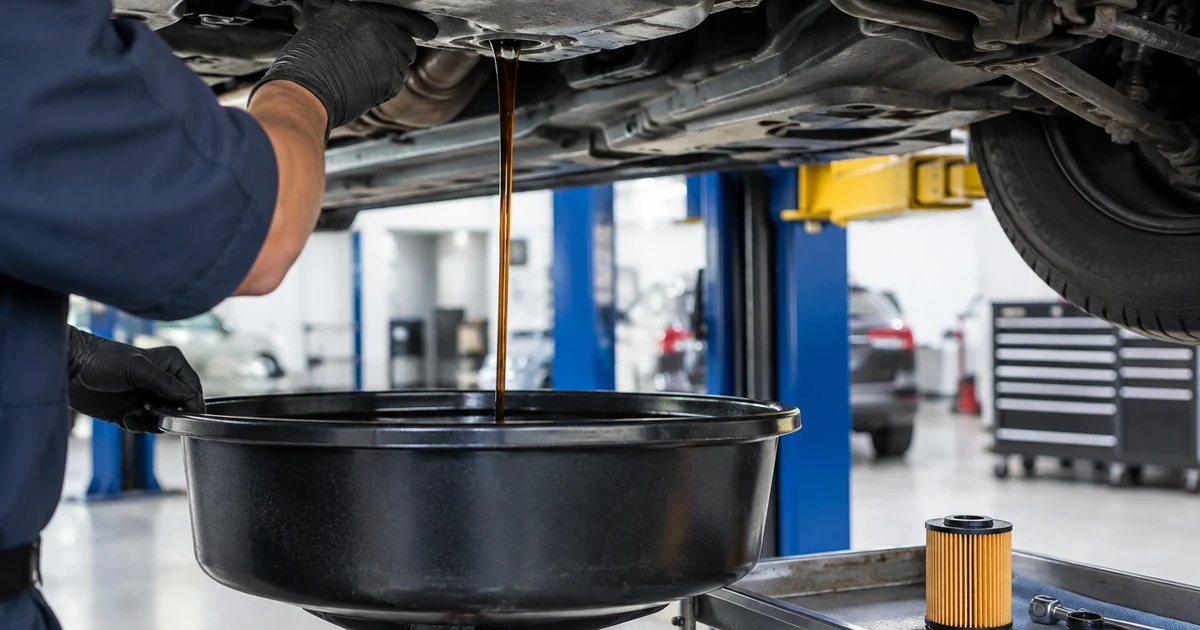
- Draining the old oil and replacing the drain plug gasket or crush washer
- A new oil filter
- Refilling with the specified grade and quantity of oil
- Resetting the oil life monitor or maintenance reminder
- At most shops, a quick check of other fluid levels, tire pressure and wipers
Some chains include a tire rotation or a multipoint inspection. What they rarely include is the add-ons that get recommended at the counter: engine air filter, cabin air filter, wiper blades, fuel system cleaners and fluid flushes. Those can double the bill. Ask to see the old part before approving an air filter, and check your maintenance schedule before approving any flush.
How Often Do You Need an Oil Change?
The old 3,000-mile rule is outdated for most cars. Many modern engines on synthetic oil have factory intervals of 5,000 to 10,000 miles, and some are longer. Conventional oil is usually changed more often, around 3,000 to 5,000 miles.
Your car’s oil life monitor, if it has one, is the best guide because it tracks how you actually drive. Follow the “severe service” schedule if you mostly make short trips, tow, idle a lot or drive in extreme heat, cold or dust. Change the oil at least once a year even if you drive very little, because oil degrades with time as well as miles.
Signs You Need an Oil Change
- Oil life monitor or maintenance light is on
- You’re at or past the mileage or time in your maintenance schedule
- Oil on the dipstick is black and gritty, or the level is low
- Engine is louder than usual, with ticking or knocking
- Oil pressure warning light (pull over and check the level right away)
An oil pressure warning is not the same as a service reminder. If the red oil can symbol comes on while driving, stop as soon as it’s safe and shut the engine off. Running an engine with no oil pressure can destroy it in minutes.
Quick Lube vs. Dealer vs. Independent Shop
| Where | Full synthetic, typical | Pros | Cons |
|---|---|---|---|
| Quick lube chain | $65 – $110 | Fast, no appointment, frequent coupons | Upsell pressure; check the oil grade on the receipt |
| Independent shop | $70 – $120 | A mechanic who knows your car can spot other issues | May need an appointment |
| Dealer | $80 – $150 | Factory filter and oil spec; records in the dealer system | Highest price unless on a service special |
| Big-box auto center (e.g., Walmart) | $30 – $70 | Lowest posted prices | Longer waits; limited vehicles and services |
| DIY | $25 – $60 | Cheapest; you know exactly what went in | Tools, mess and used-oil disposal |
For a car under warranty, you don’t have to use the dealer. Keep receipts showing the date, mileage and the oil that meets the manufacturer’s specification, and your warranty stays intact.
What Affects the Price
Oil capacity and engine type
Most four-cylinder cars hold four to five quarts. V8 trucks commonly take six to nine, and heavy-duty diesel pickups take twelve or more of more expensive diesel-rated oil. Every extra quart adds to the bill.
Oil specification
European brands often require oil that meets a factory approval such as BMW Longlife or Mercedes 229-series. Those oils cost more per quart, and many quick lube chains don’t stock them.
Filter type and access
A spin-on filter is quick. Cartridge filters, filters behind skid plates or underbody panels, and cars that need to go on a lift add labor.
Shop type and region
Dealer labor and parts prices are highest. Prices also run higher in the Northeast and on the West Coast; the region setting in the estimator above adjusts for that.
Can You Skip an Oil Change?
You can go a little past the interval without harm, but not far. Old oil loses its ability to protect against wear and heat, and sludge builds up. On turbocharged engines, degraded oil can also damage the turbo bearings. Engine damage from neglected oil changes is one of the most expensive and preventable repairs, and a manufacturer can deny a warranty claim if you can’t show the oil was changed.
DIY Oil Change vs. Taking It to a Shop
Difficulty: 2 out of 5. Tools: a wrench or socket for the drain plug, an oil filter wrench, a drain pan, a funnel, and ramps or a jack with jack stands. Budget 30–60 minutes the first time.
DIY saves roughly half the cost on a typical car: five quarts of full synthetic and a filter usually run $25–$60. Never work under a car supported only by a jack. Tighten the drain plug to spec with a new washer, fill with the exact grade in your manual, run the engine briefly and recheck the level. Take used oil and the old filter to an auto parts store or recycling center; most accept them free.
A shop is the easier call if your car needs a lift to reach the filter, has large underbody panels, or you have nowhere to work or dispose of oil.
Is It Worth Paying for Synthetic?
If your manual calls for synthetic, yes, it isn’t optional. If it allows conventional, synthetic still offers better protection. AAA testing found synthetic oils outperformed conventional oils by an average of nearly 50% in its tests, and estimated that switching costs about $64 more per year for the average driver. Longer intervals on synthetic can close much of that gap.
How to Save Money on Oil Changes
- Follow your manual’s interval, not the shop sticker. Fewer unnecessary changes is the biggest saving.
- Use coupons and service specials. Chains and dealers run them constantly; check their websites before you go.
- Decline add-ons you haven’t verified. Air filters and flushes are the most common upsells.
- Buy oil on sale and bring it to an independent shop that charges a labor-only fee, if they allow it.
- Bundle a tire rotation with every other oil change; many shops discount or include it.
- Consider a prepaid maintenance plan only if the math beats paying per visit.
- DIY if you have a safe place to work.
An oil change visit is also a good time to ask about other routine items: see our guides to engine air filter replacement cost and tire rotation cost. If the shop finds a leak, our valve cover gasket replacement cost guide covers the most common source.
Frequently Asked Questions
How much is an oil change?
Most oil changes cost $35 to $125. Conventional oil runs about $35–$75 and full synthetic about $65–$125, with $85 typical for synthetic at a quick lube or independent shop. Trucks, diesels and European cars cost more.
How much is a synthetic oil change at Jiffy Lube or Valvoline?
Posted prices vary by store, but full synthetic at national chains commonly runs roughly $80 to $110 before coupons. Both chains frequently offer online discounts, so check their websites first.
How often should I change my oil?
Follow your owner’s manual or oil life monitor. Many modern cars on synthetic oil go 5,000 to 10,000 miles between changes, while conventional oil is usually changed every 3,000 to 5,000 miles. Change it at least once a year regardless of mileage.
Is synthetic oil worth the extra cost?
If your manual requires it, yes; it’s not optional. If it’s optional, synthetic protects better at high heat and in cold starts, and AAA estimated the switch costs about $64 more per year for the average driver.
Does a dealer oil change cost more?
Usually, yes. Dealers typically charge $80 to $150 for full synthetic, though service specials can bring that close to chain pricing. You don’t have to use the dealer to keep your warranty; keep receipts showing the correct oil was used.
How long does an oil change take?
About 20 to 45 minutes of work. Quick lube chains are fastest; at a dealer or busy shop the total visit can take an hour or more.
Can I change my own oil?
Yes, it’s one of the easiest DIY jobs. You need a drain pan, a wrench, an oil filter wrench, and ramps or jack stands. Oil and a filter cost about $25–$60, and most parts stores take used oil for free.