Brake Fluid Flush Cost by Vehicle
Prices below are for a standard brake fluid flush (exchange and bleed of all four wheels) at an independent shop. They are estimates for common model years; dealer pricing, extra ABS bleeding procedures and rusted bleeder screws can push the bill higher.
| Vehicle | Parts | Labor | Total |
|---|---|---|---|
| Ford F-150 | $15 – $40 | $80 – $150 | $95 – $190 |
| Chevrolet Silverado 1500 | $15 – $40 | $80 – $150 | $95 – $190 |
| Toyota Camry | $10 – $30 | $70 – $130 | $80 – $160 |
| Toyota RAV4 | $10 – $30 | $70 – $130 | $80 – $160 |
| Honda Civic | $10 – $25 | $65 – $125 | $75 – $150 |
| Honda Accord | $10 – $30 | $70 – $130 | $80 – $160 |
| Honda CR-V | $10 – $30 | $70 – $130 | $80 – $160 |
| Nissan Altima | $10 – $30 | $70 – $130 | $80 – $160 |
| Chevrolet Equinox | $10 – $30 | $70 – $135 | $80 – $165 |
| Jeep Grand Cherokee | $15 – $40 | $80 – $150 | $95 – $190 |
| Jeep Wrangler | $15 – $40 | $80 – $150 | $95 – $190 |
| Tesla Model 3 | $15 – $40 | $80 – $160 | $95 – $200 |
| BMW 3 Series | $20 – $50 | $90 – $180 | $110 – $230 |
The fluid itself is cheap, so the price is mostly labor. Trucks and larger SUVs use a little more fluid and sometimes take longer to bleed. Many European cars call for a low-viscosity DOT 4 fluid and a scan tool to cycle the ABS unit, which is why a BMW or similar tends to cost more.
Cost Breakdown: Parts vs. Labor
A brake fluid flush uses roughly one to two quarts of fluid, which costs about $10 to $40 depending on the DOT type and brand. Labor is typically 0.5 to 1 hour, or about $70 to $160 at common shop rates. That puts most independent-shop flushes around $80 to $200, with dealers often charging $140 to $250 or more.
Brake fluid types
- DOT 3: glycol-based fluid used in many domestic and Asian cars. Lower boiling point than DOT 4 but absorbs moisture a little more slowly.
- DOT 4: higher dry and wet boiling points, common in European cars and many newer vehicles. Often specified with a two-year change interval.
- DOT 5.1: glycol-based high-performance fluid with a still higher boiling point. Only use it if your manual allows it.
- DOT 5 (silicone): not meant for modern ABS-equipped passenger cars. Never put it in a system designed for DOT 3 or DOT 4.
The rule is simple: use the type printed on your master cylinder cap or in the owner’s manual.
Dealer vs. independent vs. DIY
| Option | Typical cost | What you get |
|---|---|---|
| Independent shop | $80 – $200 | Full flush and bleed, usually with a brake inspection |
| Dealership | $140 – $260 | OEM fluid, factory bleed procedure and scan tool if needed |
| DIY | $15 – $45 | Fluid and a bleeder kit; you supply time and ideally a helper |
How Often Should You Flush Brake Fluid?
Brake fluid is hygroscopic, which means it slowly absorbs moisture from the air. Water lowers its boiling point and promotes corrosion inside calipers, lines and the ABS unit. That is why many automakers recommend inspecting or replacing brake fluid every 2 to 3 years, and many European brands specify every 2 years. Some manufacturers list a mileage interval as well, so check your maintenance schedule rather than relying on a quick-lube sticker.
Drivers who tow, drive in the mountains, or live in humid climates may want to stay on the shorter end of that range. The fluid should look clear to light amber; dark brown fluid is overdue.
What Affects the Price
Vehicle type and ABS design
Most cars can be bled with a pressure bleeder in well under an hour. Some ABS systems need a scan tool to open valves and cycle the pump during the bleed, which adds time and cost.
Fluid type
DOT 3 is the cheapest. DOT 4, low-viscosity DOT 4 and DOT 5.1 cost a bit more, but the fluid is still a small share of the bill.
Shop type
Dealers charge the highest labor rates. Quick-lube chains and brake shops often advertise low flush prices, which can be a good deal as long as they bleed every wheel.
Where you live
Labor rates are highest in the Northeast and on the West Coast. Use the region setting in the estimator above to see how it shifts the price.
Work done at the same time
A flush is often bundled with a brake job, because the system has to be bled anyway after replacing a caliper or hose. Seized or snapped bleeder screws on older, rusty cars can add labor. Pairing a flush with a brake pad replacement or a pads and rotors job can save a bit of labor overlap.
Signs You Need a Brake Fluid Flush
- Fluid is dark brown or cloudy in the reservoir instead of clear or light amber.
- Soft or spongy pedal that improves when you pump it, which can mean moisture or air in the system.
- Brake fade on long downhill runs or when towing, as wet fluid boils at a lower temperature.
- ABS warning light in some cases, though this has several possible causes.
- It has simply been 2 to 3 years or more since the last change, or you have no record of one.
Can You Drive With Old Brake Fluid?
Old fluid rarely causes a sudden failure in normal driving, so you do not need to park the car today. It does reduce your safety margin: moisture-laden fluid can boil under hard braking, which makes the pedal go soft right when you need it most. It also corrodes brake parts from the inside, which leads to costlier caliper and ABS repairs later.
Different story if the fluid level is low, the red brake warning light is on, or the pedal sinks toward the floor. That points to a leak or a failed component, not just old fluid. Stop driving and have the car inspected or towed.
DIY vs. Taking It to a Shop
Difficulty: 2 out of 5 on most cars, 3 or more on cars that need a scan tool for the ABS bleed. Plan on 1 to 2 hours the first time.
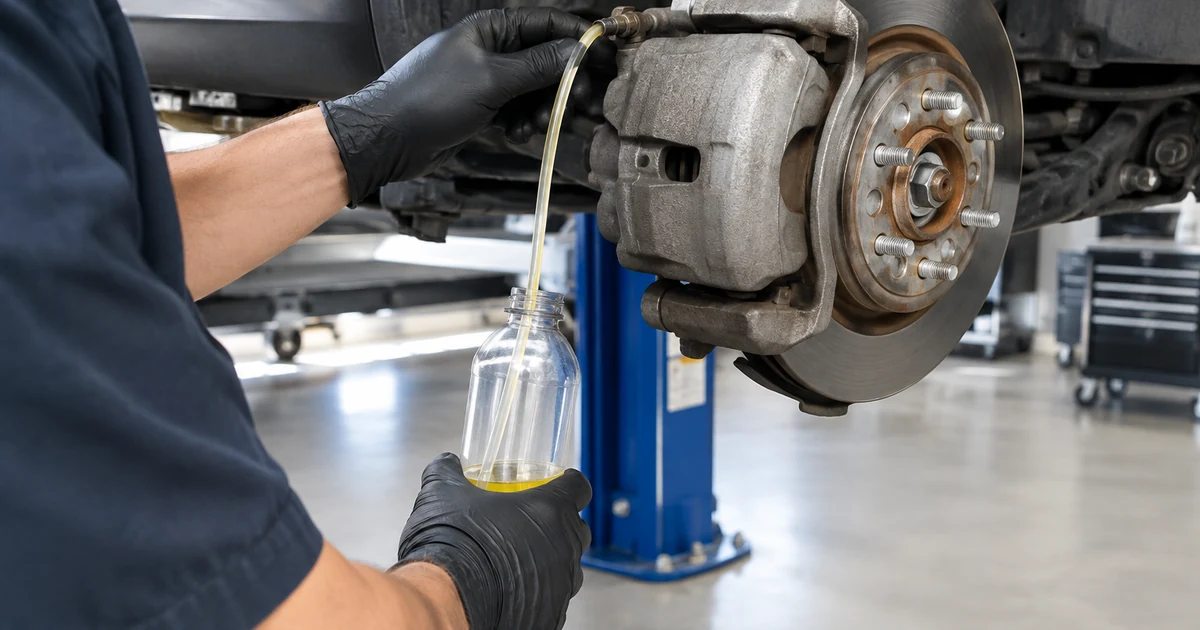
Tools you need: the correct DOT fluid (sealed, fresh bottles), a turkey baster or syringe for the reservoir, a line wrench for the bleeder screws, clear tubing and a catch bottle or a one-person bleeder kit, jack and jack stands if you cannot reach the bleeders, and a helper to pump the pedal unless you use a pressure or vacuum bleeder.
Work from the wheel farthest from the master cylinder to the nearest (usually right rear, left rear, right front, left front, but check your manual). Never let the reservoir run dry, or you will pull air into the ABS unit. Brake fluid strips paint, so wipe up spills right away. If the pedal is still soft after bleeding, stop and have a shop check it.
Is a Brake Fluid Flush Worth It?
Yes, when it follows your manufacturer’s interval. It is one of the cheapest brake services and protects far more expensive parts such as calipers and the ABS module. What is not worth it is paying for a flush every oil change because a shop recommends it. If your fluid was changed within the last couple of years and tests fine, you can usually wait.
How to Save Money on a Brake Fluid Flush
- Follow the owner’s manual interval rather than shop suggestions.
- Bundle it with brake work. If a caliper or hose is being replaced, the system gets bled anyway; ask for a full flush at the same time.
- Use an independent shop instead of the dealer on out-of-warranty cars.
- Look for service coupons from local shops and chains, which often discount fluid services.
- Get the price in writing and confirm it covers all four wheels.
- Do it yourself if you are comfortable with basic brake work; the fluid costs very little.
You can also read how we estimate costs.
Frequently Asked Questions
How often should brake fluid be changed?
Many automakers recommend inspecting or replacing brake fluid every 2 to 3 years, and many European brands specify every 2 years. Your owner’s manual has the exact interval. Towing, mountain driving and humid climates are reasons to stay on the shorter end.
Is a brake fluid flush really necessary?
Yes, on the manufacturer’s schedule. Brake fluid absorbs moisture over time, which lowers its boiling point and corrodes internal brake parts. A flush is cheap compared with replacing calipers or an ABS module.
How long does a brake fluid flush take?
About 30 minutes to an hour at a shop. Cars that need a scan tool to cycle the ABS unit, or have seized bleeder screws, can take longer.
What is the difference between a brake fluid flush and a bleed?
A bleed removes air from the lines, usually after a repair, and only pushes through a small amount of fluid. A flush replaces essentially all of the old fluid at every wheel. Both use the same bleeder screws.
Can I mix DOT 3 and DOT 4 brake fluid?
Use the type your manual specifies. Glycol-based DOT 3, DOT 4 and DOT 5.1 fluids are designed to be compatible in an emergency, but mixing lowers the performance to the weaker fluid. Never add silicone DOT 5 to a system that uses DOT 3 or DOT 4.
What color should brake fluid be?
Fresh brake fluid is clear to light amber. It darkens as it ages and picks up moisture and contaminants. Dark brown fluid is a good sign a flush is overdue, though color alone is not a precise test.