What the P0340 Code Means
P0340 stands for Camshaft Position Sensor “A” Circuit Malfunction. The engine computer expected a clean, regular signal from the camshaft position sensor and either got nothing or got a signal it couldn’t use.
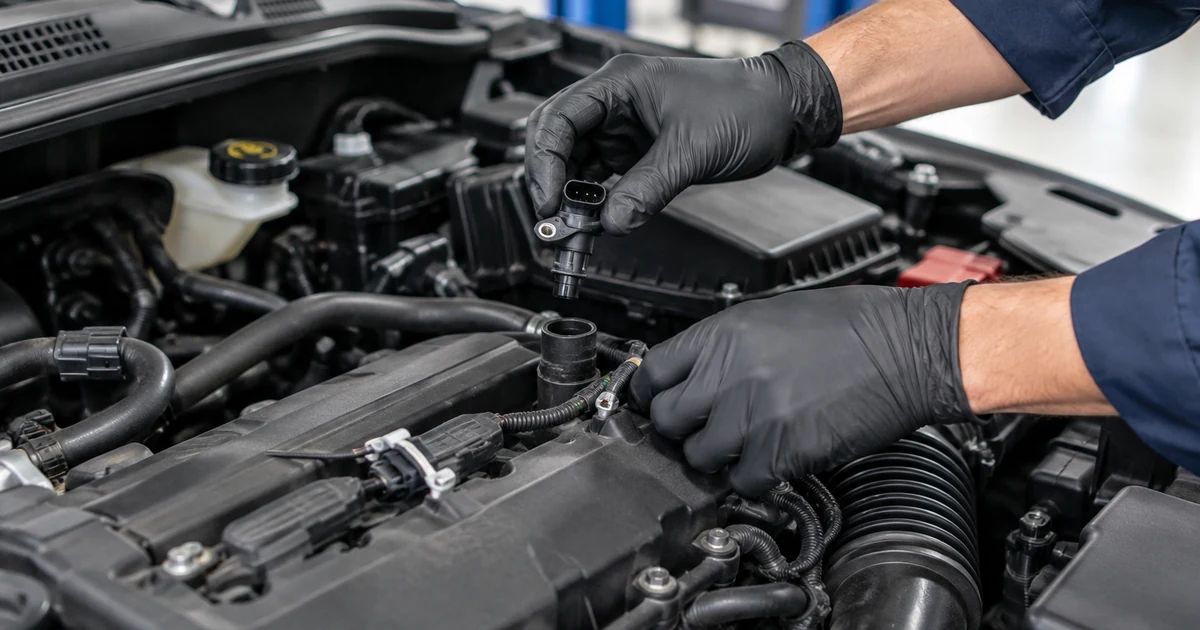
The camshaft position sensor reads a toothed reluctor wheel on the camshaft and tells the computer exactly where the cam is in its rotation. Together with the crankshaft position sensor, that lets the computer know which cylinder is on its compression stroke, so it can fire the right spark plug and time each fuel injector. Without a usable cam signal, the engine either runs on a backup strategy or doesn’t start at all.
Note the word circuit. As CarParts.com points out, P0340 covers the sensor, its wiring and connector, and the computer that reads it. That’s why replacing the sensor fixes many P0340 codes but not all of them. “A” usually refers to the intake cam or the only cam sensor on Bank 1.
Common Causes of P0340
| Cause | Likelihood | Typical repair cost |
|---|---|---|
| Failed camshaft position sensor | Most common | $160 – $360 (cam sensor) |
| Damaged, corroded or loose wiring or connector | Common | $100 – $300 |
| Faulty crankshaft position sensor | Occasional | $170 – $420 (crank sensor) |
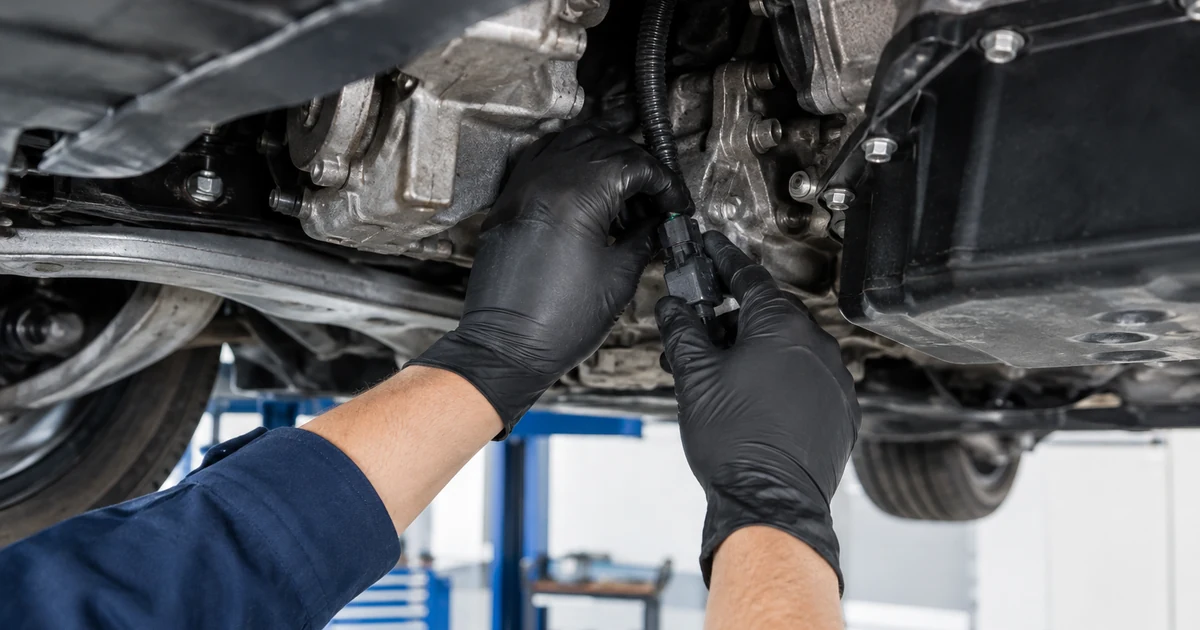
| Hard-to-reach cam sensor (behind intake or timing cover) | Depends on engine | $350 – $800 |
| Damaged reluctor wheel or sludge on the sensor tip | Less common | $200 – $600+ |
| Timing chain or belt jumped or stretched | Less common but serious | $650 – $2,700 (chain or belt) |
| PCM software or a failed engine computer | Rare | $100 – $200 update; $1,000 – $1,200 replacement |
FIXD, CarParts.com and O’Reilly all list the sensor itself and its wiring as the leading causes, followed by the crankshaft sensor, reluctor wheel damage, timing problems and, rarely, the engine computer. CarParts.com also mentions improper installation and sludge or debris on the sensor, which is worth remembering if the code appeared right after other engine work.
Symptoms of P0340
- Check engine light on
- Hard starting, or cranking without starting
- Stalling, sometimes followed by a no-restart until the engine cools
- Rough idle, misfires or hesitation
- Loss of power or poor acceleration
- Lower fuel economy
- On some vehicles, harsh shifting or limp mode
FIXD notes that many cars show no obvious symptom besides the light, because the computer falls back on the crankshaft signal and runs with less precise timing. A sensor that fails only when hot is a classic cause of a car that dies after a long drive and starts again an hour later.
Is It Safe to Drive With P0340?
Avoid driving until it’s diagnosed. FIXD rates P0340 as severe and says to stop driving, O’Reilly advises against driving with the code, and CarParts.com calls it a serious issue that needs immediate attention.
The biggest risk is practical rather than mechanical: a car with a failing cam sensor can stall without warning, in traffic or on the highway, and may not restart. You can lose power assist for steering and brakes when the engine dies, which makes the car harder to control.
- Don’t drive it if the engine stalls, misfires heavily, or the check engine light flashes. A flashing light means a misfire that can overheat the catalytic converter.
- Tow it if it cranks but won’t start, or if you also hear rattling from the timing area, which could mean the chain or belt has jumped.
- If the car runs normally, a short, low-speed trip straight to a shop is the most you should plan. Stay off the highway.
How to Diagnose P0340
Start with an OBD2 scanner, or a free code scan at a parts store; O’Reilly offers one. Write down every code and the freeze frame data before clearing anything.
- Check for companion codes. P0335 (crankshaft sensor) together with P0340 points to a shared wiring, power or ground problem. P0016 alongside it suggests a timing issue. P0341 means the signal is present but erratic.
- Look up service bulletins. CarParts.com suggests checking NHTSA for technical service bulletins tied to your VIN and this code.
- Inspect the connector and wiring. Check for oil intrusion, corrosion, broken locks and wires rubbing on brackets or hot exhaust parts.
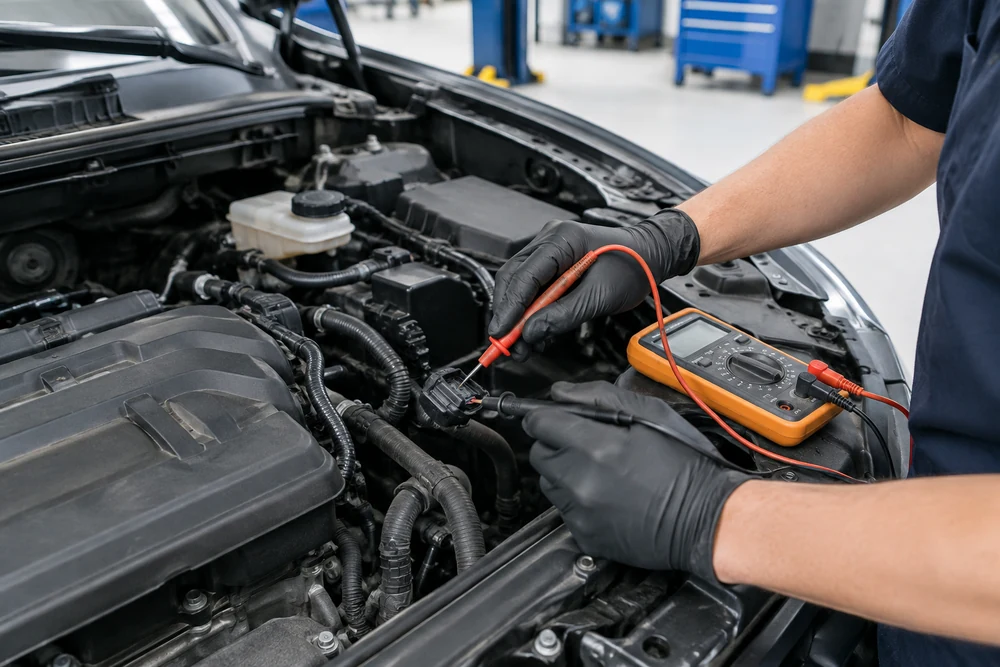
- Test the sensor. Depending on type, check resistance, reference voltage, ground and signal with a digital multimeter against the service manual. A scan tool showing cam RPM or sync status while cranking also helps.
- Inspect the sensor tip and reluctor. Remove the sensor and look for metal debris, sludge or physical damage.
- Check mechanical timing if the sensor and wiring test good, especially on a high-mileage engine or after a timing job.
A shop diagnosis usually costs $100 to $185, and many shops credit it toward the repair. For electrical faults like P0340, it can save you from buying a sensor you didn’t need.
How to Fix P0340
- Clean and secure the connector, and repair any damaged wiring. Fix the source of any oil leak soaking the plug, often a valve cover gasket or the sensor’s own O-ring.
- Replace the camshaft position sensor if it fails testing. On many engines it’s one bolt and a connector. Use a quality part: CarParts.com lists sensors starting around $13, but bargain sensors are a frequent reason the code comes back.
- Replace the crankshaft position sensor if testing shows it’s the one dropping out.
- Clean or replace a damaged reluctor or remove debris from the sensor area.
- Correct timing problems if the chain or belt has jumped or stretched.
- Update or replace the PCM only after everything else checks out.
- Clear the code and verify with a test drive, including a hot restart.
Cost to Fix P0340 by Cause
The cost to fix P0340 ranges from about $100 for a wiring repair to $2,700 for a timing chain job. In most cases it’s the sensor, and most drivers pay about $250 at an independent shop to replace it.
| Repair | Parts | Labor | Total at a shop |
|---|---|---|---|
| Diagnosis | — | $100 – $185 | $100 – $185 (often credited) |
| Wiring or connector repair | $10 – $60 | $90 – $240 | $100 – $300 |
| Camshaft position sensor, easy access | $40 – $200 | $60 – $160 | $160 – $360 |
| Camshaft position sensor, hard to reach | $40 – $200 | $250 – $600 | $350 – $800 |
| Crankshaft position sensor | $40 – $200 | $130 – $230 | $170 – $420 |
| Reluctor wheel / tone ring repair | $30 – $250 | $170 – $350 | $200 – $600 |
| Timing belt kit + water pump | $150 – $450 | $350 – $800 | $650 – $1,250 |
| Timing chain kit | $300 – $800 | $1,200 – $1,900 | $1,500 – $2,700 |
| PCM replacement and programming | $700 – $900 | $200 – $300 | $1,000 – $1,200 |
FIXD’s estimates match closely: $120 to $300 for a camshaft position sensor, $190 to $250 for a crankshaft sensor, $75 to $150 for diagnosis and $1,000 to $1,200 for an ECM, all parts and labor. Sensor prices on this page are the same ranges used in our camshaft position sensor replacement cost guide, which also breaks them down by vehicle.
What Affects the Price
Sensor location
This is the biggest variable. On many four-cylinders and V8 trucks the cam sensor sits on top of the head or the timing cover and comes out in minutes. On some V6 engines it hides behind the intake manifold or inside the timing cover, which can triple the labor.
Vehicle type
Economy cars and domestic trucks tend to have inexpensive sensors. European and luxury models use pricier parts and often need more disassembly, plus higher hourly rates at specialist shops.
Part quality
OEM sensors cost more but match the original signal exactly. Quality aftermarket sensors work well on most cars; the cheapest no-name parts are a common cause of repeat codes.
Shop type and region
Dealers typically charge $150 to $220 an hour and independent shops $110 to $150. Prices run higher in the Northeast and on the West Coast.
Related repairs at the same time
If oil from a leaking valve cover gasket ruined the connector, fix the leak too, or the new sensor will meet the same fate. If the crank and cam sensors are both original on a high-mileage engine and equally easy to reach, some owners replace both together to save a second labor charge.
DIY vs. Taking It to a Shop
P0340 is one of the more DIY-friendly engine codes. An easy-access cam sensor is a 1 to 2 out of 5 job: disconnect the battery, unplug the connector, remove one bolt, lube the new O-ring with clean oil and reinstall. Plan on 15 to 45 minutes. A sensor behind the intake or timing cover is 4 out of 5 and best left to a shop. Wiring repairs fall in between and need a multimeter and patience.
The smart DIY sequence is to scan, inspect the connector, test the sensor and wiring, and only then buy a part fitted to your exact engine. If a new sensor doesn’t clear the code, stop replacing parts and get a professional diagnosis.
Is It Worth Fixing?
Yes. A cam sensor or wiring repair costs less than a set of tires on most cars, and leaving it unfixed risks stalling and no-starts. The only hard decision comes if P0340 turns out to be a symptom of a jumped timing chain on an old, low-value car, where a $1,500 to $2,700 repair should be weighed against what the car is worth and what else it needs.
How to Save Money on P0340
- Get a free code scan at a parts store before paying for anything.
- Check the connector first; cleaning a corroded plug or repairing a wire may be all it needs.
- Test before you replace. A multimeter costs less than a wrong sensor.
- Buy a quality sensor matched to your VIN rather than the cheapest listing.
- Do the swap yourself if the sensor is easy to reach, and save the $60 to $160 in labor.
- Fix oil leaks near the sensor so the connector doesn’t fail again.
- Ask for diagnosis credit and get a second quote if the shop finds a timing problem.
Related Codes
- P0341 — camshaft position sensor “A” circuit range/performance (signal present but erratic)
- P0342 / P0343 — camshaft position sensor “A” circuit low or high input
- P0345 — camshaft position sensor “A” circuit, Bank 2
- P0335 — crankshaft position sensor “A” circuit
- P0016 — crankshaft/camshaft position correlation, often timing-related
- P0300 — random or multiple misfire, which can follow a weak cam signal; see our P0300 guide
Frequently Asked Questions
What does code P0340 mean?
P0340 means Camshaft Position Sensor “A” Circuit Malfunction. The engine computer isn’t receiving a usable signal from the cam sensor circuit, which includes the sensor, its wiring and connector, and the computer itself. It uses that signal to time spark and fuel injection.
Will a new camshaft sensor fix P0340?
Often, but not always. The sensor is the most common cause, yet a damaged connector, chafed wire, faulty crankshaft sensor or timing problem can set the same code. Test the sensor and inspect the wiring first so you don’t replace a good part.
How much does it cost to fix a P0340 code?
At an independent shop, replacing an easy-to-reach camshaft position sensor costs about $160 to $360, and most drivers pay around $250. Wiring repairs run $100 to $300, a crankshaft sensor $170 to $420 and a hard-to-reach cam sensor $350 to $800. Timing chain repairs can reach $2,700.
Can I drive with a P0340 code?
It’s best not to. Even if the car runs fine now, a failing cam sensor can make the engine stall suddenly or refuse to restart, sometimes in traffic. If it stalls, runs rough, won’t start or the check engine light flashes, have it towed.
Can a bad battery cause P0340?
Low system voltage during cranking can occasionally set sensor circuit codes on some vehicles, but it’s not a common cause. If your battery is weak and you see several unrelated codes at once, test the battery and charging system first, then recheck whether P0340 returns.
What's the difference between P0340 and P0341?
P0340 means there’s no usable signal from the cam sensor circuit at all. P0341 means a signal is present but out of range or erratic. Both often trace back to the sensor or wiring, but P0341 is more likely to point to a damaged reluctor wheel or timing issue.