Spark Plug Replacement Cost by Vehicle
Spark plugs themselves are cheap. What changes the bill is how many plugs your engine has and how much has to come apart to reach them. A four-cylinder with the plugs right on top is a short job. A sideways-mounted V6 with the rear plugs buried under the intake plenum can take three or four hours.
| Vehicle (engine) | Parts | Labor | Total at a shop |
|---|---|---|---|
| Ford F-150 (3.5L EcoBoost V6 / 5.0L V8) | $60 – $150 | $180 – $350 | $240 – $500 |
| Chevrolet Silverado 1500 (5.3L V8) | $50 – $130 | $120 – $250 | $170 – $380 |
| Ram 1500 (5.7L HEMI, 16 plugs) | $100 – $250 | $200 – $400 | $300 – $650 |
| Toyota Camry (2.5L 4-cyl) | $40 – $100 | $100 – $200 | $140 – $300 |
| Toyota Camry / Highlander (3.5L V6) | $60 – $130 | $300 – $550 | $360 – $680 |
| Toyota RAV4 (2.5L 4-cyl) | $40 – $100 | $100 – $220 | $140 – $320 |
| Honda Civic (2.0L / 1.5L turbo) | $40 – $110 | $100 – $260 | $140 – $370 |
| Honda Accord (1.5L turbo) | $50 – $110 | $150 – $260 | $200 – $370 |
| Honda CR-V (1.5L turbo) | $50 – $110 | $150 – $260 | $200 – $370 |
| Nissan Altima (2.5L 4-cyl) | $40 – $100 | $100 – $220 | $140 – $320 |
| Chevrolet Equinox (1.5L turbo) | $40 – $100 | $120 – $250 | $160 – $350 |
| Jeep Grand Cherokee (3.6L V6) | $60 – $130 | $300 – $500 | $360 – $630 |
| BMW 3 Series (2.0L turbo) | $70 – $160 | $150 – $300 | $220 – $460 |
These are estimates for common model years and engines at independent shops, using the plug type the manufacturer specifies. Electric cars like the Tesla Model 3 have no spark plugs.
Cost Breakdown: Parts vs. Labor
Spark plug prices
- Copper: about $3–$6 per plug. Shortest life, roughly 30,000 miles. Mostly for older engines.
- Platinum: about $6–$12 per plug. Around 60,000 miles.
- Iridium: about $8–$30 per plug. Standard on most modern engines, often rated for 60,000–100,000 miles.
A four-cylinder set of iridium plugs usually runs $40–$100. Six- and eight-cylinder engines need more plugs, and the Chrysler 5.7L HEMI uses two per cylinder, so 16 plugs in all.
Labor
Easy four-cylinder engines take about 0.5–1 hour. Turbo four-cylinders and V8 trucks take roughly 1–2.5 hours. Transverse V6 engines that require removing the intake plenum take about 2–4 hours. At independent-shop rates of about $110–$150 an hour, labor usually runs $100–$300, with V6 intake-removal jobs higher.
| Where you go | Typical total | Notes |
|---|---|---|
| Dealer | $300 – $700 | OEM plugs, highest labor rate |
| Independent shop | $150 – $450 | OEM-equivalent plugs, lower rate |
| DIY | $30 – $150 | Plugs only; tools extra if you don’t own them |
What Affects the Price
Engine layout: the V6 rear-bank problem
This is the biggest cost factor. In many front-wheel-drive cars and crossovers, a V6 engine is mounted sideways. The front three plugs are easy to reach, but the rear three sit against the firewall under the intake plenum or cowl. To reach them, the mechanic has to remove the upper intake, replace its gaskets and put everything back.
That turns a one-hour job into two to four hours and can push the total to $400–$700. It’s normal, not a sign you’re being overcharged. Common examples include the Toyota 3.5L V6 used in the Camry, Highlander and Sienna, and the 3.6L Pentastar V6 in Jeep and other Stellantis vehicles.
Number of cylinders and plugs
Four plugs cost less than six or eight. The HEMI’s 16 plugs roughly double parts cost versus a typical V8.
Plug type
Use the plug type your owner’s manual specifies. Downgrading an iridium engine to copper plugs saves a few dollars but means changing them far more often.
Shop type and region
Dealer labor rates are higher, and so are rates in the Northeast and on the West Coast. The region setting in the estimator above accounts for this.
Ignition coils and related parts
Most modern engines have a coil sitting on top of each plug. If a coil is cracked or causing a misfire, replacing it adds about $40–$120 per coil. Oil in the spark plug wells usually means a leaking valve cover or tube seal; see our valve cover gasket replacement cost guide. Doing both jobs together saves labor.
Seized or damaged plugs
Plugs that have been in for well over 100,000 miles can bond to the cylinder head. A careful mechanic will work them out slowly, sometimes with penetrating oil and a warm-cold cycle, but a broken plug or stripped thread means extra labor and possibly a thread repair insert. That’s rare on engines serviced on schedule, and a good reason not to stretch the interval.
Symptoms of Bad Spark Plugs
- Rough or shaky idle
- Engine misfires or hesitation when accelerating
- Hard starting
- Worse fuel economy
- Loss of power
- Check engine light, often with misfire codes like P0300–P0306
Worn plugs don’t usually fail suddenly. Symptoms creep in over thousands of miles, so many drivers only notice how rough the engine was once new plugs are in. If you’re near or past the mileage in your maintenance schedule, replacing them is worthwhile even without obvious symptoms.
A flashing check engine light usually means an active misfire. Our P0300 code guide covers the common causes and fixes.
Can You Drive With Bad Spark Plugs?
You can for a short time with mild symptoms, but it’s not a repair to put off. Misfiring cylinders send unburned fuel into the exhaust, where it can overheat and destroy the catalytic converter. That repair costs many times more than a set of plugs; see our catalytic converter replacement cost guide.
If the check engine light is flashing, reduce speed, avoid hard acceleration and get the car checked promptly. A severe misfire can also cause stalling or poor acceleration in traffic, which is a safety issue.
DIY vs. Taking It to a Shop
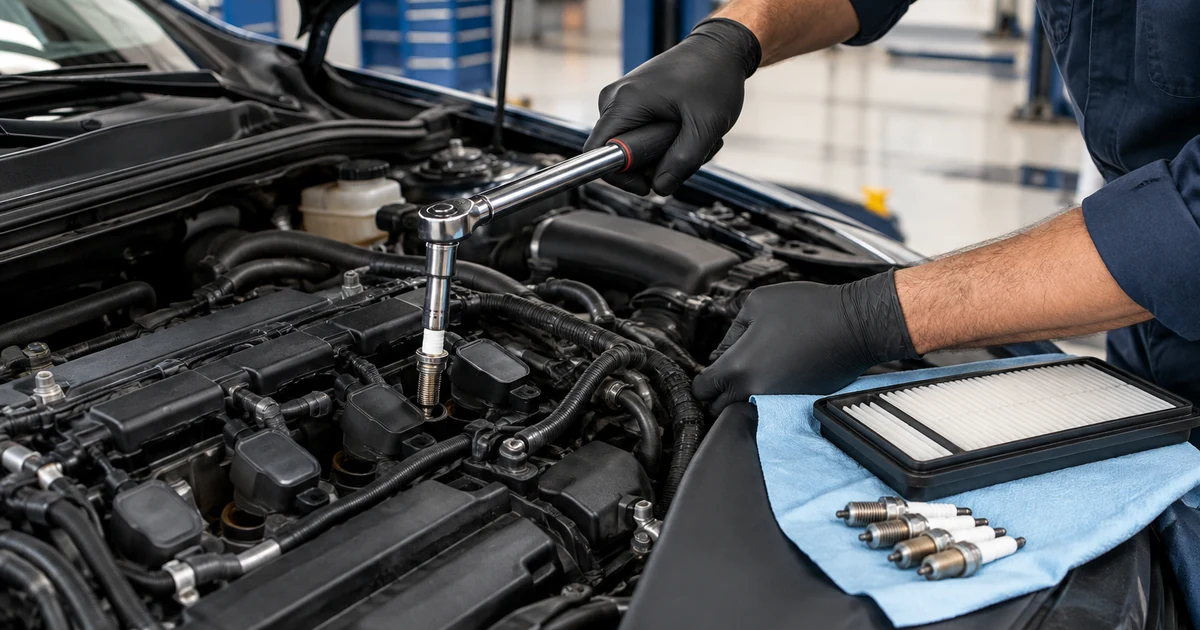
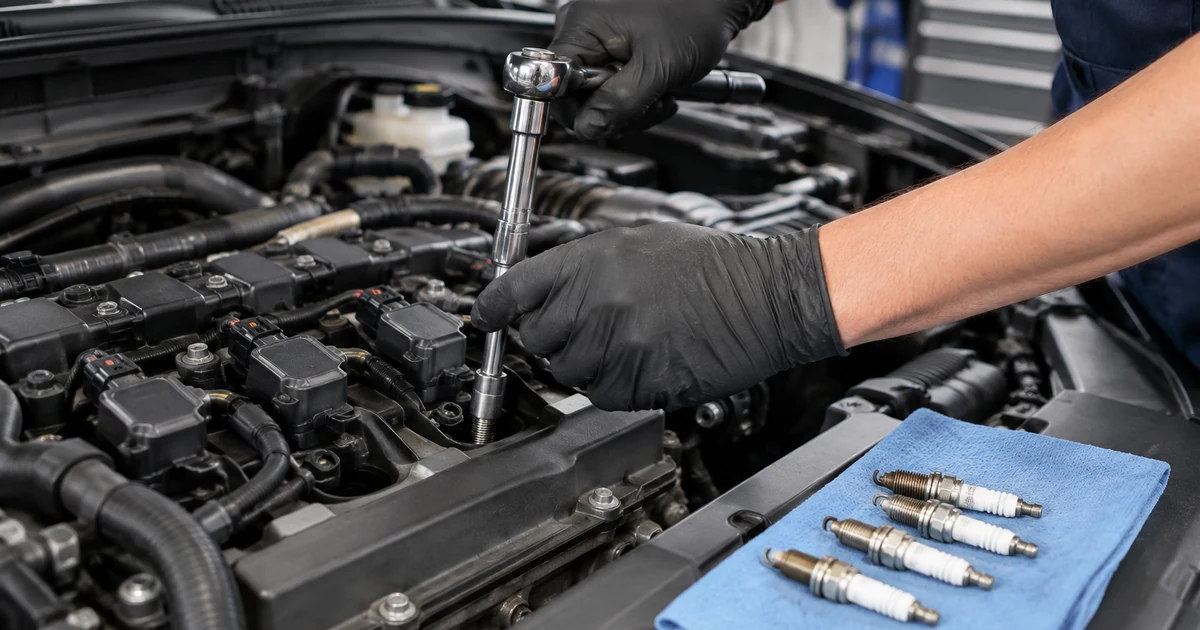
Difficulty: 1–2 out of 5 for most four-cylinders, 4 out of 5 for transverse V6 engines that need intake removal. Tools: a ratchet with extensions, a spark plug socket in the right size, a torque wrench and a gap gauge. Budget 30–60 minutes on an easy engine.
Work on a cold engine, especially with aluminum cylinder heads. Blow debris out of the plug wells before removing plugs so nothing falls into the cylinder. Thread new plugs in by hand first and tighten to the specified torque. Cross-threading or overtightening can damage the head, and fixing that costs far more than the job itself.
Skip DIY if the rear bank requires removing the intake plenum and you’ve never done that type of work. The gaskets must seal properly or you’ll create vacuum leaks.
Is It Worth Doing?
Yes. Spark plugs are scheduled maintenance, not an optional repair. Replacing them on time keeps fuel economy, power and emissions where they should be, and protects the catalytic converter. On almost any car worth driving, a $150–$450 plug job is a good investment.
Plugs left in much too long can also seize in the cylinder head, turning a routine job into a costly extraction. That’s another reason to follow the interval in your owner’s manual.
How to Save Money on Spark Plug Replacement
- Follow the factory interval. Don’t pay for plugs early, and don’t wait so long they seize.
- Use an independent shop instead of a dealer for out-of-warranty cars.
- Buy the plugs yourself if your shop allows it, but only the exact type your manual specifies.
- Bundle work. If the intake is coming off on a V6, it’s the right time to address other parts underneath.
- Only replace coils that are bad. A shop can swap coils between cylinders to confirm which one is failing.
- DIY on easy engines. A four-cylinder with plugs on top is one of the most beginner-friendly jobs there is.
- Get a second quote on V6 jobs above about $600.
Frequently Asked Questions
How much does it cost to replace spark plugs?
Most drivers pay $150 to $450 at an independent shop, with about $280 being typical. Easy four-cylinder engines can cost under $200, while transverse V6 engines that need intake removal often cost $400 to $700.
How often should spark plugs be replaced?
It depends on the plug type your engine uses. Copper plugs last around 30,000 miles, platinum around 60,000, and iridium plugs are commonly rated for 60,000 to 100,000 miles. Your owner’s manual lists the exact interval.
Why is spark plug replacement so expensive on a V6?
On many front-wheel-drive V6 engines, the rear three plugs sit under the intake plenum against the firewall. The mechanic must remove the intake and replace its gaskets to reach them, which adds 1 to 3 hours of labor.
Should I replace ignition coils with spark plugs?
Not automatically. Coils often outlast several sets of plugs. Replace only coils that are cracked, oil-soaked or proven to cause a misfire, unless your shop finds a clear reason to do the whole set.
Can I replace spark plugs myself?
On most four-cylinder engines, yes; it’s one of the easier DIY jobs with a spark plug socket, extensions and a torque wrench. Work on a cold engine and thread plugs by hand first. Leave intake-removal V6 jobs to a shop unless you’re experienced.
Do I need to replace all spark plugs at once?
Yes, in almost every case. Plugs wear at the same rate, and replacing the full set keeps every cylinder firing evenly. The exception is a single plug damaged by a separate problem, such as oil fouling, on a set that was recently replaced.
Will new spark plugs improve gas mileage?
If your old plugs were worn or misfiring, new ones can restore lost fuel economy and smooth out the engine. If the old plugs were still healthy, don’t expect a noticeable change.