Tire Rotation Cost by Vehicle
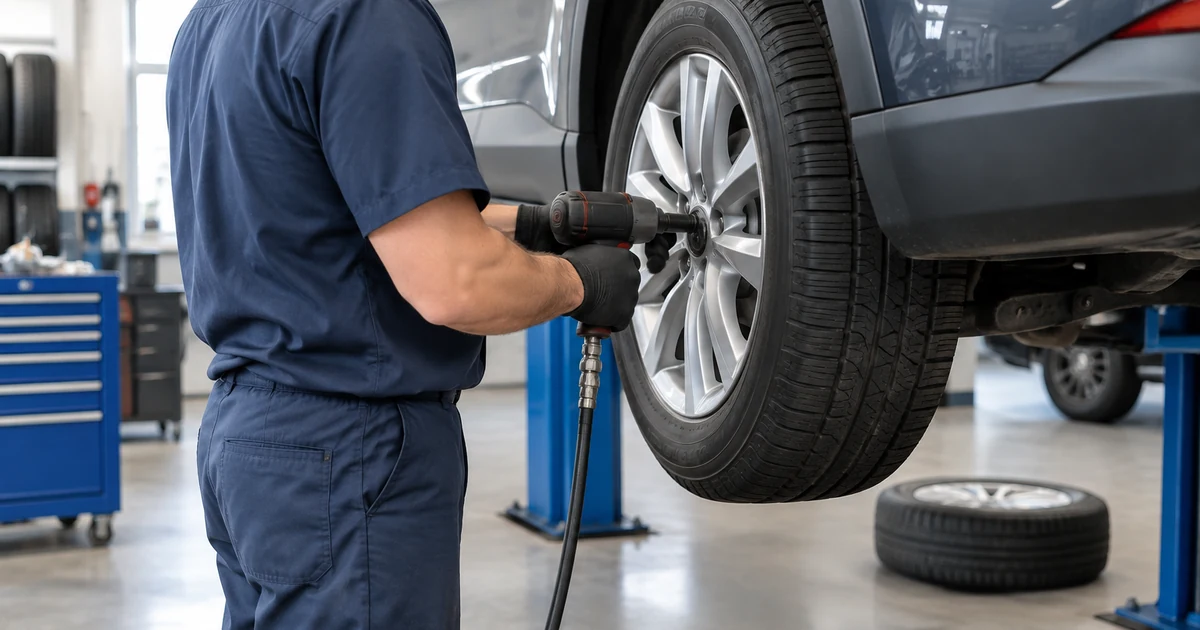
A rotation is almost pure labor: lift the car, move each wheel to a new position, torque the lug nuts and set tire pressures. It usually takes 15–30 minutes. The price differs more by where you go than by what you drive, though trucks, performance cars and vehicles with staggered or directional tires can cost more.
| Vehicle | Rotation only | Rotate + balance | Typical interval |
|---|---|---|---|
| Ford F-150 | $25 – $65 | $60 – $130 | 5,000–7,500 mi |
| Chevrolet Silverado 1500 | $25 – $65 | $60 – $130 | 5,000–7,500 mi |
| Toyota Camry | $20 – $60 | $50 – $120 | 5,000–7,000 mi |
| Toyota RAV4 | $20 – $60 | $50 – $120 | 5,000–7,500 mi |
| Honda Civic | $20 – $60 | $50 – $120 | 5,000–7,000 mi |
| Honda Accord | $20 – $65 | $50 – $120 | 5,000–7,000 mi |
| Honda CR-V | $20 – $60 | $50 – $120 | 5,000–7,500 mi |
| Nissan Altima | $20 – $60 | $50 – $120 | 5,000–7,000 mi |
| Chevrolet Equinox | $20 – $60 | $50 – $120 | 5,000–7,500 mi |
| Jeep Wrangler (with full-size spare) | $30 – $75 | $70 – $150 | 5,000 mi or less |
| Tesla Model 3 | $25 – $70 | $60 – $140 | 5,000–6,000 mi |
| BMW 3 Series (staggered tires) | $30 – $80 | $70 – $160 | Often side-to-side only or none |
These are estimates for common model years at independent shops and tire chains, before any free-rotation deals. Intervals follow Bridgestone’s general guidance by vehicle type; your owner’s manual has the exact schedule. RepairPal’s national estimate for a rotation at a repair shop is about $49–$72, while tire chains often charge $20–$25 or nothing at all.
Where to Get Tires Rotated (and What It Costs)
| Where | Typical price | Notes |
|---|---|---|
| Tire retailer where you bought the tires | Often free | Many chains include lifetime rotations with a tire purchase |
| Big-box auto center | $10 – $20 | Lowest posted prices; longer waits |
| Tire or quick lube chain | $20 – $30 | Frequent coupons; often discounted with an oil change |
| Independent shop | $25 – $60 | Often bundled with an oil change |
| Dealer | $30 – $75 | Sometimes included in prepaid or complimentary maintenance |
| DIY | $0 | Needs a floor jack, jack stands and a torque wrench |
Before paying, check your tire receipt and your new-car paperwork. Many tire purchases include free rotations for the life of the tires, and many new cars come with a few years of complimentary scheduled maintenance that covers rotations.
What Affects the Price
Where you bought your tires
This matters more than anything else. Many tire retailers rotate for free, for the life of the tires, if you bought them there. A repair shop or dealer will usually charge full price.
Bundled services
Shops often discount a rotation or include it with an oil change, and some quick lube packages include one. Standalone rotations cost the most.
Tire setup
Directional tires and staggered sizes limit which patterns can be used. If tires must be dismounted and remounted to change sides, the job becomes closer in price to a rotation plus balance.
Vehicle size
Heavy truck wheels, a full-size spare included in a five-tire rotation, and locking lug nuts add a little time.
TPMS relearn
Some vehicles must relearn tire pressure sensor positions after a rotation. Many do it automatically, but some require a scan tool, which some shops charge extra for.
What’s Included in a Tire Rotation
- Removing all four wheels (five with a full-size spare)
- Moving each wheel to a new position using the right pattern for your drivetrain and tires
- Tightening lug nuts to the specified torque
- Setting tire pressures, front and rear, to the placard on the door jamb
- A look at tread depth, uneven wear and brakes while the wheels are off
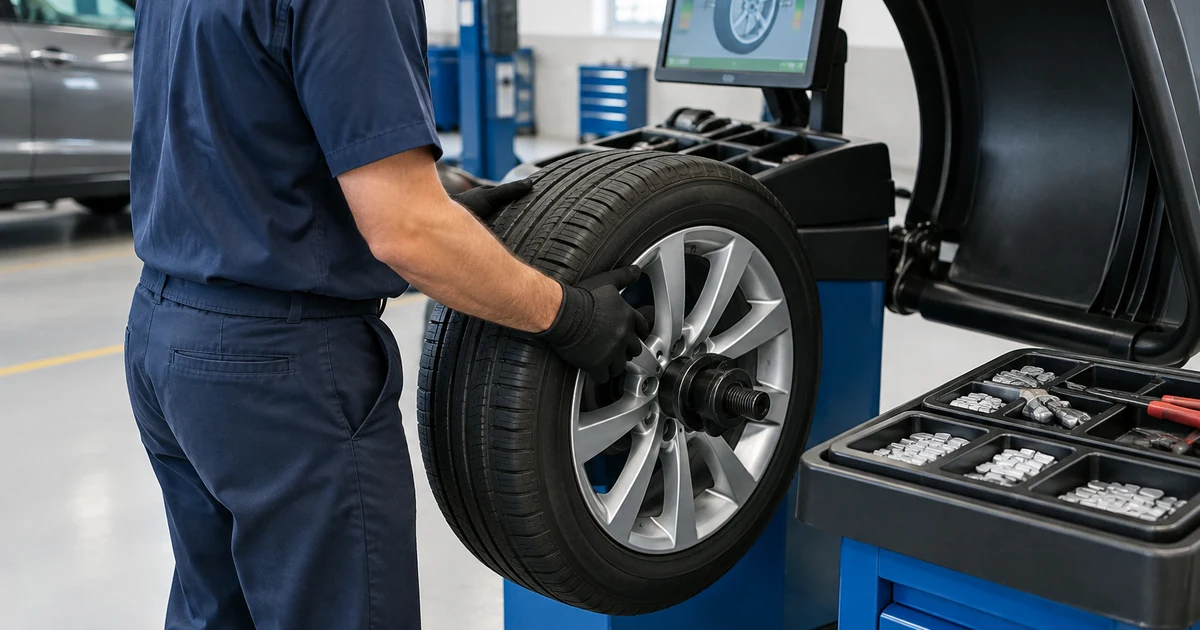
Balancing is not included unless the shop says so. If you feel a vibration at highway speed after a rotation, a wheel that was out of balance may simply have moved to the front. See our tire balancing cost guide.
Rotation patterns
- Front-wheel drive: forward cross. Fronts go straight back; rears cross to the front.
- Rear-wheel drive: rearward cross. Rears go straight forward; fronts cross to the rear.
- All-wheel and four-wheel drive: X-pattern, every tire moves diagonally.
- Directional tires: front-to-back on the same side only.
- Staggered sizes (different front and rear): side-to-side only, and only if the tires aren’t directional; otherwise it requires remounting.
How Often Should You Rotate Your Tires?
Bridgestone recommends every 5,000–8,000 miles or every six months for most vehicles, with shorter intervals for some: roughly 5,000–6,000 miles for electric vehicles, whose instant torque wears tires faster, and 5,000 miles or less for trucks and AWD or 4WD vehicles under heavy use. An easy habit is to rotate at every oil change, or every other one if your oil interval is long.
Signs Your Tires Need Rotating
- You’re at or past 5,000–8,000 miles since the last rotation
- Front tires are visibly more worn than the rears (common on front-wheel drive)
- Uneven wear across the tread or between tires
- A new vibration or hum that changes with speed
Rotation evens out normal wear. It won’t fix wear caused by a problem. Wear on only the inner or outer edge usually means an alignment issue; see our wheel alignment cost guide. Cupped or scalloped wear often points to worn suspension parts.
What Happens If You Skip Tire Rotations?
Nothing dramatic in the short term, which is why it’s easy to forget. Over time the drive axle’s tires wear much faster than the others, so you end up replacing two tires early or all four sooner than necessary. Many tire tread-life warranties also require proof of regular rotation, so skipping them can cost you a warranty claim. Uneven tread depth also reduces wet-weather grip on the more-worn axle.
DIY vs. Taking It to a Shop
Difficulty: 2 out of 5. Tools: a floor jack, at least two jack stands (four makes it easier), a lug wrench and a torque wrench. Time: 30–60 minutes.
Never rely on the jack alone. Loosen lug nuts slightly while the car is on the ground, lift using the manufacturer’s jacking points, support the car on stands, then swap wheels in the right pattern. Tighten lug nuts in a star pattern to the specified torque, and recheck after 50–100 miles. Set pressures afterward, because front and rear specs sometimes differ.
On some vehicles the tire pressure monitoring system needs to relearn sensor positions after a rotation. If a TPMS warning appears, check your manual; see our TPMS sensor replacement cost guide if a sensor has actually failed.
Is It Worth Paying for Tire Rotation?
Yes. A set of four tires commonly costs several hundred dollars or more, and regular rotation is one of the cheapest ways to get their full tread life. At $20–$60 a visit, or free where you bought your tires, it pays for itself quickly.
The math is simple. If regular rotations let a set of tires last even a few thousand miles longer, that’s worth far more than a handful of $20–$35 rotations. Rotation also gives a technician a regular look at your brakes and tread, which can catch problems such as a nail, a bulge or uneven wear before they turn into a flat or a bigger repair bill.
How to Save Money on Tire Rotation
- Use your free rotations. Check the terms from where you bought your tires.
- Check complimentary maintenance on newer cars before paying.
- Bundle with an oil change, where many shops discount or include a rotation; see our oil change cost guide.
- Look for coupons from tire and quick lube chains.
- Only pay for balancing when needed, such as a vibration or new tires.
- DIY if you already own a jack, stands and a torque wrench.
Frequently Asked Questions
How much does a tire rotation cost?
Most drivers pay $20 to $75, with about $35 typical. Tire and quick lube chains often charge $20 to $30, repair shops and dealers more, and many tire retailers rotate for free if you bought your tires there.
How often should tires be rotated?
Bridgestone recommends every 5,000 to 8,000 miles or every six months for most vehicles. EVs, trucks and AWD vehicles under heavy use may need rotation closer to every 5,000 miles. Your owner’s manual has the exact interval.
Is tire rotation and balancing the same thing?
No. Rotation moves wheels to new positions to even out wear. Balancing adds small weights to each wheel so it spins smoothly without vibration. Balancing costs extra unless the shop includes it.
Where can I get a free tire rotation?
Many tire retailers include free lifetime rotations when you buy tires from them, and some new cars include rotations in complimentary maintenance. Some shops also include one with an oil change package.
How long does a tire rotation take?
The work takes about 15 to 30 minutes. Allow more time for a wait at a busy shop or if balancing is added.
What happens if you never rotate your tires?
The drive-axle tires wear out faster, so you’ll replace tires sooner. It can also void a tread-life warranty and, on AWD vehicles, uneven tread depth can strain drivetrain parts.
Do I need an alignment after a tire rotation?
Not usually. Rotation doesn’t change alignment. Get an alignment if tires wear on one edge, the car pulls or the steering wheel is off-center.