AC Compressor Replacement Cost by Vehicle
These shop prices include the compressor, the usual supporting parts (receiver-drier or accumulator and expansion valve or orifice tube), labor, and a refrigerant recharge.
| Vehicle | Parts | Labor | Total |
|---|---|---|---|
| Ford F-150 | $650 – $1,000 | $300 – $450 | $1,000 – $1,400 |
| Chevy Silverado 1500 | $550 – $1,100 | $300 – $450 | $900 – $1,550 |
| Toyota Camry | $800 – $1,650 | $300 – $500 | $1,150 – $2,150 |
| Toyota RAV4 | $750 – $1,500 | $300 – $500 | $1,100 – $2,000 |
| Honda Civic | $500 – $1,200 | $250 – $400 | $750 – $1,600 |
| Honda Accord | $650 – $1,300 | $250 – $450 | $900 – $1,750 |
| Honda CR-V | $750 – $1,350 | $300 – $450 | $1,100 – $1,800 |
| Nissan Altima | $600 – $1,150 | $250 – $400 | $850 – $1,550 |
| Chevy Equinox | $550 – $1,100 | $300 – $450 | $850 – $1,550 |
| Jeep Grand Cherokee | $650 – $1,250 | $300 – $500 | $950 – $1,750 |
| Tesla Model 3 | $1,300 – $2,200 | $300 – $600 | $1,600 – $2,800 |
| BMW 3 Series | $900 – $1,800 | $350 – $650 | $1,250 – $2,450 |
These are estimates for common model years and engines. Newer vehicles that use R-1234yf refrigerant sit toward the top of each range, and hybrids and EVs use electric compressors that cost considerably more than belt-driven units.
Cost Breakdown: Parts vs. Labor
National estimates put a complete AC compressor replacement at roughly $1,080 to $1,460 on average, with parts making up most of it. Labor is usually 2 to 4 hours, about $250 to $450 at an independent shop.
The compressor
- Remanufactured: about $100 to $300 for many common cars; the cheapest route, usually with a shorter warranty.
- New aftermarket: about $150 to $500.
- OEM: about $300 to $800 or more, and higher for luxury models and electric compressors.
Supporting parts shops replace with it
Most compressor warranties require a new receiver-drier or accumulator and a new expansion valve or orifice tube, plus new O-rings and the correct compressor oil. Those add roughly $50 to $250 in parts. If the old compressor failed internally and sent metal debris through the system, the condenser may need replacing and the lines flushed, which can add $150 to $600 or more.
Refrigerant: R-134a vs. R-1234yf
Refrigerant type makes a real difference in the final bill. Older vehicles use R-134a, which is relatively cheap, and a system charge usually adds $30 to $50 in refrigerant. Most vehicles built in roughly the last decade use R-1234yf, a lower-global-warming refrigerant that costs far more per pound and requires dedicated recovery equipment. Expect R-1234yf to add about $150 to $300 to the job compared with R-134a. Your refrigerant type is printed on a label under the hood.
| Where | Typical total | Notes |
|---|---|---|
| Dealer | $1,400 – $2,500 | OEM compressor, highest labor rate |
| Independent shop | $950 – $1,650 | Choice of new, reman or OEM; must be EPA 609 certified to handle refrigerant |
| DIY | Not recommended | Requires refrigerant recovery, vacuum pump and gauges; venting refrigerant is illegal |
What Affects the Price
Vehicle and engine layout
On many cars the compressor bolts to the front of the engine and comes out in a couple of hours. On others, a crowded engine bay means removing other parts first. Hybrids and EVs use high-voltage electric compressors that are expensive and need a technician trained for high-voltage systems.
Compressor quality
Remanufactured and new aftermarket compressors can save hundreds of dollars over OEM. The trade-off is warranty length and, with cheap units, a higher chance of an early failure.
Refrigerant type
R-1234yf systems cost more to recharge, as explained above.
Shop type and region
Dealers charge the most per hour. Labor rates on the coasts can add a couple of hundred dollars compared with the South and Midwest.
Contamination and related parts
This is the wild card. A compressor that seized and shed metal (sometimes called “black death” by technicians) contaminates the whole system and can nearly double the bill once the condenser, lines, and valves are cleaned or replaced.
Clutch-only repair
On many belt-driven compressors, the clutch, pulley, and coil can be replaced without opening the refrigerant system. National estimates put an AC clutch replacement around $690 to $830, and it can cost less on vehicles where the clutch is easy to reach. It makes sense when the compressor itself is healthy, for example a worn clutch air gap, a failed coil, or a noisy pulley bearing. Many shops will still recommend a whole compressor on a high-mileage car because the clutch kit alone can approach half the cost of a complete unit, and some newer compressors do not have a serviceable clutch at all.
Symptoms of a Bad AC Compressor
- Warm air from the vents with the A/C on max.
- Grinding, squealing, or rattling when the A/C is switched on.
- The clutch does not engage: the center of the compressor pulley never starts spinning.
- Refrigerant or oil leaks around the compressor body or its seals.
- Cooling that comes and goes, especially at idle or in traffic.
- A tripping A/C fuse or breaker, which can point to a shorted clutch coil.
How a shop diagnoses a bad compressor
A technician typically checks the static and running pressures with gauges, confirms the clutch receives power and engages, and looks for leaks using UV dye or an electronic leak detector. Low refrigerant is the most common reason for weak A/C and is much cheaper to fix than a compressor, so a leak test should come before any compressor quote. Many shops charge a diagnostic fee of around one hour of labor.
Can You Drive With a Bad AC Compressor?
Usually yes. You just will not have air conditioning, and on many vehicles the defroster also loses its dehumidifying effect. Leave the A/C switched off until it is repaired.
The exception is a compressor that is seizing or has a failing pulley bearing. On belt-driven systems it shares the serpentine belt with the alternator, water pump, and often power steering. If the bearing locks up, it can shred the belt and leave you without charging or cooling. If you hear loud grinding or see smoke from the belt area, stop and have it inspected. See our serpentine belt replacement cost guide if the belt is damaged.
DIY vs. Taking It to a Shop
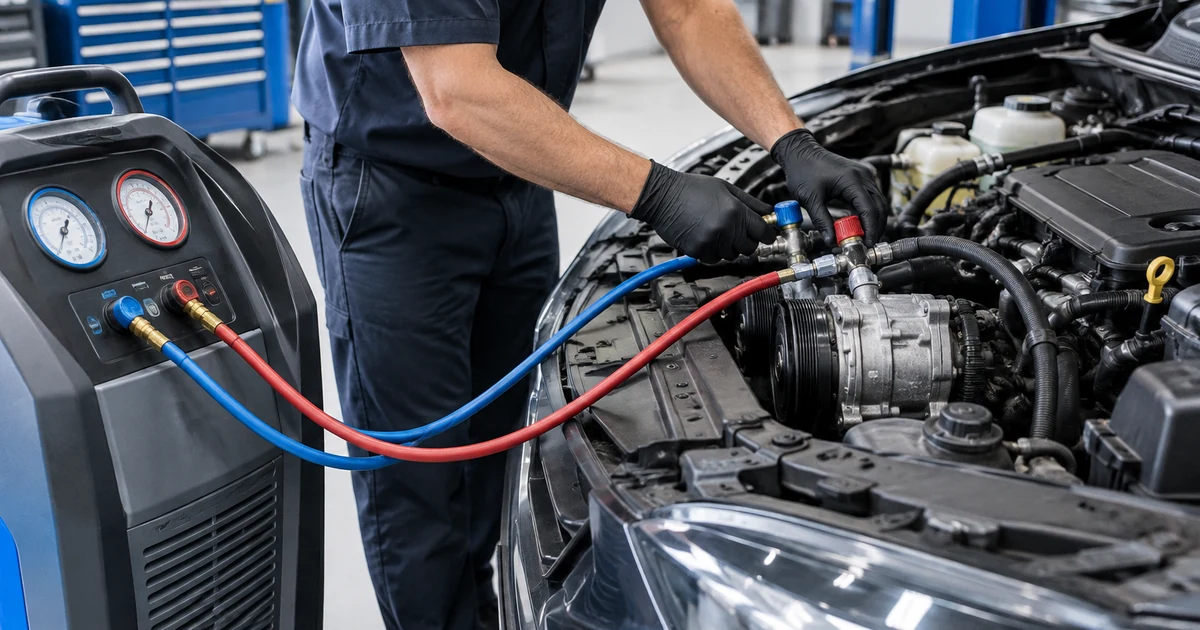
Difficulty: 4 out of 5. Unbolting a compressor is not hard on many cars, but the refrigerant work is. Federal rules require that refrigerant be recovered with proper equipment, not vented, and the system must be pulled into a deep vacuum and charged by weight to the exact spec. That takes a recovery machine or access to one, a vacuum pump, and manifold gauges rated for your refrigerant type.
A realistic middle ground: buy the compressor kit yourself and ask an independent shop to install it, if they allow customer-supplied parts. Many will not warranty the labor, so weigh the savings.
Avoid “stop leak” cans. They can clog the expansion valve and contaminate shop equipment, and many shops charge extra or refuse to service systems that contain sealant.
Is It Worth Replacing the AC Compressor?
In hot climates, a working A/C is close to essential and adds to resale value, so a $1,000 to $1,500 repair is usually worth it on a car you plan to keep. On a high-mileage car worth only a few thousand dollars, some owners choose to live without A/C or try a clutch-only repair first. If the old compressor contaminated the system, get a written quote for the full repair before deciding.
How to Save Money on AC Compressor Replacement
- Confirm the failure. Ask the shop to check the fuse, relay, clutch air gap and refrigerant charge before condemning the compressor.
- Ask about a clutch-only repair if the compressor itself is quiet and not leaking.
- Consider a remanufactured compressor from a reputable supplier with a solid warranty.
- Get a second quote from an independent A/C specialist; dealer pricing is often much higher.
- Replace the drier and expansion valve at the same time. Skipping them to save money often voids the compressor warranty.
- Check your warranty. Newer vehicles may still be under bumper-to-bumper coverage, which usually includes A/C components.
- Fix it before summer. A/C shops are busiest in hot months and may have less room to negotiate.
Also compare with our alternator replacement cost guide if a noisy belt-driven accessory is the concern. See how we estimate costs for our method.
Frequently Asked Questions
How much does it cost to replace an AC compressor in a car?
Most drivers pay $950 to $1,650 for a car AC compressor replacement, including the drier, expansion valve, labor and recharge. The typical bill is about $1,270. Luxury cars, hybrids and systems that need a full flush can run $2,000 to $3,000 or more.
Can you replace just the AC compressor clutch?
On many belt-driven compressors, yes. A clutch-only repair typically runs around $450 to $850 and does not require opening the refrigerant system on most vehicles. It only makes sense if the compressor itself is healthy, and some newer compressors do not have a replaceable clutch.
Why is R-1234yf so much more expensive than R-134a?
R-1234yf costs much more per pound, is made by fewer manufacturers, and requires dedicated recovery equipment because it is mildly flammable. Expect a recharge with R-1234yf to add roughly $150 to $300 to a compressor job compared with R-134a.
How long does it take to replace an AC compressor?
Most compressor replacements take 2 to 4 hours, including evacuating the system, swapping the compressor and supporting parts, pulling a vacuum and recharging. Jobs that require a system flush or condenser replacement take longer.
Is it worth replacing an AC compressor on an old car?
It depends on the car’s value and your climate. In hot regions a working A/C is close to essential and helps resale value. On a car worth only a few thousand dollars, a clutch-only repair or living without A/C may make more financial sense.
Is it safe to drive with a bad AC compressor?
Usually yes, with the A/C switched off. The exception is a seizing compressor or failing pulley bearing on a belt-driven system, which can damage the serpentine belt and knock out charging and engine cooling. Loud grinding means get it checked soon.
Do I need to replace the drier when replacing the compressor?
Yes, in almost all cases. The receiver-drier or accumulator absorbs moisture and gets saturated once the system is opened. Most compressor warranties require a new drier and expansion valve or orifice tube.