Power Steering Pump Replacement Cost by Vehicle
Prices below are for replacing a belt-driven hydraulic power steering pump at an independent shop with a quality remanufactured or aftermarket pump, including new fluid. They are estimates for common model years and engines; V8 and diesel trucks, tight engine bays and dealer pricing run higher.
| Vehicle | Parts | Labor | Total |
|---|---|---|---|
| Ford F-150 (2004–2010) | $150 – $400 | $200 – $330 | $350 – $730 |
| Ford F-250 Super Duty | $200 – $500 | $220 – $380 | $420 – $880 |
| Chevrolet Silverado 1500 (2007–2013) | $150 – $400 | $200 – $330 | $350 – $730 |
| Ram 2500 | $200 – $480 | $220 – $380 | $420 – $860 |
| Toyota Tacoma | $180 – $450 | $220 – $380 | $400 – $830 |
| Toyota 4Runner | $180 – $450 | $220 – $380 | $400 – $830 |
| Toyota Camry (2007–2011) | $150 – $400 | $220 – $380 | $370 – $780 |
| Honda Accord (2008–2012) | $150 – $380 | $200 – $340 | $350 – $720 |
| Honda Odyssey | $170 – $420 | $220 – $360 | $390 – $780 |
| Nissan Altima (2007–2012) | $150 – $400 | $200 – $340 | $350 – $740 |
| Jeep Wrangler (2007–2018) | $150 – $400 | $200 – $320 | $350 – $720 |
| Jeep Grand Cherokee (2011–2021) | $180 – $450 | $220 – $380 | $400 – $830 |
| BMW 3 Series (older hydraulic models) | $250 – $650 | $280 – $480 | $530 – $1,130 |
You will notice many popular newer cars are missing from this table. That is on purpose: most recent Camrys, Civics, Accords, CR-Vs, RAV4s, Equinoxes, half-ton pickups and every Tesla use electric power steering (EPS), which has no pump at all. Model years in the table are approximate, so check your owner’s manual or look for a power steering fluid reservoir under the hood to confirm what your vehicle has.
Does Your Car Even Have a Power Steering Pump?
There are three common setups:
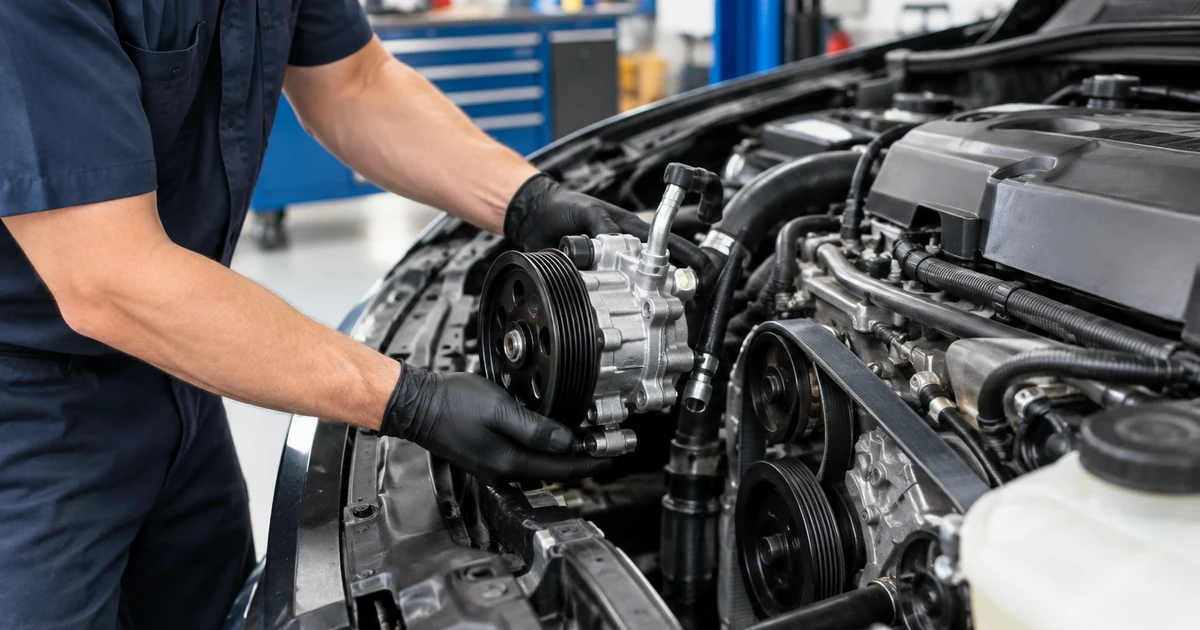
- Hydraulic power steering: a pump driven by the serpentine belt pushes fluid to the steering rack or gearbox. This is the system this page covers.
- Electro-hydraulic power steering (EHPS): still uses fluid, but the pump is driven by an electric motor instead of the belt. These pumps usually cost more to replace.
- Electric power steering (EPS): an electric motor on the steering column or rack provides assist directly. No pump, no fluid, no belt. When EPS fails, the repair is usually a steering rack, column assist motor or sensor, not a pump.
If a shop quotes a “power steering pump” on a car with EPS, ask them to explain exactly which part they mean.
Cost Breakdown: Parts vs. Labor
A power steering pump usually costs $150 to $600 for the part, depending on whether it is remanufactured, new aftermarket or OEM, and whether it comes with a reservoir and pulley. Labor runs about $150 to $400, or roughly 1.5 to 3.5 hours of book time. Pumps that sit low in a crowded V6 or V8 engine bay take the longest.
Remanufactured vs. new vs. OEM
- Remanufactured: the most common repair part, usually the cheapest. Parts stores typically add a refundable core charge.
- New aftermarket: a brand-new pump from an aftermarket maker, often 10% to 20% more than reman.
- OEM: the factory part from the dealer. Often the most expensive, sometimes by a wide margin on European cars.
Dealer vs. independent vs. DIY
| Option | Typical cost | What you get |
|---|---|---|
| Independent shop | $450 – $1,050 | Reman or aftermarket pump, fluid, system bleed, parts and labor warranty |
| Dealership | $650 – $1,400 | OEM pump, factory procedures, higher labor rate |
| DIY | $150 – $600 | Pump and fluid only; you supply tools and a pulley puller if needed |
What Affects the Price
Vehicle type and engine layout
On many four-cylinder engines the pump is easy to reach on the front of the engine. On some V6 and V8 engines it is buried under other components, which adds hours. Heavy-duty trucks use larger pumps, sometimes combined with a hydro-boost brake system.
Part quality and type
Remanufactured pumps keep costs down. Electro-hydraulic pumps and OEM pumps for luxury cars cost much more.
Shop type
Dealers charge higher labor rates and use OEM parts, so expect roughly 25% to 35% more than an independent shop.
Where you live
Labor rates are highest in the Northeast and on the West Coast. Use the region setting in the estimator above to compare.
Parts replaced at the same time
Leaking pressure or return hoses, a worn serpentine belt, and a fluid flush are common add-ons. If the steering rack itself is leaking, that is a much larger repair and may be the real cause of the pump failure.
Symptoms of a Bad Power Steering Pump
- Whining or groaning noise that gets louder when you turn the wheel, especially at low speed.
- Heavy or stiff steering, particularly when parking.
- Steering that feels jerky or inconsistent, with assist coming and going.
- Power steering fluid leaks near the front of the engine, often reddish or amber.
- Foamy or discolored fluid in the reservoir.
- Squealing at startup, which can also point to a slipping belt.
Loose or clunky steering with no noise is usually a different problem, such as worn tie rods; see our tie rod replacement cost guide.
Can You Drive With a Bad Power Steering Pump?
You can still steer without power assist, but it takes much more effort, especially at low speed and when parking. That can be dangerous in an emergency maneuver. If the steering suddenly goes heavy, the pump is leaking badly, or you smell burning fluid, stop driving and have the car towed or inspected. Leaking power steering fluid can also drip onto hot exhaust parts.
A mild whine with normal steering effort usually means you have time to book a repair, but check the fluid level right away. Running the pump dry destroys it quickly. On vehicles where the pump shares a belt with the alternator and water pump, a seized pump can throw the belt and cause overheating or a dead battery too.
DIY vs. Taking It to a Shop
Difficulty: 3 out of 5. On an engine with good access, swapping the pump is a straightforward bolt-on job for an experienced DIYer. Plan on 2 to 4 hours the first time.
Tools you need: socket and wrench set, line wrenches for the pressure hose, a serpentine belt tool, a pulley puller and installer if the new pump does not include a pulley, a drain pan, and the exact power steering fluid your vehicle calls for. After installing, you must bleed the air out of the system, usually by turning the wheel lock to lock with the front wheels raised.
Be honest with yourself: on a buried pump or an electro-hydraulic unit, the time and risk of damaging hoses or wiring can outweigh the savings. Using the wrong fluid can also damage seals.
Is It Worth Replacing a Power Steering Pump?
On most vehicles, yes. At $450 to $1,050, a pump is a moderate repair compared with the value of a running truck or SUV. It gets harder to justify when the steering rack is also leaking, the vehicle has other major problems, and its market value is only a couple of thousand dollars. In that case, get a full quote for everything the steering system needs before deciding.
How to Save Money on a Power Steering Pump
- Confirm the diagnosis. Rule out low fluid, a leaking hose or a slipping belt before paying for a pump.
- Choose a remanufactured pump with a good warranty.
- Get a second written quote that lists pump, hoses, belt and fluid separately.
- Use an independent shop instead of the dealer on out-of-warranty vehicles.
- Bundle a worn belt or leaking hose into the same visit to avoid paying labor twice.
- Return the core if you buy the part yourself.
- Check the fluid regularly and fix small leaks early so the pump never runs low.
You can also read how we estimate costs.
Frequently Asked Questions
How long does it take to replace a power steering pump?
Most jobs take about 1.5 to 3.5 hours of shop time, including bleeding the system. Pumps that are buried under other parts on V6 and V8 engines take longer.
Do all cars have a power steering pump?
No. Most newer cars, crossovers and many half-ton pickups use electric power steering, which uses an electric motor instead of a hydraulic pump and fluid. If your car has no power steering fluid reservoir, it most likely has electric steering.
How long does a power steering pump last?
Many pumps last 100,000 miles or more. Low fluid, leaks and contaminated fluid are the most common reasons they fail early.
Can I just add power steering fluid instead of replacing the pump?
If the fluid is low, topping it up may stop the whine for a while, but the fluid is going somewhere. Find and fix the leak first. If the pump has already been damaged by running low, it will still need replacement.
Is a remanufactured power steering pump reliable?
A quality remanufactured pump is the standard repair part for most vehicles and usually comes with a warranty. Choose a reputable brand and make sure the underlying cause, such as a leak, is fixed.
What happens if you keep driving with a bad power steering pump?
The steering gets heavier, the pump can seize, and on many engines a seized pump can damage or throw the serpentine belt, which also drives the alternator and often the water pump. Steering without assist is harder and less safe in emergencies.