What the P0011 Code Means
P0011 stands for “A” Camshaft Position, Timing Over-Advanced or System Performance (Bank 1). It only shows up on engines with variable valve timing (VVT), which is nearly every modern gasoline engine.
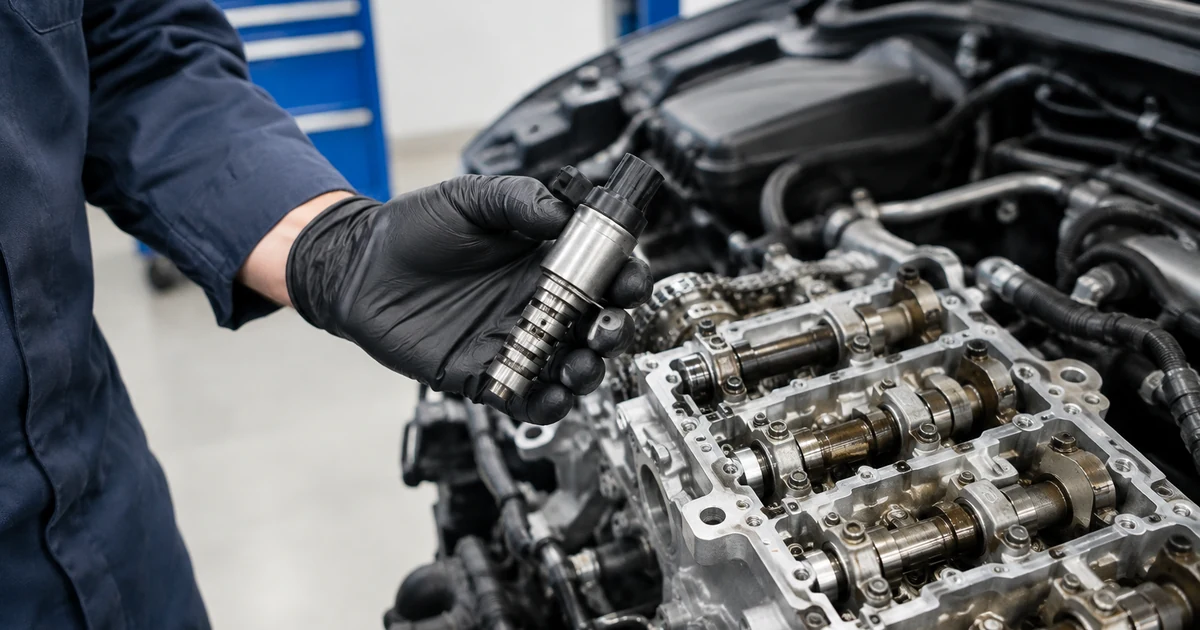
On a VVT engine, the engine computer moves the camshaft slightly ahead of or behind its base position to improve power, fuel economy and emissions. It does this with an oil control valve (often called the VVT solenoid) that sends pressurized engine oil to a cam phaser bolted to the end of the camshaft. The camshaft position sensor reports where the cam actually is.
P0011 sets when the actual cam position is more advanced than the computer commanded and the computer can’t bring it back into range. “A” usually means the intake camshaft, and Bank 1 is the side of the engine with cylinder 1. On an inline four-cylinder there is only one bank.
Because the whole system runs on engine oil, P0011 is often an oil problem first and a parts problem second. That’s good news for your wallet, but it also explains why the code can point to serious timing wear on some engines.
Common Causes of P0011
| Cause | Likelihood | Typical repair cost |
|---|---|---|
| Low, dirty or wrong-viscosity engine oil | Most common, check first | $65 – $125 (oil change) |
| Sticking or failed VVT solenoid (oil control valve) | Very common | $250 – $550 |
| Damaged wiring or connector at the solenoid | Occasional | $100 – $300 |
| Faulty camshaft position sensor | Occasional | $160 – $360 (cam sensor) |
| Worn or stuck cam phaser (actuator) | Less common | $750 – $1,500 |
| Stretched timing chain, worn guides or tensioner | Less common but serious | $1,500 – $2,700 (timing chain) |
| PCM software or a failed engine computer | Rare | $100 – $200 update; $900 – $1,300 replacement |
CarParts.com, FIXD and AutoZone all list oil level or oil condition near the top, along with the oil control valve and the cam phaser. Thick or sludged oil can’t flow through the solenoid’s fine screen and passages fast enough, so the phaser stays where it is instead of following the computer’s command. AutoZone specifically mentions oil that’s too viscous as a cause, which is why using the exact grade on your oil cap matters on VVT engines.
Symptoms of P0011
- Check engine light on
- Rough or unstable idle, sometimes with stalling when you come to a stop
- Hard starting, especially after the engine is warm
- Hesitation and reduced power
- Lower fuel economy
- Misfires or a failed emissions test
- Rattling or ticking from the front of the engine, often worst for a second or two at cold start
Some drivers notice nothing except the light. Others get a rough idle that comes and goes. A rattle at startup is the symptom to take most seriously, because it can point to a worn phaser or a timing chain that has stretched.
Is It Safe to Drive With P0011?
Limit your driving until you know the cause. FIXD advises against driving with P0011 at all and recommends a tow, because in the worst case worn timing parts can let valves and pistons collide. CarParts.com notes the cause can be as minor as low oil. The honest answer sits between those two:
- Check the oil level right away. If it’s low, top it up with the correct grade before going anywhere. Running a VVT engine low on oil can damage far more than the phaser.
- If the engine runs smoothly and the oil is full, a short, gentle drive to a shop or parts store is usually reasonable. Avoid highway trips, towing and hard acceleration.
- Stop driving and arrange a tow if you hear rattling or knocking, the engine stalls, the check engine light flashes, or the oil pressure light comes on. A flashing light means an active misfire that can overheat the catalytic converter.
How to Diagnose P0011
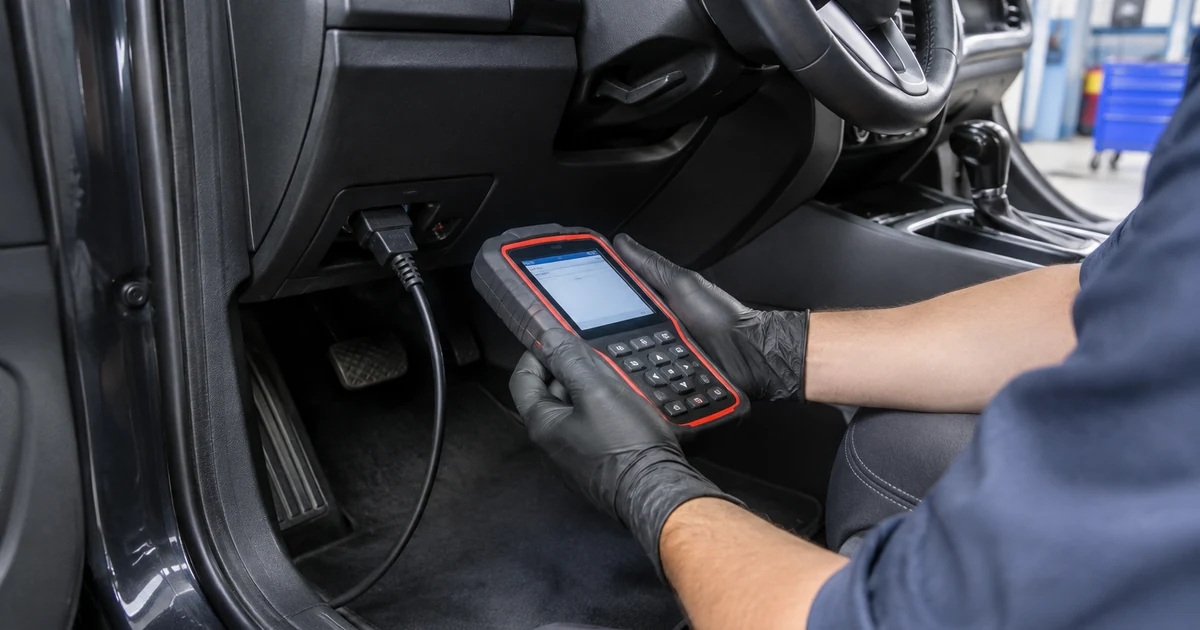
Start with an OBD2 scanner. It confirms the code, shows freeze frame data (engine temperature, rpm and load when it set) and reveals any companion codes. A scanner with live data lets you watch “desired” vs. “actual” cam angle, which is the most useful reading for this fault.
- Read all codes. P0011 alone usually points to oil or the solenoid. Paired with P0016, P0017 or P0021 on the other bank, it shifts suspicion toward the chain or an oil supply problem that affects both sides.
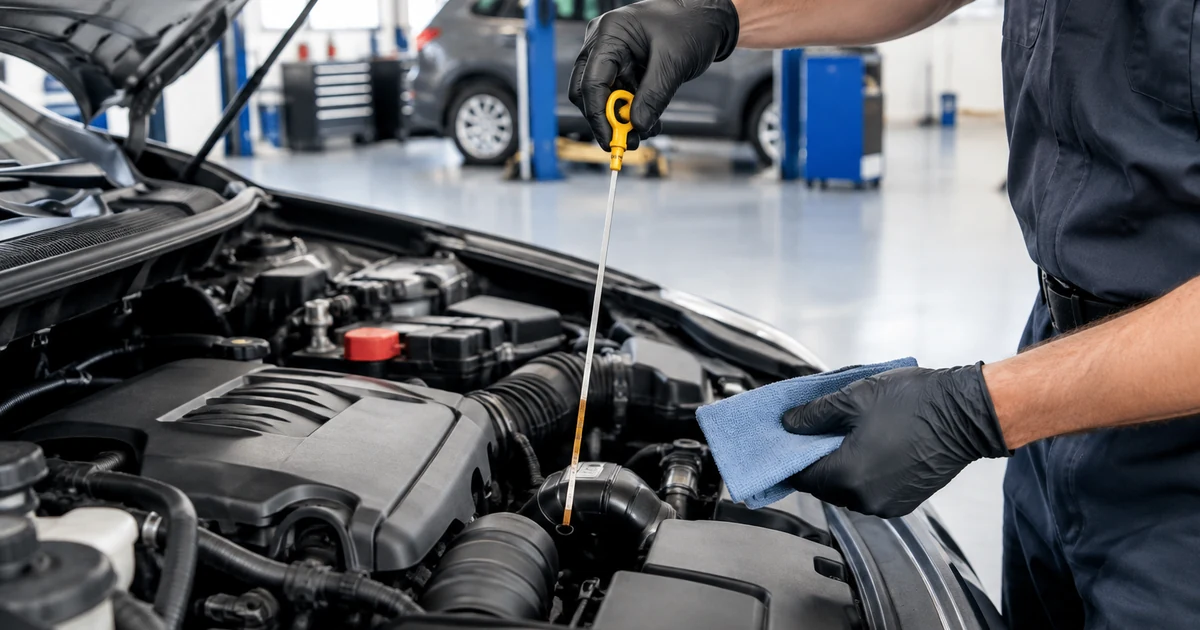
- Check the oil level and condition. Low, dark, sludgy or overdue oil is the cheapest thing to fix. Confirm the viscosity matches the oil cap or owner’s manual.
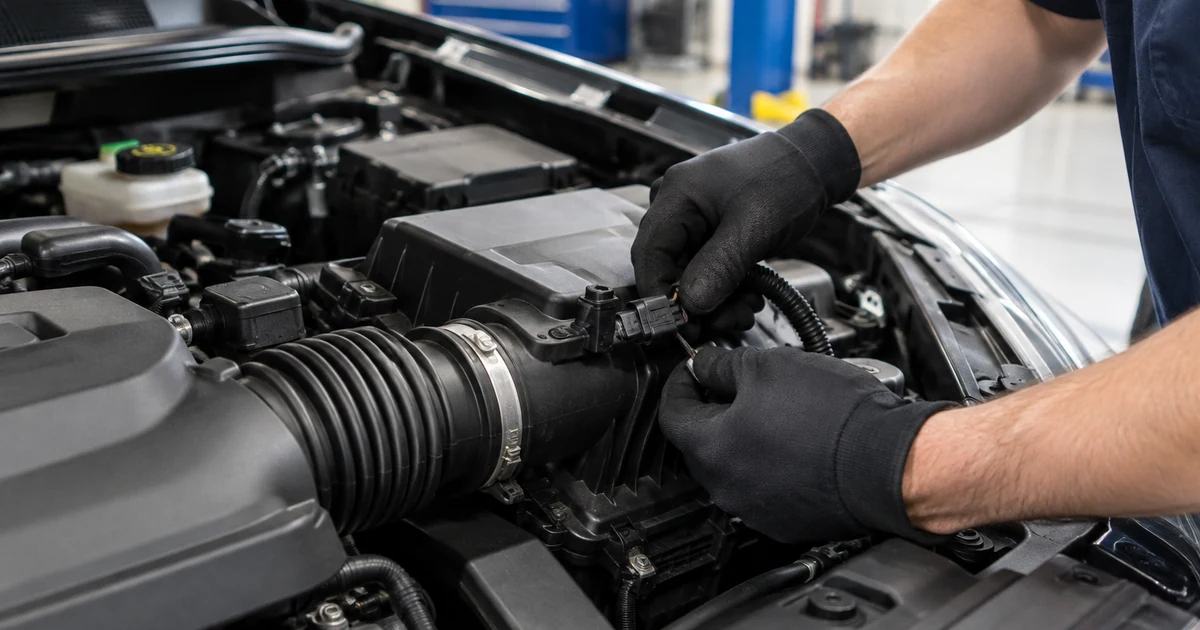
- Inspect the solenoid connector and wiring. Look for oil soaking into the connector, broken locking tabs or chafed wires. AutoZone’s diagnostic steps start with exactly this visual check.
- Test the VVT solenoid. Measure its resistance against spec, or command it on and off with a bidirectional scan tool and watch whether cam angle changes. Removing it often reveals a clogged screen.
- Clear the code and test drive. If it returns quickly with good oil and a working solenoid, a shop should check the phaser and timing chain stretch using cam/crank correlation data or a scope.
Expect to pay about $100 to $185 for a professional diagnosis, often credited toward the repair.
How to Fix P0011
Work from cheapest to most expensive, and don’t skip the oil step:
- Change the oil and filter with the exact viscosity your engine calls for. Clear the code and drive for a few days. CarParts.com lists an oil change as the first thing to try.
- Clean or replace the VVT solenoid. Some solenoids have a small screen that can be cleaned; a failed coil or a stuck spool means replacement. On many four-cylinders it’s held in by one or two bolts.
- Repair damaged wiring or an oil-soaked connector.
- Replace the camshaft position sensor only if testing shows a bad signal.
- Check for PCM software updates, since some manufacturers have released reprogramming for VVT-related codes.
- Replace the cam phaser and/or timing chain components when testing confirms wear or stretch. This is the expensive end, and the one you don’t want to put off.
Cost to Fix P0011 by Cause
The cost to fix P0011 ranges from about $65 for an oil change to $3,900 for a timing chain kit with new cam phasers. When the oil isn’t the answer, most drivers pay about $380 at an independent shop for a VVT solenoid replacement.
| Repair | Parts | Labor | Total at a shop |
|---|---|---|---|
| Diagnosis | — | $100 – $185 | $100 – $185 (often credited) |
| Oil and filter change (full synthetic) | $35 – $70 | $25 – $55 | $65 – $125 |
| Wiring or connector repair | $10 – $60 | $90 – $240 | $100 – $300 |
| Camshaft position sensor | $40 – $200 | $60 – $160 | $160 – $360 |
| VVT solenoid (oil control valve) | $90 – $250 | $160 – $300 | $250 – $550 |
| Cam phaser, accessible design | $150 – $500 | $600 – $1,000 | $750 – $1,500 |
| Timing chain kit | $300 – $800 | $1,200 – $1,900 | $1,500 – $2,700 |
| Timing chain kit + cam phasers | $700 – $1,600 | $1,600 – $2,300 | $2,300 – $3,900 |
| PCM replacement and programming | $600 – $1,000 | $150 – $300 | $900 – $1,300 |
Published figures line up with these ranges. FIXD puts an oil control valve at $340 to $402 at a shop and a cam phaser at $755 to $875, while CarParts.com says a VVT solenoid replacement costs around $400. RepairPal’s VVT solenoid estimates vary widely by model: about $392 to $541 for a Chevrolet Silverado 1500, $492 to $636 for a 2018 Hyundai Elantra GT, and $643 to $928 for a 2022–2025 Chevy Tahoe. Timing chain prices match our timing chain replacement cost guide.
What Affects the Price
Where the solenoid and phaser sit
On many four-cylinders the VVT solenoid bolts into the top or front of the cylinder head and comes out in under an hour. On some V6 and V8 engines it’s buried under the intake or sits behind the timing cover, which multiplies labor. Phasers almost always require removing the timing cover or at least the valve cover and chain.
Engine layout
Transverse V6 engines and engines with timing at the back (some GM and European designs) need far more teardown. A timing chain job on a compact four-cylinder can cost half as much as the same job on a V6 SUV.
Part quality
Quality aftermarket solenoids work well on many cars and cost less. For phasers and chain kits, many technicians prefer OEM or OE-supplier parts because a weak replacement can bring the code back.
Shop type and region
Dealers charge roughly $150 to $220 an hour and have factory test procedures and software updates. Independent shops typically charge $110 to $150. Labor rates are highest in the Northeast and on the West Coast.
Related parts replaced at the same time
If the timing cover comes off, it usually makes sense to replace the chain, guides, tensioner and seals together, and sometimes the water pump. That raises the bill now but avoids paying the same labor twice.
DIY vs. Taking It to a Shop
An oil change is a 1 out of 5 job. Replacing an accessible VVT solenoid or camshaft position sensor is about 2 out of 5: basic sockets, a clean work area and fresh oil on the new O-ring. Cam phasers and timing chains are 5 out of 5, requiring cam locking tools, precise timing alignment and often a full day or more. A mistake there can destroy an interference engine.
A sensible DIY plan is to scan the code, change the oil with the correct grade, inspect the connector and, if your engine allows easy access, test or replace the solenoid. If the code keeps coming back after that, let a shop measure timing chain stretch before buying more parts.
Is It Worth Fixing?
Almost always, yes. Oil, solenoid and sensor fixes cost far less than the risk of ignoring the code. The harder decision comes when the diagnosis is a stretched chain plus phasers at $2,300 to $3,900. On an older, high-mileage car worth less than about $4,000, weigh that bill against the car’s value and the condition of everything else: transmission, rust, suspension. On a car worth more, or one you plan to keep for years, the timing repair is usually the better financial choice than replacing the vehicle.
How to Save Money on P0011
- Change the oil first, using the exact viscosity on the oil cap, and give the car a few days before buying parts.
- Keep oil changes on schedule. Sludge is a leading cause of VVT trouble, and fresh oil is the cheapest prevention.
- Pull and inspect the solenoid before replacing it; a clogged screen can sometimes be cleaned.
- Ask about software updates and technical service bulletins for your engine before approving major work.
- Check your powertrain warranty. Cam phasers and timing chains are internal engine parts, often covered on newer cars.
- Get a second quote from an independent shop for any phaser or chain job.
- Bundle timing work. If the cover is coming off, replace the chain, guides and tensioner together.
Related Codes
- P0010 — “A” camshaft actuator circuit (Bank 1), an electrical fault in the solenoid circuit
- P0012 — “A” camshaft timing over-retarded (Bank 1), the opposite of P0011
- P0014 — “B” (usually exhaust) camshaft timing over-advanced (Bank 1)
- P0021 — “A” camshaft timing over-advanced (Bank 2), the same fault on the other side of a V engine
- P0016 — crankshaft/camshaft position correlation (Bank 1 Sensor A), often linked to timing chain stretch
- P0340 — camshaft position sensor “A” circuit malfunction
- P0300 — random or multiple misfire, which can appear alongside VVT faults; see our P0300 guide
Frequently Asked Questions
What does code P0011 mean?
P0011 means “A” Camshaft Position, Timing Over-Advanced or System Performance (Bank 1). The engine computer commanded a certain intake cam position through the variable valve timing system, but the camshaft position sensor shows the cam is further advanced and the computer can’t correct it.
Can an oil change fix P0011?
Sometimes, yes. The VVT system is driven by engine oil, so low, dirty or overly thick oil can keep the cam phaser from moving as commanded. Change the oil and filter with the exact viscosity your engine specifies, clear the code and drive for a few days before replacing parts.
How much does it cost to fix a P0011 code?
An oil change runs $65 to $125. At an independent shop, a VVT solenoid typically costs $250 to $550, a camshaft position sensor $160 to $360, and a cam phaser $750 to $1,500. A timing chain kit costs $1,500 to $2,700, or $2,300 to $3,900 with new phasers.
Is it safe to drive with a P0011 code?
Drive as little as possible until it’s diagnosed. Check the oil level first. If the engine rattles, stalls, runs rough, or the check engine or oil pressure light flashes or comes on, stop driving and have it towed, because worn timing parts can lead to serious engine damage.
What is the difference between P0011 and P0016?
P0011 means the intake cam is more advanced than commanded, which usually points to the VVT solenoid, phaser or oil. P0016 means the crankshaft and camshaft signals don’t line up as expected, which more often points to a stretched timing chain or a sensor problem. Seeing both together is a strong hint to check the chain.
Will a bad VVT solenoid cause P0011?
Yes, it’s one of the most common causes. A solenoid that sticks open or has a clogged screen can leave the cam phaser stuck in an advanced position. Testing the solenoid with a multimeter or a bidirectional scan tool confirms it before you buy a new one.
- CarParts.com — P0011 code: "A" camshaft timing over advanced (Bank 1)
- FIXD — P0011 engine code
- AutoZone — P0011 trouble code diagnosis and causes
- RepairPal — Chevrolet Tahoe variable valve timing control solenoid replacement cost
- RepairPal — 2018 Hyundai Elantra GT variable valve timing control solenoid replacement cost