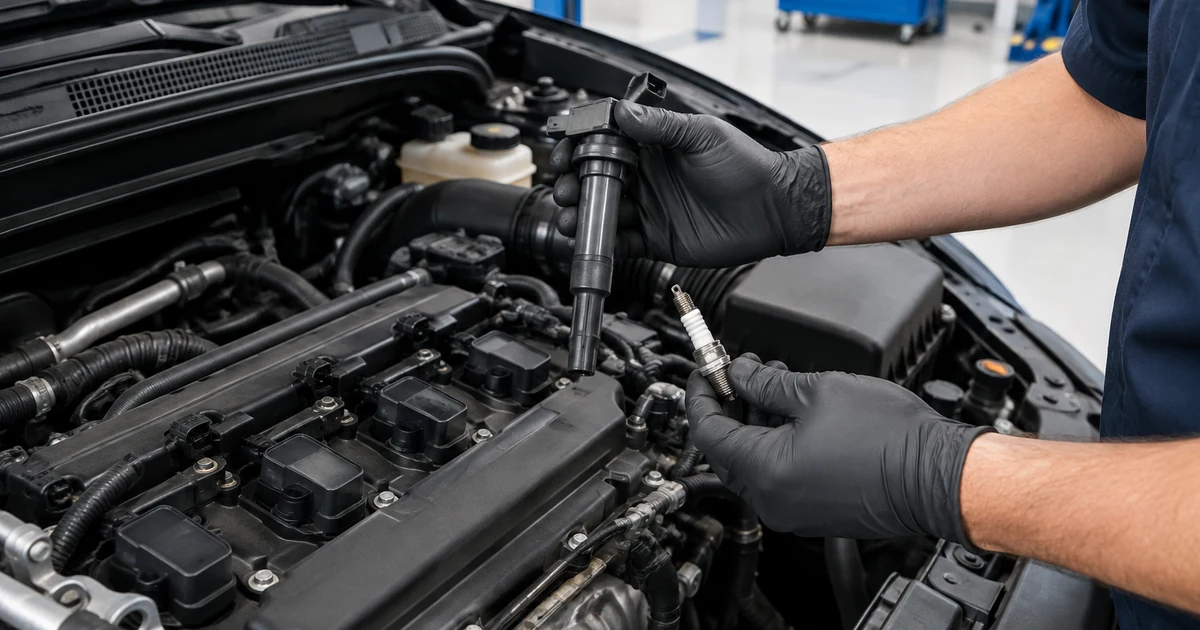
What the P0300 Code Means
P0300 stands for “Random/Multiple Cylinder Misfire Detected.” A misfire happens when the air-fuel mixture in a cylinder doesn’t burn properly. The engine computer watches crankshaft speed, and each misfire causes a tiny slowdown. When it counts enough of them across more than one cylinder, or can’t pin them to a single cylinder, it sets P0300.
The companion codes P0301 through P0306 (up to P0308 on V8s, P0312 on V12s) name a specific cylinder. The last digit is the cylinder number: P0301 is cylinder 1, P0304 is cylinder 4, and so on. You’ll often see P0300 together with one or more of them.
That difference matters. A single-cylinder code usually points to a part on that cylinder, like a spark plug, coil or injector. A true random P0300 more often points to something every cylinder shares: fuel pressure, a vacuum leak, a dirty MAF sensor, or worn plugs across the board.
Common Causes of P0300
| Cause | Likelihood | Typical repair cost |
|---|---|---|
| Worn spark plugs or plug wires | Most common | $290 – $400 (4-cylinder) |
| Failed ignition coil(s) | Very common | $240 – $320 per coil |
| Vacuum leak (lean misfire) | Common | $180 – $450 |
| Clogged or leaking fuel injector | Occasional | $770 – $950 |
| Low fuel pressure / weak fuel pump | Occasional | $900 – $1,700 |
| Faulty sensor (MAF, crankshaft or camshaft position) | Occasional | $150 – $450 |
| Timing chain or belt jumped a tooth | Less common | $1,000+ |
| Low compression, head gasket leak | Less common but serious | $2,570 – $3,390 |
Costs are shop estimates based on RepairPal national averages for a four-cylinder engine. V6 and V8 engines cost more because there are more plugs and coils, and rear-bank plugs on transverse V6s can require removing the intake plenum.
Symptoms of P0300
- Check engine light on or flashing
- Engine shaking, stumbling or jerking, especially under load or at idle
- Rough idle and vibration you can feel in the seat or steering wheel
- Hesitation and reduced power when accelerating
- Hard starting or stalling at stops
- Worse fuel economy and a raw fuel smell from the exhaust
Is It Safe to Drive With P0300?
If the check engine light is flashing, stop driving. A flashing light means the misfire is severe. Unburned fuel is being pumped into the exhaust, where it can overheat and destroy the catalytic converter quickly, and in extreme cases start a fire. Pull over when it’s safe, shut the engine off, and have the car towed or driven only a very short distance at low load.
With a steady light and a mild misfire, a short, gentle drive to a shop is usually fine. Edmunds notes a brief drive for repairs likely won’t cause irreparable damage. Don’t tow a trailer, climb long hills or drive on the highway until it’s fixed.
A misfiring engine can also lose power suddenly when you merge or pass, which is a safety risk in traffic. YourMechanic rates P0300 as a serious code that needs prompt attention.
How to Diagnose P0300
An OBD2 scanner is the first tool. A basic reader shows P0300 and any cylinder-specific codes. A scanner with Mode 6 or misfire counters shows how many misfires each cylinder is logging, which often reveals a pattern even when only P0300 is stored.
- Read all codes and freeze-frame data. Note rpm, load and temperature when the misfire happened. Lean codes like P0171 alongside P0300 point to a vacuum leak or fuel delivery.
- Check misfire counters by cylinder. Are the misfires spread evenly or concentrated on one or two cylinders?
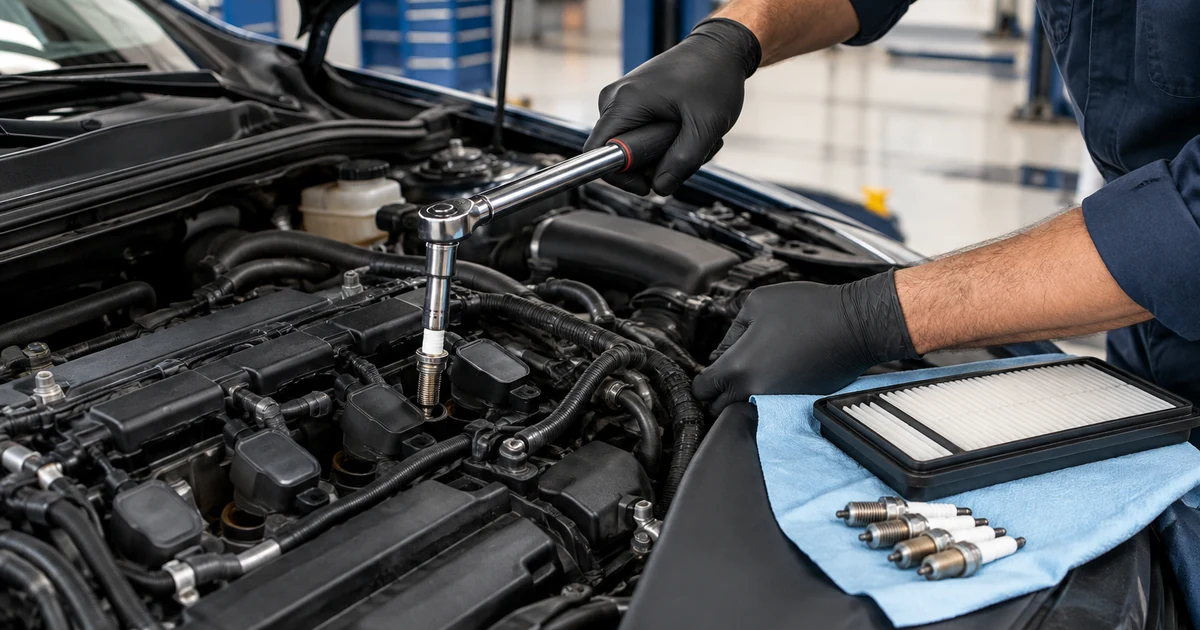
- Inspect spark plugs. Check their age against the maintenance schedule, and look for worn electrodes, oil fouling or cracked insulators.
- Swap test the coils. Move the coil from a misfiring cylinder to a good one. If the misfire follows the coil, the coil is bad. If it stays put, look at the plug, injector or compression.
- Check for vacuum leaks and review fuel trims.
- Test fuel pressure if the misfire is random and trims are lean.
- Run a compression or leak-down test if ignition and fuel check out. Low compression on one or two cylinders points to valves, rings or a head gasket.
YourMechanic lists the most common diagnostic mistake as assuming spark plugs are the only cause and missing injector or compression problems.
How to Fix P0300
Work from the cheapest and most likely fixes upward:
- Replace worn spark plugs if they are due or look worn. Use the plug type and gap the manufacturer specifies.
- Replace any coil that fails the swap test, or damaged plug wires on older engines.
- Fix vacuum leaks and clean the MAF sensor if fuel trims are lean.
- Address fuel delivery: clogged injectors, filter, pressure regulator or pump.
- Check sensors and timing (crankshaft and camshaft position, timing chain or belt) if misfires persist.
- Test compression and repair mechanical problems last, since they’re the most expensive.
- Clear the codes and drive, then re-check misfire counters to confirm the fix.
Cost to Fix P0300 by Cause
Most drivers pay about $340 to fix P0300 on a four-cylinder, because the usual fix is a new set of spark plugs. The full range runs from about $180 for a vacuum leak to more than $3,000 if the engine has a mechanical problem.
| Repair | Parts | Labor | Shop total |
|---|---|---|---|
| Diagnosis | — | $100 – $185 | $100 – $185 (often credited) |
| Spark plugs (4-cylinder set) | $100 – $130 | $185 – $270 | $290 – $400 |
| One ignition coil | $165 – $210 | $75 – $110 | $240 – $320 |
| Plugs + all coils (4-cylinder) | $350 – $800 | $200 – $300 | $600 – $1,100 |
| Vacuum leak repair | $15 – $100 | $150 – $350 | $180 – $450 |
| Fuel injector | $465 – $505 | $305 – $445 | $770 – $950 |
| Fuel pump | $500 – $1,150 | $240 – $355 | $900 – $1,700 |
| Head gasket | $900 – $940 | $1,670 – $2,450 | $2,570 – $3,390 |
On V6 and V8 engines, expect plug and coil jobs to cost roughly 25% to 50% more, and more still where the intake must come off to reach rear plugs. If the misfire went on long enough to damage the converter, add a catalytic converter replacement.
DIY vs. Taking It to a Shop
Difficulty: 2 out of 5 for plugs and coils on most four-cylinder engines, 4 out of 5 on V6 engines where the rear plugs sit under the intake.
- Tools: an OBD2 scanner, a spark plug socket with extensions, a torque wrench, a gap tool, and dielectric grease for the coil boots.
- Time: 30 minutes to an hour for plugs and coils on an inline four-cylinder; several hours on some V6 engines.
- Savings: labor is roughly two-thirds of a shop spark plug job, so DIY can save $180 to $270 on a four-cylinder.
- Cautions: install plugs by hand first to avoid cross-threading aluminum heads, and torque them to spec. Remove plugs only from a cool engine.
Leave it to a shop if the swap test doesn’t move the misfire, if fuel pressure or compression testing is needed, or if the light is flashing and the car isn’t safe to drive.
Is It Worth Fixing?
Almost always, when the cause is ignition, a vacuum leak or fuel delivery. These are routine repairs that restore power and fuel economy and protect the catalytic converter. The harder call is a compression problem on an older, high-mileage car: a head gasket or valve job can approach the value of the car, so get a second opinion and weigh it against the car’s overall condition.
Related Codes
- P0301–P0306 — Misfire detected in cylinder 1 through 6 (P0307–P0308 on V8s)
- P0171 / P0174 — System too lean, bank 1 / bank 2
- P0351–P0356 — Ignition coil primary/secondary circuit faults by cylinder
- P0335 / P0340 — Crankshaft / camshaft position sensor circuit
- P0420 — Catalyst efficiency below threshold, often the aftermath of long-running misfires
Frequently Asked Questions
What does code P0300 mean?
P0300 means “Random/Multiple Cylinder Misfire Detected.” The engine computer has counted misfires in more than one cylinder, or can’t tell which cylinder is misfiring. Codes P0301 to P0306 name the specific cylinder when it can.
Can I drive with a P0300 code?
Not if the check engine light is flashing. That signals a severe misfire that can overheat and destroy the catalytic converter. With a steady light and mild symptoms, a short, gentle drive to a repair shop is usually acceptable.
How much does it cost to fix P0300?
Most drivers pay about $290 to $400 for new spark plugs on a four-cylinder, the most common fix. An ignition coil is $240 to $320 each, a fuel injector $770 to $950, and a head gasket $2,570 to $3,390 at a shop.
What is the most common cause of P0300?
Worn spark plugs and failing ignition coils are the most common causes. Vacuum leaks, low fuel pressure and clogged injectors come next. Mechanical problems like low compression are less common but more expensive.
What is the difference between P0300 and P0301?
P0300 means random or multiple cylinders are misfiring. P0301 means the misfire is in cylinder 1 specifically. Single-cylinder codes usually point to a part on that cylinder, while P0300 often points to a shared cause like fuel pressure or a vacuum leak.
Can bad gas cause a P0300 code?
It can. Water-contaminated or very low-quality fuel can cause random misfires across all cylinders. If the misfire started right after a fill-up, mention that to your mechanic.
- YourMechanic — P0300 OBD-II trouble code
- Edmunds — P0300: Random/Multiple Cylinder Misfire Detected
- CarParts.com — P0300 code: random or multiple cylinder misfire
- RepairPal — Spark plug replacement cost estimate
- RepairPal — Ignition coil replacement cost estimate
- RepairPal — Head gasket replacement cost estimate