What a Car Shaking at Idle Usually Means
A healthy engine idles smoothly, with only a light hum through the seat and steering wheel. If your car shakes when idle, at a stoplight, in the drive-thru or in park, the cause is almost always one of two things:
- The engine is running unevenly. One or more cylinders isn’t firing properly, usually because of a spark, air or fuel problem. This is a misfire or rough idle.
- The engine runs fine, but its vibration reaches the cabin. Worn motor mounts no longer absorb normal engine movement, so you feel it in the car.
Telling them apart is the first step. A misfire usually comes with a stumbling, uneven rhythm, a check engine light, and sometimes hesitation when you pull away. Bad mounts give a steadier vibration that often gets worse when you shift into drive or reverse, or when the A/C kicks on, with clunks when you accelerate.
Shaking that only appears while driving at speed or while braking is a different problem, usually tires, wheel balance, axles or brake rotors, rather than the engine at idle.
Common Causes of a Car Shaking at Idle
| Cause | How to recognize it | How likely | Typical repair cost |
|---|---|---|---|
| Worn spark plugs | Rough, uneven idle, overdue plugs, misfire codes | Most common | $150 – $450 |
| Failed ignition coil | Shaking plus a cylinder code (P0301–P0308) | Very common | $160 – $360 per coil |
| Worn motor mounts | Vibration worse in drive or with A/C on, clunk on acceleration | Common | $350 – $800 per mount |
| Vacuum leak | Hissing sound, high or hunting idle, lean code P0171 | Common | $180 – $450 |
| Dirty throttle body / bad idle air control valve | Idle too low or surging, stalling when stopping | Occasional | $120 – $500 |
| Dirty or failing fuel injector | Misfire on one cylinder, hesitation, hard starting | Occasional | $300 – $1,500 |
| Worn serpentine belt or pulley | Squeal, chirp, vibration from the front of the engine | Less common | $100 – $250 |
| Low compression | Persistent misfire on one cylinder after plugs and coils | Less common | $2,000+ |
Costs are typical national shop prices for a four-cylinder car or small SUV. V6 and V8 engines have more plugs and coils, and luxury models cost more across the board.
Worn Spark Plugs
Spark plugs are the most common reason an engine shakes at idle. As the electrodes wear, the spark weakens and some combustion events fail, which you feel as a shudder or stumble.
Signs: a rough, uneven idle, slower acceleration, lower fuel economy and plugs that are past their service interval. A P0300 code or cylinder-specific misfire codes often appear.
Fix and cost: a set of spark plugs costs $150 to $450 at a shop, with most drivers paying about $280 on a four-cylinder. Sideways V6 engines that need the intake plenum removed run about $400 to $700.
Failed Ignition Coil
On most modern engines, each spark plug has its own coil. A failing coil can cause a steady misfire on one cylinder, which feels like a rhythmic shake at idle.
Signs: a check engine light (flashing if the misfire is severe), a code naming one cylinder, and shaking that gets worse under load.
Fix and cost: one coil costs $160 to $360 installed, about $250 on average. Swapping the suspect coil to another cylinder and seeing if the misfire follows is the standard test.
Worn Motor Mounts
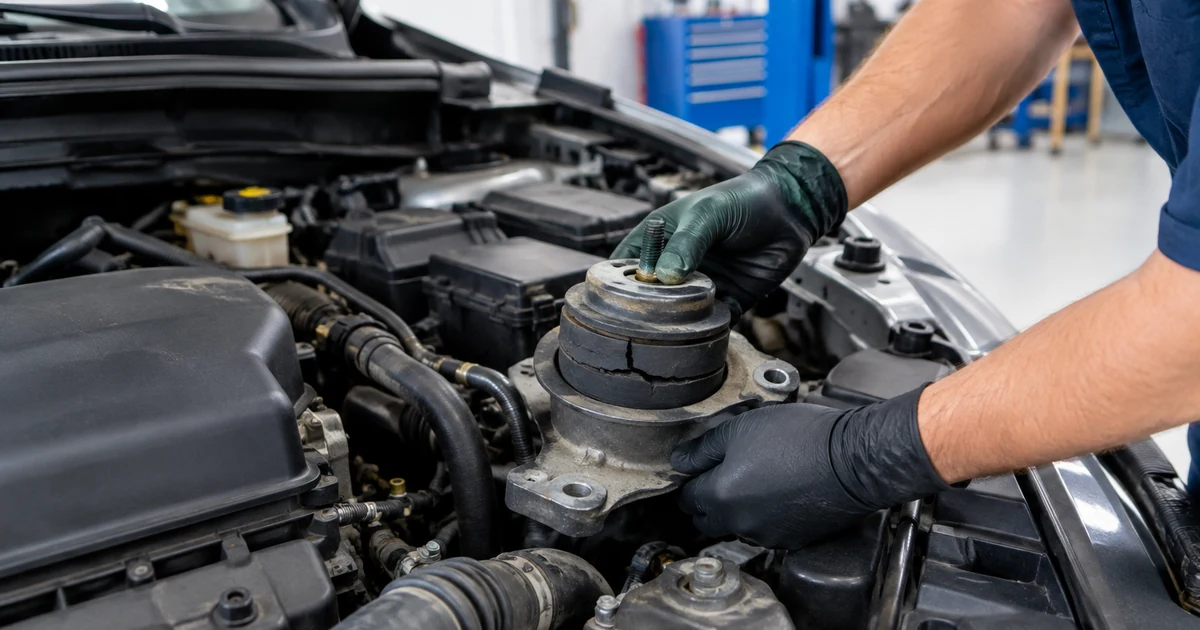
Motor mounts are rubber or fluid-filled blocks that hold the engine and soak up its vibration. Over time the rubber cracks and sags, and hydraulic mounts can leak their fluid. CarParts.com lists damaged engine mounts as a leading cause of vibration at idle.
Signs: vibration that increases when you shift into drive or reverse, a clunk when accelerating or letting off the gas, visible cracks or fluid leaks at a mount, and an engine that rocks noticeably when someone briefly revs it.
Fix and cost: one engine mount typically costs $350 to $800, about $550 on average. Replacing all mounts runs about $800 to $1,800. Hydraulic and electronic active mounts cost more.
Vacuum Leak
The engine computer measures the air coming in and adds fuel to match. A cracked vacuum hose, a loose connection or a leaking intake gasket lets in extra air that isn’t measured. The mixture runs lean, and the effect is strongest at idle, when the engine uses very little air.
Signs: a hissing sound under the hood, an idle that surges or sits too high, and lean codes such as P0171.
Fix and cost: most vacuum leak repairs run $180 to $450 including a smoke test to find the leak. A cracked hose can be cheap, while an intake manifold gasket costs more because of the labor.
Dirty Throttle Body or Bad Idle Air Control Valve
On many older engines, an idle air control (IAC) valve meters the air that keeps the engine running at idle. Newer cars do it with an electronic throttle body. Carbon buildup in either one can starve the engine of air at idle.
Signs: idle speed that’s too low, surges up and down, or dips when the A/C comes on, plus stalling when you come to a stop.
Fix and cost: IAC valve replacement ranges from about $120 to over $1,000, but most common cars fall well under $500. Throttle body cleaning adds roughly $170 to $300 at a shop if needed. Cleaning is often tried first.
Fuel Delivery Problems
A dirty or leaking fuel injector, a clogged fuel filter or a weak fuel pump can starve one or more cylinders at idle. A single bad injector usually causes a misfire on one cylinder; low fuel pressure affects them all.
Signs: a misfire that stays on the same cylinder after swapping coils, hard starting, hesitation and a fuel smell.
Fix and cost: fuel injector replacement typically costs $300 to $1,500 depending on the engine. A fuel system cleaning service is a cheaper first step for mild deposits.
Is It Safe to Drive a Car That Shakes at Idle?
It depends on the cause and how bad it is:
- Check engine light flashing: stop driving. A flashing light means a severe misfire that can quickly ruin the catalytic converter, a $700 to $3,500 repair.
- Steady check engine light with mild shaking: you can usually drive gently to a shop, but don’t put it off. Misfires get worse and can damage other parts.
- Worn motor mounts: mild vibration is not an immediate danger, but a broken mount lets the engine move too much, which can stress hoses, wiring, axles and the exhaust. A loud clunk or engine that visibly lurches needs prompt attention.
- Stalling at stops: limit driving. Losing the engine in an intersection is dangerous, and power steering and brake assist get much harder when the engine dies.
If the shaking comes with overheating, smoke or a strong fuel smell, stop and have the car checked before driving further.
How a Mechanic Diagnoses Shaking at Idle
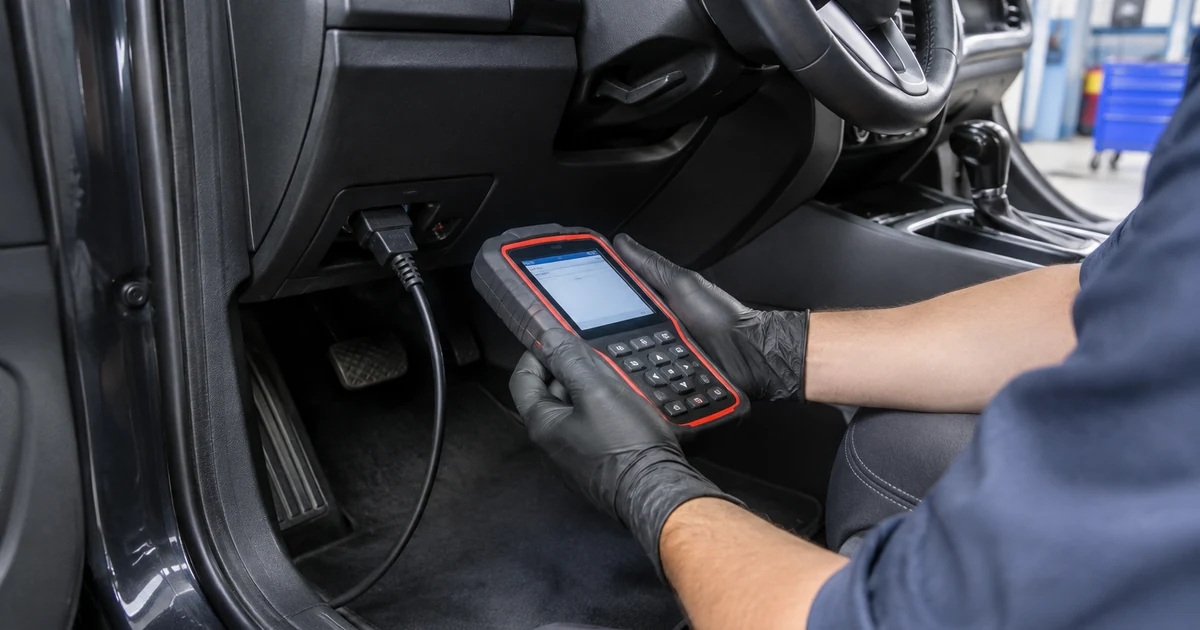
A mechanic will usually start with a scan tool, then work through the most likely causes:
- Read codes and misfire counts for each cylinder, plus fuel trims to spot a vacuum leak.
- Swap coils between cylinders to see if a misfire follows the coil.
- Pull and inspect spark plugs for wear, fouling or cracks.
- Smoke test the intake to find vacuum leaks.
- Watch the engine with a helper shifting between drive and reverse with the brake held, to check for excess engine movement from bad mounts.
- Check idle speed and throttle body condition, and run a compression test if a misfire persists.
Expect to pay $100 to $200 for diagnosis at an independent shop. Many shops apply the fee toward the repair.
What You Can Check Yourself
- Scan for codes. An inexpensive OBD2 scanner, or a free scan at an auto parts store, tells you right away whether the engine is misfiring.
- Check your maintenance records for when the plugs and air filter were last replaced. A very dirty air filter can contribute to a rough idle.
- Listen for hissing around the intake and vacuum hoses with the engine idling. Keep hands away from belts and fans.
- Look at the motor mounts with the engine off for cracked rubber, separated metal or fluid leaks.
- Notice when it shakes. Worse in drive than in park, or worse with the A/C on, points toward mounts or idle control. Shaking in all gears with a misfire code points to ignition or fuel.
- Try the exhaust test. CarParts.com suggests holding a cloth near the tailpipe: a steady flow is normal, while irregular puffs suggest a misfiring cylinder. Don’t touch the hot pipe.
When to See a Mechanic Right Away
- The check engine light is flashing
- The engine stalls at stops or nearly stalls when you brake
- You hear a loud clunk and the engine visibly lurches when you accelerate
- You smell fuel or see smoke
- The temperature gauge is rising along with the shaking
How to Save on the Repair
- Get the codes read first. Knowing it’s a misfire on one cylinder narrows the job to a coil, plug or injector instead of guesswork.
- Start with the cheapest likely fix. Spark plugs that are due, a cracked vacuum hose or a throttle body cleaning often solve rough idle for far less than bigger parts.
- Use an independent shop. Plug, coil and mount jobs cost noticeably less than at a dealer.
- Replace only the mounts that are bad, unless the car has high mileage and all of them are worn.
- Bundle labor. If coils have to come off to replace plugs anyway, replacing a weak coil at the same time avoids paying twice.
- Ask about aftermarket parts for mounts and coils on older cars.
- Get a second quote on anything over $500.
Frequently Asked Questions
Why does my car shake when idle but not when driving?
At idle, the engine runs at its lowest speed, so a weak cylinder or worn mount is easiest to feel. Misfires from worn plugs or a bad coil, vacuum leaks and worn motor mounts are the usual causes. Shaking that appears only at speed is more often tires or wheels.
Can bad motor mounts cause shaking at idle?
Yes. Worn mounts stop absorbing normal engine vibration, so you feel it in the seat and steering wheel. The shaking is typically worse in drive or reverse, or with the A/C on, and you may hear a clunk when accelerating.
How much does it cost to fix a car shaking at idle?
Most fixes cost $150 to $450 for spark plugs, $160 to $360 for an ignition coil, $180 to $450 for a vacuum leak, or $350 to $800 for one motor mount. Fuel injector problems can reach $300 to $1,500.
Is it safe to drive if my car shakes at idle?
With a steady check engine light and mild shaking, a gentle drive to a shop is usually fine. If the light is flashing, or the engine stalls at stops, stop driving and get it checked. A severe misfire can damage the catalytic converter.
Can a dirty air filter cause shaking at idle?
An extremely clogged air filter can restrict airflow enough to contribute to a rough idle, but it’s rarely the only cause. It’s a cheap part, so it’s worth checking while you look into plugs, coils and vacuum leaks.
Why does my car shake at idle with the AC on?
Turning on the A/C adds load to the engine. A worn motor mount, a dirty throttle body or a weak idle air control valve can’t compensate well, so idle drops and vibration increases. Slight changes are normal, but strong shaking isn’t.