What a Grinding Noise When Braking Usually Means
A grinding noise when braking almost always means metal is rubbing on metal. In most cars, the brake pads have worn through their friction material and the steel backing plate is now scraping the rotor. Every stop cuts deeper into the rotor and reduces how well the car can stop.
Treat grinding brakes as a stop-driving problem. Unlike a squeal, which is an early warning, grinding usually means the warning stage is over. Autobarn’s guidance is blunt: if your brakes grind, stop driving and have the car inspected or towed.
There is one harmless exception. A short grinding or scraping sound on the first few stops after the car sat in the rain or overnight, which disappears after three or four stops, is usually surface rust being wiped off the rotors. Chloe’s Auto Repair lists it as the one case where no action is needed. If the noise comes back on every stop, it is not rust.
Common Causes of Grinding Brakes
| Cause | How to recognize it | How likely | Typical repair cost |
|---|---|---|---|
| Pads worn to the metal, rotors damaged | Loud, harsh grinding on every stop; often followed a period of squealing | Most common | $350 – $800 per axle (pads + rotors) |
| Pads just worn through, rotors still usable | Grinding that started very recently; rotors smooth when inspected | Common (if caught fast) | $150 – $450 per axle |
| Seized caliper or slide pins | Grinding plus pulling, burning smell, one very hot wheel | Common | $300 – $800 per caliper, or $500 – $1,250 with pads and rotors |
| Rock or debris between pad and rotor | Sudden scraping after driving on gravel, sometimes even when not braking | Occasional | $50 – $150 (remove and inspect) |
| Heavy rust on rotors after the car sat | Grinding after weeks of storage; rough, pitted rotor surface | Occasional | $0 if it clears; $350 – $800 if rotors are pitted |
| Bad wheel bearing (mistaken for brakes) | Growl that changes with speed or turning, not just braking | Less common | $250 – $750 per wheel |
Ranges are parts and labor at an independent shop for a typical midsize car. Double them if both front and rear axles are affected. Chloe’s Auto Repair puts severe neglect, where the brake job also needs a caliper and a wheel bearing, at $800 to $1,500 or more per axle.
1. Brake Pads Worn Down to Metal
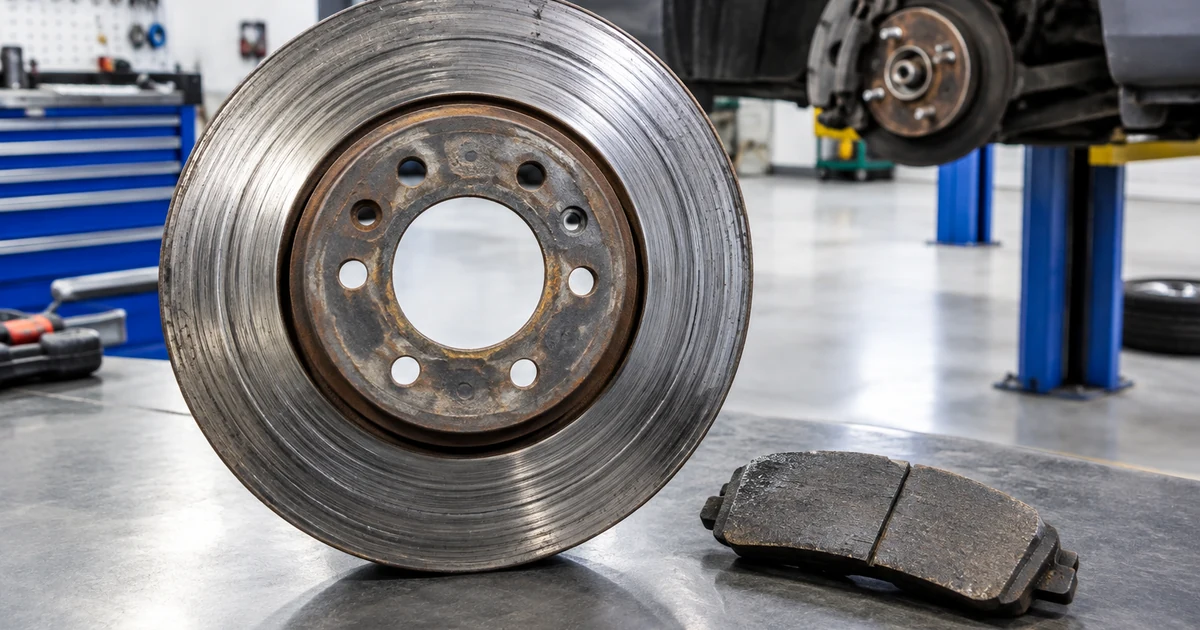
Brake pads are a layer of friction material bonded to a steel backing plate. Once that layer is gone, the steel plate meets the iron rotor. Autobarn, Chloe’s Auto Repair and NuBrakes all list this as the number one cause of grinding.
Signs: a deep grinding or growling sound on every stop, sometimes felt through the pedal. Many drivers heard a squeal for weeks before the grinding started. That squeal was the wear indicator.
Fix: new pads and, in most cases, new rotors on that axle. Metal-on-metal contact gouges the rotor surface, and a rotor that’s been ground down is often below minimum thickness, so resurfacing isn’t an option.
Cost: about $350 to $800 per axle for pads and rotors, with most drivers paying around $550. Trucks, large SUVs and European cars land at or above the top of the range.
2. Pads Worn Through, Rotors Still Saved
If you get the car in right after the grinding starts, the rotors may still be above minimum thickness and smooth enough to keep or resurface.
Fix: new pads, plus rotor resurfacing if needed.
Cost: about $150 to $450 per axle for pads alone, typically around $300. This is the best-case outcome, and the reason not to keep driving on grinding brakes.
3. Seized Caliper or Slide Pins
A caliper piston or slide pin that corrodes can stop the pad from retracting. The pad then drags on the rotor constantly, overheats, and wears unevenly or down to metal on one side. Autobarn and Firestone both list sticking calipers as a cause of brake noise.
Signs: the car pulls to one side, there’s a burning smell, one wheel is far hotter than the others after a drive, or one pad is worn much more than its partner.
Fix: replace the caliper (usually remanufactured), pads and rotors on that axle, then bleed the brakes.
Cost: about $300 to $800 for one caliper alone. Combined with pads and rotors on the same axle, expect roughly $500 to $1,250, because some labor overlaps.
4. Debris Caught Between Pad and Rotor
A small stone or piece of grit can wedge between the pad and rotor, especially after driving on gravel. Chloe’s Auto Repair describes it acting like a grinding wheel, scoring the rotor.
Signs: sudden scraping that started after a dirt road or construction zone, sometimes heard even when you’re not braking.
Fix: remove the wheel and debris, inspect the rotor. A light score can stay; a deep groove may mean a new rotor.
Cost: about $50 to $150 if nothing is damaged.
5. Rust From Sitting
Light overnight rust is normal. A car that sat for weeks or months can develop heavy rust and pitting on the rotors, and the pads may even stick to them.
Fix: drive gently for a few stops in a safe place. If the grinding doesn’t go away, the rotors (and often pads) need replacing.
6. A Wheel Bearing That Sounds Like the Brakes
A worn wheel bearing makes a growl or hum that drivers often confuse with brake grinding. The difference: a bearing noise usually changes with speed and gets louder when turning one way, whether or not you brake.
Cost: about $250 to $750 per wheel.
Is It Safe to Drive With Grinding Brakes?
No, not in the normal sense. Grinding brakes have less stopping power, the damage gets worse every mile, and an overheated or seized caliper can fail without much warning. If the grinding just started and the pedal feels completely normal, drive directly to a shop, slowly, with extra following distance, and avoid highways. Otherwise, have the car towed.
Stop driving immediately and call for a tow if:
- The brake pedal goes soft or sinks toward the floor before the car stops
- The car pulls hard to one side when braking
- You smell burning, see smoke, or a wheel is too hot to get near
- You hear a loud clunk or bang along with the grinding
- The brake warning light or ABS light comes on
- The car takes noticeably longer to stop
These warning signs match the stop-and-tow list from Chloe’s Auto Repair. A tow typically costs less than the extra rotor, caliper or crash damage that comes from driving on failing brakes.
How a Mechanic Diagnoses Grinding Brakes
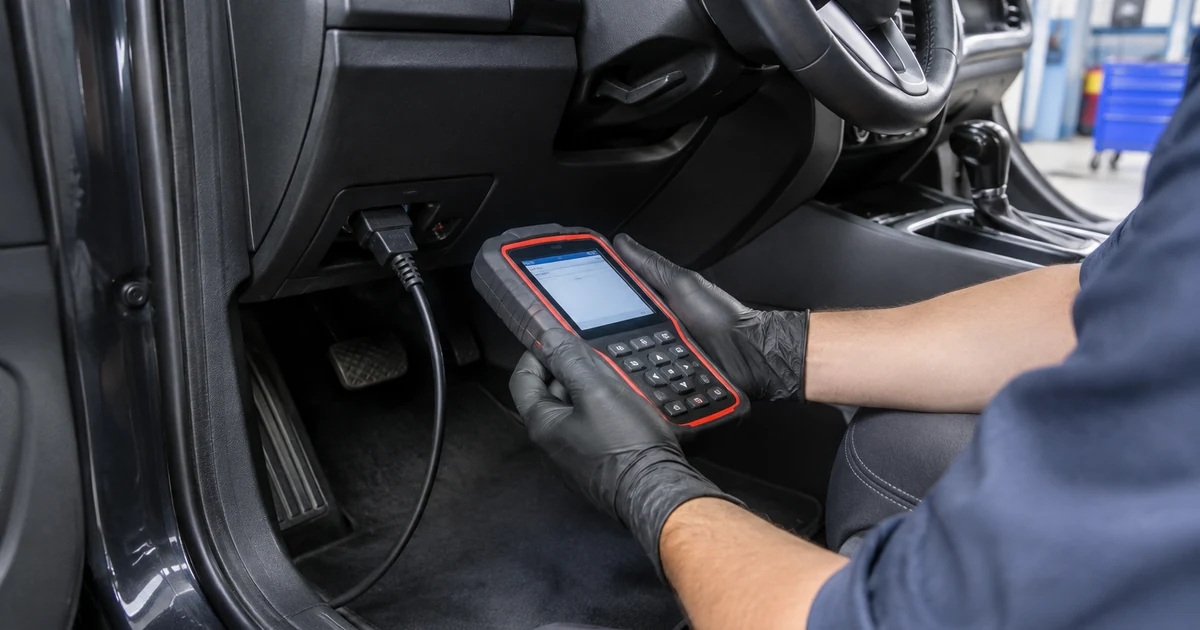
- A short road test (if safe) to confirm the noise only happens when braking, and which corner it comes from.
- Wheels off: measure pad thickness and check for metal-to-metal contact.
- Measure rotor thickness and compare it with the minimum stamped on the rotor.
- Check calipers for a stuck piston or seized slide pins, and look for brake fluid leaks.
- Check wheel bearings for play or roughness if the noise doesn’t match the brakes.
A stand-alone brake diagnosis usually costs $100 to $200 at a general repair shop, and is often applied to the repair. Many tire and brake chains offer free brake inspections. Ask the shop to show you the old pads and the rotor measurements before you approve a caliper or bearing.
What You Can Check Yourself
Only do these checks with the car parked on level ground, in Park, engine off. Don’t put any part of your body under a car supported only by a jack.
- When does it happen? Only on the first few stops after rain is likely rust. Every stop means a real problem.
- Does it happen without braking? If yes, think debris or a wheel bearing.
- Look through the wheel spokes. If you can’t see friction material between the steel backing plate and the rotor, the pad is gone.
- Look at the rotor. Deep circular grooves or a shiny, gouged band mean the rotor is damaged.
- Feel for heat. After a short drive, hold your hand near each wheel. One very hot wheel points to a dragging caliper.
- Check the brake fluid. A very low reservoir can mean badly worn pads or a leak. Don’t just top it off and keep driving.
Pads and rotors are one of the more DIY-friendly brake jobs, at about 1.5 to 2 hours per axle with a jack, jack stands, basic sockets, a C-clamp or piston tool and a torque wrench. Only take it on if you have done brakes before or have someone experienced with you, and always bed in the new pads afterward. A seized caliper adds bleeding the brakes, which is harder to do correctly at home.
When to See a Mechanic Right Away
For grinding brakes, the answer is: now. Specifically, get a professional inspection the same day if:
- The grinding happens on every stop, warm or cold
- You heard squealing for weeks before the grinding started
- The steering wheel or pedal vibrates when braking
- Only one side seems affected (possible caliper problem)
- You recently drove through gravel and the noise started suddenly
How to Save on the Repair
- Stop driving on it. Every extra trip can turn a $300 pad job into a $550 pads-and-rotors job, or more if a caliper overheats.
- Ask whether rotors are above minimum thickness. If you caught it early, resurfacing or reusing them may be an option.
- Choose an independent shop. Dealers typically charge around 30% more for the same brake work.
- Use quality aftermarket parts. Coated aftermarket rotors and ceramic pads are a good value for most daily drivers.
- Ask for a remanufactured caliper if one needs replacing; they’re usually cheaper than new.
- Get a second quote if the estimate includes calipers, bearings, hoses and a fluid flush all at once. Ask which items are failed and which are just “recommended.”
- Check your pad warranty. Some chain shops include lifetime pads, so you pay labor and rotors only.
Frequently Asked Questions
Why do my brakes grind when I stop?
The most common cause is brake pads worn down to their steel backing plate, which then scrapes the iron rotor. Other causes include a seized caliper, a stone stuck between the pad and rotor, and heavy rust after the car sat for a long time.
Is it safe to drive with grinding brakes?
No. Grinding means reduced stopping power and ongoing damage. If the pedal feels normal and the grinding just started, drive slowly and directly to a shop; if the pedal is soft, the car pulls, or you smell burning, have it towed.
How much does it cost to fix grinding brakes?
Most drivers pay about $550 per axle for new pads and rotors, within a range of $350 to $800. If the rotors can be saved, pads alone are about $150 to $450. A seized caliper pushes the axle total to roughly $500 to $1,250.
Why do my brakes grind in the morning and then stop?
That’s usually surface rust from overnight moisture being scraped off the rotors. If the noise clears after three or four stops, it’s normal. If it continues on every stop, have the brakes inspected.
Do I need new rotors if my brakes are grinding?
Usually yes. Metal-on-metal contact gouges the rotor and often takes it below minimum thickness. If you stop driving right after the grinding starts, the rotors can sometimes be reused or resurfaced.
Can a wheel bearing sound like grinding brakes?
Yes. A worn wheel bearing makes a growl that drivers often mistake for brakes. Bearing noise usually changes with speed and turning, even when you’re not braking, while brake grinding happens when you press the pedal.