Tire Balancing Cost by Vehicle
Balancing is priced per tire, so the math is simple: a standard spin balance usually costs $10–$20 per wheel, or $40–$80 for four. Large truck wheels, low-profile performance tires and road force balancing cost more. Many shops include balancing free when you buy and mount new tires.
| Vehicle | Standard balance (4 tires) | Road force balance (4 tires) | Notes |
|---|---|---|---|
| Ford F-150 | $50 – $100 | $100 – $180 | Large, heavy wheels |
| Chevrolet Silverado 1500 | $50 – $100 | $100 – $180 | Large, heavy wheels |
| Toyota Camry | $40 – $80 | $80 – $160 | |
| Toyota RAV4 | $40 – $80 | $80 – $160 | |
| Honda Civic | $40 – $80 | $80 – $160 | |
| Honda Accord | $40 – $80 | $80 – $160 | |
| Honda CR-V | $40 – $80 | $80 – $160 | |
| Nissan Altima | $40 – $80 | $80 – $160 | |
| Chevrolet Equinox | $40 – $80 | $80 – $160 | |
| Jeep Wrangler | $60 – $120 | $120 – $220 | Often 5 tires with the full-size spare |
| Tesla Model 3 | $50 – $100 | $100 – $180 | Heavy EV; vibration shows easily |
| BMW 3 Series | $60 – $120 | $120 – $200 | Low-profile, often staggered tires |
These are estimates for common model years with factory wheels at tire chains and independent shops. Warehouse clubs charge less, dealers more.
Tire Balancing Cost by Shop
| Where | Per tire | Four tires |
|---|---|---|
| Warehouse club (Costco, Sam’s Club) | About $7 – $10 | About $28 – $40 |
| Walmart / Discount Tire | About $10 – $15 | About $40 – $60 |
| Tire and service chains (Firestone, Pep Boys, Les Schwab, Big O) | About $15 – $20 | About $60 – $80 |
| Independent shop | About $10 – $30 | About $40 – $120 |
| Dealer | About $20 – $30 | About $80 – $120 |
These figures come from a 2026 AutoTrends comparison of posted prices; your local store may differ, and many locations include balancing free with a tire purchase or in a lifetime tire service plan. Some retailers only balance tires for members or for tires bought there.
Standard Balancing vs. Road Force Balancing
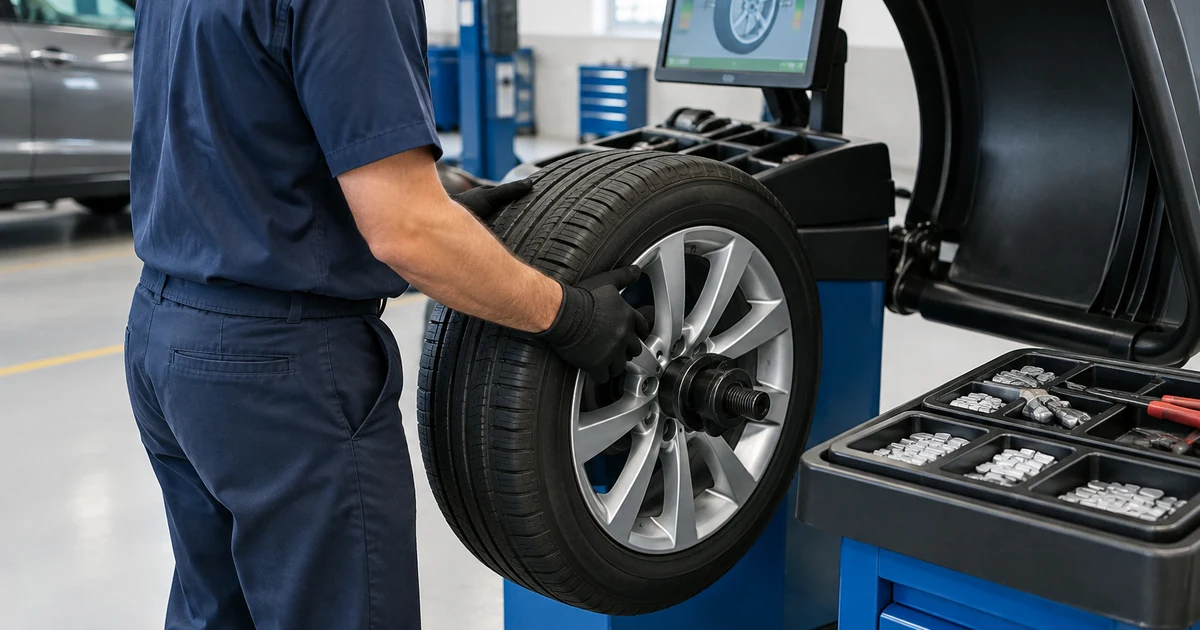
A standard spin balancer spins the wheel and tells the technician where to add small weights so the assembly spins evenly. It fixes most vibrations.
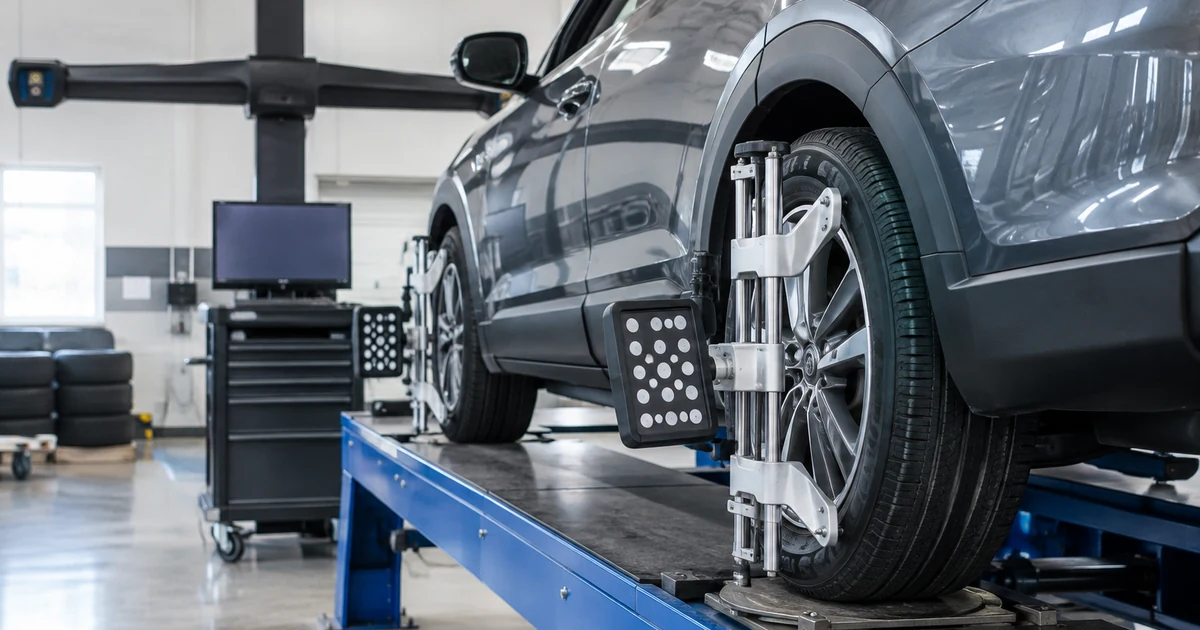
A road force balancer also presses a roller against the tire to simulate the weight of the car on the road. It finds problems a spin balance can’t: a tire that’s slightly out of round, stiff spots in the tire, or a wheel that runs out. The technician can then rotate the tire on the wheel to match high and low spots. Road force balancing typically costs $20–$40 per tire, or $80–$160 for a set. It’s worth it for a stubborn vibration that a regular balance didn’t fix, on low-profile performance tires, and on vehicles that are especially sensitive to vibration.
What Affects the Price
Number of wheels
Because balancing is priced per wheel, balancing only the two front wheels to cure steering-wheel shake costs half as much as all four. A Jeep or truck with a matching full-size spare may need five.
Wheel and tire size
Large, heavy truck wheels and low-profile performance tires take more time to handle and may need more weight, and some shops charge a higher tier for them.
Balance type
Road force balancing takes longer and uses a more expensive machine, so it typically costs about twice as much as a standard spin balance.
Wheel weight type
Many alloy wheels use stick-on weights hidden inside the rim for appearance. They take a little more care to place than clip-on weights on steel wheels.
Where you bought the tires
Many tire retailers and warehouse clubs include balancing free for the life of tires you bought there. Tires bought elsewhere are usually charged at full price.
Region
Prices run higher in the Northeast and on the West Coast; the region setting in the estimator adjusts for that.
What’s Included in Tire Balancing
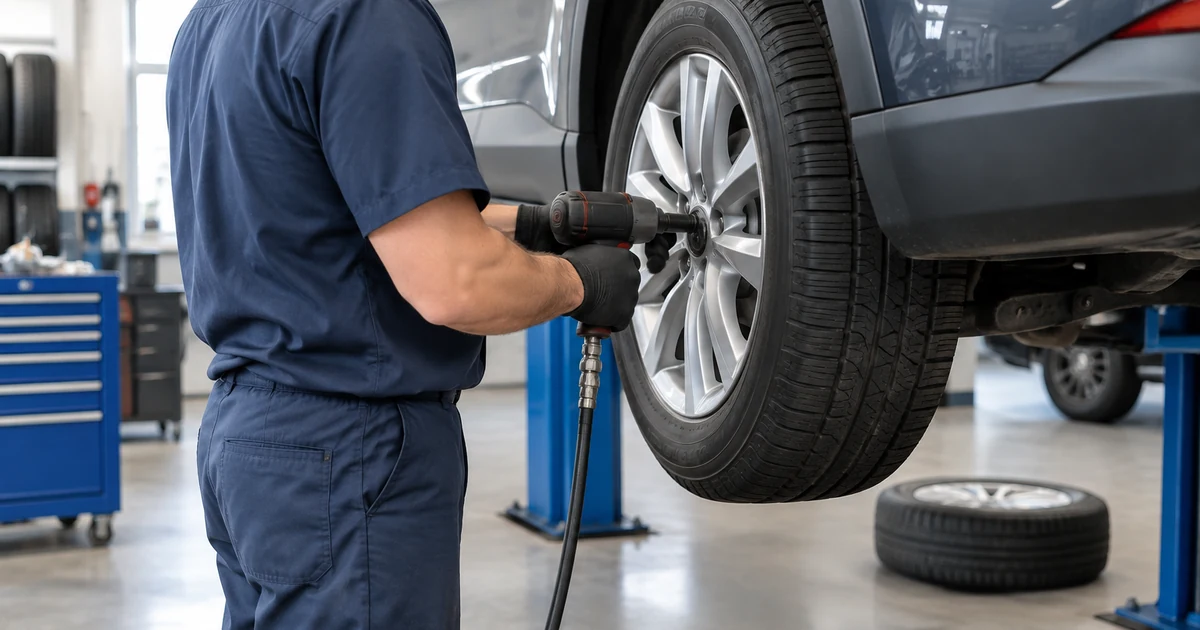
- Removing each wheel and mounting it on the balancer
- Removing old weights and cleaning the mounting surface
- Spinning the wheel and adding clip-on or stick-on weights where needed
- Re-checking the balance, then reinstalling and torquing the lug nuts
New valve stems are sometimes added for a few dollars each. If your car has TPMS sensors in the valve stems, the shop may replace the sensor’s seal kit; a failed sensor is separate, see our TPMS sensor replacement cost guide.
How Often Do You Need Tire Balancing?
Balancing isn’t on a fixed schedule for most cars. You need it:
- When new tires are mounted (usually included in the installation price)
- When a tire is patched or removed from the wheel
- When you notice a new vibration at highway speed
- After a wheel weight falls off or a hard pothole hit
Some shops recommend rebalancing every other rotation. That’s reasonable if you drive a lot of highway miles or notice vibrations, but many drivers can wait for a symptom. Pairing it with a rotation is efficient because the wheels are already off; see our tire rotation cost guide.
Signs Your Tires Need Balancing
- Vibration in the steering wheel at highway speeds (often 50–70 mph), which usually means a front wheel
- Vibration in the seat or floor, which usually means a rear wheel
- Scalloped or cupped tread wear
- A missing wheel weight, visible as a clean spot on the rim
Balancing and alignment are different. Balancing cures vibration; alignment cures pulling and uneven edge wear. If your car pulls or the steering wheel is off-center, see our wheel alignment cost guide. Vibration that appears only when braking is usually a brake problem, not balance; our brake pads and rotors cost guide covers that.
Can You Drive With Unbalanced Tires?
Yes, a mild imbalance isn’t an emergency. Left alone, though, it wears tires unevenly and adds stress to wheel bearings and suspension parts, and the vibration is tiring on long drives. A sudden, severe vibration is different: it can mean a damaged tire, a bent wheel or loose lug nuts. Slow down, pull over safely and check before continuing.
DIY vs. Taking It to a Shop
Difficulty: 4 out of 5, mainly because of equipment. Accurate balancing requires a wheel balancer that costs far more than a lifetime of shop visits. Bubble balancers exist but are much less precise, and balancing beads are mostly used in large truck tires. For almost everyone, balancing is a shop job.
What you can do: take the wheels off yourself and bring them in for a “loose wheel” balance at a lower price at some shops, and keep an eye out for missing weights.
Is Tire Balancing Worth It?
When you have a vibration, yes. At $40–$80 for four wheels it’s one of the cheapest fixes for a common complaint, and it protects tires that cost far more. Paying for routine balancing with no symptoms is optional; many drivers go years between balances with no issue.
If you’re about to replace tires anyway, hold off on paying for a balance: new tires are balanced as part of the installation at nearly every tire shop. And if a shop recommends new suspension parts to fix a vibration, ask whether the wheels were balanced first. It’s the cheapest thing to rule out.
How to Save Money on Tire Balancing
- Use included services. New tire installs and many lifetime tire plans include balancing.
- Balance when there’s a reason: a vibration, new tires or a tire repair.
- Bundle with a rotation so you pay for the wheels to come off once.
- Balance only the problem wheels if you can tell front from rear.
- Compare warehouse clubs and tire chains, which are usually cheaper than dealers.
- Try a standard balance first, and move to road force only if the vibration persists.
Frequently Asked Questions
How much does it cost to balance tires?
Most shops charge $10 to $20 per tire, or $40 to $80 for four, with about $60 typical. Warehouse clubs are cheaper and dealers charge more. Balancing is usually included when you buy and mount new tires.
How much does road force balancing cost?
Typically $20 to $40 per tire, or $80 to $160 for a set. It’s worth it for a vibration that a standard balance didn’t fix or for low-profile performance tires.
What's the difference between balancing and alignment?
Balancing adds small weights so each wheel spins smoothly, which fixes vibration. Alignment adjusts wheel angles, which fixes pulling and uneven edge wear. They’re separate services with separate prices.
How often should tires be balanced?
When new tires are installed, after a tire repair, or when you feel a new vibration. Some shops suggest every other rotation, which is reasonable but not required for most drivers.
What does an unbalanced tire feel like?
Usually a vibration in the steering wheel or seat that appears at highway speeds, often around 50 to 70 mph. Steering wheel vibration points to a front wheel; seat vibration to a rear.
Can you balance just one tire?
Yes. Shops price balancing per tire, so if you know which wheel is causing the vibration or only one tire was repaired, you can balance just that one.
Does Costco or Discount Tire balance tires for free?
Both commonly include balancing with tires purchased there, and Discount Tire’s free service plan includes rebalancing. Terms vary, so check with your store.