Strut Replacement Cost by Vehicle
The table shows replacing both front struts (a pair) with aftermarket complete strut assemblies at an independent shop, not including the alignment (add about $75 to $170). These are estimates for common model years and trims; OEM parts, adaptive or air suspension and dealer labor cost more.
| Vehicle | Parts (pair) | Labor | Total |
|---|---|---|---|
| Ford F-150 | $250 – $600 | $250 – $450 | $500 – $1,050 |
| Chevrolet Silverado 1500 | $250 – $600 | $250 – $450 | $500 – $1,050 |
| Toyota Camry | $200 – $500 | $250 – $400 | $450 – $900 |
| Toyota RAV4 | $220 – $520 | $250 – $400 | $470 – $920 |
| Toyota Corolla | $180 – $450 | $230 – $380 | $410 – $830 |
| Honda Civic | $180 – $450 | $230 – $380 | $410 – $830 |
| Honda Accord | $200 – $500 | $250 – $400 | $450 – $900 |
| Honda CR-V | $220 – $520 | $250 – $400 | $470 – $920 |
| Nissan Altima | $200 – $480 | $240 – $400 | $440 – $880 |
| Chevrolet Equinox | $220 – $500 | $250 – $400 | $470 – $900 |
| Jeep Wrangler (front shocks) | $80 – $250 | $120 – $250 | $200 – $500 |
| Jeep Grand Cherokee | $300 – $700 | $280 – $450 | $580 – $1,150 |
| BMW 3 Series | $350 – $900 | $300 – $500 | $650 – $1,400 |
Most cars and crossovers use struts in front and either struts or shocks in the rear. Solid-axle 4x4s like the Jeep Wrangler use shock absorbers at all four corners, which are cheaper to replace. Vehicles with adaptive, electronically controlled or air suspension can cost several times more per corner.
Struts vs. Shocks: What’s the Difference?
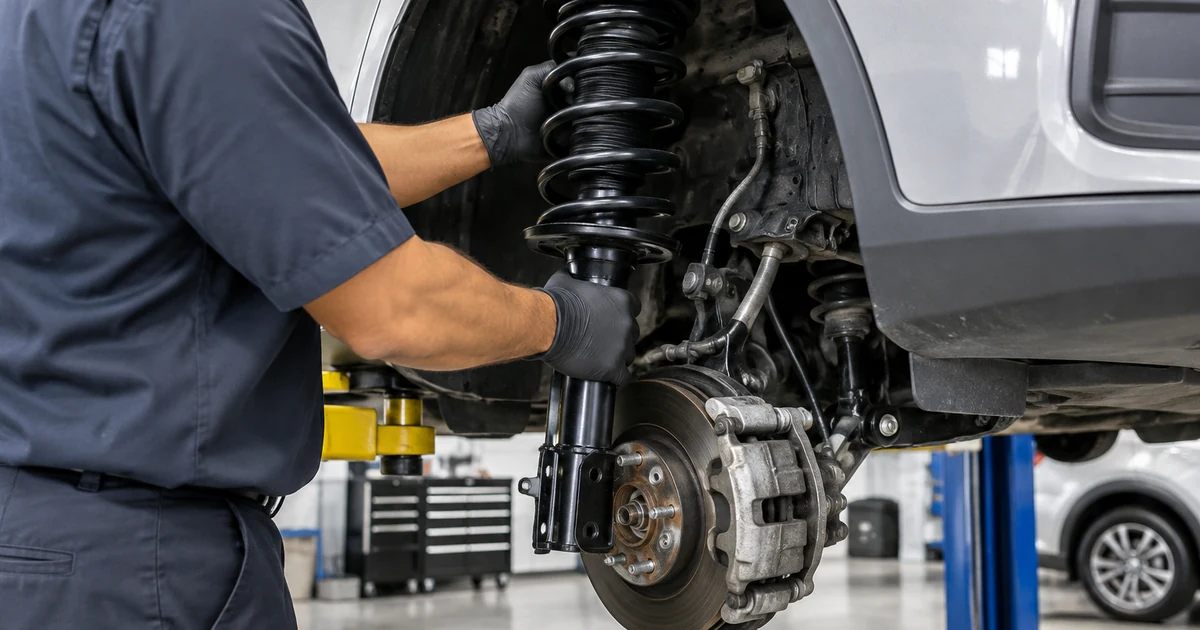
Both dampen the bouncing of the springs and keep the tires on the road. A shock absorber is only a damper: it bolts in separately from the spring and is not part of the steering or structure, so it is quicker and cheaper to replace. A strut is a structural part of the suspension. It holds the coil spring, supports the weight of the car and, on the front of most vehicles, is part of the steering pivot. That is why strut jobs cost more and usually need an alignment, while shock replacement typically does not.
Cost Breakdown: Parts vs. Labor
A complete aftermarket strut assembly (strut, spring, mount and hardware already assembled) typically costs about $100 to $300 per corner, while OEM struts or luxury parts can run much higher. Labor is typically 1 to 2.5 hours per strut, or about $250 to $500 for a front pair at independent rates. Rear shocks are usually the quickest job, often under an hour each.
| Job (independent shop) | Parts | Labor | Total, before alignment |
|---|---|---|---|
| Front struts, pair | $200 – $600 | $250 – $500 | $500 – $1,100 |
| Rear struts, pair | $180 – $550 | $220 – $450 | $450 – $1,000 |
| Rear shocks, pair | $80 – $300 | $120 – $250 | $250 – $550 |
| Front struts + rear shocks | $300 – $900 | $400 – $750 | $750 – $1,650 |
| All four struts | $400 – $1,150 | $450 – $950 | $950 – $2,100 |
Complete assembly vs. bare strut
A complete (quick) strut assembly costs more to buy but installs faster and replaces the worn top mount and spring seat at the same time. A bare strut cartridge is cheaper, but the shop has to compress the spring and transfer it to the new strut, which adds labor and reuses old mounts. For most daily drivers, complete assemblies are the better value.
Why front struts need an alignment
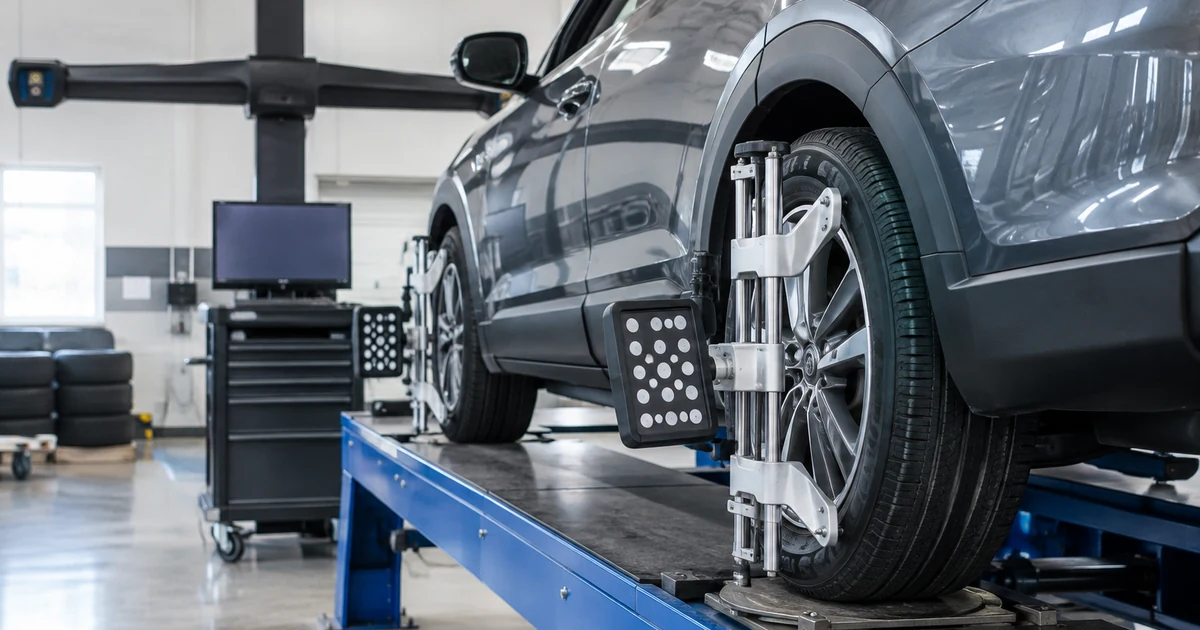
Front struts are part of the steering geometry, so removing them changes camber and sometimes toe. Shops recommend an alignment afterward, typically $75 to $170. Rear shocks alone usually do not require one.
Dealer vs. independent vs. DIY
| Option | Front strut pair, with alignment | Notes |
|---|---|---|
| Independent shop | $575 – $1,270 | Aftermarket or OEM parts |
| Dealership | $750 – $1,650 | OEM parts, higher labor rate |
| DIY + shop alignment | $260 – $570 | Complete assemblies recommended |
What Affects the Price
Vehicle type and suspension design
Compact cars with conventional struts are cheapest. Trucks and large SUVs use bigger, heavier parts. Luxury and performance models with adaptive dampers or air suspension can cost far more per corner and may need electronic calibration.
Part quality
Aftermarket complete assemblies are the most common choice at independent shops. OEM struts usually cost more and are standard at dealers; premium performance struts sit at the top of the range.
Shop type
Dealer labor rates typically run $150 to $220 an hour, compared with about $110 to $150 at independent shops, so dealers often charge 25% to 50% more for the same job.
Region
Labor costs more in big coastal metro areas than in the South and Midwest. Use the region selector in the estimator above.
Related parts replaced at the same time
Strut mounts, bearing plates, bump stops and dust boots are often replaced along with bare struts. Shops also inspect sway bar links, tie rods and ball joints, since doing that work at the same visit shares one alignment.
Symptoms of Bad Struts or Shocks
- Excessive bouncing after bumps or dips, or a floaty ride at highway speed.
- Nose dive when braking and squat when accelerating.
- Body lean or sway in turns and lane changes.
- Fluid leaking down the outside of the strut or shock body.
- Clunking or knocking over bumps, often from worn mounts.
- Cupped tire wear, a scalloped pattern of high and low spots on the tread.
- Longer stopping distances, since weak dampers let the tires lose grip.
Shocks and struts commonly last around 50,000 to 100,000 miles, depending on roads, loads and driving habits. A humming noise that rises with speed is more likely a wheel bearing than a strut.
Can You Drive With Bad Struts?
You can usually drive a short distance, but worn struts are a real safety issue. They reduce tire grip, lengthen braking distances and make the car less stable in an emergency swerve. A strut that is leaking a little can wait for an appointment; a broken coil spring, a strut mount that has torn loose, or a wheel that sits at an odd angle means you should stop driving and have the car towed.
DIY vs. Taking It to a Shop
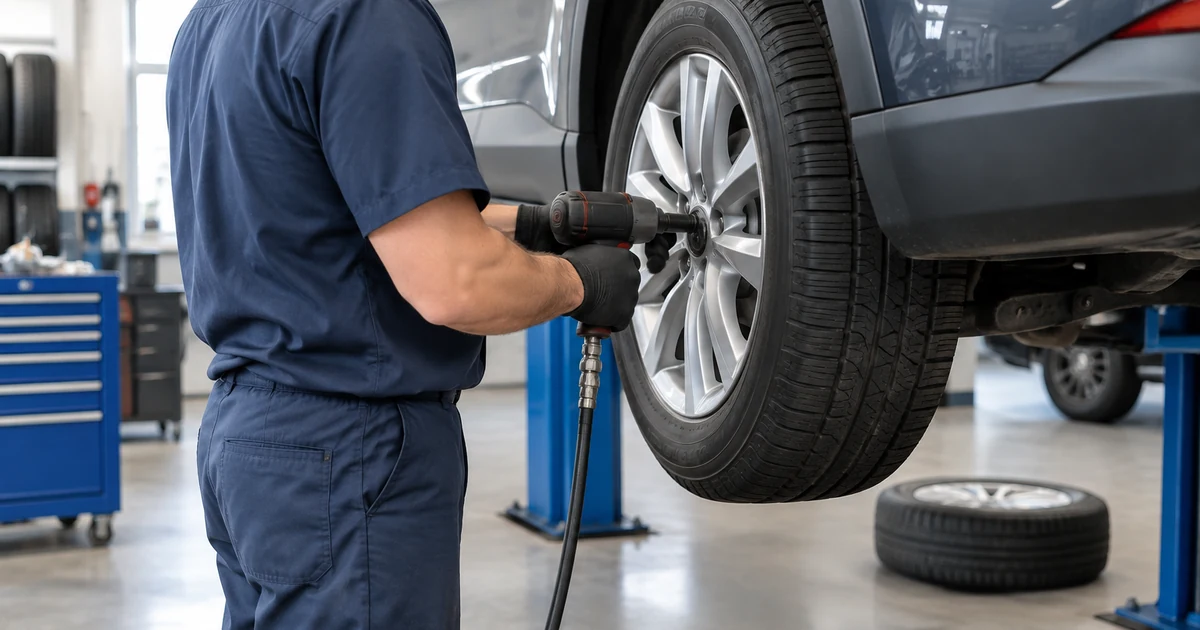
Difficulty: 3 out of 5 with complete strut assemblies, 4 out of 5 if you have to transfer springs to bare struts. You need a jack and stands, a breaker bar, a socket set, a torque wrench and sometimes a ball joint or tie rod separator. Expect 1.5 to 3 hours per corner for a first-timer. Rear shocks on many vehicles are much easier.
Compressing coil springs is dangerous: a spring that slips can cause serious injury. If your parts are not complete assemblies, leave the spring work to a shop. You still need a professional alignment after front struts.
Is It Worth Fixing?
Usually yes. Worn struts affect braking and handling, and they speed up tire wear, so the repair protects both your safety and your tires. On an older car worth only a couple of thousand dollars, a full set of four can be a big share of its value. In that case, replacing the worst axle first (usually the front) is a reasonable compromise, as long as the car is safe to drive.
How to Save Money on Strut Replacement
- Get a second quote and make sure both use the same parts (complete assembly or bare strut) and include the alignment.
- Use an independent shop or suspension specialist instead of the dealer.
- Choose quality aftermarket complete assemblies; they save labor and replace the mounts too.
- Replace only the worn axle if the other axle checks out fine.
- Bundle suspension work so you pay for one alignment.
- Watch for tire and parts store promotions on shocks and struts, which are common.
Learn more about how we estimate costs.
Frequently Asked Questions
Should struts be replaced in pairs?
Yes. Struts and shocks should be replaced in pairs on the same axle so both sides damp equally. Mixing a new strut with a worn one can make the car handle and brake unevenly.
Do you need an alignment after replacing struts?
After front struts, yes. They are part of the steering geometry, so replacing them changes the alignment angles. Rear shocks alone usually do not require an alignment.
What is the difference between shocks and struts?
A shock is only a damper that controls spring motion. A strut is a structural part that also holds the spring and supports the car, and on the front it is part of the steering. Struts cost more to replace and need an alignment.
How long do shocks and struts last?
They commonly last around 50,000 to 100,000 miles. Rough roads, heavy loads, towing and aggressive driving wear them out sooner.
How long does it take to replace struts?
Most shops need about 1 to 2.5 hours per strut with complete assemblies, so a front pair plus alignment is typically a half-day job. Rear shocks often take under an hour each.
Is it cheaper to replace all four struts at once?
Doing all four at once saves some labor overlap and one alignment covers everything, but it costs more up front. If only one axle is worn, replacing that pair is a reasonable way to spread out the cost.